If your record skips, it is almost always one of three things: a tracking fault in the setup, damage or debris in the groove, or vibration reaching the plinth. On the tables I run, a skip that survives a careful cleaning and a tracking-force recheck is usually the record — but a skip that moves around or follows the deck is almost always setup or the floor.
That split is the whole game. Skips feel random when you are standing over the platter watching the arm hop, but they almost never are. The stylus is a mechanical follower riding a groove wall, and when it leaves that wall there is a specific reason it could no longer hold on. This guide is the diagnostic tree I actually walk through when a deck on my bench starts misbehaving — symptom first, cause second, fix last, in the order that costs the least and risks the record the least.
Start Here: The Three Families of Skips
Every skip I have ever chased traces back to one of three families: the setup (tracking force, anti-skate, alignment, bearing), the record (groove damage, debris, warps, pressing defects), or the environment (footfalls, vibration, an unlevel plinth). Sorting which family you are in takes about a minute and saves you from “fixing” a record that was never the problem.
The reason this matters is that the fixes pull in opposite directions. If you add tracking force to stop a footfall skip you will mask the symptom and grind a stylus into grooves it should be gliding over. If you blame the record for a mistracking fault you will toss a perfectly good pressing. So before you touch a single dial, you sort the family. Here is the fast way to do it.
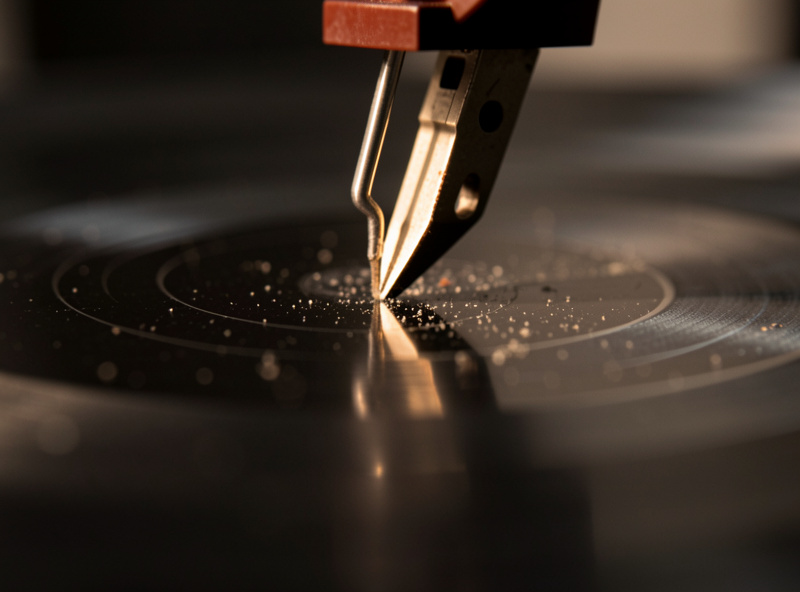
The 60-Second Triage
Before any adjustment, run three quick observations: does the skip happen at the same spot every play, does it happen when you walk or tap the shelf, and does it follow a different record on the same deck. Those three answers point straight at a family. The table below is the triage I run from memory.
| What you observe | Most likely family | First thing to check |
|---|---|---|
| Skips at the exact same groove every single play | Record (damage or debris) | Clean that spot, inspect groove wall under raking light |
| Skips when you walk past or tap the cabinet | Environment (footfall/vibration) | Isolation and shelf, not the cartridge |
| Skips at random spots on many different records | Setup (tracking/alignment) | Stylus-force gauge and anti-skate |
| Arm slides inward on its own across a record | Setup (anti-skate/bearing/level) | Level the plinth, then anti-skate |
| Same groove plays over and over (locked loop) | Record or setup (a true repeating groove) | Groove damage vs. low tracking force |
| Brand-new record skips out of the sleeve | Record (pressing defect or debris) | Clean first, then check it on a second deck |
Notice that the same symptom can land in two families — a repeating groove can be a gouged record or a stylus that simply isn’t pressing hard enough to climb the next groove wall. That ambiguity is exactly why the swap test further down exists. But the triage gets you 80% of the way, and the dedicated guides below take each row to the bottom.
Family 1 — Setup and Tracking Faults
Setup skips are the ones that show up across many records at no fixed spot. The cartridge is failing to hold the groove because the forces on the stylus are wrong, and the single most common culprit is tracking force set too light. A stylus that floats can be thrown out by ordinary groove modulation on a loud passage.
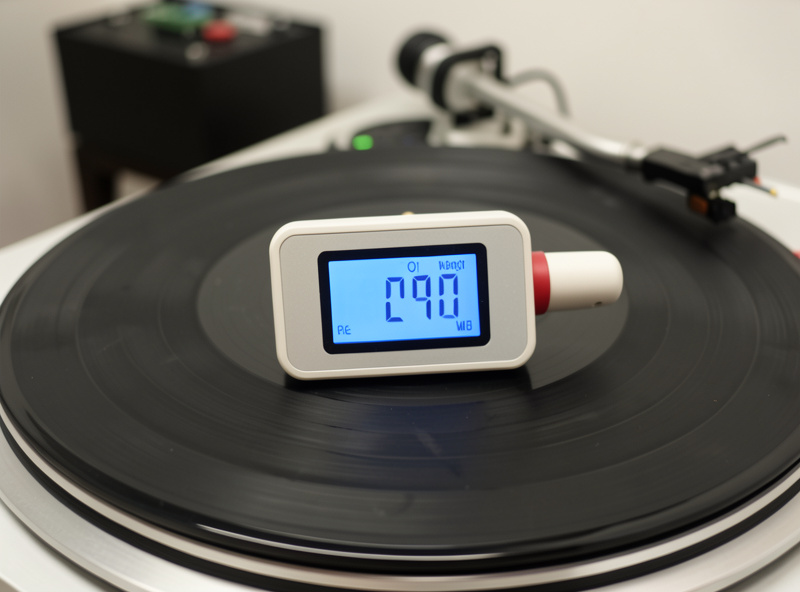
I set vertical tracking force with a digital gauge to 0.01 g, dead center of the cartridge maker’s range — for most of the moving-magnet cartridges I have mounted that lands around 1.8 to 2.0 g, but you follow your own cartridge’s spec, not a number from the internet. Too light and the stylus skates over peaks; too heavy and you get muffled sound and accelerated wear, though heavy rarely causes skips. If you have never measured yours, that is the first reading to take.
Anti-skate is the next suspect. The spinning groove drags the arm inward, and anti-skate counters it. Set wrong, the stylus loads one groove wall harder than the other and loses grip — classic mid-side mistracking and channel-specific skipping. I dial it roughly to match the tracking force as a starting point, then fine-tune. My full method lives in the anti-skate setting guide and the combined tracking force and anti-skate walkthrough.
Alignment is the quieter offender. If overhang and the null points are off, the stylus sits at the wrong angle to the groove across most of the record and tracks poorly, especially toward the inner grooves. I align every cartridge on a two-point protractor to the Baerwald nulls at 66.0 mm and 120.9 mm from the spindle — the geometry that spreads tracking error evenly across the side — and on the Rega P3 I run that means setting overhang against the RB330 arm’s fixed mounting distance. The full process is in the cartridge alignment guide. A worn or damaged stylus belongs in this family too: a chipped tip cannot hold any groove and will skip on records that play fine with a good stylus.
Family 2 — The Record Itself
Record skips are the ones locked to a fixed spot. If a record skips at 2:14 on track three every single time, on every deck, the cause is in that groove — debris bridging it, a scratch across it, a heat-warp ridge, or a molding defect from the pressing plant. The fix is cleaning first, inspection second, and acceptance third when it is a genuine gouge.
Most “damage” is actually dust. A speck lodged in the groove can deflect the stylus enough to hop, and it cleans out completely. I run a carbon-fiber brush every play and wet-clean anything suspect — the record cleaning guide and the wet-cleaning method resolve a surprising share of “skipping” records. Thrift finds get the deep treatment in how to clean used records, and the Library of Congress’s disc-care guidance backs the basics — handle by the edge, store vertical, and keep dust out of the grooves in the first place so it never bridges one.
If cleaning doesn’t fix it, inspect the groove under a raking light. A scratch shows as a bright line cutting across the grooves; a true gouge has depth you can see. Pressing defects — non-fill, a stitch, an off-center hole causing speed wobble — are the manufacturer’s fault, not yours, and a brand-new record that skips fresh from the sleeve usually falls here. I cover that case in detail below and in the dedicated new-record guide.
Family 3 — The Environment
Environmental skips are tied to motion outside the deck. If the arm jumps when you walk past, when the cat lands on the floor, or when the bass hits hard, the plinth is receiving vibration it cannot reject. The stylus is so light that a few microns of plinth movement reads as a groove the arm can’t follow, and it hops.
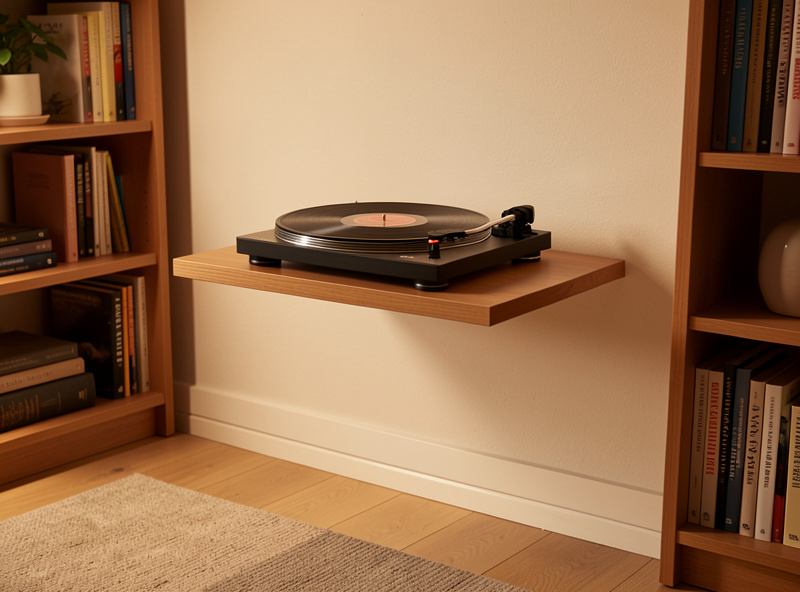
Footfall skips through a suspended wood floor are the classic version — your weight flexes the joists, the rack rocks, the arm jumps. The cure is isolation and a rigid mounting point, not a heavier tracking force. I have measured this every way: a wall-mounted shelf decouples the deck from the floor better than anything sitting on it, and where a wall mount isn’t possible, a proper isolation platform or spring/feet system does real work. The whole subject is in the vibration isolation guide, and the physics of why footfalls matter more than loud music is in footfall vs airborne vibration.
Level matters here too. A plinth that isn’t level lets gravity add to the inward skating force, which can tip a marginal setup into drifting and skipping. A 30-second pass with a bubble level on the platter is free and rules it out. The right furniture helps — see turntable furniture and stands — and so do quality sorbothane feet under a deck that has none.
How to Tell Record Damage From Mistracking
This is the question that decides whether you adjust the deck or set the record aside, and there is a clean test for it. Play the skipping record on a second, correctly set-up deck — or move a known-good record onto your deck. If the skip follows the record to another deck, it is the record. If it follows the deck across different records, it is your setup or your floor.
I keep one “reference” pressing I know is clean specifically for this. When a customer’s deck comes in skipping, the reference record tells me in one play whether to reach for the protractor or the cleaning fluid. The full logic, including how a damaged stylus mimics a damaged record, is in is it the record or the stylus. The short version: a record fault is fixed in location, a stylus or setup fault travels.
The Fix-It Order — Cheapest and Safest First
The mistake I see most is people changing the cartridge first. That is the most expensive, most disruptive move and almost never the cause. Work the list in order; stop when the skip stops.
| Step | What you do | Cost | Catches |
|---|---|---|---|
| 1 | Brush, then wet-clean the record | Near zero | Debris skips (the majority of fixed-spot skips) |
| 2 | Level the plinth with a bubble level | Free | Drift and skating skips |
| 3 | Check tracking force with a gauge | ~$15 gauge | Light-tracking skips across many records |
| 4 | Set anti-skate to match | Free | One-channel mistracking |
| 5 | Verify alignment on a protractor | ~$20 tool | Inner-groove and angle skips |
| 6 | Isolate the deck (shelf/platform/feet) | Varies | Footfall and vibration skips |
| 7 | Inspect/replace the stylus | Stylus cost | Worn or chipped tip |
Seven steps, and the first four are nearly free. I have fixed more skips with a cleaning brush and a bubble level than with any component swap. Only after all of this comes the cartridge — and even then, the phono stage and setup outrank the table itself in how much they shape what you hear, which is the spend-order argument I make across this whole site.
When It’s the Cartridge or Stylus
A cartridge causes skips in two ways: a worn or damaged stylus that physically cannot hold a groove, or a compliance mismatch with the arm that lets the cartridge resonate. The stylus is by far the common one. Under magnification a worn tip looks flattened or asymmetric; a chipped one has an obvious facet. A stylus past its hours will skip on heavily modulated passages that a fresh tip rides cleanly.
Mistracking from a tired stylus also sounds a specific way before it fully skips — sibilance gets gritty, loud passages distort, inner grooves smear. If you are hearing that, the tip is telling you. I cover when to retip versus replace in the turntable upgrade guide, and cartridge selection in best phono cartridges. Loading and capacitance can change tracking behavior on some cartridges too — that’s in cartridge loading explained.
The Bench Routine I Actually Run
When a skipping deck lands on my bench, I don’t guess — I run the same sequence every time, because guessing is how you replace a $200 cartridge to cure a 50-cent speck of dust. First I drop a bubble level on the platter and shim the feet until it reads true in both axes. Then I put the reference record on. If it plays clean, the deck is mechanically fine and the original record is the suspect; if the reference skips too, the fault is in the deck or the floor.
Next I check tracking force with the gauge, cold, before the record spins — I want the static reading against the cartridge spec. Then anti-skate, then a quick protractor check of overhang at both nulls. Most of the time one of those three is off, and correcting it ends the skip. Only if the deck plays a known-good record perfectly and still throws the customer’s record do I conclude it is the record and move to cleaning and inspection. The whole pass takes ten minutes and it has never once led me to the wrong family.
The lesson I keep relearning is that skips reward discipline. The arm is a balance of tiny forces, and a skip means one of them broke the balance. Find which force, and the fix is obvious and usually cheap. Reach for the most expensive change first and you will spend money chasing a symptom that a brush and a level would have cured.
Skips That Aren’t Really Skips
A few symptoms get filed under “skipping” that are actually different faults, and treating them as skips sends you down the wrong path. The most common is the repeating groove — the same passage plays over and over in a locked loop. That can be a genuine circular gouge that bridges one revolution to itself, or it can be a stylus tracking so light it cannot climb the tiny step from one groove to the next and keeps falling back. Same sound, opposite fixes, which is why it has its own guide in this cluster.
Another impostor is the off-center pressing. If the spindle hole was punched off-center, the whole record swings the arm in and out once per revolution. That cyclic wobble can read as instability and, on a marginal setup, tip into an actual skip on the side where the arm is being pushed. It is not a skip you can adjust away — it is a manufacturing fault — but leveling the deck and setting anti-skate correctly gives the arm the best chance of riding through it. I describe how to spot the difference between a wobble and a true skip in the drift and repeating-groove guides.
Speed instability gets blamed too. Wow and flutter — pitch that wavers — is a drive or bearing issue, not a skip, and it never throws the arm. If your “skip” is really the pitch sagging, you are looking at a belt, a motor, or a dry main bearing, and that is a different repair entirely. A direct-drive deck like the Technics-class table I use as my speed reference holds pitch dead steady; a tired belt deck can drift, but it still won’t make the stylus hop. Keep these separate in your head and you won’t waste an afternoon adjusting anti-skate to cure a worn belt.
Inner-Groove Distortion Is a Warning, Not a Skip
As the stylus moves toward the label, the groove velocity drops and the geometry gets harder to track. A setup that is marginal everywhere will mistrack first in the inner grooves — gritty sibilance, smeared loud passages, and eventually a skip on the last track when nothing earlier skipped. If your skips cluster near the center of the record, suspect alignment and anti-skate before you suspect damage, because the inner grooves are where those faults surface first.
This is also the single best argument for aligning to the right null points. Baerwald spreads the tracking error to favor the busy middle of the record; Stevenson pushes the inner null closer to the label to protect those final grooves. On the decks I set up for someone who plays a lot of side-ending climaxes, I will choose the alignment that keeps the inner grooves clean. The point is that an inner-groove skip is the deck telling you the geometry is on the edge — fix it there, not with brute tracking force.
Related Guides in This Cluster
Each skip symptom has its own deep dive. Start with the one that matches what you are seeing:
- Record Skips at the Same Spot Every Time: Groove Damage or Setup?
- Why Your Stylus Jumps Grooves and How to Stop It
- Turntable Skips When You Walk Past It: Fixing Footfall Skips
- Record Player Repeats the Same Groove: Causes and Fixes
- Tonearm Drifts Across the Record: Anti-Skate and Bearing Checks
- Is It the Record or the Stylus? Telling Damage From Mistracking
- New Record Skips Out of the Sleeve: What to Check First
Frequently Asked Questions
Why does my record skip in the same place every time?
A skip locked to one spot is in the groove itself: debris, a scratch, or a pressing defect. Clean that section first since most fixed-spot skips are dust, then inspect under raking light. If it survives cleaning and follows the record to another deck, it is damage.
Can low tracking force cause skipping?
Yes. Tracking force set too light is the most common setup cause of skips. A stylus that floats gets thrown out of the groove by loud passages. Measure with a digital gauge and set it to the center of your cartridge’s specified range, often around 1.8 to 2.0 grams for moving-magnet types.
Why does my turntable skip when I walk past it?
That is a footfall skip: your weight flexes the floor, the rack rocks, and the arm jumps. The fix is isolation, not more tracking force. A wall-mounted shelf decouples the deck from a suspended wood floor better than anything sitting on the floor itself.
How do I know if it is the record or my turntable?
Play the skipping record on a second correctly set-up deck. If the skip follows the record, it is the record. If it follows the deck across different records, it is your setup, stylus, or floor. A record fault is fixed in place; a setup fault travels.
Should I add tracking force to stop skipping?
Only up to your cartridge’s specified maximum, and only if you are below center. Going heavier than spec to mask a skip grinds the stylus into the groove and accelerates wear without fixing footfall or alignment faults. Diagnose the real family first instead of overweighting.
Will cleaning a record stop it from skipping?
Often, yes. Most fixed-spot skips are debris bridging the groove, and a wet clean removes it. Cleaning is the cheapest, safest first step and resolves a large share of skipping records before you ever touch a dial.
Related Articles
- Turntable Setup and Calibration: The Complete Guide
- Setting Up a Turntable for the First Time
- Turntable Isolation and Vibration Control
- How to Set Tracking Force and Anti-Skate
- How to Clean Vinyl Records: The Complete Guide