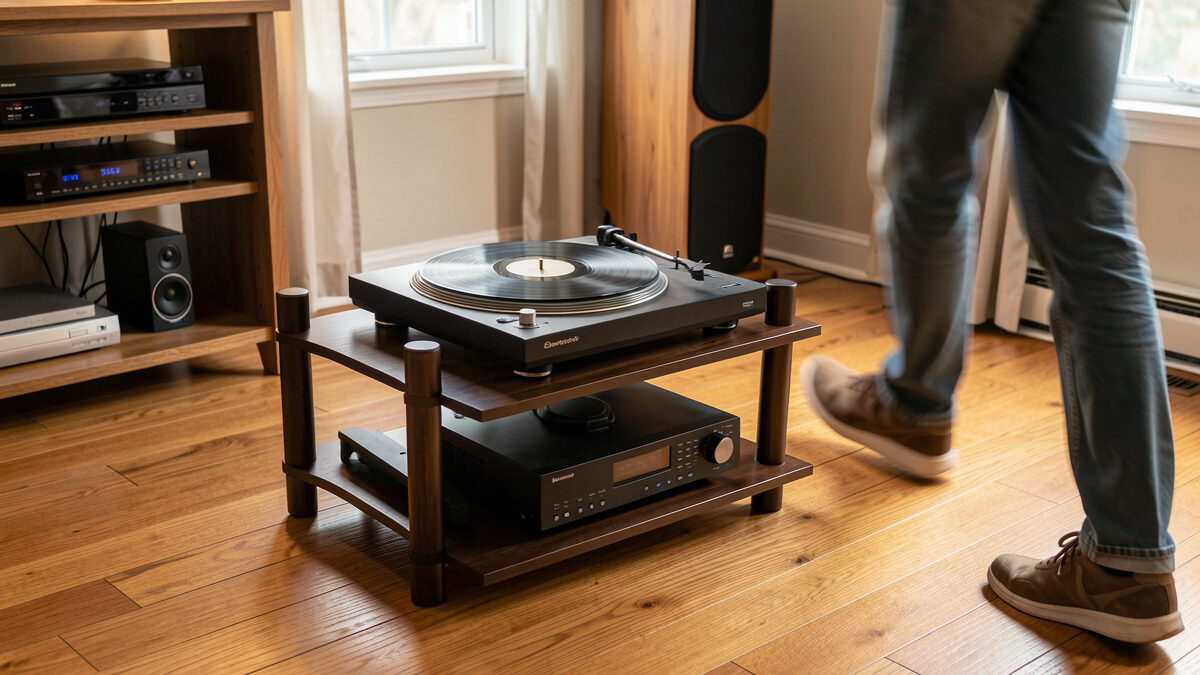
If your turntable skips when you walk past it, the cause is footfall vibration: your weight flexes the floor, the rack rocks, and the lightly-loaded stylus reads that movement as a groove it cannot follow, so it hops. On every deck I have chased this on, the fix is isolation and a rigid mounting point — not a heavier tracking force, which only masks the symptom while wearing your records.
This is one of the most satisfying turntable problems to solve because it is purely mechanical and the cure is permanent. A stylus tracks at a couple of grams; a few microns of plinth movement at the wrong moment is all it takes to throw it. Once you understand that the energy is coming up through the floor and into the plinth, the whole solution becomes obvious: break that path. Here is how I do it, in order of effectiveness.
Why Footfalls Make a Stylus Skip
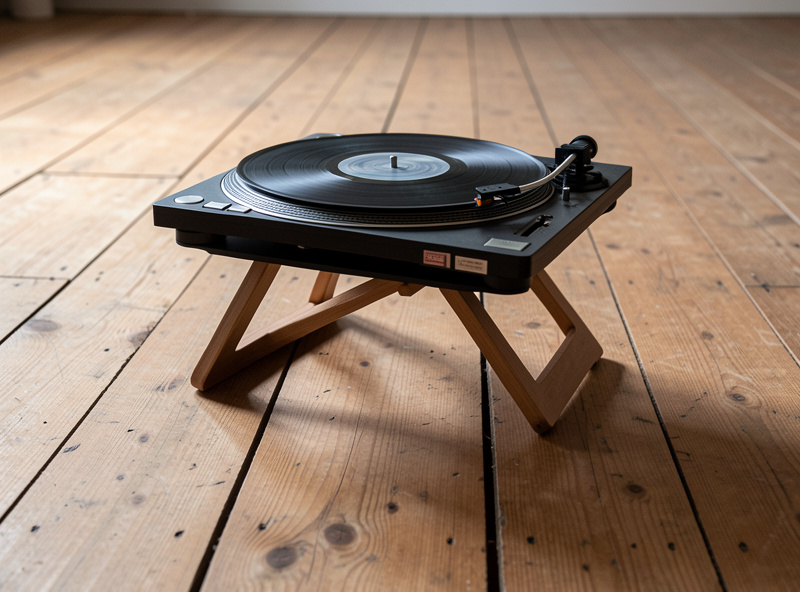
A suspended wooden floor — joists with a subfloor on top — flexes under your weight like a very stiff trampoline. When you step, the floor deflects, the furniture the deck sits on rocks, and the deck moves with it. The tonearm and platter have inertia and lag behind that motion for an instant, and in that instant the stylus is dragged across or out of the groove. On a concrete slab floor this rarely happens; on a first-floor suspended timber floor it is almost guaranteed without isolation.
The key insight is that it is not about how loud you play — it is about low-frequency mechanical energy entering the plinth. That is why footfalls, a slammed door, or a child jumping across the room set it off while quiet passages at the same volume are fine. I break down the physics, and why footfalls matter more than the music itself, in footfall vs airborne vibration. Understanding the path is what tells you where to cut it.
The Most Effective Fix: Get the Deck Off the Floor
The single best cure for footfall skips is a wall-mounted shelf bolted into a structural wall. The floor can flex all it likes; the wall doesn’t move with your footsteps, so the deck doesn’t either. I have fixed hopeless suspended-floor setups in an afternoon with a solid wall bracket, and nothing that sits on the floor matches it. The full method, including how to find a load-bearing point and avoid transmitting wall vibration, is in wall-mounting a turntable isolation shelf.
If a wall mount isn’t an option — rented walls, a chimney breast, a brick-free stud wall — the next best thing is a dedicated isolation platform between the deck and the furniture, on furniture that is itself as rigid and low as possible. A heavy, stiff platform on good isolators decouples the plinth from the rack. I rate the options in best turntable isolation platforms and show a build that works in the DIY isolation platform guide.
Isolation Feet, Springs, and Sorbothane
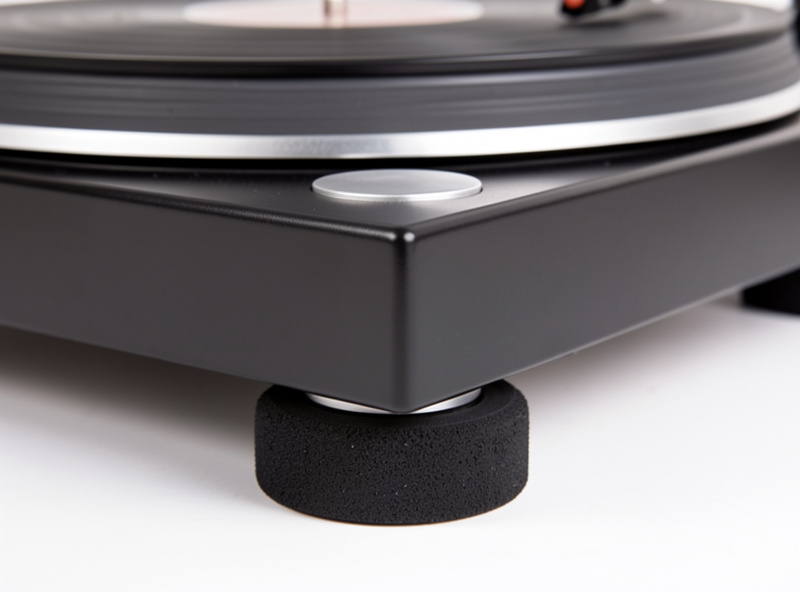
Under the deck itself, the feet matter. Many budget tables ship with hard plastic feet that transmit everything — the Pro-Ject X2 I run arrived with that kind, where the Technics SL-1200 I keep as my reference uses much better damped feet from the factory. Swapping to sprung feet, spring absorbers, or sorbothane hemispheres gives the plinth a soft, lossy path to ground that absorbs the footfall energy before it reaches the platter. This is the cheapest meaningful step and often enough on its own for a mild case.
Sorbothane is the one I reach for most because it is predictable and you can size it to the load — the manufacturer’s load-deflection data is exactly why: too firm and it does nothing, too soft and the deck wobbles. I cover how to pick and place it in sorbothane feet for turntables, and the broader feet-and-springs comparison is in isolation feet and spring absorbers. A set of quality turntable isolation feet under a deck that has none is the highest-value 20 minutes you can spend on a footfall problem.
As an Amazon Associate I earn from qualifying purchases.
What Actually Works, Ranked
Here is how the common fixes stack up against footfall skips specifically. I have run all of these and these are the verdicts I stand behind.
| Fix | Effectiveness on footfalls | Effort / cost |
|---|---|---|
| Wall-mounted shelf (into masonry) | Excellent — usually a complete cure | Medium effort, low-medium cost |
| Dedicated isolation platform | Very good | Low effort, varies by platform |
| Sorbothane / sprung feet | Good for mild cases | Low effort, low cost |
| Heavier, more rigid furniture lower down | Moderate — reduces rocking | Varies |
| Leveling the plinth | Helps a marginal case | Free |
| Increasing tracking force | Masks it, wears records — avoid | Free but harmful |
The bottom row is the trap. Adding tracking force does stop some footfall hops, but you are pressing the stylus harder into the groove to fight a problem that has nothing to do with tracking force, and you pay for it in record and stylus wear. Fix the path, not the symptom.
Quick Wins Before You Spend Anything
Before buying isolation gear, rule out the free fixes. Level the deck with a bubble level — an unlevel plinth rocks more easily and tips a marginal setup into skipping. Move the deck away from the middle of the room toward a corner or near a load-bearing wall where the floor flexes least; the center of a span moves most. And walk softly near the deck while a record plays to confirm footfalls are genuinely the trigger before you assume.
Also check what the deck sits on. A tall, wobbly cabinet amplifies every footstep; a low, heavy, rigid stand resists it. The right furniture is half the battle — I cover what to look for in best furniture for a turntable setup. Sometimes simply relocating the deck from a flimsy IKEA shelf in the middle of the room to a solid stand against the wall ends the problem with no isolation products at all.
A 15-Minute Diagnosis and Cure Plan
If you want a concrete sequence rather than a menu, this is the one I hand people. Put a record on, set the volume low so airborne feedback is out of the picture, and walk normally near the deck. If it skips, you have confirmed footfalls. Now drop a bubble level on the platter and shim or adjust the feet until it reads true — and walk again. A meaningful share of mild cases stop right here, for free.
If it still skips, slide the deck as close as you can to a load-bearing wall, off the center of the floor span where deflection is greatest, and test once more. Then, if you have any on hand, slip sorbothane or sprung feet under the plinth and repeat. Each of these is reversible and costs little or nothing, and you are isolating the variable that fixes it before you spend on a shelf or platform.
Only if the deck still hops after leveling, relocation, and feet do you commit to the structural fix: a wall-mounted shelf into masonry, or a proper isolation platform on rigid low furniture. Doing it in this order means you never overspend — and you learn exactly how severe your floor really is, which tells you whether feet will hold long-term or whether the wall mount was always going to be necessary. I have walked this exact plan on suspended-floor rooms that seemed hopeless and ended with a deck you can dance next to.
When It Isn’t Footfalls
If the deck also skips when you are sitting still and the music is loud, you may have acoustic feedback as well — the speakers driving the plinth through the air and the floor. That is a related but separate problem; isolation helps both, but speaker placement and volume play a role too, covered in footfall vs airborne vibration and speaker placement for vinyl. And if the skip happens with no vibration at all — same spot every play, or at random with the deck dead still — you are not looking at a footfall problem; start back at the hub, why does my record skip, to sort the family.
Frequently Asked Questions
Why does my turntable skip when I walk past it?
Footfall vibration. Your weight flexes a suspended floor, the rack rocks, and the lightly-tracked stylus reads that movement as a groove it cannot follow, so it hops. The cure is isolation and a rigid mounting point, not more tracking force.
What is the best fix for footfall skips?
A wall-mounted shelf bolted into a structural wall. The floor can flex but the wall does not move with your steps, so the deck does not either. It is usually a complete cure where a masonry wall is available.
Will isolation feet stop my turntable skipping?
For mild cases, often yes. Swapping hard plastic feet for sorbothane or sprung feet gives the plinth a lossy path that absorbs footfall energy before it reaches the platter. For severe suspended-floor cases, a wall shelf or platform works better.
Should I increase tracking force to stop footfall skips?
No. Adding tracking force masks footfall hops by pressing the stylus harder into the groove, but it does not fix the vibration path and it accelerates record and stylus wear. Isolate the deck instead and keep tracking force at your cartridge spec.
Does leveling the turntable help with skipping?
It helps a marginal case. An unlevel plinth rocks more easily and lets gravity add to the skating force, tipping it into a skip. Leveling is free, takes 30 seconds with a bubble level, and is always worth doing first.
Why does it only skip on a wooden floor and not concrete?
A suspended timber floor flexes under your weight like a stiff trampoline, moving the deck. A concrete slab does not deflect, so footfalls rarely reach the plinth. This is why footfall skips are almost a first-floor, timber-floor problem specifically.
Related Articles
- Why Does My Record Skip? The Full Diagnostic Guide
- Footfall vs Airborne Vibration
- Wall-Mounting a Turntable Isolation Shelf
- Turntable Isolation and Vibration Control
- Why Your Stylus Jumps Grooves