When a record skips at the same spot every single time, the cause is almost always in that one piece of groove, not in your turntable. On the decks I run, a repeatable, fixed-location skip points to debris, a scratch, or a pressing defect — and the order I check them in is clean first, inspect second, accept third. A setup fault, by contrast, skips at random spots across many records.
That distinction is the fastest diagnostic you have. A skip welded to 1:42 on side B, play after play, behaves like a pothole in the road — it is a physical feature the stylus hits at the same point each revolution. Your job is to figure out whether that feature is removable dirt or permanent damage, and there is a clean sequence for finding out without guessing or throwing away a record you could have saved.
Why a Fixed-Spot Skip Means the Record
The groove is a fixed spiral. If the skip lands at the identical point every play, the disturbance is locked to a physical location on the disc, which means it is part of the record’s surface — debris bridging the groove, a scratch deflecting the stylus, or a molding flaw from the pressing plant. Setup faults like light tracking force or bad anti-skate don’t pick one spot; they let go wherever the music gets loud, which moves around.
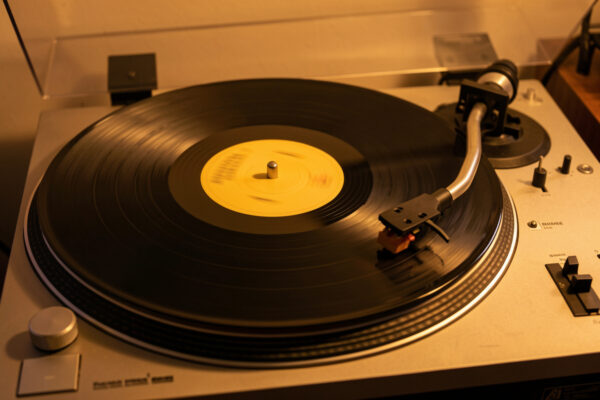
The proof is the swap test. Move the skipping record to a second, correctly set-up deck. If it still skips at 1:42, the fault traveled with the record — it is the record. If a known-good record plays clean on your deck while this one skips, you have confirmed the disc is the problem and you can stop adjusting dials. I keep one reference pressing on the bench, played on the Technics SL-1200 I trust as my known-good reference, exactly for this; it answers the question in a single play.
Step One: Clean That Exact Spot
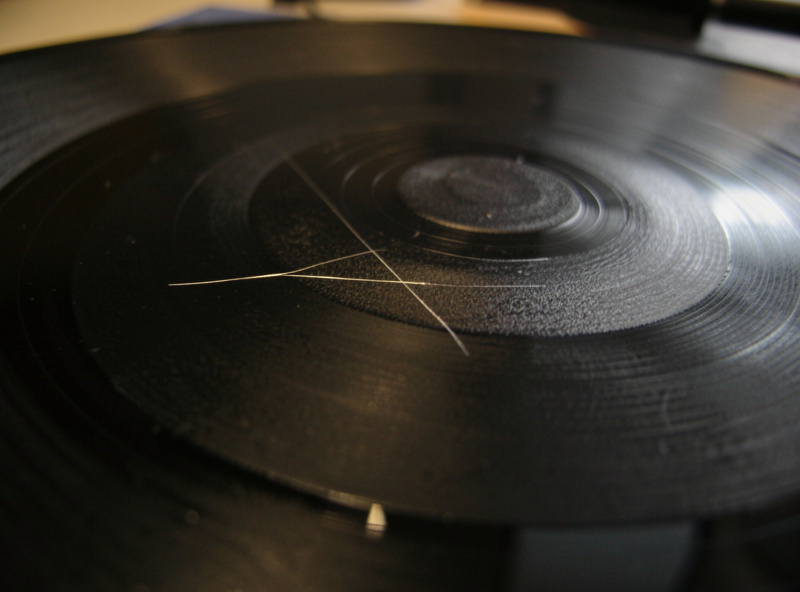
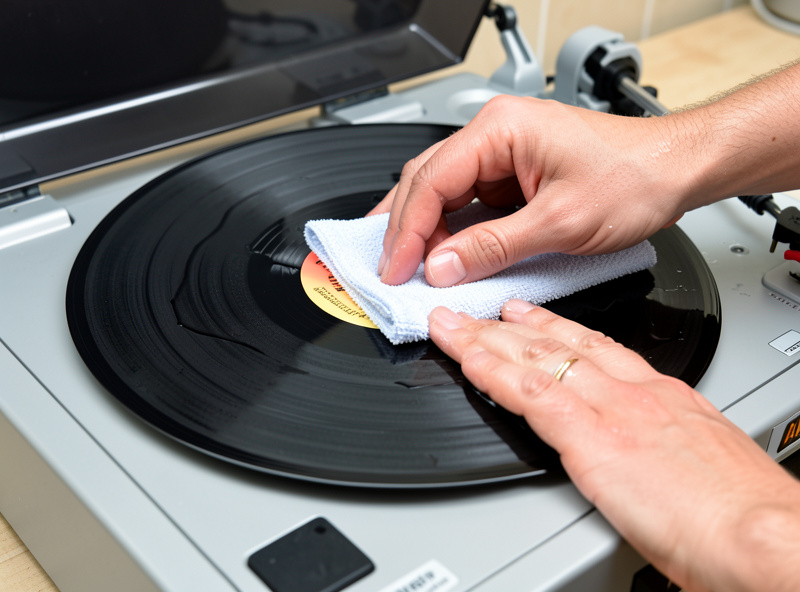
Most fixed-spot skips are dust, not damage. A single speck wedged across the groove deflects the stylus enough to hop, and it cleans out completely. Before you condemn a record, wet-clean it — properly, not a dry wipe that just drags the grit around. A surprising share of “scratched” records I am handed turn out to be filthy ones.
I run a carbon-fiber brush every play and a proper wet clean on anything suspect, working with the grooves, never across them. The full method is in the wet-cleaning guide and the broader record cleaning guide; thrift finds with ground-in grime get the deep treatment in how to clean used records. If a basic clean doesn’t fix it, the right tools matter — a decent vinyl record cleaning kit with fluid and a microfiber pad clears bridged debris that a dry brush leaves behind.
As an Amazon Associate I earn from qualifying purchases.
Step Two: Inspect the Groove Under Raking Light
If cleaning didn’t cure it, look at the spot under a light held low and to the side — raking light. A scratch shows as a bright line cutting across the grooves; a gouge has visible depth. Debris that survived cleaning sometimes shows as a tiny white fleck still sitting in the channel, and a fingernail or a second targeted clean lifts it.
What you are trying to tell apart is a surface mark that rides over the groove walls versus a cut that breaks the wall itself. A light scratch across the top of the grooves often plays right through — it adds a tick, not a skip. A deeper gouge that removes part of the groove wall is what makes the stylus lose the wall and jump. Under raking light, depth is the tell.
Step Three: Tell Damage From Debris From Defect
Three things cause a fixed-spot skip, and they look different on inspection. Here is how I sort them on the bench.
| Cause | How it looks | Fixable? |
|---|---|---|
| Debris in the groove | White or grey fleck in the channel; cleans out | Yes — wet clean |
| Scratch (surface) | Bright line across grooves, no depth | Often plays through as a tick, not a skip |
| Gouge (deep) | Visible depth, broken groove wall | No — permanent |
| Pressing defect (non-fill) | Dull, rough patch where vinyl didn’t fill the stamper | No — manufacturer fault |
| Heat warp ridge | Raised line you can feel; record sat in heat | Sometimes, with flattening |
Pressing defects deserve a word because people blame themselves for them. Non-fill — where the molten vinyl didn’t fully fill the stamper — leaves a rough, under-formed patch that can skip or distort, and it is the plant’s fault, not yours. A brand-new record skipping fresh from the sleeve usually falls here; I cover that case in the new record skips guide.
When a Fixed Spot Is Actually Your Setup
There is one way setup mimics a fixed-spot skip: if the skip is in the inner grooves near the label, and it happens on the same track on several records, the cause may be alignment or anti-skate rather than damage. The inner grooves are where a marginal setup mistracks first, so a “same spot” that is really “same radius across discs” is a setup tell, not a damage tell.
The swap test catches this — if multiple records skip at the same distance from the label, it is the deck, not the discs. Fix it with a tracking-force check and a protractor pass, not cleaning. My methods are in the tracking force guide, the anti-skate guide, and the cartridge alignment guide. The broader decision tree is in the hub, why does my record skip.
What to Do With a Genuinely Damaged Record
If it is a real gouge, no adjustment saves it — the groove information at that point is physically gone. You have a few options: live with the skip by nudging the arm past it, try a slightly higher tracking force within the cartridge’s specified range to help the stylus hold the damaged wall, or replace the pressing. I never push tracking force past spec to muscle through damage; that grinds the stylus and risks the rest of the record for one bad spot.
A marginal scratch sometimes plays through with a fresh, well-aligned stylus that a worn one skips on, so before you give up, confirm your stylus is in good shape. The line between “the record is damaged” and “my stylus can’t track it” is exactly the subject of is it the record or the stylus, and it is worth ruling out before you bin a disc.
Stopping the Next Fixed-Spot Skip Before It Starts
Most fixed-spot skips are avoidable, because most of them start as debris and handling damage rather than bad luck. The habits that prevent them are cheap and boring, which is exactly why people skip them. A carbon-fiber brush pass before every play keeps airborne dust from being driven into the groove by the stylus, and that single habit removes the most common cause of new same-spot skips on records that used to play clean.
Storage is the other half. Records left out of their inner sleeves collect dust that settles into the grooves; records stacked flat or left leaning in heat warp into ridges that read as skips. I keep every disc in an anti-static inner sleeve and store them vertical, snug but not crushed, away from radiators and sunny windows — the Library of Congress’s disc-care guidance stresses the same vertical storage and stable temperature to keep records from warping into a ridge that reads as a skip. Fingerprints matter too — the oils hold dust at a fixed point, which is how a fingerprint becomes a repeatable skip months later. Handle by the edge and the label, and you spare yourself the cleaning later.
One more prevention point lives in the deck, not the disc: a stylus you let go too long starts chewing groove walls, and the damage it leaves is permanent and fixed-location. Keeping the stylus clean and replacing it on schedule protects the records, not just the sound. That feedback loop — a tired stylus damaging discs that then skip on a fresh stylus — is one of the sneakier ways a collection accumulates same-spot skips.
Frequently Asked Questions
Why does my record skip at the same spot every time?
Because the cause is locked to one physical place on the disc: debris bridging the groove, a scratch, or a pressing defect. A setup fault would skip at random spots across records. Clean that exact spot first, then inspect under raking light.
Can cleaning fix a record that skips in one spot?
Often, yes. Most fixed-spot skips are debris wedged in the groove, and a proper wet clean removes it. Use fluid and a pad worked along the grooves, not a dry wipe. If it survives cleaning, inspect for a scratch or gouge.
How do I know if it is a scratch or just dirt?
Look under raking light held low and to the side. Debris is a fleck sitting in the channel that cleans out. A scratch is a bright line across the grooves; if it has visible depth and a broken groove wall, it is a gouge and permanent.
Is the skip the record or my turntable?
Play it on a second correctly set-up deck. If it still skips at the same spot, the fault is in the record. If a known-good record plays clean on your deck while this one skips, the disc is confirmed as the problem.
Should I increase tracking force to play through a scratch?
Only within your cartridge’s specified range, and only briefly. Pushing past spec to muscle through a gouge grinds the stylus and risks damaging the rest of the record. A fresh, well-aligned stylus is a safer way to ride a marginal mark.
Can a brand-new record skip at the same spot?
Yes, from a pressing defect such as non-fill, where the vinyl did not fully form the groove. Clean it first to rule out debris, then test on a second deck. If it still skips, it is a manufacturing fault and worth returning.
Related Articles
- Why Does My Record Skip? The Full Diagnostic Guide
- Is It the Record or the Stylus?
- New Record Skips Out of the Sleeve: What to Check First
- Wet Cleaning Vinyl Records: The Method That Works
- How to Clean Vinyl Records: The Complete Guide