The best furniture for a turntable is rigid, heavy, low to the ground, and decoupled from the floor — the opposite of the flimsy glass shelf or tall flat-pack tower most people start with. The furniture is the foundation of every isolation strategy, and no platform or set of feet can rescue a deck sitting on a stand that rings like a tuning fork. On my bench, moving a deck from a wobbly two-shelf tower to a solid, low audio rack did more for the sound than any single tweak I bolted on afterward.
As an Amazon Associate I earn from qualifying purchases. I have set decks on everything from dedicated audio racks to repurposed sideboards across years of fiddling with my Technics, Rega, and Pro-Ject, and the pattern is consistent: get the furniture right first and the rest of isolation becomes easy. This guide covers what to look for, what to avoid, and how the stand fits the wider plan. For the full isolation picture, see the complete turntable isolation guide.
Why the Furniture Comes First
Every isolation product — platform, feet, springs, wall shelf — assumes a stable base to build on. Put the best platform in the world on a stand that flexes and resonates, and the stand re-injects the vibration you just filtered. A rigid, massive, low stand is the foundation; the platform and feet are refinements on top of it. Skip the foundation and you are tuning a system that is fighting itself.
The two qualities that matter most are rigidity and mass. Rigidity stops the stand from flexing and storing energy; mass stops it from being easily moved by footfall or airborne pressure. Height matters too — a low center of gravity is far more stable than a tall tower, which acts as a lever that amplifies any movement at the floor into a larger sway at the deck. The cheap, tall, lightweight rack is the worst of all worlds.
What to Look For in a Turntable Stand
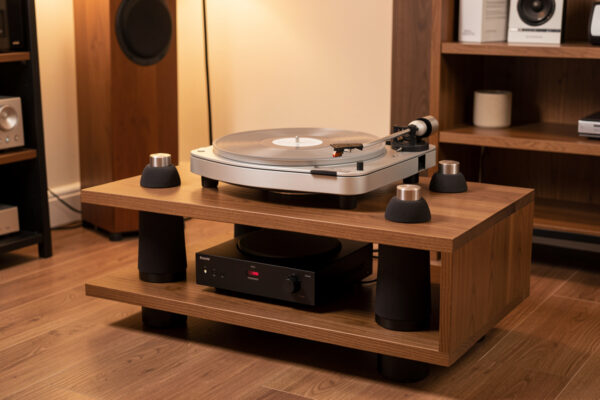
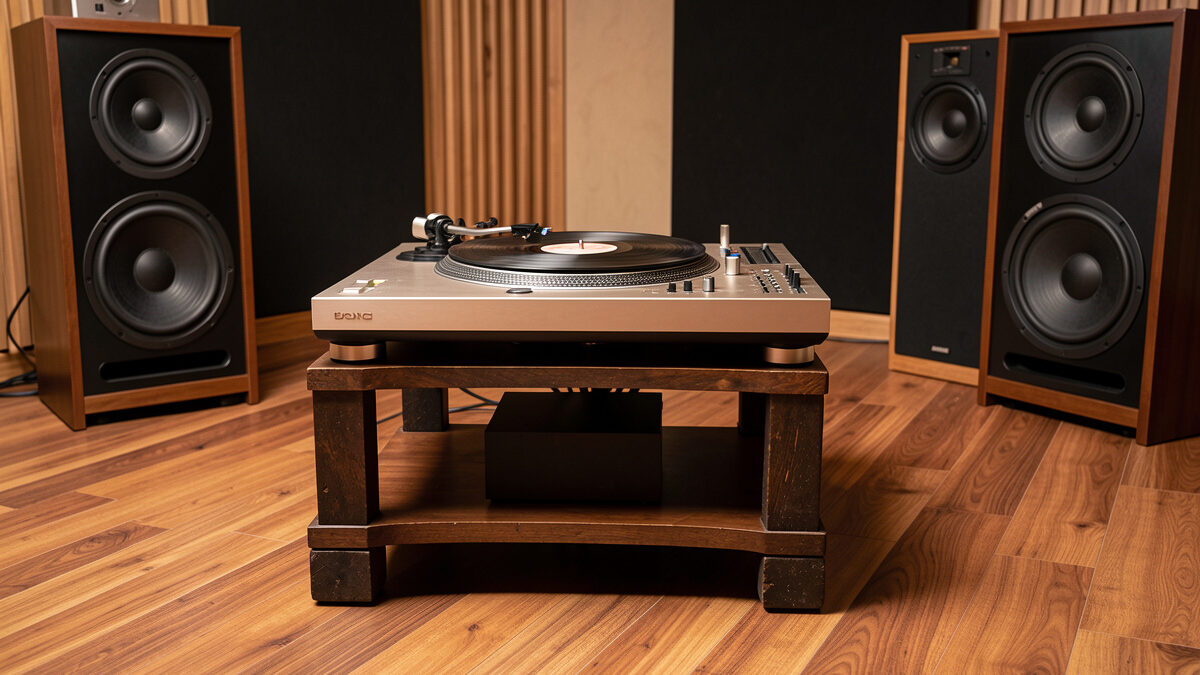
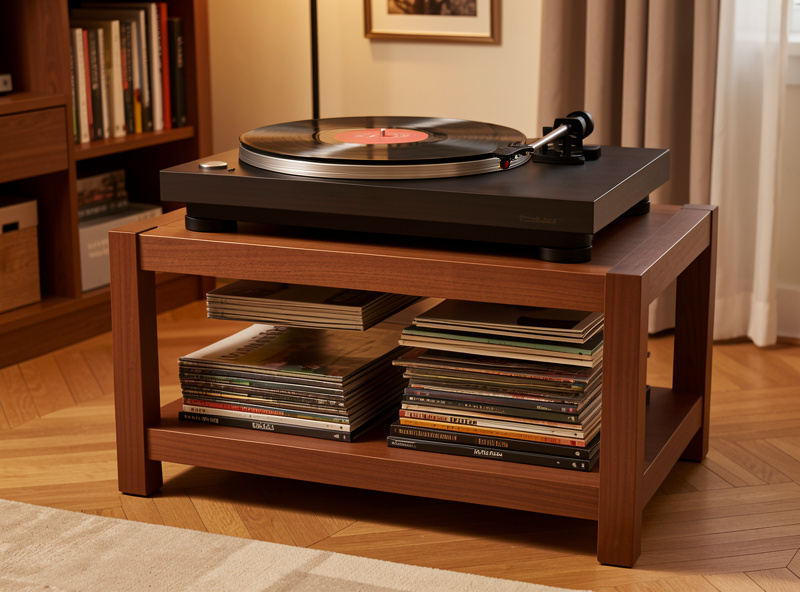
A good dedicated audio rack uses thick, rigid shelves (constrained-layer board, thick MDF, or solid hardwood), heavy uprights, and feet that decouple the rack from the floor — spikes that bite through carpet to the subfloor, or compliant footers on a hard floor. Wide, stable proportions beat tall and narrow. Some racks isolate each shelf individually, which is a bonus for the turntable shelf specifically. Mass-loadable designs let you add weight low down to lower the center of gravity further.
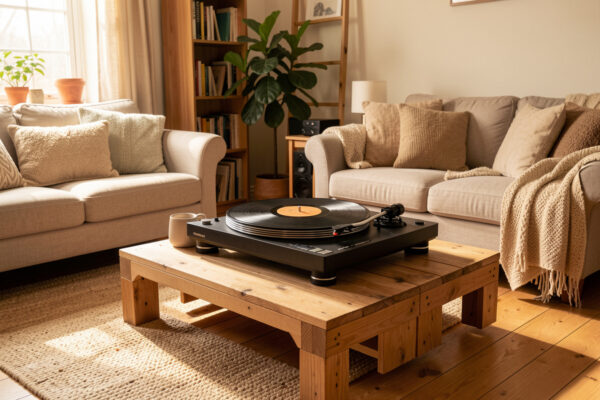
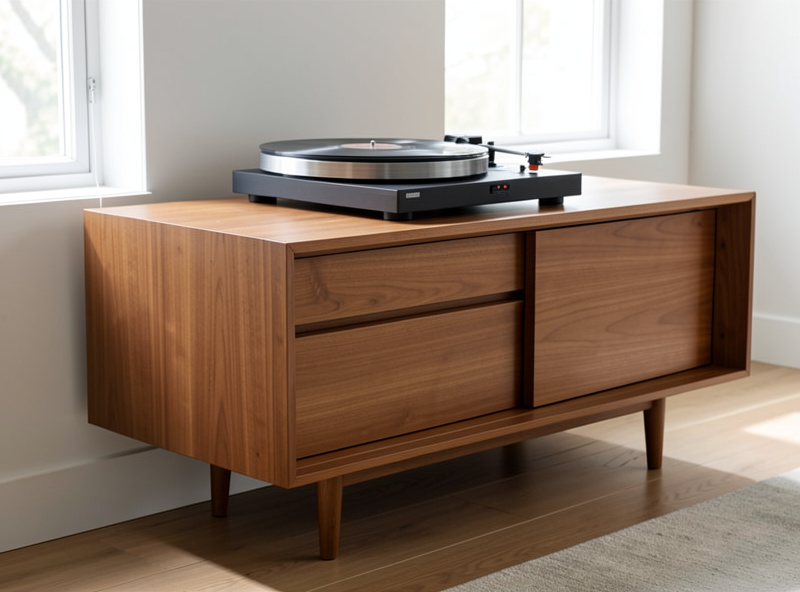
A solid sideboard or low cabinet can work brilliantly as turntable furniture, often better than a budget audio rack, because it is heavy, low, and rigid by nature. The trick is to set the deck on the most rigid part — directly over a leg or a load-bearing panel, not in the middle of an unsupported span that can flex. Add a platform on top and you have a foundation that rivals purpose-built racks for far less.
What to Avoid
The cheap glass-shelf rack is the classic mistake. Glass is hard and rings, the shelves flex on their supports, and the whole thing tends to be tall and light. The flat-pack particleboard tower is nearly as bad: lightweight, resonant, and unstable. Anything that wobbles when you press a corner is telling you it will wobble when you walk past, and that movement goes straight into the deck.
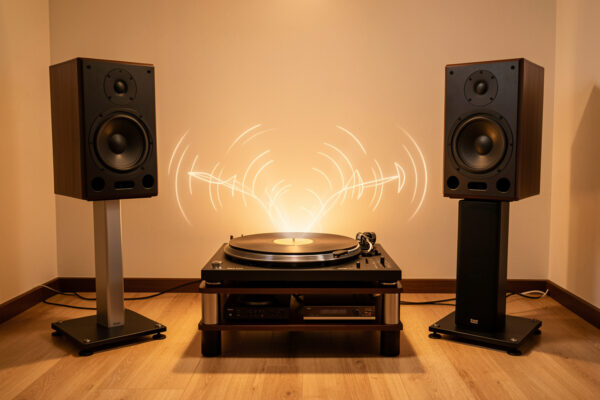
Also avoid placing the deck on the same surface as the speakers or directly between them, no matter how good the furniture is, because that maximizes airborne feedback. And avoid a stand that is taller than it needs to be — every extra centimeter of height adds leverage to floor movement. Low, heavy, and rigid beats tall, light, and fashionable every time.
Placement: Furniture Position Matters as Much as Choice
Even the right stand in the wrong place underperforms. Keep the turntable furniture away from the speakers and out of the direct line between them to limit airborne energy. On a suspended floor, position the stand near a wall or over a joist where the floor is stiffest rather than in the middle of a springy bay. Corners can brace a stand but also load up bass, so a corner near a solid wall is good for stability but keep the deck itself slightly out of the very corner.
If footfall is severe even with good furniture, the furniture has reached its limit and the answer is to leave the floor entirely with a wall shelf. The stand still matters for everything else, but no floor-standing furniture fully escapes a badly bouncing floor. Match the furniture to your room’s dominant problem, which you can identify with the simple tests in the main isolation guide.
Feet and Floor Coupling Under the Furniture
How the furniture meets the floor is as important as the furniture itself. On carpet over a suspended floor, spikes or cones that pierce the carpet and bite into the subfloor couple the stand rigidly to the structure, which is what you want for a stable, non-rocking base — counterintuitively, on a turntable stand you often want the rack itself coupled firmly to the floor and then the deck decoupled from the rack, rather than a wobbly stand trying to do the isolating. On a hard floor, the choice between spikes and compliant footers depends on whether footfall or airborne energy dominates: spikes for rigidity, compliant footers to add a little floor decoupling.
The principle is to keep the isolation in one deliberate place rather than spread across a chain of soft, wobbly contacts. A rigidly coupled stand plus a decoupling platform or matched feet under the deck gives you a clear, tunable system. A stand on soft feet, holding a deck on soft feet, on a soft platform, is three vague compliances fighting each other and never settling. Decide where the decoupling layer lives and make everything else rigid.
Turntable Furniture Compared
| Furniture Type | Rigidity | Mass | Verdict |
|---|---|---|---|
| Dedicated audio rack | High | Moderate-high | Best all-round, decoupled feet |
| Solid sideboard/cabinet | High | Very high | Excellent value if placed right |
| Solid hardwood table | Moderate-high | High | Good if low and stable |
| Glass-shelf rack | Low | Low | Avoid — rings and flexes |
| Flat-pack particleboard tower | Low | Low | Avoid — light and resonant |
Building Up From the Foundation
Get the furniture right and the rest of isolation falls into place. Set a rigid, low, heavy stand with decoupled feet, place it away from the speakers and over the stiffest part of the floor, then add a mass-loaded platform and matched sorbothane feet on top if you need them. For severe footfall, skip to a wall shelf. With a steady foundation under the deck, your cartridge alignment finally holds and the music comes off the record clean.
Frequently Asked Questions
What is the best type of furniture for a turntable?
A rigid, heavy, low stand with feet that decouple it from the floor. A dedicated audio rack or a solid sideboard both work well. Avoid tall, lightweight, or glass-shelf furniture, which flexes and rings, sending vibration straight into the deck.
Can I put a turntable on any shelf?
No. Flimsy, tall, or resonant shelves flex and ring, undoing any isolation. The shelf must be rigid and stable, set on a heavy low stand, and ideally over the stiffest part of the floor. A wobble when you press a corner means it will wobble as you walk past.
Is a sideboard good turntable furniture?
Yes, often excellent. A solid sideboard is heavy, low, and rigid by nature. Place the deck over a leg or load-bearing panel rather than an unsupported span, and add a platform on top for a foundation that rivals purpose-built racks for less money.
Why does turntable furniture height matter?
A tall stand acts as a lever, amplifying small floor movements into larger sway at the deck. A low center of gravity is far more stable. Choose the lowest practical height that still lets you cue records comfortably for the steadiest support.
Should the turntable sit between the speakers?
No. Placing the deck between or on the same surface as the speakers maximizes airborne feedback, which shakes the plinth at volume. Keep the furniture away from and out of the direct line between the speakers, regardless of how rigid the stand is.