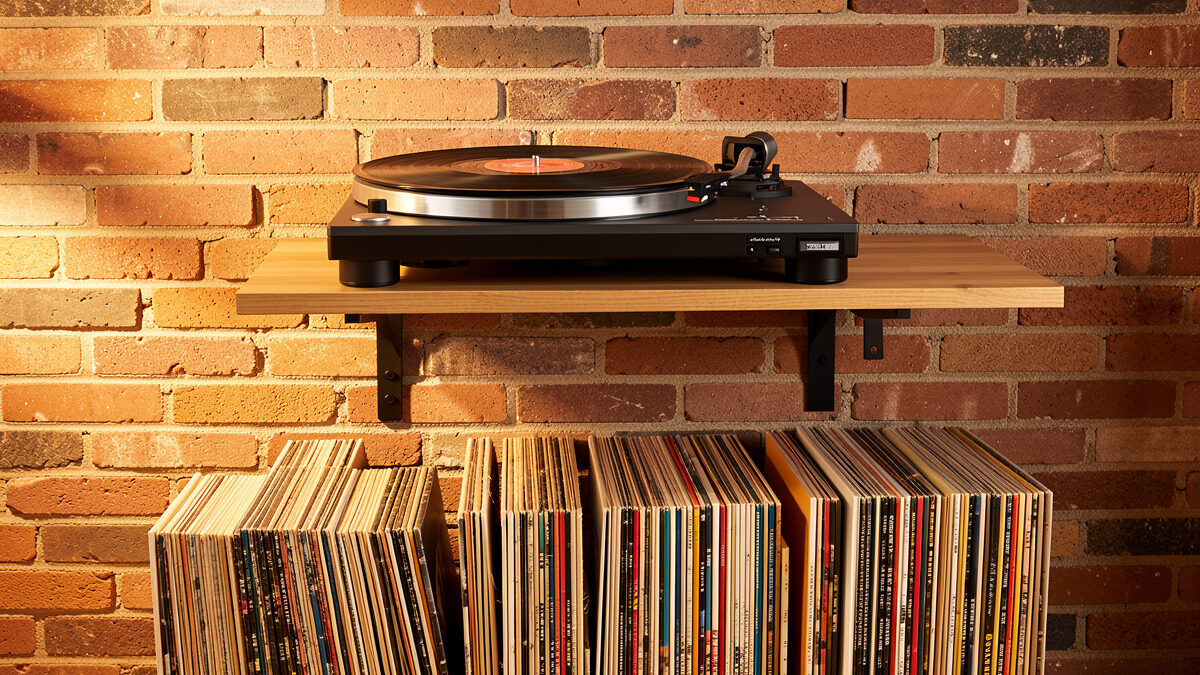
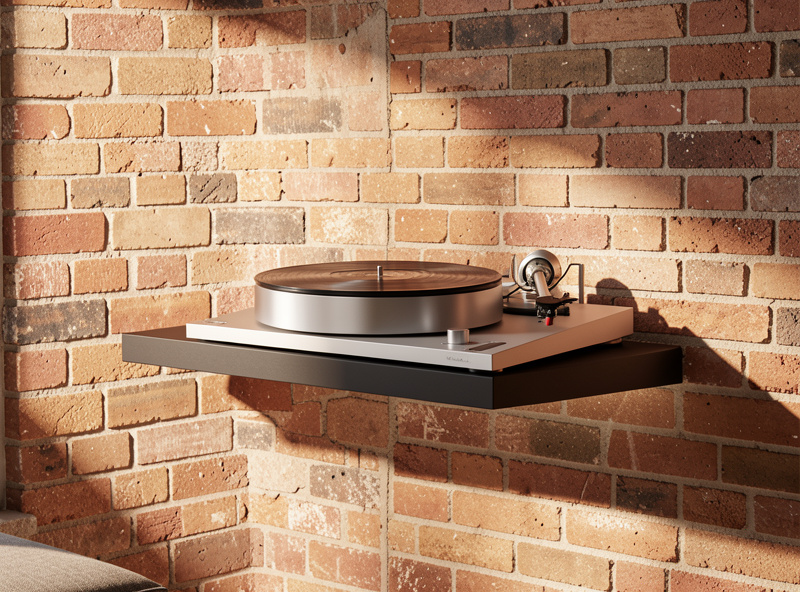
Wall-mounting a turntable on an isolation shelf is the single most effective fix for footfall, because it removes the deck from the floor entirely. Bolt a rigid shelf to a solid masonry wall and the turntable is no longer connected to the bouncy timber floor that was shaking it. On a suspended upstairs floor where nothing I put under the deck would settle it, a wall shelf solved the skipping completely in an afternoon.
As an Amazon Associate I earn from qualifying purchases. I have wall-mounted decks in rooms where the floor was the enemy, and I have also watched people bolt a shelf to a hollow stud wall and make things worse. The difference is the wall. This guide is the honest version: when wall-mounting works, when it backfires, and exactly how to do it. For where this fits among platforms, feet, and furniture, see the complete turntable isolation guide.
Why Wall-Mounting Beats Everything for Footfall
Footfall is low-frequency energy that travels through the structure of a suspended floor and arrives at the deck as a slow heave. Platforms and feet filter that energy after it has entered the system; a wall shelf removes the entry path. A solid brick or block wall is far stiffer and heavier than a timber floor and does not flex when you walk, so a deck bolted to it simply never receives the footfall in the first place.
That is a fundamentally better strategy than filtering. Filtering can only reduce what arrives; removing the path eliminates it. This is why a wall shelf rescues decks that no amount of sorbothane or springs can settle. If your walk-and-listen test shows the stylus jumping on footsteps, the wall is your best move — provided you have the right wall.
The Wall Is Everything
A wall shelf only works on a genuinely solid wall: brick, block, concrete, or stone. A stud partition — timber or metal frame with plasterboard skin — is hollow, flexible, and often shares structure with the same floor you are trying to escape. Bolt a deck to a stud wall and you have not isolated it; you have mounted it on a large drumhead that can transmit and even amplify vibration.
The quick test is to knock along the wall with your knuckle. A dense, dull thud that does not change much as you move means masonry. A hollow, resonant drum sound, especially one that changes pitch between studs, means a partition. Tap-test at the exact height where the shelf will go, not just at waist level, because some walls are masonry low down and stud above. If it is a partition, wall-mounting is off the table and you should look at a platform or springs instead.
Choosing and Fixing the Shelf
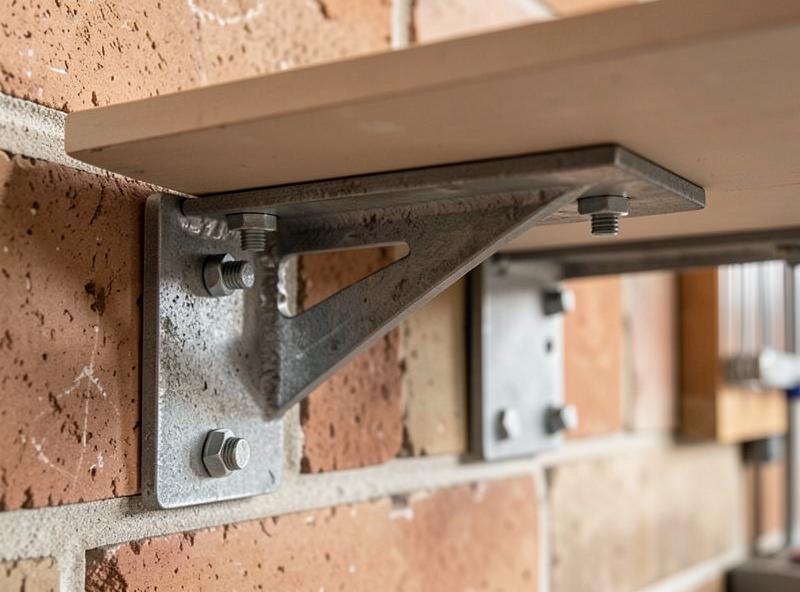
The shelf itself needs to be rigid and ideally a little massive, because a floppy bracket reintroduces resonance. Purpose-made turntable wall shelves use heavy steel brackets and a thick, damped platform; a sturdy DIY version uses solid steel L-brackets and a constrained-layer or thick MDF top. Whatever you use, the brackets must bolt into the masonry with proper expansion anchors or chemical fixings rated well above the deck’s weight — never into the mortar joints alone, and never into plasterboard plugs.
Get the fixings right and the shelf becomes part of the wall. I add a thin compliant layer between the shelf top and the deck — matched feet or a damped mat — to handle any residual airborne energy, since the wall does nothing for that. Level the shelf before mounting and re-level the deck on top, the same two-stage leveling I use on every isolation support.
Where on the Wall to Mount It
Height and position matter more than people expect. Mount the shelf at a comfortable working height for cueing records, but bias toward the lower, stiffer part of the wall where masonry is most likely continuous and least likely to be a thin skim over something hollow. Avoid mounting directly behind or between the speakers; offset the deck to one side so airborne energy has a longer, less direct path to the plinth. A corner can be useful because two walls brace the bracket, but corners also load up bass, so keep the deck itself away from the very corner even if the bracket lives near it.
Run the cabling neatly so the tonearm lead and power cord are not tugging the deck or coupling it back to the floor through a taut wire — a surprisingly common way to undo the isolation you just built. I leave a gentle service loop so nothing is under tension. Finally, check the shelf is dead level after the deck has sat on it for a day; masonry fixings can settle a hair under load, and a deck that drifts out of level changes its anti-skate behavior.
The Catch: Airborne Feedback
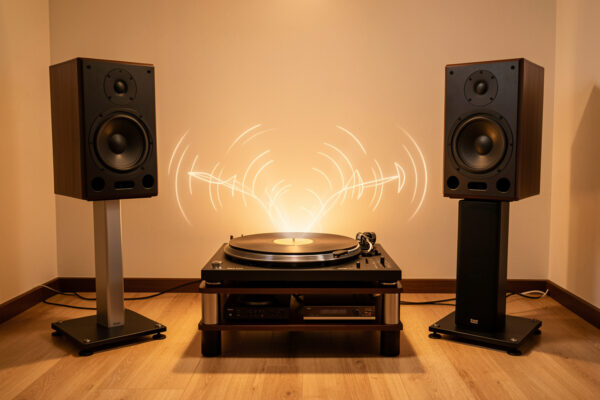
Wall-mounting solves footfall brilliantly and does nothing for airborne feedback — the energy your speakers pump through the air into the plinth at volume. Worse, a wall shelf often puts the deck higher and sometimes closer to the speakers, which can increase feedback. If your problem was airborne to begin with (trouble only at volume, fine when walking), a wall shelf is the wrong fix and a mass-loaded platform away from the speakers is what you want.
Many real rooms have both problems. The honest answer is that the wall handles the floor path and a damped, massive shelf plus sensible placement handles the rest. Diagnose which source dominates first — the walk-and-listen and volume tests from the main guide tell you — so you do not wall-mount your way out of one problem and into another.
Wall Shelf vs Platform vs Springs
| Solution | Footfall | Airborne | Requirement |
|---|---|---|---|
| Wall-mounted shelf | Excellent | None (can worsen) | Solid masonry wall |
| Mass-loaded platform | Moderate | Good | Rigid stand |
| Spring absorbers | Very good | Limited | Weight matching |
| Sorbothane feet | Good | Good | Load matching |
Is It Worth the Holes?
Wall-mounting is permanent, visible, and requires drilling masonry, so it is not for everyone or every room. But where footfall is the dominant problem and you own the wall, nothing else comes close — it is the difference between a deck you tiptoe around and one you can walk past freely. If you would rather not drill, a spring-isolated platform on a rigid stand is the next best thing for footfall, just less complete. Either way, with the deck finally steady, your cartridge alignment and feet or springs choices hold their settings instead of being undone every time someone crosses the room.
Frequently Asked Questions
Does a wall-mounted turntable shelf really stop footfall?
Yes, on a solid masonry wall it is the most effective footfall fix available. The wall does not flex when you walk, so the deck never receives the floor-borne energy. It is more reliable than any platform or feet for severe footfall on a suspended floor.
Can I mount a turntable shelf on a plasterboard stud wall?
No. A stud partition is hollow and flexible and often shares structure with the floor you are escaping, so it can transmit or even amplify vibration. Tap-test the wall: only a dense, dull masonry thud is safe to mount to.
How do I tell if my wall is solid enough?
Knock along the wall at the shelf’s intended height. A dull, dense thud that barely changes means brick, block, or concrete. A hollow drum sound that changes between studs means a partition. Test at the exact mounting height, since walls can be masonry low and stud above.
Will wall-mounting help with speaker feedback?
No, and it can make airborne feedback worse by raising the deck or moving it nearer the speakers. Wall shelves remove the floor path only. For feedback that appears at volume, use a mass-loaded platform placed away from the speakers instead.
What brackets should I use for a turntable wall shelf?
Heavy steel brackets fixed into masonry with expansion or chemical anchors rated well above the deck’s weight. Never fix into mortar joints alone or plasterboard plugs. A rigid, slightly massive shelf top prevents the bracket itself from resonating.