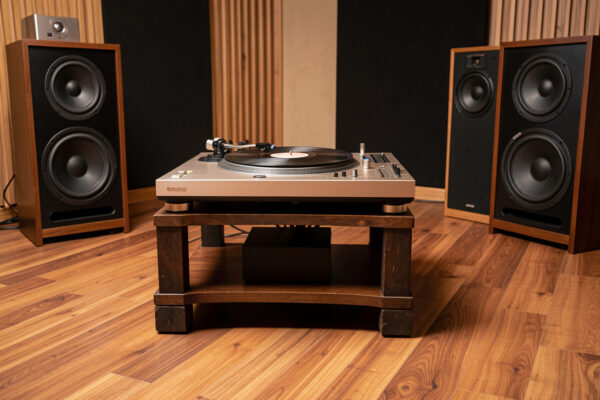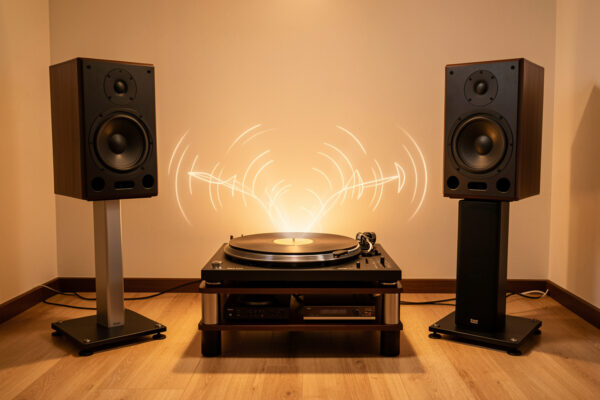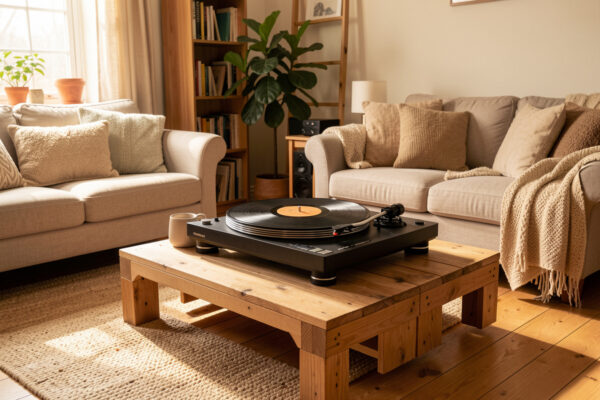
Turntable isolation feet and spring absorbers both decouple your deck from whatever sits below it, but they work in different ways and suit different problems. Compliant feet — sorbothane or elastomer pucks — filter footfall and rumble within a tight load range; spring absorbers tune their resonance lower and filter a broader band, at the cost of a deck that wobbles if you nudge it. On my bench, springs settled a footfall-prone upstairs deck that no rubber foot could; on a solid floor, matched elastomer feet were the cleaner, steadier choice.
As an Amazon Associate I earn from qualifying purchases. I have swapped feet and absorbers under my Technics, Rega P3, and Pro-Ject X2 across concrete and suspended floors, and the lesson is always the same: match the absorber to the load or it does nothing. This guide explains the engineering so you buy the right one. For the wider isolation strategy — platforms, walls, and furniture — see the complete turntable isolation guide.
How Decoupling Feet Actually Work
Any compliant foot behaves like a simple spring-mass system with a resonant frequency. Below that frequency the foot passes vibration straight through; at the resonance it actually amplifies; well above it the foot attenuates, filtering the energy out. The whole game is getting the resonant frequency low enough that it sits below the vibrations you care about — footfall and structural rumble live roughly between 5 and 50 Hz, so you want a system whose resonance is comfortably under that.
Resonant frequency depends on the stiffness of the foot and the load on it. A foot that is too stiff for the weight it carries resonates too high and passes footfall through. A foot too soft bottoms out and goes solid. That is why a foot rated for a 4 kg deck does little under a 12 kg one — the load has pushed it out of its working range. Load matching is not optional; it is the entire mechanism.
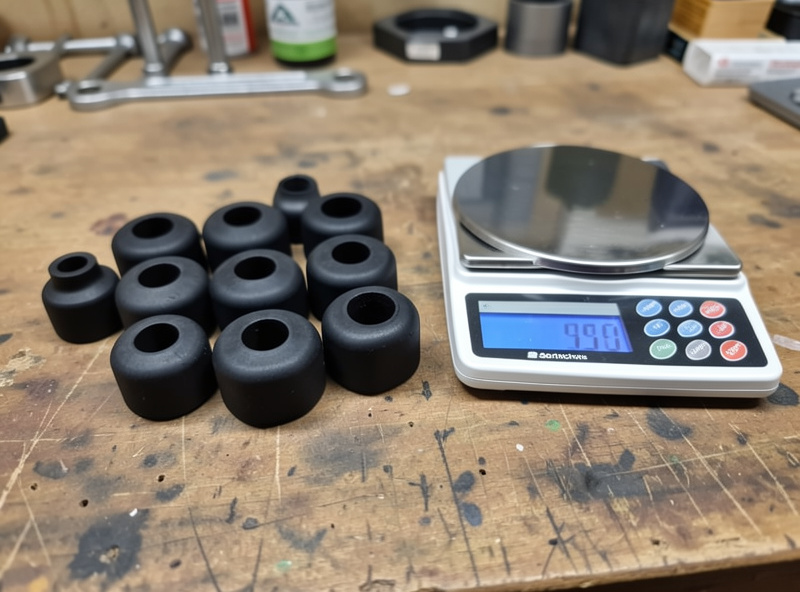
Sorbothane and Elastomer Feet
Sorbothane and similar viscoelastic elastomer feet add damping on top of decoupling, so they not only filter but also kill ringing. They work beautifully within their load window and do nothing outside it. The two variables are durometer (hardness) and the weight on each foot: a softer durometer suits a lighter deck, a firmer one a heavier deck, and you split the deck’s weight evenly across the pucks so none is over- or under-loaded.
The practical method is to weigh your deck, divide by the number of feet, and pick a puck rated to deflect a little — but not collapse — under that per-foot load. I cover durometer selection and the cheap-pucks-versus-proper-feet question in more depth as part of the sorbothane discussion in the main guide. Used this way, elastomer feet are one of the best value isolation tools there is.
Spring Absorbers and Why They Go Lower
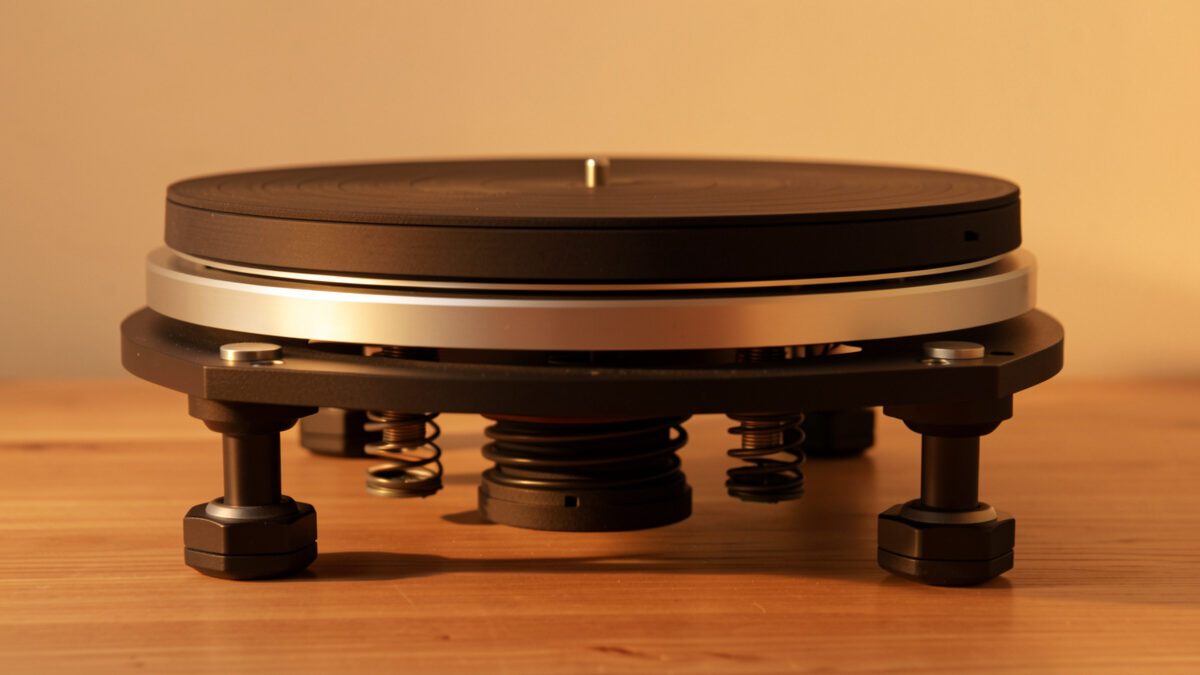
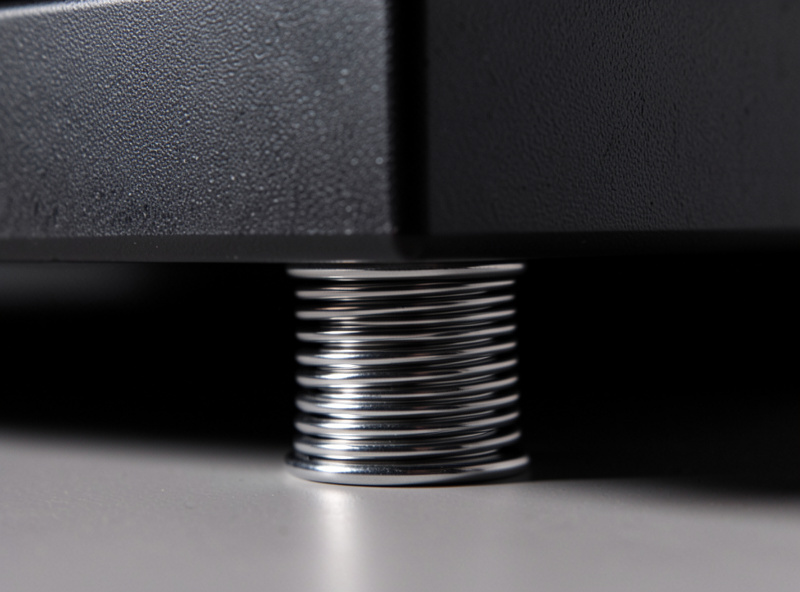
Spring-based absorbers — the well-known wing-nut isolators and their kin — use a metal spring (sometimes combined with a damping element) to reach a much lower resonant frequency than a rubber foot can. Because the resonance sits well below the audio band, a spring absorber filters a wider range of low-frequency energy, which is exactly what you want against stubborn footfall on a bouncy floor.
The tradeoff is stability. A deck floating on springs sways if you bump it, takes a moment to settle after you cue a record, and is sensitive to uneven loading. You also have to weight-match springs just as carefully as feet — most adjustable spring isolators let you tune preload to the deck’s mass, and getting that wrong leaves the deck either bottomed out or pogoing. For severe footfall, the wobble is a price worth paying.
Feet vs Springs: Which One You Need
Choose elastomer feet when your floor is solid and your main enemy is airborne feedback or mild rumble — they are stable, low-profile, and add useful damping. Choose spring absorbers when footfall on a suspended floor is the dominant problem and you need to reach lower frequencies than a rubber foot can manage. Many decks benefit from feet plus a damped platform; only the worst footfall cases truly need springs.
Whatever you pick, it sits within a layered system. Feet or springs under a deck on a flimsy stand still leave you fighting a resonant foundation, so pair them with the right support. If you are deciding between buying a finished platform or assembling feet yourself, my best isolation platforms guide walks through that choice and how the feet integrate.
Feet vs Springs at a Glance
| Factor | Elastomer Feet | Spring Absorbers |
|---|---|---|
| Resonant frequency | Higher (10-20 Hz typical) | Lower (3-5 Hz typical) |
| Best against | Airborne, mild footfall | Severe footfall, rumble |
| Damping | Built in (viscoelastic) | Needs added damping |
| Stability | Steady, low-profile | Wobbles, bump-sensitive |
| Load matching | By durometer + weight | By adjustable preload |
Setting Them Up Right
Whichever you use, level the deck after the feet are loaded, not before, because compliant supports settle under weight and change the height at each corner. Distribute the load as evenly as you can — an unevenly loaded set of feet has one corner out of its working range. And resist the urge to stack compliance: feet under a deck that already sits on a soft platform on soft furniture just oscillates. One well-matched decoupling layer in a rigid system beats three soft layers fighting each other. Once the foundation is steady, the rest of the deck — your tracking force and cartridge alignment — finally holds its settings.
Frequently Asked Questions
Are spring absorbers better than rubber feet for turntables?
Only for severe footfall. Springs reach a lower resonant frequency and filter a broader low-frequency band, which suits bouncy suspended floors. On solid floors, elastomer feet are steadier, add damping, and avoid the wobble that springs introduce.
How do I match isolation feet to my turntable weight?
Weigh the deck, divide by the number of feet, and pick feet rated to deflect slightly but not collapse under that per-foot load. Too stiff and they pass vibration through; too soft and they bottom out solid. Even load distribution across all feet is essential.
Why does my turntable wobble after I added spring feet?
That wobble is normal for spring isolation. Floating the deck on a low-resonance spring is what lets it filter footfall, but it also makes the deck sway and settle slowly after a bump. Tune the spring preload to your deck’s mass to minimize it.
Can I stack isolation feet on top of a platform?
One compliant layer is ideal. Stacking soft feet on a soft platform on flimsy furniture creates a multi-layer system that oscillates rather than isolates. Use one well-matched decoupling layer within an otherwise rigid, mass-loaded system for clean results.
Do isolation feet help with motor rumble?
Not directly. Feet and springs filter vibration entering from the floor and air. Internal motor and bearing rumble is generated inside the deck and is addressed by bearing maintenance and a quality platter, not by what you place under the plinth.
How many isolation feet should a turntable have?
Three or four, matching the deck’s own footprint. Three feet self-level on uneven supports; four spread load and add stability. Whatever the count, the deck’s weight must divide evenly so each foot stays within its working compliance range.