Sorbothane feet work for turntable isolation only when you match them to the load on each foot. Sorbothane is a viscoelastic polymer that damps and decouples within a narrow weight range; load it correctly and it filters footfall and rumble while killing ringing, but slap it under a corner with no thought to the weight and it does nothing useful. On my bench, a set of correctly loaded sorbothane pucks dropped the noise floor under my Rega P3 noticeably; the same pucks under my much heavier Technics just squashed flat and stopped isolating.
As an Amazon Associate I earn from qualifying purchases. Sorbothane is the most misused material in the hobby precisely because it genuinely works — which earns it a reputation it then fails to live up to when people use it wrong. This guide is how to use it right: durometer, load, placement, and when to choose something else. For the full menu of isolation options, see the complete turntable isolation guide.
What Sorbothane Actually Is
Sorbothane is a thermoset polyether-based polyurethane with an unusually high damping coefficient. What makes it special is that it behaves partly like a solid and partly like a thick liquid: when vibration tries to pass through, the material shears internally and converts that energy into a tiny amount of heat instead of passing it along or storing and re-releasing it like a spring. That combination of decoupling and damping in one material is why it suits turntables, where you want both to filter floor energy and to stop the deck ringing.
The catch is that all of this only happens within a specific deflection range. Sorbothane needs to compress a certain amount — neither too little nor too much — to operate in its damping sweet spot. Outside that range it either behaves like a hard rubber block (under-loaded) or bottoms out and goes solid (over-loaded). The whole skill is keeping each foot inside its window.
Durometer and Load: The Two Numbers That Matter
Durometer is the hardness of the sorbothane, usually given on the Shore 00 scale for this material, with softer grades around 30 and firmer ones around 70. A softer durometer suits lighter loads; a firmer durometer suits heavier loads. The manufacturer publishes load-versus-deflection charts, and the goal is to pick a durometer and puck size that put your per-foot load in the recommended deflection band, typically a compression of around 10 to 20 percent of the puck’s height.
To find your per-foot load, weigh the deck and divide by the number of feet, accounting for uneven weight distribution if the motor or platter sits to one side. Then choose pucks rated for that load. This is the step almost everyone skips — they buy one generic pack and stick it under everything regardless of weight. A 5 kg deck and a 12 kg deck need different sorbothane, and the same puck cannot serve both.
Pucks, Hemispheres, and Proper Feet
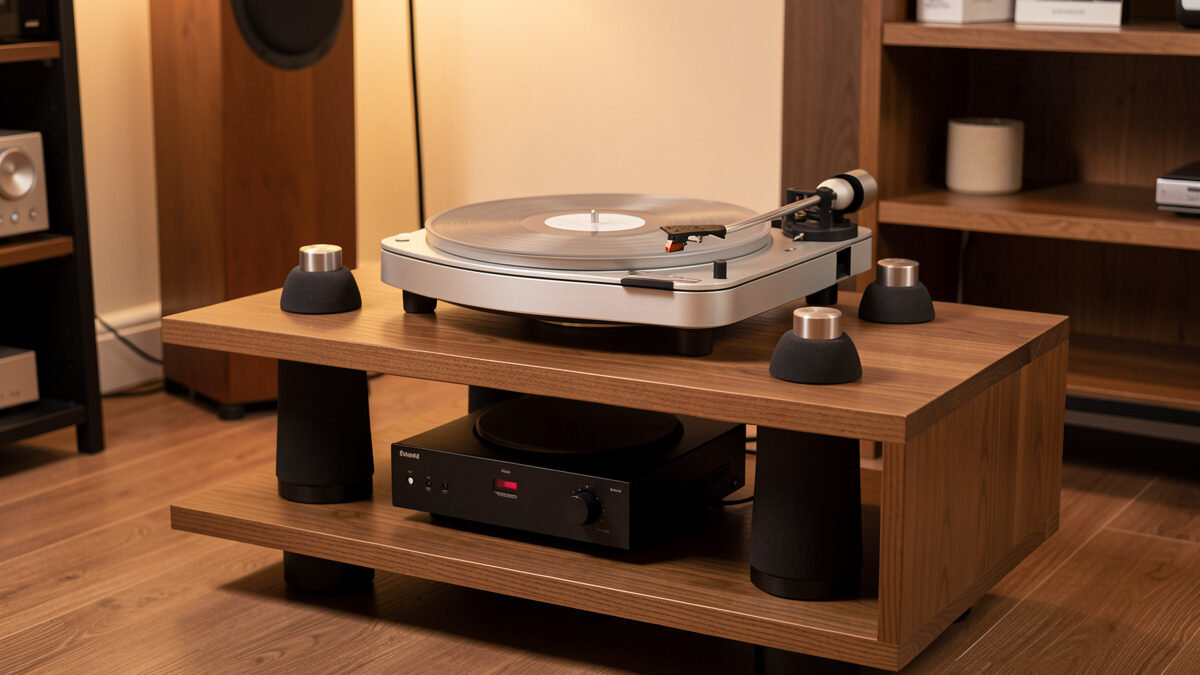
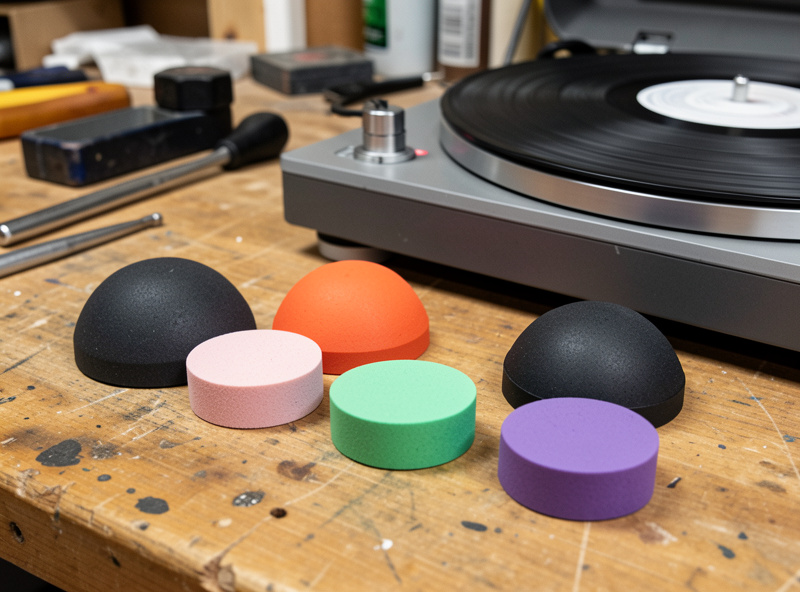
Sorbothane comes as flat pucks, hemispheres, bonded washers, and as the damping element inside purpose-made isolation feet. Flat pucks are the cheapest and work fine if sized right, but they can creep sideways over time and need an occasional reseat. Hemispheres concentrate the load on a smaller contact area, which changes the effective stiffness and can help fine-tune deflection. Purpose-made feet with a sorbothane core and rigid cups are the tidiest, hold their position, and often come with load guidance built in.
For most decks I prefer either correctly sized hemispheres or proper feet over bare pucks, simply because they stay put and keep the deck level. The cheap-puck route is perfectly valid and saves money; it just asks for a little more attention to placement and the occasional check that nothing has crept or flattened.
Where Sorbothane Helps and Where It Does Not
Sorbothane shines against airborne feedback and mild-to-moderate footfall and rumble — the everyday vibration that muddies a deck on a reasonable floor. Because it adds damping as well as decoupling, it is a great partner to a mass-loaded platform, sitting between the slab and the stand. It is genuinely one of the best value isolation materials when used within its load window.
Where it struggles is severe footfall on a very bouncy floor. There, the low frequencies you need to filter sit below what a practical thickness of sorbothane can reach, and a spring absorber or a wall shelf does a better job. Sorbothane also cannot help with rumble generated inside the deck — that is a bearing and platter matter. Knowing these limits keeps you from blaming the material for a problem it was never going to solve. If your footfall is severe, compare it against the options in my isolation feet and springs guide.
Setting Up Sorbothane Feet Correctly
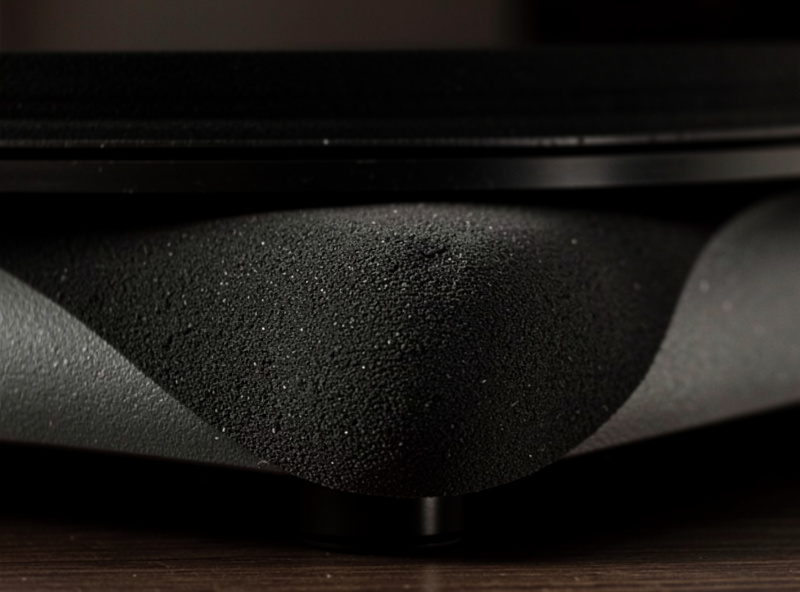
Place the feet to match the deck’s own footprint or its existing feet positions so the load lands where the plinth is stiffest. Distribute weight evenly; if the deck is heavier at one end, you may need a firmer puck there. Let the feet settle for a day before final leveling, because sorbothane creeps slightly under sustained load and the deck will sink a hair. Then re-level. Avoid the temptation to stack sorbothane on top of a soft platform on soft furniture — one compliant layer in a rigid system isolates, three soft layers just sway. With the deck steady and damped, the rest of your setup — tracking force, alignment, and a good platform — finally works over a quiet foundation.
Frequently Asked Questions
Do sorbothane feet really work for turntables?
Yes, when matched to the load. Sorbothane damps and decouples within a specific deflection range, filtering footfall and rumble while killing ringing. Under- or over-load it and it does nothing. Correctly sized, it is one of the best value isolation materials available.
What durometer sorbothane should I use under a turntable?
Pick a durometer and puck size that put your per-foot load in the maker’s recommended deflection band, roughly 10 to 20 percent compression. Softer grades suit lighter decks, firmer grades heavier decks. Weigh the deck and divide by the number of feet first.
How many sorbothane feet does a turntable need?
Three or four, matching the deck’s own foot positions so the load lands on the stiffest parts of the plinth. The deck’s weight must divide so each foot stays in its working compression range, with a firmer puck under any heavier corner.
Why did my sorbothane feet stop working?
They likely fell outside their load window, either bottoming out under too much weight or barely deflecting under too little. Sorbothane also creeps over time, so flat pucks can flatten or shift. Re-check the per-foot load and reseat or resize the feet.
Is sorbothane better than springs?
For airborne feedback and mild-to-moderate footfall, sorbothane is steadier and adds damping. For severe footfall on a bouncy floor, springs reach lower frequencies and isolate better. Choose based on which vibration source dominates your room.
Can I just stick sorbothane pads anywhere under the deck?
No. Random placement without load matching is why sorbothane gets called snake oil. Position feet at the plinth’s stiffest points, size them to the per-foot load, and avoid stacking them on other soft layers. Placement and load are the whole mechanism.