Cartridge loading — the combined resistance and capacitance the phono preamp presents to the cartridge — determines the frequency response of every moving-magnet cartridge you will ever own, and the wrong loading value produces a treble peak of 3-6 dB between 8 kHz and 15 kHz that most listeners mistake for “detail” but is actually a frequency-response error. The standard 47kΩ resistance and 100-250pF capacitance that every built-in phono stage defaults to was standardized in the 1970s for the Shure V15 Type III, and almost no modern cartridge was designed for that load. Matching your cartridge’s recommended capacitance — typically 100-200pF for Audio-Technica, 150-300pF for Ortofon, and 200-400pF for vintage Shure and Stanton — is the difference between a cartridge that sounds “bright and detailed” (ringing at 12 kHz) and one that sounds correct.
| Cartridge Brand | Recommended Load Resistance | Recommended Load Capacitance | Typical Inductance | Default 47kΩ/200pF Result |
|---|---|---|---|---|
| Audio-Technica (VM95 series) | 47kΩ | 100-200pF | 550mH | Correct within spec |
| Ortofon 2M series | 47kΩ | 150-300pF | 700mH | +2dB peak at 10kHz if too low C |
| Nagaoka (MP series) | 47kΩ | 100-200pF | 570mH | Correct within spec |
| Shure (vintage V15, M97) | 47kΩ | 200-400pF | 500-700mH | Dull if too low C, bright if too high |
| Grado Prestige series | 47kΩ | 100-200pF | 45mH (moving iron) | Correct — low inductance, loading-insensitive |
| Moving Coil (high-output) | 1kΩ | N/A | Very low | Slightly rolled-off treble at 47kΩ |
The Physics: Why Capacitance Creates a Treble Peak
A moving-magnet cartridge is an inductor — the coils of wire wrapped around the magnet inside the cartridge body. When you connect that inductor to the phono preamp’s input stage, the cartridge’s inductance and the total capacitance at the input (the phono preamp’s internal capacitance plus the tonearm cable capacitance) form an electrical resonant circuit. The resonant frequency is determined by the formula f = 1/(2π√(LC)), where L is the cartridge inductance and C is the total loading capacitance. A cartridge with 500mH inductance and 200pF total capacitance resonates at approximately 15.9 kHz — right at the upper edge of human hearing, creating a peak that adds false brightness to cymbals, sibilance, and high-frequency transients. Adding 100pF of capacitance drops the resonant frequency to roughly 11.2 kHz — a more audible and more annoying peak in the middle of the treble range.
Lowering the load resistance from 47kΩ to a value like 32kΩ or 22kΩ damps this resonance by reducing the Q (quality factor) of the electrical circuit — the peak becomes broader and lower in amplitude. Some cartridges with unusually high inductance, like the vintage Shure V15 Type IV (700mH), benefit from a lower load resistance of 32kΩ to flatten the frequency response. Most modern cartridges are designed for 47kΩ and do not benefit from resistive loading changes — the capacitance adjustment alone is sufficient.
How to Determine Your System’s Total Capacitance
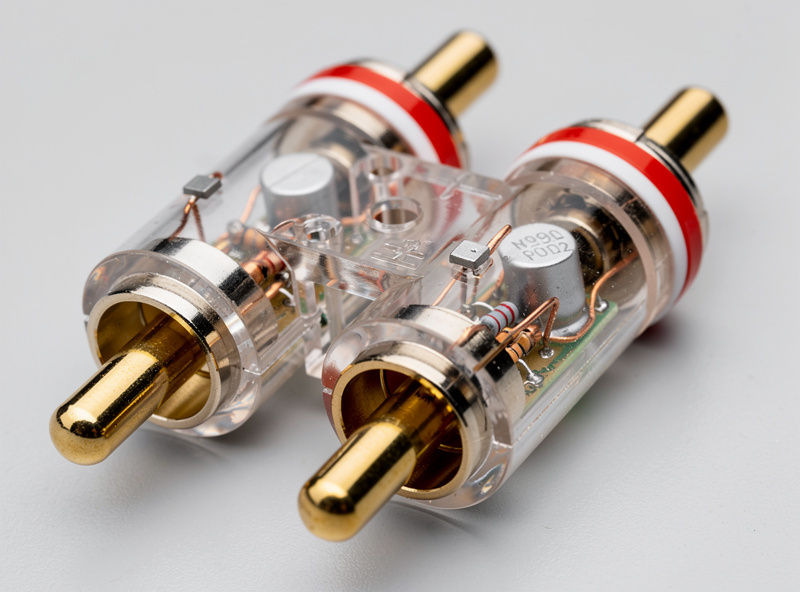
The total capacitance the cartridge sees is the sum of three values: the phono preamp’s internal input capacitance (listed in the specifications, typically 100-220pF for most built-in stages), the tonearm cable capacitance (roughly 100-150pF for a 1.2-meter cable, or printed on the cable jacket for premium cables), and any capacitance you add via external loading plugs or a preamp with adjustable capacitance settings. If your preamp has 100pF internal capacitance and your tonearm cable contributes 120pF, your total is 220pF without any adjustment — and a cartridge that specifies 100-200pF loading is starting 20pF over its maximum before you touch anything. The fix is either a preamp with adjustable capacitance (the Schiit Mani 2, Cambridge Audio Duo, and iFi Zen Phono all have selectable loading) or external loading plugs that add parallel resistance and capacitance to the signal path.
For the complete phono preamp guide covering gain settings, MM vs MC selection, and how different preamp topologies interact with cartridge loading — the electronics that follow the cartridge in the signal chain — the phono preamp buying guide on HiFiAudioSource covers the amplification side that the cartridge loading physics feed into.
Measuring Your System’s Actual Total Capacitance
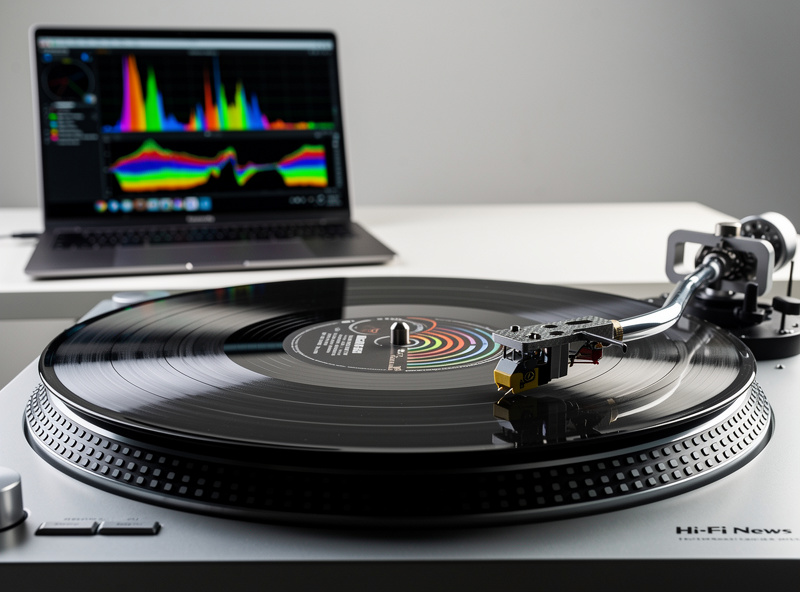
If you do not know your tonearm cable’s capacitance and your preamp’s input capacitance, you can measure the system response directly with a test record. The Hi-Fi News Test LP (track 8, side 2) contains a frequency sweep from 20 Hz to 20 kHz that you record into audio analysis software like Room EQ Wizard or Audacity’s spectrum analyzer. Play the sweep through your entire system — cartridge, tonearm cable, phono preamp — and capture the output. The frequency-response curve shows exactly where the electrical resonance creates a peak. If the curve is flat within +/- 1 dB from 20 Hz to 20 kHz, your loading is correct. If you see a broad hump centered at 10-14 kHz with an amplitude of 3-6 dB, your total capacitance is too high for the cartridge’s inductance. Reduce capacitance by either shortening the tonearm cable (impossible on most turntables), using a phono preamp with lower input capacitance, or adding parallel resistance loading to damp the peak. A 22kΩ resistor in parallel with the standard 47kΩ drops the effective load resistance to roughly 15kΩ — a heavy-handed approach that flattens the peak but also rolls off treble extension. The correct solution is always capacitance adjustment first, resistive loading only if capacitance changes are insufficient.
Frequently Asked Questions
What is cartridge loading in phono preamps?
Cartridge loading is the resistance (typically 47kΩ) and capacitance (typically 100-400pF) the phono preamp presents to the cartridge. The capacitance value interacts with the cartridge’s internal inductance to form a resonant circuit that can create a treble peak of 3-6 dB between 8-15 kHz if set incorrectly.
How do I know what capacitance my phono preamp has?
Check the preamp specifications for input capacitance — most built-in stages are 100-220pF. Add your tonearm cable capacitance (100-150pF typical) to get total capacitance. Compare the total to your cartridge’s recommended range in its specifications. If you are 20-50pF over, you may hear excessive treble brightness.
What happens if cartridge loading capacitance is too high?
Higher capacitance shifts the electrical resonance lower in frequency, creating an audible treble peak around 10-14 kHz that manifests as harsh sibilance, exaggerated cymbal splash, and a general brightness that some listeners mistake for detail. The peak amplitude increases until the resonant frequency drops into the audible band.
Should I change the load resistance from 47kΩ?
Rarely. Most modern cartridges are designed for 47kΩ and changing the resistive load changes the overall frequency response across the entire treble range, not just the resonant peak. Only cartridges with very high inductance (above 600mH) or certain high-output moving-coil cartridges benefit from lower resistance values like 1kΩ or 22kΩ.
Do moving-coil cartridges need capacitance loading?
No. Moving-coil cartridges have extremely low inductance (under 0.1mH vs 500-700mH for moving-magnet), so their resonant frequency with any practical capacitance is well above 100 kHz — far outside the audible range. MC cartridges are loading-insensitive for capacitance but do benefit from correct resistive loading, typically 100Ω-1kΩ.
How do I add external capacitance loading to my phono preamp?
If your preamp has fixed capacitance, use a Y-adapter at the input with loading plugs — RCA connectors containing a resistor and capacitor in parallel soldered between the signal and ground pins. A 100pF capacitor in parallel adds 100pF to the total load. Pre-built loading kits with multiple values cost $30-80.