Why Upgrade Your Turntable?
Upgrading your turntable is the most cost-effective way to improve vinyl playback quality. A $150 cartridge upgrade on a $400 turntable can outperform a stock $800 turntable, because the stylus, tonearm, and platter directly determine how much detail the needle extracts from the groove.
Most entry-level turntables ship with adequate but not exceptional components. Manufacturers cut costs on the cartridge, mat, and platter because those are the parts enthusiasts replace first. By upgrading strategically—starting with the component that has the largest impact per dollar—you can transform a mid-range deck into a system that rivals turntables costing three times as much. The key is knowing which upgrades matter and in what order to apply them.
Upgrade Priority Order: What to Upgrade First
The highest-impact turntable upgrade is always the cartridge, followed by the phono preamp, then the mat, platter, and tonearm. A better cartridge extracts more musical detail from the groove, while a quality preamp preserves that detail without adding noise or coloration.
Here is the recommended upgrade order based on cost-to-improvement ratio:
| Priority | Component | Budget Range | Impact (1-10) | Notes |
|---|---|---|---|---|
| 1 | Cartridge/Stylus | $50–$500 | 9 | Biggest single improvement in detail and tracking |
| 2 | Phono Preamp | $100–$400 | 8 | Reduces noise, improves RIAA accuracy |
| 3 | Turntable Mat | $15–$80 | 5 | Controls resonance, changes tonal character |
| 4 | Platter | $50–$300 | 5 | Acrylic or glass reduces vinyl-contact resonance |
| 5 | Tonearm | $200–$1,000+ | 6 | Requires compatible mount; advanced upgrade |
| 6 | Bearing Oil/Maintenance | $10–$30 | 4 | Reduces rumble, restores speed stability |
Start with the cartridge if your turntable ships with a stock conical stylus. Even a $75 elliptical upgrade will reveal details you have never heard in your records. Move to a phono preamp if you are using the built-in preamp on an entry-level deck. Mats and platters are refinements that come after the signal chain is solid.
For a deeper dive into cartridge selection, see Best Phono Cartridges 2026. If your turntable already has a good cartridge but sounds thin, the issue is likely your preamp—read Phono Preamp Explained first.
Cartridge Types: Moving Magnet, Moving Coil, and Stylus Profiles
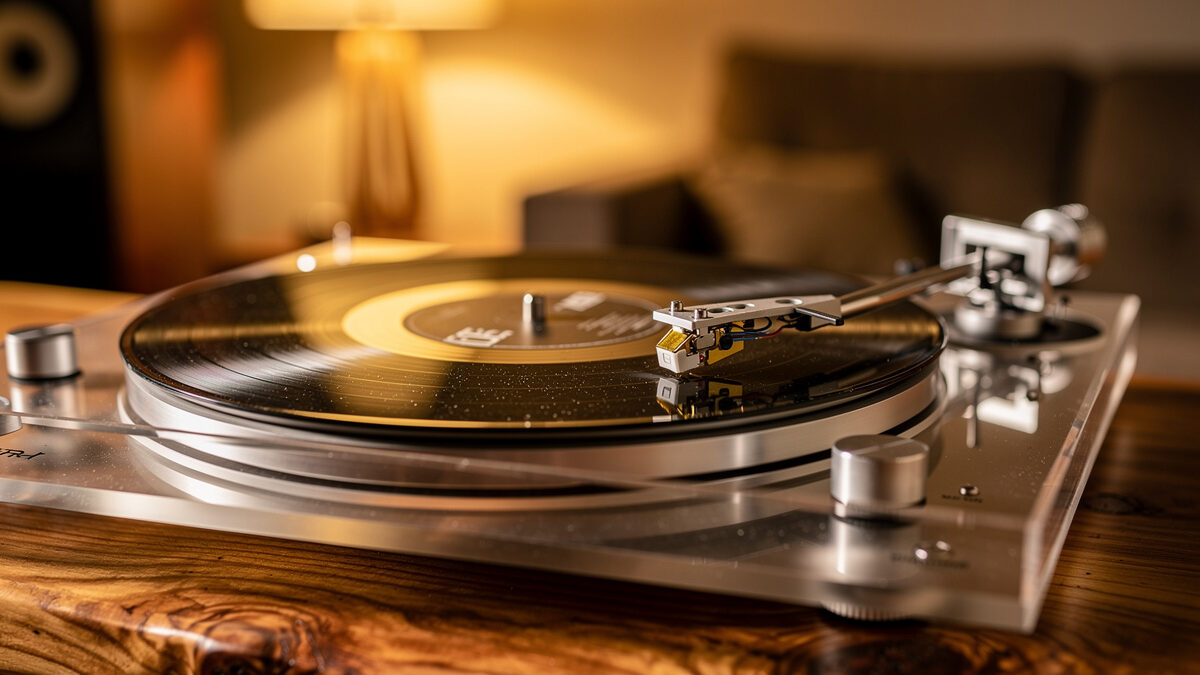
The cartridge is the transducer that converts mechanical stylus vibrations into an electrical signal. Moving Magnet (MM) cartridges use a magnet attached to the cantilever that moves between fixed coils, while Moving Coil (MC) cartridges attach tiny coils to the cantilever that move within a fixed magnet field. MM cartridges are louder, more affordable, and user-replaceable; MC cartridges are lighter, more detailed, but typically cost $200+ and require a step-up transformer or MC-capable preamp.
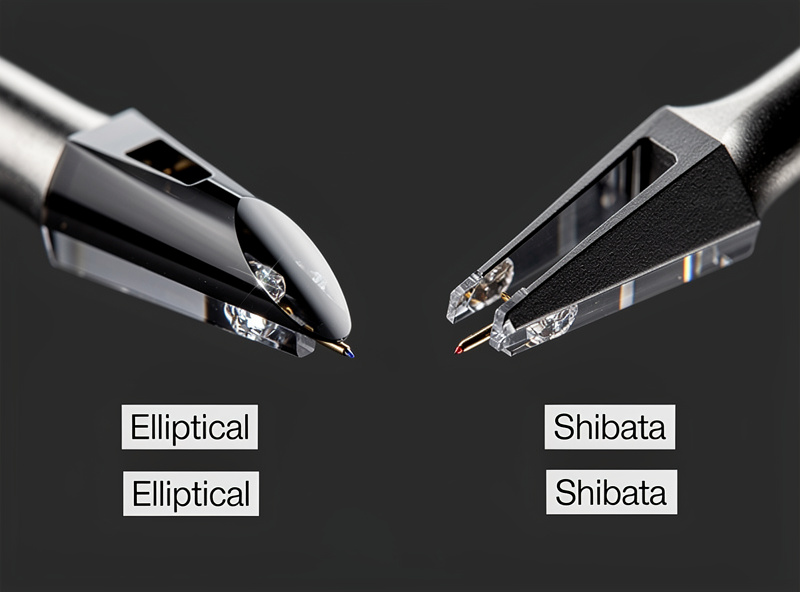
Within both MM and MC types, the stylus profile determines how much of the groove wall the diamond contacts. Conical (spherical) styli are the cheapest and most forgiving of alignment errors but retrieve the least detail. Elliptical styli contact a narrower section of the groove and track high-frequency modulations better. Microline, Shibata, and line-contact styli follow the groove contour almost perfectly, extracting the most information but requiring precise setup and a clean preamp signal chain.
Moving Magnet (MM) Cartridges
MM cartridges dominate the under-$300 market because they offer excellent performance at accessible prices. The Ortofon 2M Red ($99) is the most popular entry-level upgrade, replacing stock conical cartridges on turntables like the Audio-Technica LP120 and Fluance RT81. The 2M Blue ($236) uses a nude elliptical stylus on an improved cantilever for noticeably better detail retrieval.
Other strong MM options include the Nagaoka MP-110 ($99), which is warmer and more forgiving of worn records, and the Audio-Technica VM540ML ($199), which uses a microline stylus for near-MC detail at an MM price. MM cartridges output 2.5–5 mV, which works with any standard phono preamp.
Moving Coil (MC) Cartridges
MC cartridges begin at around $200 and scale into the thousands. The Denon DL-103 ($249) is a legendary budget MC used by audiophiles for decades, offering a rich, musical presentation. The Ortofon 2M Bronze ($440) and 2M Black ($755) are technically high-end MM designs that rival entry MCs, but true MCs like the Hana EL ($280) and Hana ML ($1,200) deliver lower moving mass for superior transient response.
MC cartridges output 0.2–0.5 mV, requiring a preamp with MC gain or an external step-up transformer. If your preamp lacks MC support, the iFi Zen Phono ($199) and Schiit Mani 2 ($149) both handle MM and MC with selectable gain.
Stylus Profile Comparison
| Profile | Contact Area | Detail Retrieval | Price Range | Alignment Sensitivity |
|---|---|---|---|---|
| Conical (Spherical) | Wide (0.6 mm) | Basic | $20–$80 | Low |
| Elliptical | Medium (0.3×0.7 mm) | Good | $50–$200 | Moderate |
| Microline | Narrow (0.08 mm) | Excellent | $150–$400 | High |
| Shibata | Very Narrow | Excellent | $200–$600 | High |
| Line Contact | Minimal | Reference | $400+ | Very High |
For most listeners upgrading from a stock cartridge, an elliptical or microline MM cartridge offers the best value. Reserve MC cartridges for systems with quality preamps and well-isolated turntables. A full cartridge alignment guide is available at Cartridge Alignment Guide.
Turntable Mat Materials: Rubber, Cork, Leather, and Felt
The turntable mat sits between the record and the platter, controlling resonance transfer and affecting the tonal balance of playback. Stock felt mats are cheap and static-prone; upgrading to rubber, cork, or leather reduces unwanted vibrations and can subtly improve clarity in the midrange and treble.
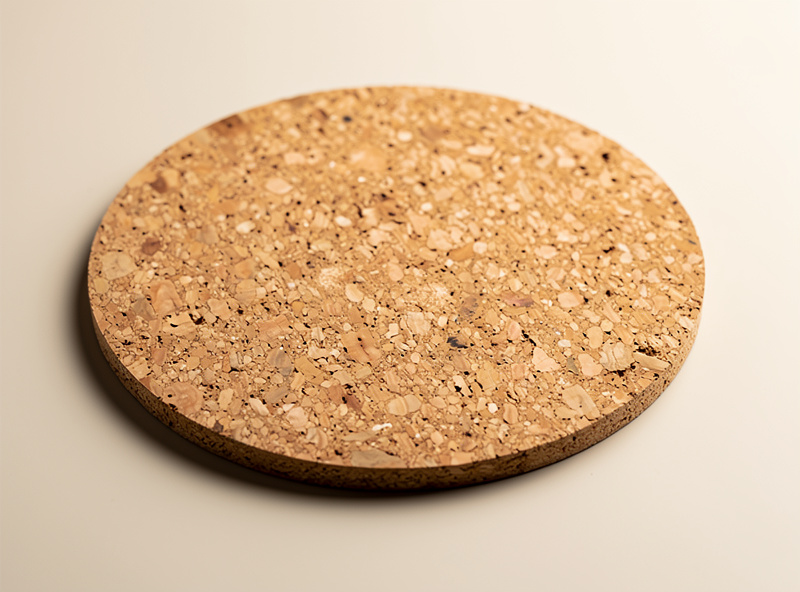
Each material has a distinct sonic signature. Rubber mats like the Thorens TD 160 mat dampen resonance effectively and add a neutral, controlled sound. Cork mats brighten the presentation slightly and reduce static buildup. Leather mats absorb midrange resonance and add warmth. Felt mats are the lightest damping option and are popular with DJs for slip-cueing, but they generate static and offer minimal resonance control for home listening.
The Pro-Ject Cork It ($15) is the most popular budget upgrade, while the Herbie’s Way Excellent II ($52) rubber mat is a favorite among high-end users. For a full comparison, see Turntable Mat Guide.
Platter Upgrades: Acrylic, Glass, and Metal
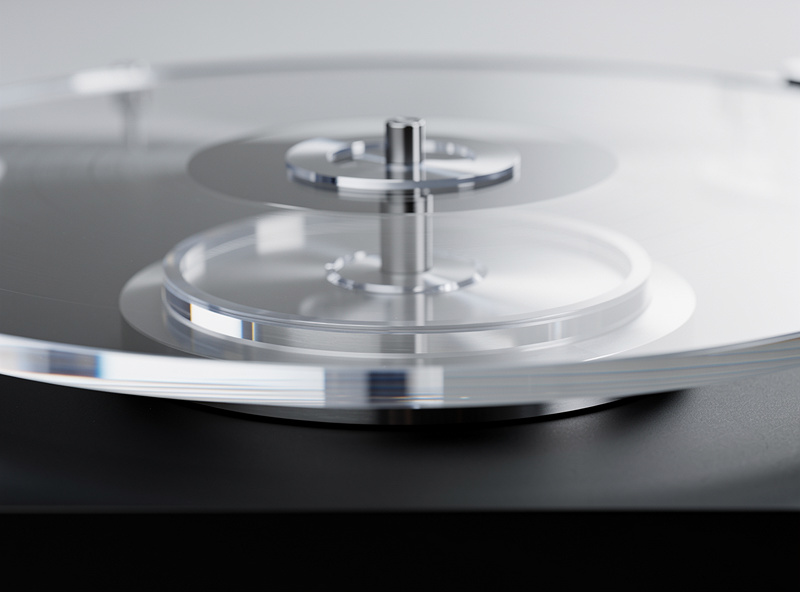
The platter holds the record and rotates beneath the tonearm. Stock aluminum platters on budget turntables ring when tapped, transferring metallic resonance into the record. Upgrading to an acrylic, glass, or heavier metal platter reduces this resonance and can improve speed stability due to increased rotational mass.
Acrylic platters are the most popular upgrade because they eliminate the need for a mat entirely—the record sits directly on the acrylic surface, which has a similar impedance to vinyl and damps resonance naturally. The Fluance acrylic platter ($59) fits several Fluance models, while aftermarket acrylic platters are available for Pro-Ject and Rega turntables.
Glass platters, used on high-end Linn and Thorens models, offer excellent mass and resonance control but are fragile and expensive. Stainless steel platters add rotational inertia for better speed stability but require a mat to prevent metallic coloration. For a full breakdown, see Turntable Platter Upgrades.
Tonearm Types and Upgrades
The tonearm holds the cartridge and allows it to track the groove with minimal friction or resonance. Tonearm upgrades are the most technically demanding modification because they require a compatible mount and may involve drilling or replacing the armboard. Most listeners should upgrade the cartridge and preamp before considering a tonearm replacement.
Three main tonearm designs exist: straight, S-shaped, and gimbal-bearing arms. Straight arms like those on Rega turntables are lightweight and minimize bearing friction. S-shaped arms like the Audio-Technica AT-LP120’s stock arm reduce skating force but add mass. Gimbal-bearing arms use precision ball bearings for the lowest friction, while unipivot arms rest on a single point for minimal contact area.
The Rega RB330 ($395) is the most popular aftermarket tonearm upgrade, offering a stiff, lightweight aluminum design that pairs well with both MM and MC cartridges. For budget turntables, the tonearm upgrade is rarely the best use of funds—save it for after the cartridge, preamp, mat, and platter are optimized. Full details in Turntable Tonearm Guide.
Bearing Maintenance and Lubrication
The main bearing supports the platter spindle and allows it to rotate with minimal friction. Over time, bearing oil degrades, dries out, or becomes contaminated with dust, increasing rumble and degrading speed consistency. A simple bearing lubrication costs under $15 and can measurably reduce wow and flutter.
Most turntables use a sleeve bearing with a thrust pad at the bottom. To lubricate, remove the platter, clean the spindle and bearing well with isopropyl alcohol, and apply 2–3 drops of synthetic bearing oil (Mobil 1 5W-30 or a specialty oil like Pro-Ject Bearing Oil). Reassemble and spin the platter by hand to distribute the oil evenly.
If the bearing makes grinding or knocking noises after lubrication, the thrust pad may be worn. Replacement thrust pads are available from turntable manufacturers for $10–$30. A detailed maintenance walkthrough is at Turntable Bearing Maintenance.
Tracking Force and Anti-Skate Setup
Every cartridge upgrade requires recalibrating tracking force and anti-skate. Tracking force is the downward pressure the stylus exerts on the groove, measured in grams. Too little force causes mistracking and distortion; too much accelerates record and stylus wear. Anti-skate compensates for the inward skating force that tonearm geometry creates, ensuring equal pressure on both groove walls.
A digital stylus gauge ($15–$25) is the most accurate way to set tracking force. Balance the tonearm so it floats horizontally, set the counterweight dial to zero, then rotate the counterweight until the gauge reads the cartridge manufacturer’s recommended force (typically 1.5–2.5 g). Set anti-skate to the same value as tracking force.
Incorrect tracking force is the number one cause of premature record wear and poor sound quality after a cartridge upgrade. Always verify with a gauge—never trust the counterweight dial alone. Step-by-step instructions are at How to Set Tracking Force and Anti-Skate.
Upgrade Budget by Turntable Price Tier
The upgrade budget should match the turntable’s base quality. Upgrading a $150 turntable beyond a $75 cartridge is diminishing returns—the arm, motor, and plinth cannot resolve what a high-end cartridge retrieves. On a $500–$800 turntable, a $200–$400 cartridge plus a $150 preamp will deliver near-reference performance.
A practical rule: spend no more than 50% of the turntable’s retail price on the cartridge, and no more than 30% on the preamp. For a $500 turntable, that means a $250 cartridge maximum and a $150 preamp maximum. Beyond those ratios, the weak link shifts to the turntable’s mechanical platform, and you would be better served by upgrading the entire deck. Here is a tier-by-tier breakdown of sensible upgrade budgets:
| Turntable Price | Cartridge Budget | Preamp Budget | Mat Budget | Total Upgrade Budget | Expected Result |
|---|---|---|---|---|---|
| $100–$200 | $49–$99 | $0 (use built-in) | $15 | $65–$115 | Meaningful improvement over stock |
| $200–$400 | $99–$199 | $100–$150 | $15–$25 | $215–$375 | Near-reference for most listeners |
| $400–$800 | $199–$399 | $150–$300 | $25–$50 | $375–$750 | Competitive with $1,500+ stock decks |
| $800+ | $399–$750 | $300–$500 | $50+ | $750+ | Reference-level performance |
The $200–$400 turntable tier offers the best upgrade value in analog audio. A Fluance RT82 ($300) with an Ortofon 2M Blue cartridge ($236) and a Schiit Mani 2 preamp ($149) produces sound that rivals stock turntables in the $800–$1,200 range. The mechanical platform is solid enough to resolve the upgraded components, and the total investment stays under $700.
For turntables under $200, the cartridge upgrade is the only one that makes economic sense. A $15 mat swap from felt to cork helps, but do not spend $150 on a preamp for a $150 turntable—the arm and bearing have inherent limitations that no preamp can overcome. Save toward a better turntable instead. Our Turntable Buying Guide covers which turntables provide the best upgrade platforms at each price point.
System Synergy: Matching Components for Balanced Performance
Upgrading one component in isolation can create bottlenecks elsewhere in the signal chain. A $500 cartridge feeding a $30 preamp wastes the cartridge’s potential because the preamp’s noise floor and RIAA accuracy limitations cap the output quality. Similarly, a $500 preamp connected to a $50 cartridge amplifies the cartridge’s limitations rather than overcoming them. Balanced system performance requires matching component quality across the signal chain.
The ideal analog signal chain has each component performing at roughly the same level. A $200 cartridge, $150 preamp, and $300 turntable form a balanced system. Replacing just the cartridge with a $600 model shifts the bottleneck to the preamp and turntable platform. Before upgrading any single component, evaluate whether the rest of the system can resolve the improvement.
Signal chain order matters for bottleneck identification. The signal flows from the cartridge through the tonearm cables, into the phono preamp, through the interconnect cables, into the amplifier or receiver, and finally to the speakers. The weakest link in this chain determines the maximum achievable quality. In most budget-to-mid-range systems, the weakest link is the cartridge first, then the preamp, then the speakers—rarely the turntable itself.
When to Upgrade vs. When to Replace
Upgrading individual components makes sense when the turntable platform is fundamentally sound—good bearing, stable plinth, functional motor, and a tonearm with acceptable geometry. If the motor has speed stability issues, the bearing has play, or the plinth resonates audibly when tapped, no amount of cartridge or preamp upgrading will fix the core problems.
Replace the entire turntable when two or more of these conditions exist: the motor cannot maintain speed within 0.5% wow and flutter, the bearing has visible play or audible grinding after lubrication, the plinth is plastic and flexes under the platter weight, or the tonearm lacks anti-skate adjustment and has no counterweight fine-adjustment. These are structural deficiencies that individual upgrades cannot overcome.
The crossover point where upgrading stops making sense is typically 50–60% of the cost of a new turntable that would perform equivalently. If your $300 turntable needs $400 in upgrades to match a $600 stock turntable, buying the $600 turntable is the better investment because you get a new warranty, fresh bearing, new motor, and current-generation components throughout. See the comparison below for common upgrade-vs-replace scenarios:
| Scenario | Upgrade Path | Cost | Replace Path | Cost | Better Choice |
|---|---|---|---|---|---|
| AT-LP60X with stock cartridge | AT-VM95E stylus swap | $25 | Fluance RT80 | $200 | Upgrade ($25 is trivial) |
| Fluance RT80, want better detail | 2M Blue + Cork mat | $250 | Fluance RT82 | $300 | Replace (RT82 has better motor) |
| Pro-Ject Debut Carbon, full optimization | 2M Bronze + Mani 2 + acrylic platter | $650 | Pro-Ject X1 | $900 | Upgrade (Debut platform is solid) |
| Rega Planar 1, want reference sound | 2M Black + Rega Fono + RB330 arm | $1,500 | Rega Planar 6 | $1,795 | Replace (Planar 6 platform is superior) |
Common Upgrade Mistakes
The most common mistake is skipping the phono preamp. A $300 cartridge feeding a $20 built-in preamp is wasted potential—the preamp’s noise floor and RIAA accuracy limitations cap the cartridge’s performance. Always upgrade the preamp alongside or immediately after the cartridge.
The second mistake is not checking tonearm compatibility before buying a cartridge. Heavy cartridges on lightweight tonearms can cause resonance issues in the audible range. Check the tonearm’s effective mass and ensure the cartridge compliance creates a resonant frequency between 8–12 Hz. Our Turntable Buying Guide covers matching components for new buyers.
The third mistake is upgrading the platter or mat before the cartridge and preamp. Platter and mat upgrades improve the mechanical interface between the record and the turntable, but they cannot recover detail that a stock conical stylus never extracted in the first place. Always follow the priority order: cartridge, preamp, mat, platter, tonearm, bearing.
The fourth mistake is neglecting record maintenance while upgrading playback equipment. A $400 cartridge playing dirty records sounds worse than a $50 cartridge playing clean ones. Invest in a quality record cleaning routine before spending more than $150 on cartridge upgrades. Our How to Clean Vinyl Records guide covers the most effective methods.
The fifth mistake is over-upgrading a turntable that has reached its ceiling. If the motor, bearing, and plinth are entry-level, a $500 cartridge reveals the platform’s limitations rather than transcending them. Know when to stop upgrading and start saving for a better turntable platform.
Frequently Asked Questions
What is the best first upgrade for a turntable?
The cartridge offers the highest impact per dollar. A $75–$150 elliptical cartridge upgrade reveals significantly more detail than stock conical styli on entry-level turntables like the Audio-Technica LP60X or Fluance RT80.
Do turntable upgrades really make a difference?
Yes. A $150 cartridge on a $400 turntable can outperform a stock $800 turntable. The cartridge, phono preamp, and mat directly determine how much detail the stylus extracts from the groove.
Should I upgrade my turntable or buy a new one?
If your turntable costs less than $300, a cartridge and preamp upgrade is the best value. Above $500, upgrading individual components extends the life of a quality platform for years.
How often should I oil my turntable bearing?
Apply 2–3 drops of synthetic bearing oil every 12–18 months. Use Mobil 1 5W-30 or a specialty turntable bearing oil. Degrease the spindle with isopropyl alcohol before applying fresh oil.
What is the difference between moving magnet and moving coil cartridges?
Moving magnet cartridges output 2.5–5 mV and work with any phono preamp. Moving coil cartridges output 0.2–0.5 mV, require MC-capable preamps, and offer lower moving mass for better transient response.
Can I use any mat on my turntable?
Most 12-inch mats fit any standard turntable platter. Acrylic platters do not need a mat. Felt mats suit DJs; rubber or cork mats are better for home listening because they reduce static and resonance.