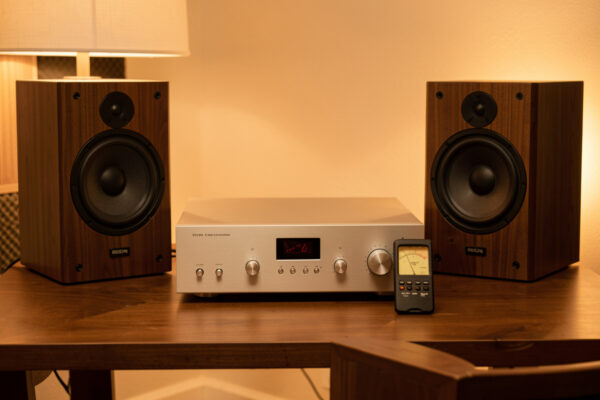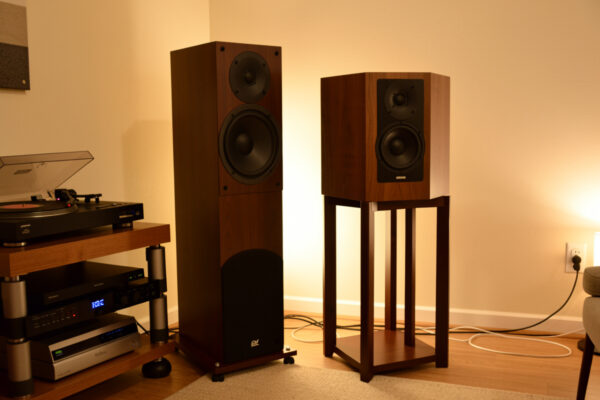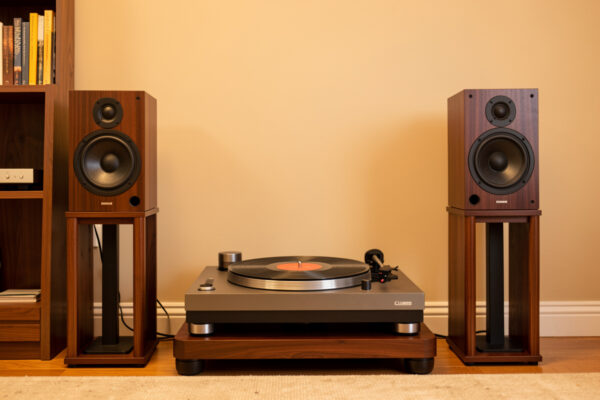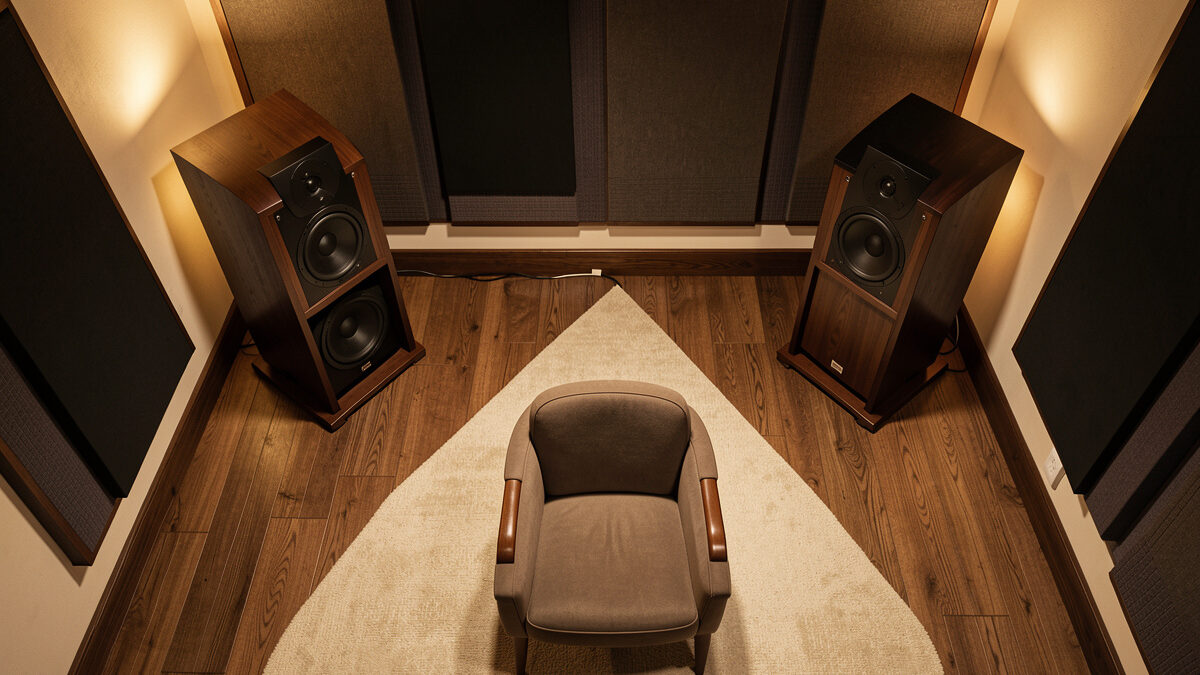
The fastest free upgrade to any vinyl system is speaker placement: pull the speakers 30 to 90 cm off the front wall, set them and your chair in a rough equilateral triangle, put the tweeters at ear height, and toe them in toward your seat. Done by ear, this tightens bass and sharpens the stereo image more than a several-hundred-dollar component swap.
I treat placement the way I treat cartridge alignment — as geometry you dial in by measurement and then fine-tune by ear, not as guesswork. The room is half of what you hear, and where the speakers sit decides how the room behaves. Here is the method I use to set up a pair of speakers in a vinyl room, in the order I do it, including the part most guides skip: keeping the speakers from feeding vibration back into the turntable.
Start With Distance From the Walls
Begin by pulling each speaker 30 to 90 cm away from the front wall behind it and at least 50 cm from the nearest side wall. Walls reinforce bass through standing-wave reflection, so a speaker shoved into a corner sounds boomy and thick; moving it out trades a little bass quantity for far better bass quality and clarity.
Every boundary near a speaker adds a bass reflection, and the closer the boundary, the stronger and more uneven the reinforcement. A speaker in a corner gets bass boost from the front wall, the side wall, and the floor all at once, which sounds impressive for ten seconds and fatiguing for an hour. Start with the speakers well out from the front wall and away from the corners, then move them in small increments until the bass is full but not bloated. Rear-ported speakers especially need breathing room behind them. This is the single biggest lever in the whole exercise, and it costs nothing but a few minutes of shuffling.
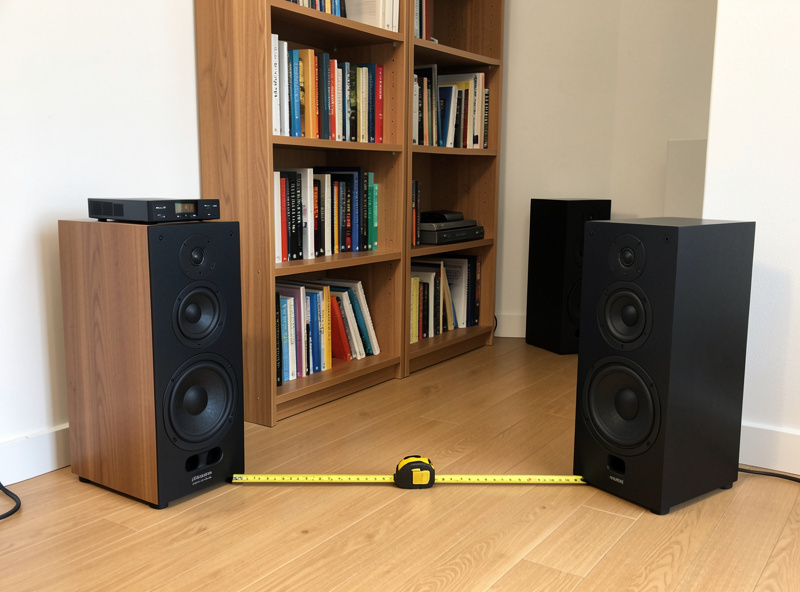
Build the Stereo Triangle
Set the two speakers and your listening seat so they form a roughly equilateral triangle — the distance between the speakers should about equal the distance from each speaker to your ears. This is what produces a focused center image and a soundstage that spreads cleanly between the speakers instead of collapsing into two points.
Stereo is an illusion built from two channels, and it only locks in when the geometry is right. Too far apart and the center vocal drifts into a hole between the speakers; too close and the soundstage shrinks. The equilateral triangle is the starting point: measure speaker-to-speaker, then sit at that same distance. From there I adjust by a few centimeters until a mono vocal sits dead center and rock solid. A turntable’s soundstage — the way instruments arrange across the front — only reveals itself once this triangle is set, which is why placement is as much a part of the source chain as the cartridge that reads it.
Set Tweeter Height and Toe-In
The tweeter should sit at or very near ear height when you are seated, because high frequencies are directional and beam straight out of the tweeter. Then toe the speakers inward so they aim toward your seat, adjusting the angle until the treble is detailed but not harsh.
Tweeter height is why bookshelf speakers belong on stands and not on a sideboard — a tweeter firing at your chest dulls the top end and blurs the image. Get your ears level with the tweeter first. Then set toe-in: aiming the speakers directly at your ears gives the sharpest image and the most treble, while toeing them out a little softens a bright speaker or a reflective room. I start with the speakers aimed so their axes cross just behind my head and adjust from there by ear. Horn-loaded and metal-dome tweeters usually want a touch less toe-in than soft domes.
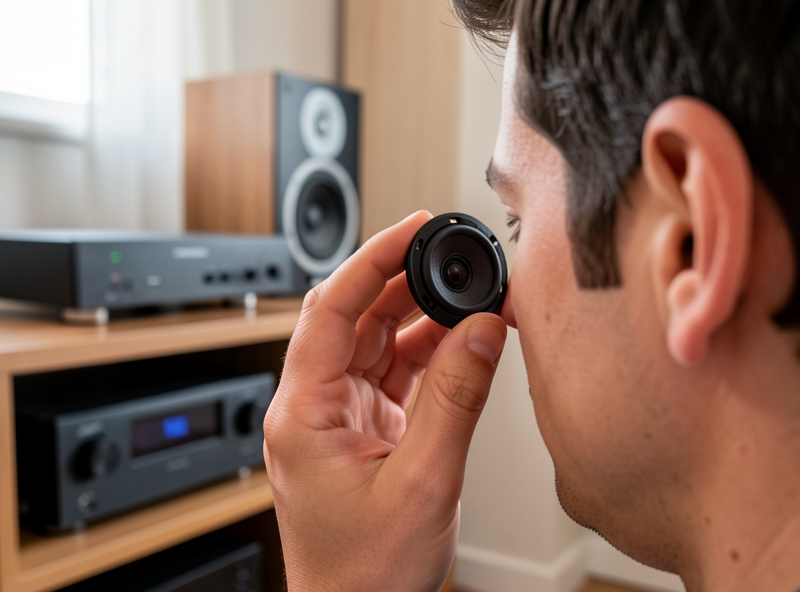
Tame the First Reflections
The first reflection points are the spots on your side walls and floor where sound bounces off on its way to your ears, arriving slightly delayed and smearing the image. A rug between you and the speakers and some absorption at the side-wall mirror points clean up the sound for almost nothing.
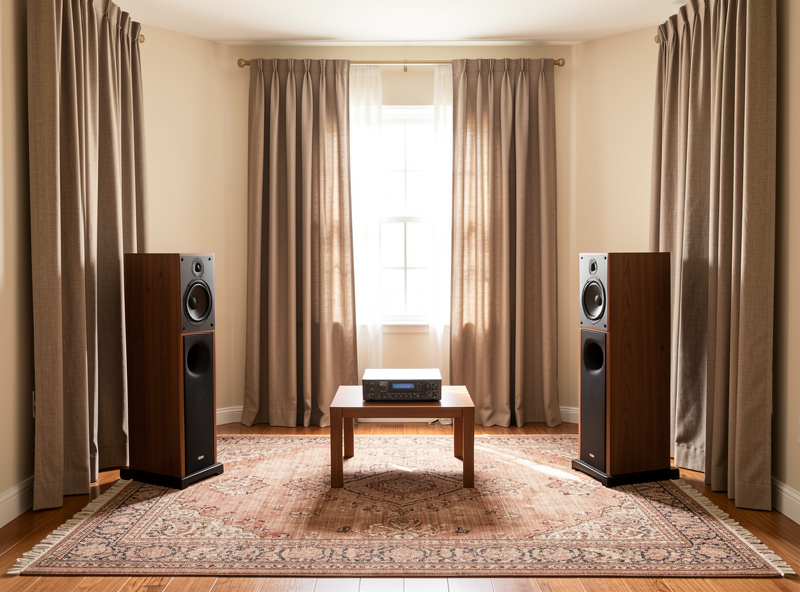
Here is the mirror trick: have someone slide a hand mirror along each side wall while you sit in your chair, and wherever you can see a tweeter reflected, that is a first-reflection point. A panel, a bookshelf, or even a thick curtain there cuts the delayed reflection that blurs stereo focus. A rug on a hard floor between you and the speakers kills the floor bounce. None of this needs a treated room — a furnished living room with a rug and curtains is already most of the way there. The bonus for vinyl is that a more absorptive room also lowers the airborne energy that can reach the deck.
Keep the Speakers From Feeding the Turntable
In a vinyl room, placement has a second job: stop the speakers from vibrating the turntable. Never put the turntable between or directly beside the speakers on the same surface, and keep floorstanders off a suspended floor the deck shares, or you get a feedback rumble that worsens with volume.
This is the part general speaker guides ignore, because they are not thinking about a stylus tracking a groove. Speakers pump acoustic and structural energy into the room, and a turntable nearby — especially on the same shelf or a springy wooden floor — can pick it up and feed it back through the cartridge. Place the deck away from the speakers, ideally on a wall-mounted shelf or a properly isolated platform, and the loop never starts. If you already hear a low rumble that rises with volume, this is almost always the cause — the footfall versus airborne vibration guide helps you pin down the path.
Placement Quick Reference
| Setting | Starting point | Adjust by |
|---|---|---|
| Distance from front wall | 30–90 cm | Bass: out for tighter, in for fuller |
| Distance from side wall | 50 cm or more | Even bass, less corner boom |
| Speaker-to-speaker vs to-seat | Roughly equal (equilateral) | Center image focus |
| Tweeter height | At seated ear level | Treble clarity |
| Toe-in | Axes cross just behind head | More for focus, less for softer treble |
For the tools, a set of speaker isolation pads for the stands helps decouple the cabinets from the floor. As an Amazon Associate I earn from qualifying purchases.
Frequently Asked Questions
How far should speakers be from the wall for vinyl?
Start with 30 to 90 cm between the speaker and the front wall behind it, and at least 50 cm from the nearest side wall. Move them out for tighter, cleaner bass or in for a fuller low end, adjusting in small steps until the bass is even.
Should speakers be toed in toward the listener?
Usually yes. Toeing the speakers inward so they aim toward your seat sharpens the center image and adds treble detail. Start with the axes crossing just behind your head, then toe out slightly if the sound is too bright or the room is reflective.
How high should speakers be for a seated listener?
The tweeter should sit at or near your ear height when seated, because high frequencies beam directly from the tweeter. This is why bookshelf speakers need stands rather than a low sideboard, which fires the treble at your chest and dulls the sound.
Where should the turntable go relative to the speakers?
Place the turntable away from the speakers, never between them or on the same shelf, and ideally on a wall-mounted shelf or isolated platform. This prevents the speakers’ vibration from returning to the stylus as a feedback rumble that worsens with volume.
Does speaker placement really matter more than upgrades?
Yes. Moving speakers off the walls, building a proper triangle, and setting tweeter height changes the sound more than most component swaps and costs nothing. It is the highest-value hour you can spend on a vinyl system before buying anything.
How do I find first-reflection points?
Sit in your listening seat and have someone slide a mirror along each side wall. Wherever you can see a tweeter reflected in the mirror is a first-reflection point. Placing absorption, a bookshelf, or a curtain there reduces the delayed reflections that blur stereo imaging.