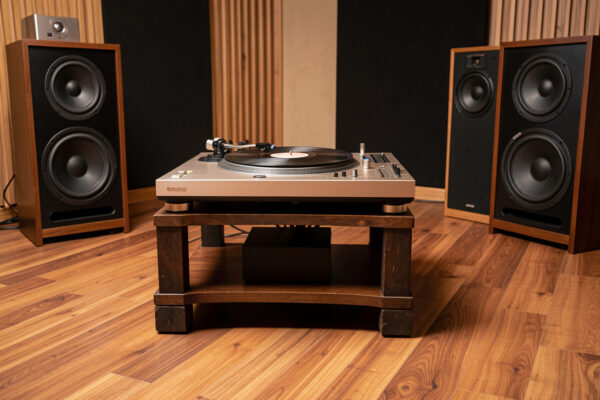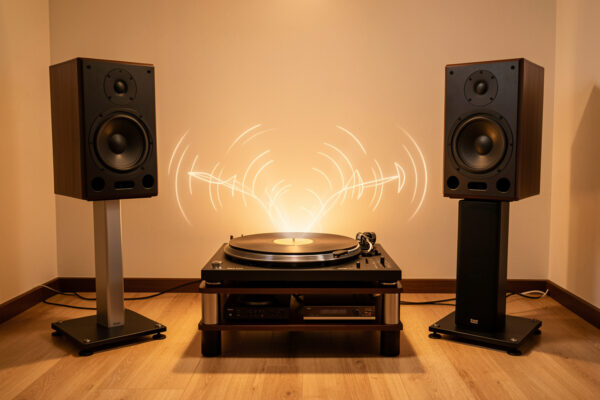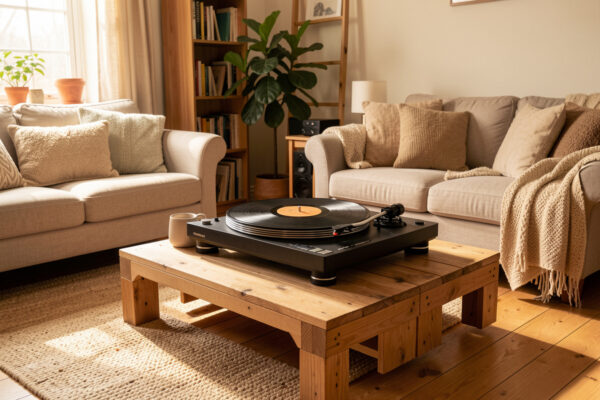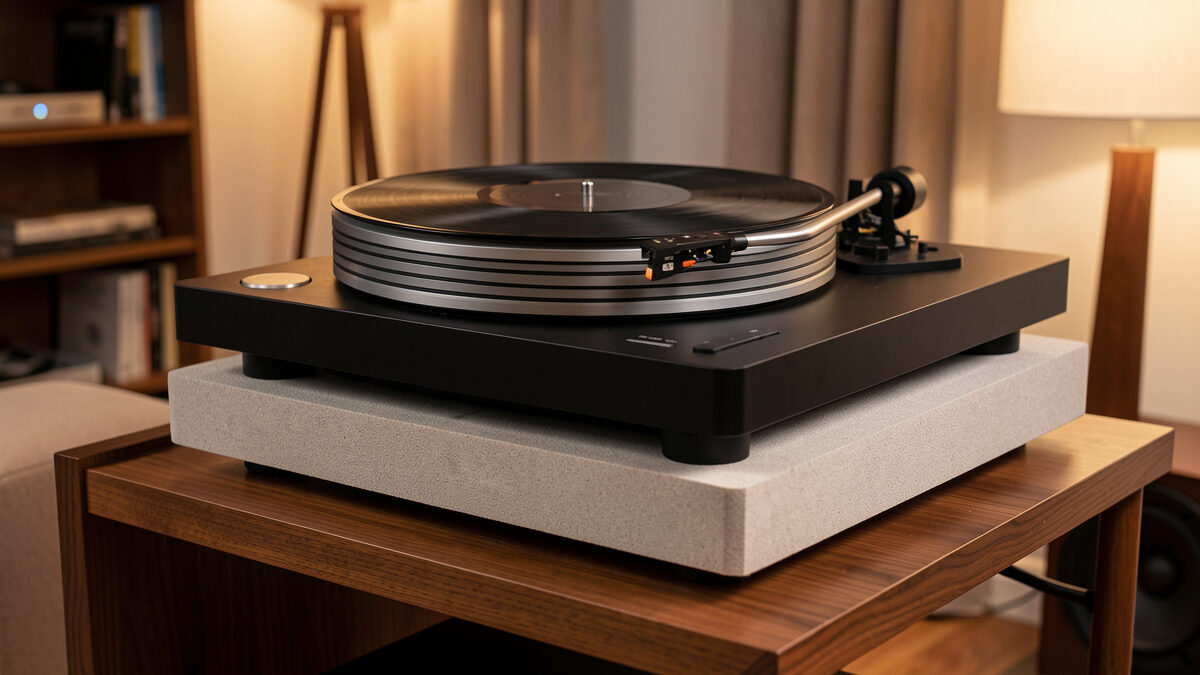
The best turntable isolation platform is the one that combines real mass, a genuine damping layer, and compliant decoupling feet — not just a heavy slab that looks the part. On my bench, a layered platform under my Rega P3 dropped the audible footfall thump to nothing and tightened the bass noticeably, while a plain stone block did about half the job. A good platform is the highest-value isolation purchase most vinyl listeners can make, often outperforming racks that cost several times more.
As an Amazon Associate I earn from qualifying purchases. I run a Technics SL-1200-class deck, a Rega P3, and a Pro-Ject X2, and I have shuffled all three across every kind of support I could get my hands on. This is what I have learned about which platforms actually move the needle and which are just expensive furniture. For the full picture of how platforms fit alongside feet, springs, and wall shelves, start with my turntable isolation and vibration control guide.
What a Real Isolation Platform Does
An isolation platform works on three principles at once: mass to resist movement, damping to absorb ringing, and decoupling to filter floor energy before it arrives. The mass gives the deck something stable to push against; the damping layer turns vibration into a tiny amount of heat instead of letting it ring; the compliant feet underneath act as a low-pass filter that blocks footfall and structural rumble. Get all three and you handle airborne feedback and floor energy together.
The platforms that disappoint usually skip one layer. A pure granite slab has mass and rigidity but no decoupling, so floor energy travels straight through it into the plinth. A soft foam pad has decoupling but no mass, so it sways and never settles. The winners stack the layers in the right order, which is exactly the logic I apply when building a deck up from the foundation in my turntable upgrade guide.
The Materials That Matter
Mass layers are usually stone (granite, slate, or marble), thick MDF, or a constrained-layer sandwich of two stiff sheets bonded around a lossy core. Stone is dense and dead but heavy and unforgiving if dropped. MDF is cheaper, easy to cut, and pleasantly dead when thick enough. Constrained-layer construction is the quietest option per kilogram because the lossy core shears as the panels flex, converting vibration to heat across a wide band.
Damping layers are where sorbothane, cork, butyl rubber, and dense foam earn their place. They sit between the mass and the feet, or are built into the feet themselves. The decoupling layer is the feet: elastomer pucks, spring absorbers, or purpose-made isolators, each tuned to a load range. The trick is never to stack two compliant layers without mass between them — soft on soft just oscillates.
Commercial Platforms vs a Granite Slab
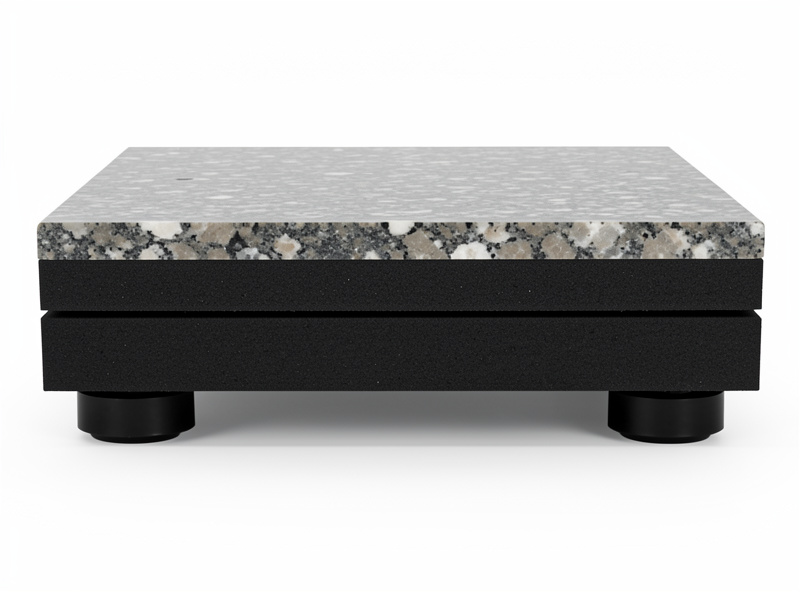
Commercial isolation platforms from makers like IsoAcoustics package the mass-damping-decouple stack into one tidy unit, often with adjustable or weight-tuned feet so you do not have to engineer the load matching yourself. They are the convenient, proven choice and they look the part on a hi-fi rack. What you pay for is the engineering and the finish.
A granite or slate slab on a set of matched sorbothane feet does most of the same job for a fraction of the price. I have run both side by side, and the gap is smaller than the price difference suggests — the slab-plus-feet approach gets you maybe 80 percent of the result. If you enjoy the build, the DIY route is genuinely competitive; if you want it solved out of the box, the commercial unit is worth the premium. Either way, the platform matters far more than whether the rack beneath it is fashionable.
Matching the Platform to Your Floor
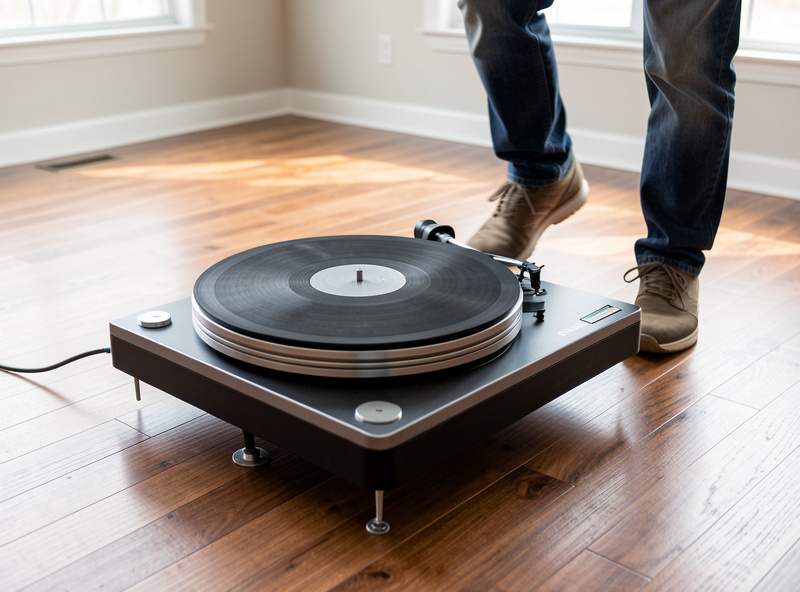
The right platform depends on what your room is doing. On a solid concrete floor, airborne feedback dominates, so prioritize mass and damping — a heavy slab with a modest damping layer is plenty, and aggressive decoupling can even loosen things up unhelpfully. On a suspended timber floor, footfall dominates, so the decoupling feet become the most important layer and you want compliant isolation that filters low-frequency floor heave.
If your footfall problem is severe enough that no platform fully settles it, the platform is not the right tool and you should look at removing the floor path entirely. A heavy, well-damped platform still helps, but it is fighting physics. Diagnose which source dominates before you buy, using the walk-and-listen test from the main isolation guide, so you spend on the layer that actually matters for your room.
Platform Types Compared
| Platform Type | Mass | Damping | Decoupling | Best For |
|---|---|---|---|---|
| Engineered commercial unit | Moderate-high | Built-in | Tuned feet | Out-of-box solution |
| Granite/slate slab + feet | Very high | Add-on layer | Sorbothane feet | Best value DIY |
| Constrained-layer board | Moderate | Excellent | Add feet | Quietest per kilo |
| Thick MDF slab | Moderate | Good when thick | Add feet | Cheap, easy to cut |
| Bare foam pad | None | Some | Yes | Avoid alone — sways |
Sizing and Setup Tips That Most People Miss
Two details separate a platform that works from one that just sits there. The first is footprint: the platform needs to extend slightly beyond the deck’s own feet in every direction, because a platform smaller than the turntable concentrates the load at the edges and lets the deck rock. I aim for at least a couple of centimeters of overhang on each side. The second is leveling. A platform that is itself out of level reintroduces the wobble you are trying to remove, so I level the platform first with a bubble level, then re-level the deck on top of it. Two stages, checked separately.
It also pays to think about the feet you put under the platform if it does not come with them. Cheap rubber bumper feet are better than nothing but ring at higher frequencies. Matched sorbothane pucks or proper spring isolators, chosen for the combined weight of the platform plus deck, are what actually filter the floor. Weigh the loaded platform, divide by the number of feet, and pick compliance for that per-foot load — the single most skipped step in a DIY platform build.
What I Actually Recommend
For most people, the order is simple. If you want it solved without a project, buy an engineered platform sized for your deck’s weight and set it on a rigid stand. If you enjoy building, a thick stone or constrained-layer top on matched sorbothane feet gets you nearly all the way for far less. In both cases, the platform sits on top of the right furniture and feeds into the rest of the chain — a stable deck only pays off when the cartridge alignment and tracking force are dialed in too. Pair the platform with a good platter mat and you have a deck that finally reads only the record.
Frequently Asked Questions
Is an isolation platform worth it for a budget turntable?
Yes. A platform that decouples and damps benefits any deck, and the relative improvement is often larger on a lighter budget turntable because its plinth has less inherent mass. A simple slab-and-feet platform costs little and noticeably steadies the sound.
Do I need a commercial platform or is a granite slab enough?
A granite or slate slab on matched sorbothane feet delivers roughly 80 percent of a commercial unit’s result for a fraction of the cost. Buy the engineered platform if you want a tuned, out-of-the-box solution; build the slab version if you enjoy the project.
What thickness should an isolation platform be?
For a stone slab, around 20 to 30 mm gives useful mass without being unmanageable. For MDF or constrained-layer board, 18 mm and up works well, doubled for heavier decks. The goal is enough mass to stay put under the spinning platter and stylus drag.
Can a platform fix a turntable that skips when I walk?
Partially. A platform with good decoupling feet reduces footfall transmission, but severe footfall on a bouncy suspended floor may need a wall-mounted shelf to remove the floor path entirely. Diagnose the source before assuming a platform alone will solve it.
Where should the isolation platform sit?
On a rigid, heavy, low stand that is itself decoupled from the floor, and away from the speakers to limit airborne feedback. The platform is the last line of defense, so the furniture beneath it must not be a flimsy resonator that re-injects the energy you just filtered.