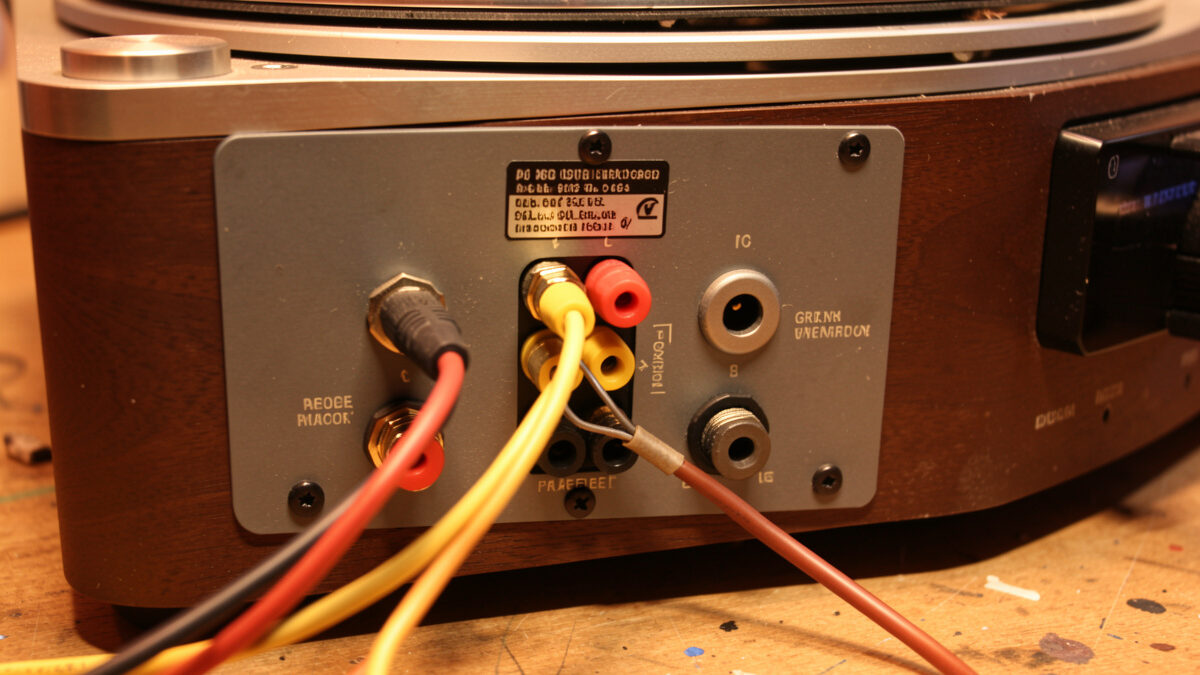
Hiss and hum through the speakers on a vinyl setup are electrical faults, not surface noise — they are present with the stylus in a silent groove or even with the tonearm lifted. Hum is a steady low-frequency 50/60 Hz drone that points to a grounding problem; hiss is a higher, constant rush tied to your phono stage gain and cartridge match. Lift the arm: if the noise stays, the record is innocent.
This is the family of noise people waste the most money on, buying cleaning gear and new records to fix a problem that lives entirely in the wiring and the phono stage. I run several phono stages A/B on the bench — a budget solid-state unit, a switchable-gain MM/MC stage, and a tube stage — and tracing hum and hiss is a wiring-and-matching job I have done more times than I can count. Here is the chain, in the order I actually check it.
The One Test That Splits Electrical From Surface Noise
Before anything else, lift the tonearm off the record with the system running at normal volume. If the hum or hiss is still there with the stylus in the air, the noise cannot be coming from the vinyl — it is electrical or mechanical, and no cleaning will ever touch it. This single test saves people hours of pointless record washing and immediately narrows the hunt to grounding, cabling, and the phono stage.
Now characterize what you hear. A low, steady drone you could hum along to — around 50 or 60 Hz depending on your country’s mains — is hum, and it means grounding. A constant higher-frequency rush, like distant air escaping, is hiss, and it means gain and cartridge matching. A harsher, buzzier version of hum with upper harmonics usually means a ground loop or a nearby interference source. Placing your noise in one of these buckets tells you which section to fix. This is the electrical branch of the wider surface-noise diagnosis.
Hum: Almost Always a Grounding Problem
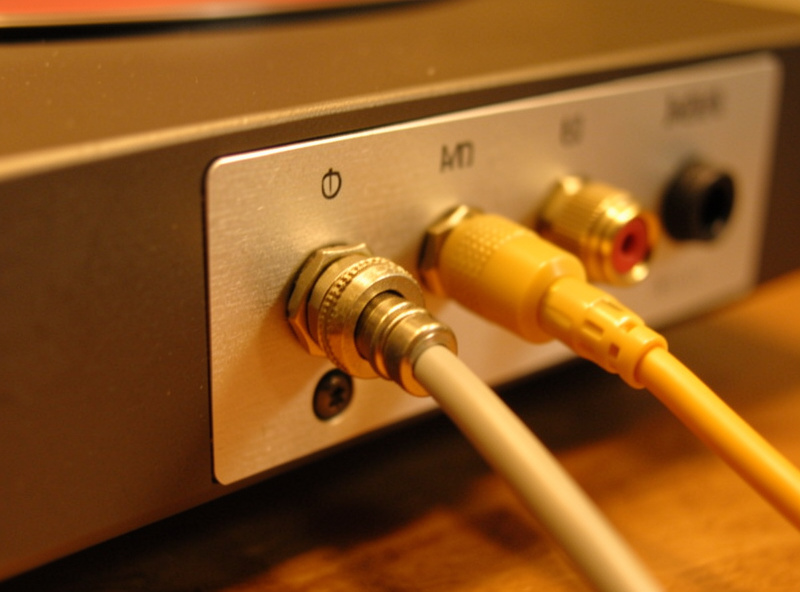
A steady 50/60 Hz hum is the classic vinyl complaint and it is nearly always grounding. Turntables generate a tiny signal that the phono stage amplifies enormously, so any stray mains field the cartridge or wiring picks up gets amplified right alongside the music. The single most common cause is a disconnected or missing ground wire — the thin lead that runs from the turntable to the ground terminal on your phono stage or amplifier. If yours is loose or never connected, connect it first.
If the ground wire is properly attached and the hum persists or gets worse, you likely have a ground loop — two paths to earth creating a circulating current that shows up as hum. Try plugging the turntable and amplifier into the same outlet or power strip so they share a single ground reference. Keep the phono interconnects away from power cables and wall-wart transformers, which radiate mains hum straight into the sensitive phono signal. A cheap phono stage with a flimsy wall-wart supply is a frequent hum source; the phono stage guide covers what separates a quiet unit from a noisy one, and why you need a phono preamp at all explains the huge gain that makes grounding so critical.
Hiss: Gain and Cartridge Matching
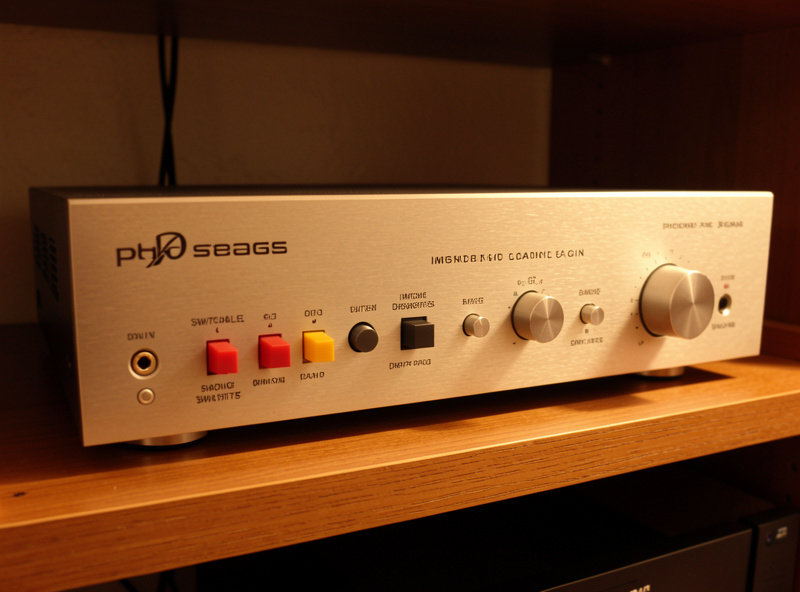
A constant hiss that rises with the volume control and does not change when you touch the grounding is a gain-and-matching issue, not a wiring fault. Phono stages apply a lot of gain — a moving-magnet cartridge needs around 40 dB, a low-output moving-coil needs 60 dB or more — and more gain means more audible hiss. If you are running a low-output MC into a stage set for high gain, or a mismatched loading, the noise floor rises and you hear a persistent rush between tracks.
The fix is matching. Confirm your phono stage is set for the right cartridge type: MM input for a moving-magnet, MC input (and correct impedance loading) for a moving coil. A moving-magnet cartridge typically wants 47 kΩ loading; moving-coils want far lower values, often in the 100 Ω region, and getting this wrong shifts both tone and noise. If your hiss is excessive with a budget stage, a better-designed phono stage genuinely lowers the noise floor — this is where spending money actually buys quiet. My guide to cartridge loading walks through matching capacitance and resistance, and cartridge selection covers MM versus MC output levels.
Hum vs Hiss vs Rumble: The Signatures
Three low-and-constant noises get confused, so pin them down. Hum and hiss are electrical; rumble is mechanical, a very low subsonic noise you feel more than hear, coming from a worn platter bearing or footfalls reaching the plinth. Rumble is not fixed by grounding or gain — it is a isolation and bearing problem. Use the table to match your noise to its cause.
| Noise | Character | Present With Arm Lifted? | Likely Cause | Fix |
|---|---|---|---|---|
| Hum | Steady 50/60 Hz drone | Yes | Grounding / ground loop | Connect ground wire; share outlet |
| Buzz | Harsher hum with harmonics | Yes | Ground loop / interference | Reroute cables; single ground path |
| Hiss | Constant high-frequency rush | Yes | Phono gain / cartridge match | Match gain & loading; better stage |
| Rumble | Subsonic, felt not heard | Yes | Bearing wear / footfalls | Service bearing; isolate deck |
| Crackle | Random fizz | No | Dust on the record | Clean the record |
Tracing It Down the Chain
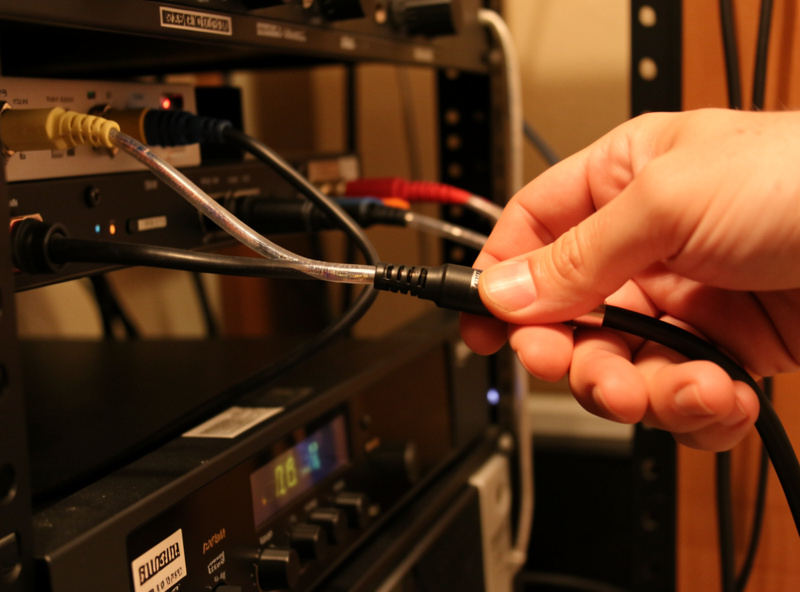
When the source is not obvious, isolate section by section. Disconnect the turntable from the phono stage: if hiss remains, it is downstream in the phono stage or amp, not the deck. Swap the phono interconnects for a known-good pair to rule out a bad or unshielded cable. Move the phono stage away from the amplifier and any power supplies. Try a different outlet. Each step removes one variable, exactly like the record-noise decision tree, just on the electrical side.
If the hum only appears when a specific other device is connected — a TV, a subwoofer, a cable box — you have found your ground loop, and breaking that device’s shared ground path (or using a proper ground-loop isolator on that connection) cures it. Remember that mechanical rumble can masquerade as electrical noise; if the low-frequency noise changes when you tap the shelf or walk across the room, it is a footfall and vibration issue, and the deck needs isolating, not rewiring. Work the chain methodically and the source always surfaces.
Frequently Asked Questions
Why do I hear hiss through my speakers on vinyl?
A constant hiss that rises with the volume is your phono stage gain and cartridge matching, not the record. Phono stages apply 40 to 60-plus dB of gain, and more gain means more audible hiss, especially with a low-output moving-coil cartridge into a mismatched stage. Match the gain and loading to your cartridge.
How do I know if the noise is electrical and not the record?
Lift the tonearm off the record with the system at normal volume. If the hum or hiss is still there with the stylus in the air, it is electrical or mechanical and cleaning will never fix it. If the noise only appears when the stylus is in the groove, it is on the record.
What causes hum on a turntable?
A steady 50/60 Hz hum is almost always a grounding problem — most often a disconnected or missing turntable ground wire, or a ground loop between the deck and other equipment. Connect the ground wire first, then share a single outlet and keep phono cables away from power supplies.
What is the difference between hum and hiss?
Hum is a low, steady 50/60 Hz drone you could hum along to, caused by grounding faults. Hiss is a higher, constant rush like escaping air, caused by phono stage gain and cartridge matching. Both are present with the arm lifted, which distinguishes them from record surface noise.
Can a cheap phono preamp cause noise?
Yes. Budget phono stages with flimsy wall-wart power supplies are a common source of hum, and their higher inherent noise floor produces more hiss. A better-designed phono stage genuinely lowers the noise floor, which is one of the few places where spending money reliably buys quiet.
Why do I get hum only when another device is connected?
That is a ground loop. Two devices sharing signal and mains connections create a circulating current that shows up as hum. Break the loop by plugging everything into one outlet, or use a ground-loop isolator on the offending connection such as a TV, subwoofer, or cable box.
Related Guides
- Vinyl Surface Noise: Causes and How to Diagnose It by Ear
- Phono Stage Guide: Gain, Loading, MM/MC
- Turntable Isolation and Vibration Control
- One Channel Sounds Noisier Than the Other
- Phono Preamp Explained