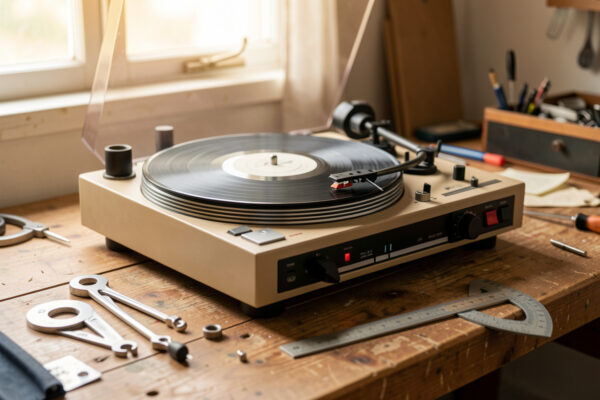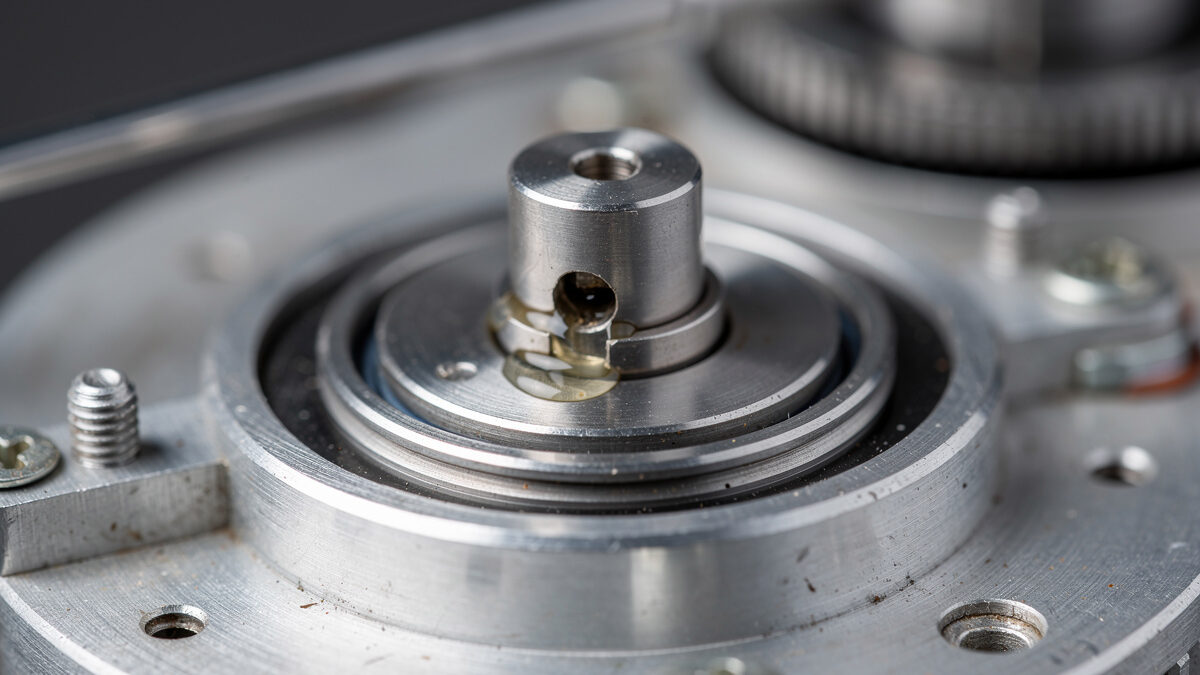
What Is a Turntable Bearing?
The turntable main bearing is the spindle assembly that supports the platter and allows it to rotate with minimal friction. It consists of a shaft (spindle), a sleeve or ball bearing that the shaft rides on, and a thrust pad at the bottom that supports the platter’s vertical weight. The bearing directly affects rumble, wow and flutter, and background noise during playback.
Over time, bearing oil degrades from heat, contamination, and evaporation. A dry or contaminated bearing produces audible rumble—a low-frequency noise that muddies the bass and reduces the signal-to-noise ratio. Regular lubrication every 12–18 months prevents this degradation and maintains the turntable’s original performance specifications.
Types of Turntable Bearings
Turntable bearings come in three main designs: sleeve bearings, ball bearings, and inverted bearings. Each type has different friction characteristics, maintenance requirements, and sonic signatures.
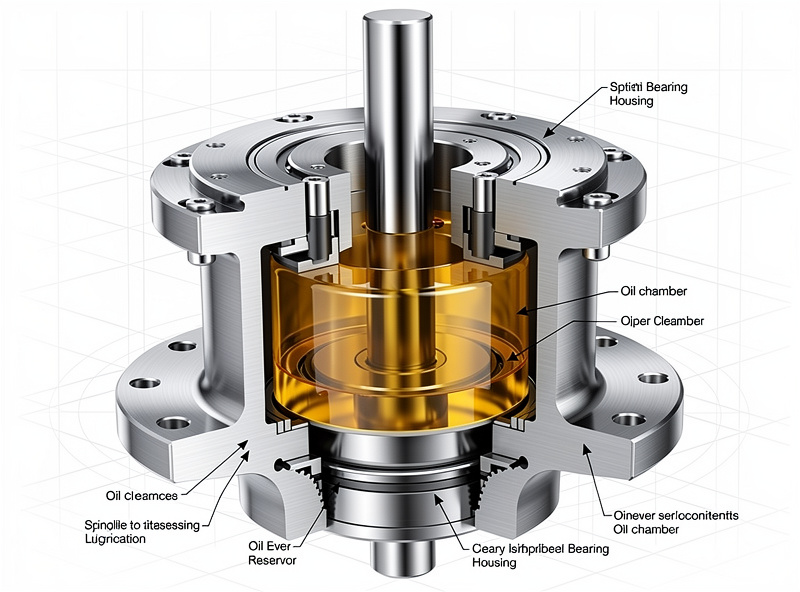
Sleeve bearings are the most common type in consumer turntables. The spindle sits inside a close-tolerance brass or bronze sleeve, separated by a thin film of oil. Sleeve bearings are simple, quiet, and require periodic oil replenishment. Most turntables from Audio-Technica, Fluance, Pro-Ject, and Rega use sleeve bearings.
Ball bearings use one or more steel or ceramic balls between the spindle and the housing, reducing point-contact friction. They are found in higher-end turntables and require less frequent lubrication than sleeve bearings but are more sensitive to contamination—a single dust particle in the bearing race can cause audible noise.
| Bearing Type | Friction | Noise Floor | Maintenance Interval | Cost to Replace | Common In |
|---|---|---|---|---|---|
| Sleeve | Low | Very Low | 12–18 months | $10–$30 | Entry to mid-range turntables |
| Ball | Very Low | Low | 18–24 months | $30–$80 | Mid to high-end turntables |
| Inverted | Near Zero | Ultra Low | 24–36 months | $80–$200 | High-end turntables |
Signs Your Bearing Needs Service
A healthy bearing produces no audible noise during playback. If you hear a low-frequency rumble, grinding, knocking, or rhythmic whooshing that increases with volume, the bearing is the likely culprit. Other signs include inconsistent speed (audible as pitch wavering on sustained notes), visible wobble in the platter, or increased wow and flutter measurements.
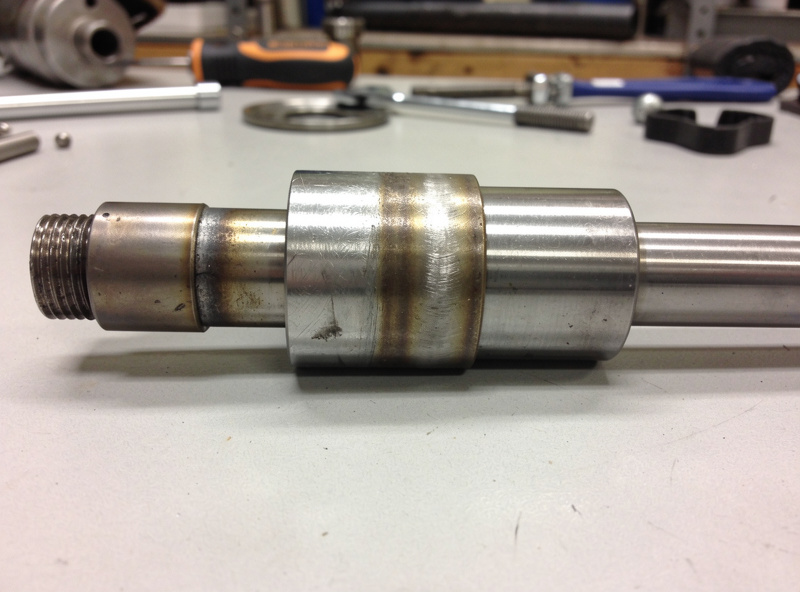
To test for bearing noise, remove the belt (on belt-drive turntables) and spin the platter by hand. A healthy bearing spins freely for 30+ seconds with a smooth, silent motion. If you hear any grinding, clicking, or feel roughness through the spindle, the bearing needs cleaning and oiling. If noise persists after lubrication, the thrust pad or sleeve may be worn and require replacement.
Bearing noise is most audible on quiet passages and between tracks. If you notice a low-frequency hum or rumble that appears only when the turntable is spinning (not when the motor runs without the platter), the bearing is confirmed as the source. Do not confuse bearing rumble with motor noise—motor noise continues when the platter is removed, while bearing noise stops.
How to Lubricate a Sleeve Bearing
Lubricating a sleeve bearing requires removing the platter, cleaning the spindle and bearing well, and applying fresh oil. The entire process takes 10 minutes and costs under $5 in materials.
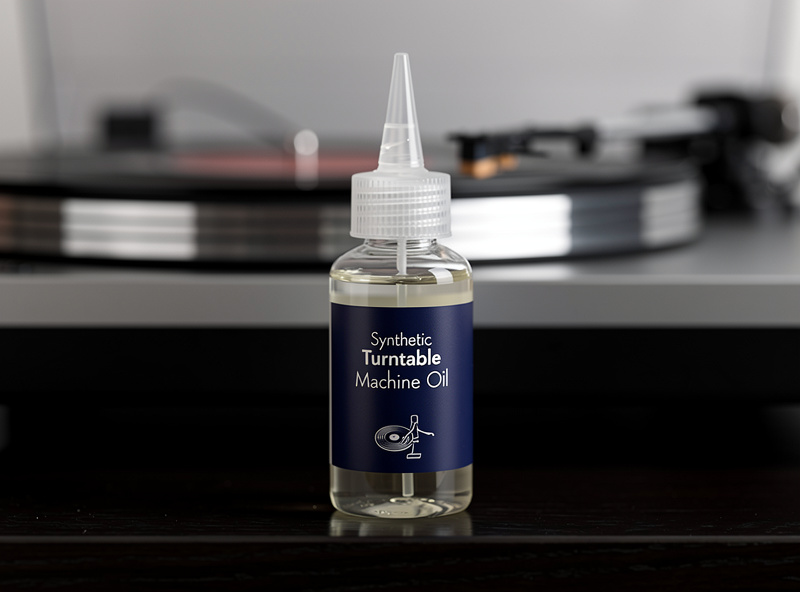
Step 1: Remove the platter. Lift the platter straight up off the spindle. On belt-drive turntables, remove the belt first by sliding it off the motor pulley and platter sub-platter. Set the belt aside on a clean surface to avoid picking up dust.
Step 2: Clean the spindle. Wipe the spindle with a lint-free cloth dampened with isopropyl alcohol (90% or higher). Remove all old oil, dust, and any dark residue that indicates metal wear. Clean the inside of the bearing well in the plinth using a cotton swab dipped in alcohol. Allow both surfaces to dry completely.
Step 3: Apply oil. Place 2–3 drops of synthetic bearing oil directly onto the spindle shaft. Recommended oils include Mobil 1 5W-30 synthetic motor oil (widely used by turntable technicians), Pro-Ject Bearing Oil ($8), or any lightweight synthetic machine oil rated for high-speed bearings. Do not use WD-40, vegetable oil, or sewing machine oil—these degrade quickly and can gum up the bearing.
Step 4: Reassemble. Insert the spindle into the bearing well and rotate the platter by hand several times to distribute the oil evenly across the bearing surface. The platter should spin freely with smooth, silent rotation. Reinstall the belt and verify the platter spins for 20+ seconds when given a gentle push.
Thrust Pad Replacement
The thrust pad is a small disc (usually brass, ruby, or ceramic) at the bottom of the bearing well that supports the spindle’s vertical weight. Over years of use, the thrust pad develops a small indentation from the spindle tip, which increases friction and can cause knocking or rumbling sounds during rotation.
Thrust pad wear is the most common cause of bearing noise that persists after lubrication. If the platter still knocks or rumbles after cleaning and oiling, inspect the thrust pad by looking into the bottom of the bearing well with a flashlight. A visible dimple or groove in the pad surface confirms wear.
Replacement thrust pads are available from turntable manufacturers for $10–$30. Install by removing the old pad (some press out, others unscrew), cleaning the well, and pressing or screwing in the new pad. After replacement, apply fresh oil and verify the noise is eliminated.
Bearing Sleeve Replacement
The bearing sleeve is the cylindrical housing that the spindle rides inside. In most turntables, the sleeve is pressed into the plinth and is not user-replaceable without specialized tools. Sleeve wear is rare in well-maintained turntables and typically only occurs after 15–20 years of use or after prolonged operation with insufficient oil.
Signs of sleeve wear include persistent spindle wobble (visible as platter runout), grinding that does not resolve after cleaning and oiling, and excessive play when you wiggle the spindle horizontally. If the sleeve is worn, the turntable manufacturer or a specialized technician can press out the old sleeve and install a new one.
For turntables where the bearing assembly is integrated into the plinth (common in entry-level models), sleeve replacement may cost more than the turntable is worth. In this case, consider upgrading to a new turntable rather than investing in bearing repair. See Turntable Buying Guide for replacement recommendations.
Bearing Oil Selection
The best bearing oils are lightweight synthetic oils with high film strength and low evaporation rates. Mobil 1 5W-30 is the most widely recommended general-purpose option because it is inexpensive, widely available, and has excellent long-term stability. Purpose-made turntable bearing oils from Pro-Ject ($8), Michell ($12), and Origin Live ($15) are formulated specifically for the slow-speed, high-pressure conditions in turntable bearings.
Avoid heavy oils (20W-50, gear oil) because they increase drag and slow the platter. Avoid thin oils (3-in-1 oil, sewing machine oil) because they evaporate quickly and leave gummy residue. Avoid any oil containing detergents (most automotive oils contain them)—detergents suspend particles in the oil, which is desirable in engines but harmful in precision bearings where particles accelerate wear.
One bottle of bearing oil lasts for years of maintenance. A 4-ounce bottle of Pro-Ject Bearing Oil costs $8 and provides approximately 50 bearing lubrications at 2–3 drops each. This is one of the cheapest maintenance items in analog audio and one of the most impactful.
Speed Stability and Bearing Condition
Bearing condition directly affects wow and flutter measurements. A worn or dry bearing introduces friction that the motor must overcome, causing speed variations that are audible as pitch instability on sustained musical notes. Clean, well-lubricated bearings allow the motor to maintain consistent speed with minimal effort.
On belt-drive turntables, the belt absorbs some bearing noise and friction, masking degraded bearing condition. This means bearing problems can develop slowly without obvious symptoms until the degradation becomes severe. Proactive lubrication every 12–18 months prevents the gradual accumulation of wear that eventually becomes audible.
Direct-drive turntables with servo feedback control are more sensitive to bearing condition because the motor actively compensates for speed variations. A worn bearing on a direct-drive turntable causes the servo to work harder, which can introduce audible motor noise as the electronics struggle to maintain speed against increased bearing drag.
Preventive Maintenance Schedule
A consistent maintenance schedule keeps the bearing in optimal condition and extends the turntable’s lifespan. Follow this schedule regardless of how frequently you use the turntable—oil degrades from exposure to air even when the turntable is idle.
| Interval | Action | Time Required | Cost |
|---|---|---|---|
| Every 12–18 months | Clean spindle and bearing, apply fresh oil | 10 minutes | $0.15 (2–3 drops of oil) |
| Every 3–5 years | Inspect thrust pad for wear dimple | 5 minutes | $0 |
| As needed | Replace thrust pad if worn | 15 minutes | $10–$30 |
| As needed | Replace bearing sleeve (rare, technician required) | 1 hour | $50–$150 |
For a comprehensive turntable maintenance routine that includes the bearing, tonearm, cartridge, and belt, see Turntable Upgrade Guide. Record cleaning is equally important for playback quality—see How to Clean Vinyl Records and Vinyl Record Care Guide.
Frequently Asked Questions
How often should I oil my turntable bearing?
Every 12–18 months. Apply 2–3 drops of synthetic bearing oil such as Mobil 1 5W-30 or Pro-Ject Bearing Oil after cleaning the spindle with isopropyl alcohol. This takes 10 minutes and costs less than 20 cents per service.
What oil should I use for my turntable bearing?
Use lightweight synthetic oil without detergents. Mobil 1 5W-30 is the most widely recommended general-purpose option. Purpose-made turntable oils from Pro-Ject ($8) and Michell ($12) are formulated for slow-speed precision bearings.
Can I use WD-40 on my turntable bearing?
No. WD-40 is a solvent and water displacer, not a lubricant. It evaporates quickly and leaves a gummy residue that increases bearing friction. Use synthetic motor oil or purpose-made turntable bearing oil instead.
How do I know if my turntable bearing is worn?
Spin the platter by hand with the belt removed. A healthy bearing rotates silently for 30+ seconds. Grinding, clicking, knocking, or roughness indicates wear. Persistent noise after cleaning and oiling suggests a worn thrust pad or sleeve.
What is a thrust pad and when should I replace it?
The thrust pad is a small disc at the bottom of the bearing well that supports the spindle’s vertical weight. Replace it when you see a visible dimple or groove in the pad surface, or when bearing noise persists after lubrication. Thrust pads cost $10–$30.
Does bearing condition affect sound quality?
Yes. A dry or worn bearing introduces rumble, increases wow and flutter, and raises the noise floor. Clean, lubricated bearings allow the motor to maintain consistent speed with minimal drag, resulting in tighter bass and cleaner background silence.
Related Articles
- Turntable Upgrade Guide: Cartridges, Platters, Mats, and Tonearms
- Turntable Platter Upgrades: Acrylic, Glass, and Metal
- Belt Drive vs Direct Drive Turntables: Which Is Better?
- Vinyl Record Care Guide: Protect Your Collection for Decades
- Turntable Buying Guide 2026: How to Choose Your First Record Player