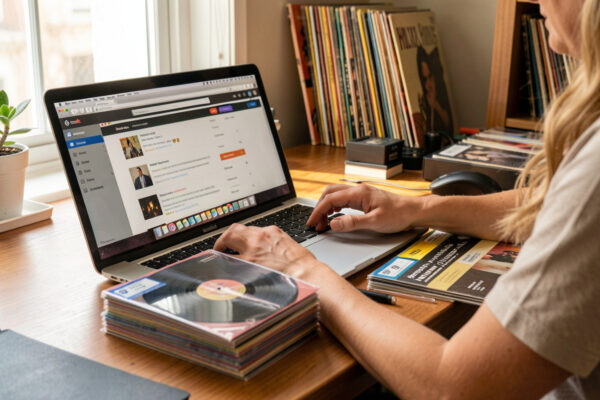
To sell vinyl records online you grade each disc to the Goldmine standard, list it where the right buyers already shop (Discogs for catalog depth, eBay for reach, local channels for bulk), and pack it so it survives the post. I have shipped a few hundred records out of my own collection over the years, and the single biggest lesson is that honest grading and a flat, rigid mailer matter more than which platform you pick. Get those two right and the rest is logistics.
This guide is the map for the whole job: how to grade to a standard buyers trust, how to set a realistic asking price using sold-listing data, where to actually sell (online and locally), and how to pack vinyl so it arrives flat and unmarked. Treat any price figure here as a reference point for comparison, not a promise — the market moves, condition is everything, and your pressing may be worth more or less than the next one that looks identical.
Why Grading Comes Before Everything Else
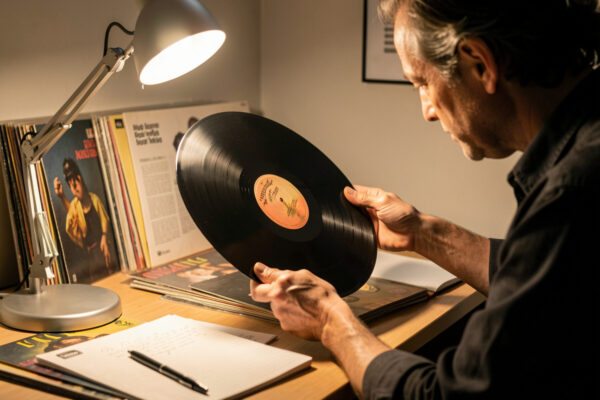
Grading is the foundation of every vinyl sale because price, trust, and returns all hang off it. The Goldmine Standard runs Mint (M), Near Mint (NM), Very Good Plus (VG+), Very Good (VG), Good (G), and Poor (P), and the gap between two adjacent grades can double or halve a record’s value. I grade under a single bright bulb at a low angle, sleeve out, disc tilted so the light rakes across the grooves.
The mistake new sellers make is grading by hope rather than by light. A record that looks clean flat-on will show a haze of hairlines the moment you tilt it under a raking light, and those hairlines are exactly what a buyer sees when they pull it out of the mailer. I grade the visual surface and the play separately, and when they disagree, the play grade wins because that is what the buyer actually hears. The full method — what each grade allows, how to test play noise, and how to write the listing note — lives in the dedicated grading vinyl records for sale walkthrough.
Clean the Record Before You Grade or List
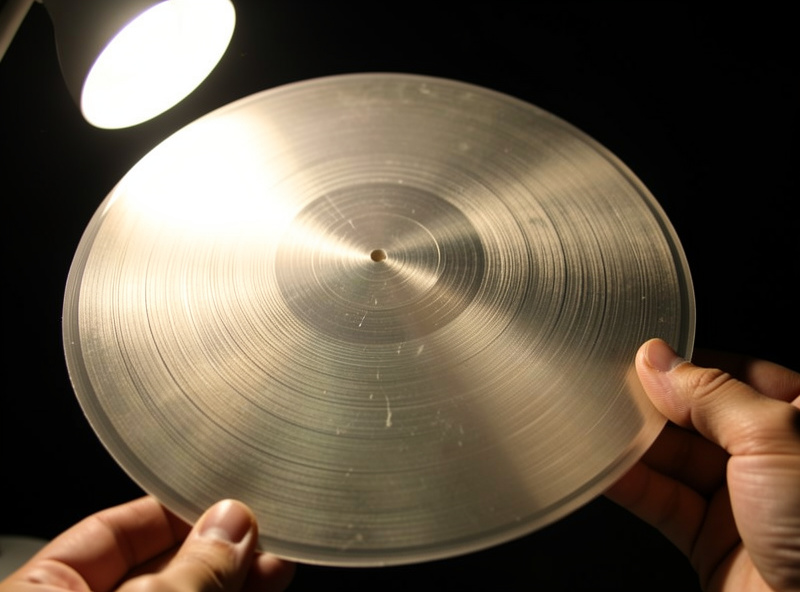
Cleaning a record before grading can lift it a full grade, because most of what reads as “noise” is dust and fingerprints sitting in the groove, not pressing damage. A wet clean removes the loose debris that masks the true surface, so I always clean a disc before I make the final grading call. A used record that grades VG dirty often plays VG+ once the grime is out of the groove.
That single step is the highest-return thing you can do before a sale. My own routine runs a carbon-fibre brush every play and a proper wet clean on anything incoming, and for thrift finds a deeper vacuum-style clean. I have written the whole cleaning system out separately — the vinyl record cleaning guide covers the method end to end, the wet cleaning walkthrough covers the fluids and pads, and cleaning used records covers the aggressive deep clean a flea-market disc needs before you can grade it honestly.
Where to Sell Vinyl Records Online
The best place to sell online depends on what you are moving: Discogs suits catalogue records and collectors who want exact pressing matches, eBay suits rarities and anything that benefits from a bidding war, and a personal storefront suits high-volume sellers. Discogs takes a small percentage fee on the sale; eBay’s final-value fee runs higher but the audience is wider. I lean Discogs for anything with a clear matrix number and eBay for the genuinely scarce.
Discogs wins on accuracy because every listing attaches to a specific release in its database, so the buyer knows the exact pressing, label variant, and country of issue. That precision is the whole point for catalogue collectors. eBay wins on reach and on price discovery for rare items, because an auction lets the market set the number rather than you guessing it. The trade-off is buyer expectation: Discogs buyers are pressing-literate and unforgiving of optimistic grades, while eBay buyers skew more casual. The full platform-by-platform workflow is in the selling vinyl records on Discogs guide.
Where to Sell Vinyl Records Locally
Selling locally trades top dollar for speed and zero shipping risk: a record store buying your collection will typically offer a wholesale fraction of resale value, while a record fair table or a local marketplace listing gets you closer to retail but costs you time. For a 300-disc clear-out, a store is the fast exit; for fifty good records, a fair table usually nets more.
I treat the local channels as a portfolio. A shop is the right home for the bulk filler that would cost more to list and ship individually than it would ever return. A record fair table is where the mid-tier records do well, because buyers are flipping through crates in person and impulse-buy in a way they never do online. And a local classified sale moves a whole collection in one transaction with no packing at all. The where to sell vinyl records locally guide breaks down what each venue realistically pays and how to prepare for it.
How to Price Used Vinyl Records
Price a used record from sold data, not from asking prices: pull the recent sold listings for that exact pressing and grade on Discogs or eBay, take the median, then adjust for your condition. A record listed at a high asking price tells you nothing — only completed sales reveal what buyers actually paid. Treat every figure as a reference, because condition, pressing, and timing all move the number.
The trap is anchoring to the highest number you see. One optimistic seller asking a big figure for a NM copy does not set the market; the cluster of recently completed sales does. I sort sold listings by date, throw out the obvious outliers at both ends, and price a touch under the median if I want a fast sale or at the median if I am patient. The detailed method — reading Discogs’ price history, handling rare pressings with thin data, and pricing collections in bulk — sits in the pricing used vinyl records guide.
Grade Honestly or Eat the Returns
Over-grading is the fastest way to lose money in vinyl sales, because an inflated grade leads to a return, a refund, and a return-shipping cost — and on most platforms, a feedback hit that suppresses future sales. A record described as NM that arrives VG comes straight back. I grade conservatively on purpose; an under-promised record that over-delivers earns repeat buyers.
This is the one place where being generous to yourself costs the most. The buyer cannot hear your record before it arrives, so your grade and your photos are the entire contract. When I am genuinely unsure between two grades, I list the lower one and say so in the note. The records I have had come back were always the ones where I talked myself up half a grade. Conservative grading is not modesty — it is the cheapest insurance you can buy against returns.
Pack Vinyl So It Survives the Post
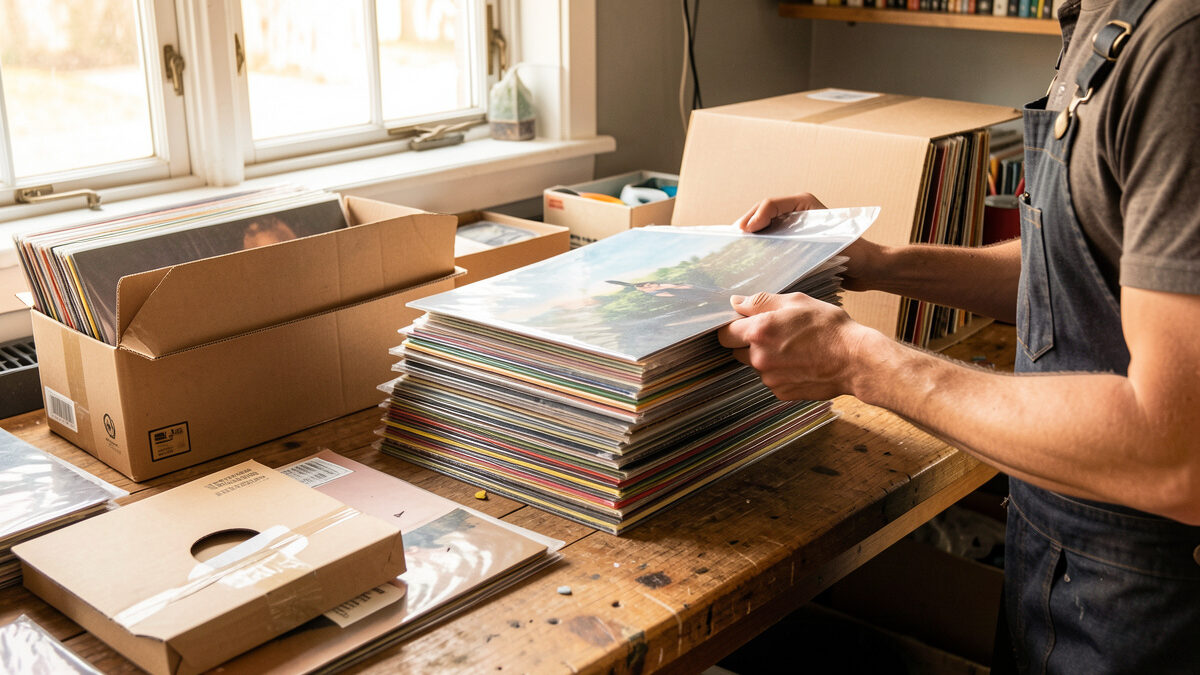
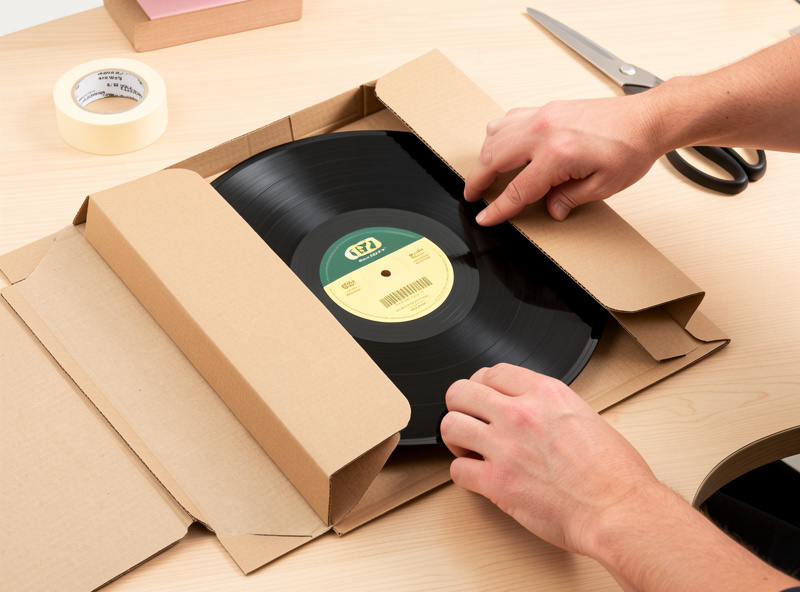
A record survives shipping when it cannot move and cannot bend: take the disc out of the album jacket so a dropped parcel does not split the seams, sandwich it between rigid stiffeners, and use a proper record mailer rather than a generic box. Most shipping damage is seam splits and corner dings from a jacket that was left loose inside an under-stiffened box. The right mailer turns a fragile sale into a routine one.
My packing routine is fixed because it works: disc out of the jacket and into a fresh poly inner sleeve, jacket in an outer sleeve, both placed between two pieces of stiff board cut larger than the record, and the whole sandwich into a true LP mailer. The disc rides outside the jacket, never inside it, so a flexed parcel cannot push the record’s edge through the cardboard. The full step-by-step — board weights, mailer types, and how to tape it — is in the packing vinyl records for shipping guide.
Selling at Record Fairs
A record fair table puts you in front of buyers who came specifically to dig, which is why mid-tier records that sit unsold online often move fast in a crate. The economics are simple: you pay a table fee, you price to sell in a day, and you trade some margin for volume and zero shipping. Bring change, price clearly, and sort by genre so buyers can flip efficiently.
Fairs reward preparation. The sellers who do well have clean, graded, sleeved records in browsable crates with prices on the sleeves, not a heap of unsorted vinyl. I price a fair table a little keener than I would online because the buyer is paying cash, taking the record away, and saving me the packing and postage. The record fair selling guide covers table setup, pricing strategy for a one-day sale, and the gear that makes a fair table run smoothly.
How Condition Maps to Value
The single biggest lever on a record’s value is its grade, and the jump between grades is rarely linear: the step from VG to VG+ is often worth far more proportionally than the step from VG+ to NM, because VG+ is where most serious buyers start. Below is how the Goldmine grades typically map to expectation and price behaviour. Use it as a reference frame, not a price list — your specific pressing always overrides the general pattern.
| Goldmine Grade | Surface Condition | Play Behaviour | Relative Value | Best Sales Channel |
|---|---|---|---|---|
| Mint (M) | Sealed or truly untouched | Unplayed, perfect | Top tier; rare and disputed | Specialist collector / auction |
| Near Mint (NM) | No visible marks under raking light | Silent, no surface noise | Benchmark resale value | Discogs / eBay |
| Very Good Plus (VG+) | Light hairlines, no scratches you feel | Faint noise in quiet passages only | Roughly half to two-thirds of NM | Discogs / eBay |
| Very Good (VG) | Visible groove wear and marks | Audible surface noise throughout | Marked discount from VG+ | Bulk online / fair crate |
| Good (G) | Scuffs, scratches, possible warps | Noticeable noise, may skip | Filler / common-title pricing | Record fair / store bulk |
| Poor (P) | Heavy damage, cracks, gouges | Skips, unplayable sections | Near zero unless ultra-rare | Store bulk / not worth listing |
Where Selling Fits in the Vinyl Hobby
Selling is the back half of the same skill set that keeps your collection sounding good: a record that has been cleaned properly, stored flat, and handled by the edges grades higher and sells faster than one that has been abused. The disciplines connect directly — good record storage keeps jackets square and discs flat, and a clean disc grades up. Sellers who care about their gear sell better records.
That is the throughline across this site. The same attention that makes you align a cartridge by protractor instead of by eye makes you grade a record by raking light instead of by hope. If you are clearing out duplicates to fund an upgrade, the money is best spent in order — cleaning, setup, phono stage, cartridge, table. Storing records well with the right inner sleeves and outer sleeve protectors protects both the records you keep and the value of the ones you eventually sell.
If you are new to the buying side of the same market, the care fundamentals carry straight over: knowing how to clean records, how to read a long-term care routine, and how to store records correctly are the same skills that let you grade what you sell. And if you are still building the playback side, the turntable buyer’s guide and the cartridge alignment guide are where the listening-room money goes.
For anyone who reaches the deep end of the market — first pressings, dead-wax matrix numbers, and audiophile reissues — the collector valuations get genuinely arcane, and the high-end side prices those in ways a generalist seller should treat with caution. I keep my own selling to records I can grade and price with confidence, and I would rather under-list a rarity than over-promise on a pressing I cannot fully authenticate.
What Actually Sells and What Just Sits
The records that move fast are clean common titles in VG+ or better and genuine scarcities at any grade; the records that sit are scratched copies of titles that were pressed in their millions. A worn copy of a record that everyone already owns is worth more as a coaster than as a listing, because the time to photograph, grade, list, and ship it will never come back as profit. I sort a collection into “list it,” “fair crate,” and “bulk to a store” piles before I touch the camera.
The decision that saves the most time is admitting which records are not worth listing individually. A scuffed VG copy of a hugely common pressing competes against hundreds of identical listings, and the cents it might fetch do not cover a mailer and an hour of work. Those go in the bulk pile for a store or a fair table priced to clear. The records that earn the individual treatment are the clean ones, the uncommon ones, and anything where the pressing variant genuinely matters to a collector. Spending your listing effort where it pays back is the difference between a profitable clear-out and a frustrating one.
Selling a Whole Collection at Once
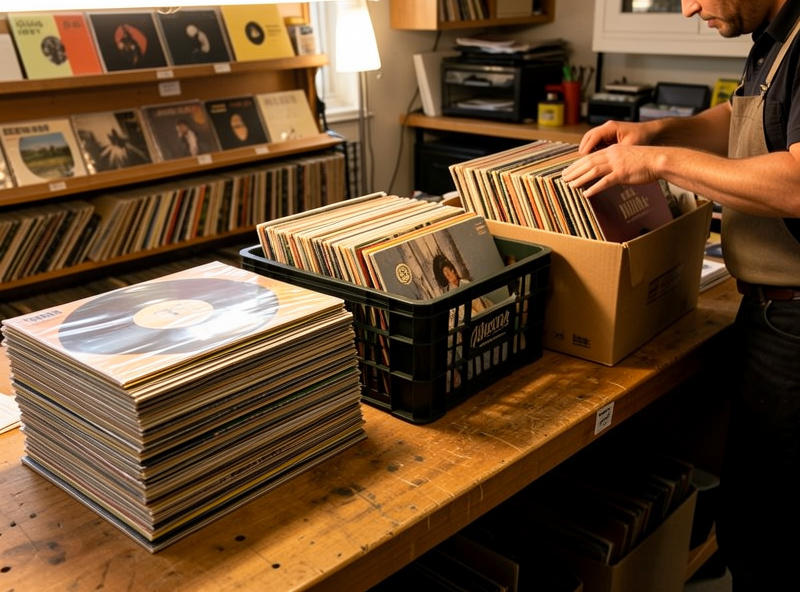
Selling an entire collection is a different job from selling individual records: you are trading maximum return for speed and simplicity, so the right move is usually a store or a bulk private sale rather than hundreds of separate listings. A dealer buying in bulk pays a wholesale fraction — often a meaningful discount to piece-by-piece resale — but you walk away in one transaction with no grading, listing, or shipping to do. For an inherited or downsized collection, that simplicity is frequently worth the margin.
If you do choose to break a collection up, cherry-pick first. Pull the genuinely valuable records to sell individually online where the audience and the price discovery are best, then move the long tail in bulk. That hybrid keeps the upside on the records that deserve it without burying you in admin for the filler. Whatever route you take, clean and roughly grade the lot first — even a bulk buyer pays more for records that are visibly cared for, and the cleaning step that lifts grades online lifts your bulk offer too. Storing the collection well in the meantime, with proper inner sleeves and square shelving, keeps it saleable instead of letting jackets ringwear and discs warp while you decide.
As a small disclosure: some links on this site are affiliate links, and I may earn a commission on qualifying purchases at no extra cost to you.
Frequently Asked Questions
What is the best way to sell vinyl records online?
Grade each record to the Goldmine standard, list catalogue titles on Discogs and rarities on eBay, price from recent sold listings, and pack each disc out of its jacket between rigid stiffeners in a true LP mailer. Honest grading and rigid packing matter more than the platform.
How do I price a used vinyl record?
Pull recent sold listings for the exact pressing and grade on Discogs or eBay, take the median of completed sales, then adjust for your record’s condition. Ignore asking prices, which reflect hope rather than what buyers actually paid. Treat all figures as reference points only.
Should I clean a record before selling it?
Yes. Cleaning before grading can lift a record a full grade, because most groove noise is dust and fingerprints rather than damage. A wet clean reveals the true surface, so a disc that grades VG dirty often plays VG+ once the grime is removed from the groove.
Is it better to sell vinyl online or locally?
Online channels like Discogs and eBay reach more buyers and get closer to retail, but cost you grading, listing, and shipping time. Local sales to a store or at a record fair are faster with zero shipping risk, but a store pays a wholesale fraction of resale value.
How should I pack vinyl records for shipping?
Take the disc out of the album jacket so a dropped parcel cannot split the seams, sandwich the record and jacket between two rigid boards cut larger than the record, and ship in a proper LP mailer rather than a generic box. The disc rides outside the jacket, never inside it.
What does VG+ mean when grading vinyl for sale?
Very Good Plus means light hairlines visible under raking light but no scratches you can feel, with faint surface noise only in quiet passages. VG+ is where most serious buyers start, so it typically holds roughly half to two-thirds of the value of a Near Mint copy.
Related Guides
- Vinyl Record Cleaning Guide — clean before you grade to recover a full grade of value.
- Vinyl Record Storage Guide — keep jackets square and discs flat so they grade and sell higher.
- Vinyl Record Care Guide — the long-term handling routine that protects resale value.
- Cleaning Used Records — the deep clean a thrift find needs before honest grading.
- Cartridge Alignment Guide — the same setup discipline that makes a good seller.