How Vinyl Records Degrade Over Time
Vinyl records are remarkably durable when stored and handled correctly — a well-cared-for pressing from 1970 can play as well today as the day it left the plant. But records degrade through four primary mechanisms: dust accumulation, static buildup, heat damage, and ultraviolet exposure. Understanding each degradation pathway is the foundation of any serious vinyl record care guide, because prevention is always easier and cheaper than restoration.
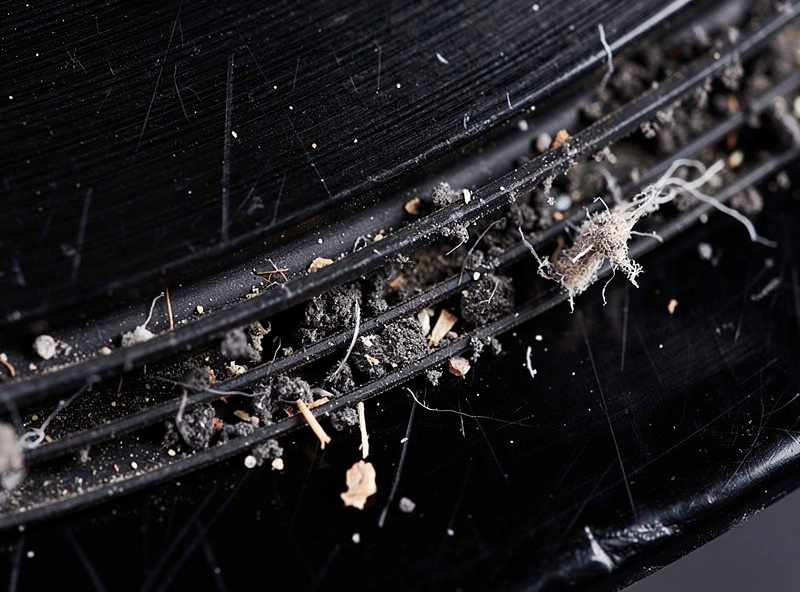
Dust settles into the grooves during every play, every sleeve change, and every moment the record sits exposed. Each dust particle the stylus rides over produces an audible pop or crackle. Over time, embedded dust particles carve micro-scratches into the groove walls, permanently increasing surface noise. A record played 100 times without cleaning accumulates measurable groove damage that wet cleaning cannot reverse.
Static electricity attracts dust like a magnet. Vinyl is an excellent insulator, and the friction of the stylus in the groove generates static charge with every play. A statically charged record can attract airborne dust particles from several inches away, coating the surface within minutes of removing it from the sleeve. Anti-static inner sleeves reduce this problem, but ambient humidity and handling also affect static levels. In dry winter environments below 30% relative humidity, static buildup accelerates dramatically.
Heat warps records. PVC — the material vinyl records are made from — softens at approximately 140°F (60°C). A record left in a car dashboard on a summer day can reach 150°F, causing permanent warps that ruin playback. Even temperatures below the softening point cause gradual warping over weeks of exposure. The shelf above a radiator, the sunny windowsill, and the trunk of a car are all record-destroying environments.
Ultraviolet light degrades PVC chemically, causing the surface to become brittle and develop a cloudy oxidation layer. Records displayed on walls in direct sunlight deteriorate visibly within 1–2 years. The groove walls develop micro-fractures that increase surface noise permanently. UV damage is irreversible — prevention is the only cure.
Proper Handling: The First Line of Defense
How you touch a record matters more than anything else you do to protect it. Fingerprints deposit oils and acids from skin onto the groove surface. These oils attract dust, embed into the PVC, and create a film that reduces stylus contact with the groove walls. Over time, fingerprint residue hardens and becomes extremely difficult to remove without aggressive cleaning that risks damaging the groove.
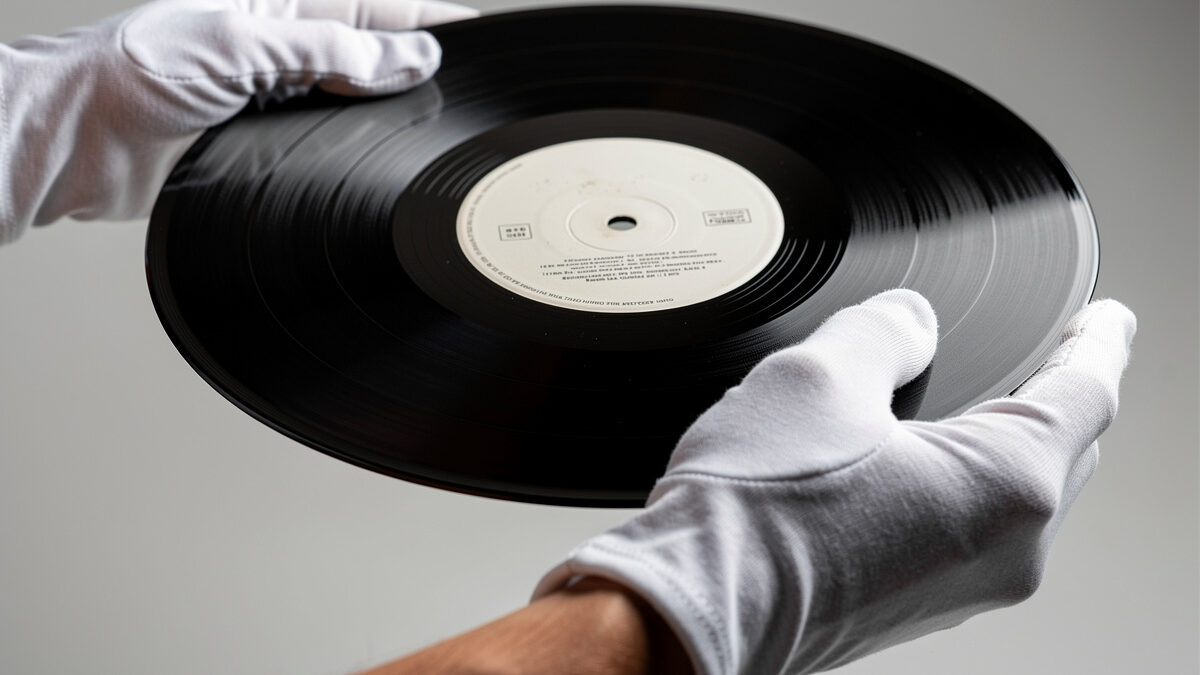
Always handle records by the edges and the label area. Grip the record with your fingertips on the outer rim and your index finger through the center hole or on the label. Never touch the playing surface — the area between the label and the outer edge where grooves are pressed. This single habit prevents 80% of preventable record damage.
Remove the record from its inner sleeve by tilting the sleeve and letting the record slide out onto your palm. Do not pinch the record between your thumb and fingers to pull it from the sleeve. When placing the record on the turntable, hold it by the edges and lower it gently onto the spindle. Let the platter support the record’s weight — do not press down on the label.
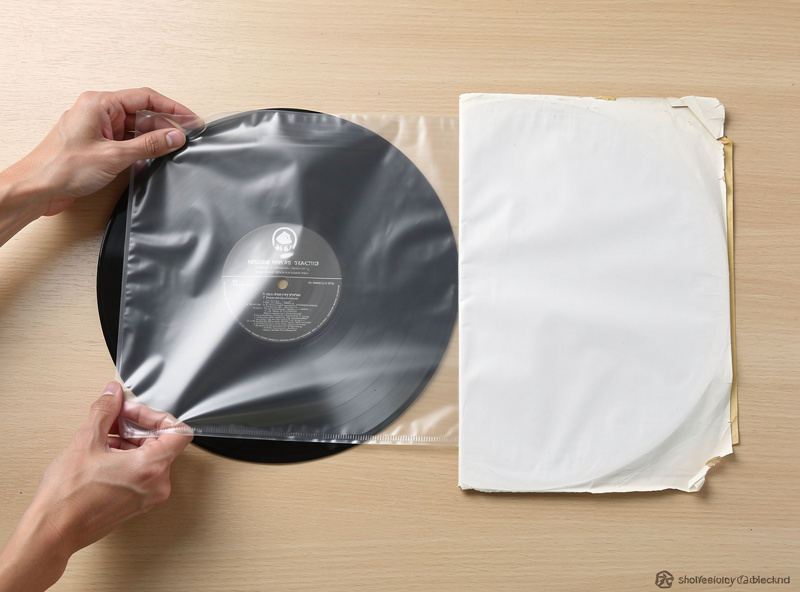
Return the record to its inner sleeve immediately after playing. Leaving a record on the turntable, leaning against the shelf, or stacked on a flat surface exposes it to dust, accidental scratches, and warping from uneven pressure. The 10 seconds it takes to sleeve a record after each play prevents years of cumulative damage.
Inner Sleeves: Paper vs Poly vs MOFI-Style
The inner sleeve is the record’s closest layer of protection. Standard paper sleeves — the kind that ship with most new records — are abrasive. Paper fibers scratch the surface every time the record slides in and out. Worse, cheap paper sleeves shed dust particles directly into the grooves. Replacing paper sleeves with anti-static alternatives is the single most cost-effective record care upgrade.
Polyethylene sleeves ($0.15–$0.30 each). These clear, smooth sleeves reduce friction and static compared to paper. They do not shed fibers and cost under $15 for a pack of 50. Poly sleeves are the minimum standard for any collection you care about. They slide easily, resist tearing, and last for years without degrading.
MOFI-style rice paper sleeves ($0.40–$0.60 each). These premium sleeves combine a polyethylene outer layer with a rice paper inner lining. The rice paper absorbs a small amount of static charge while providing a soft, non-abrasive surface. Mobile Fidelity Sound Lab popularized this design, and it remains the gold standard for archival storage. At $25–$30 for 50 sleeves, the cost per record is negligible compared to the value of the collection they protect.
Anti-static lined paper sleeves ($0.25–$0.40 each). A hybrid design that uses standard paper construction with an inner poly lining. Better than plain paper but not as effective as full poly or MOFI-style sleeves. These are acceptable for records you play infrequently but not recommended for prized pressings.
Outer Sleeve Protection
Outer sleeves protect the album jacket from ring wear, edge damage, and moisture. Ring wear occurs when the record’s edge presses against the jacket from inside, creating a visible circular wear mark on the cover. Over years of storage, ring wear can destroy the visual appeal of a collectible jacket, reducing its value significantly.
Polypropylene outer sleeves ($0.10–$0.20 each) fit over the jacket and prevent ring wear, spine splitting, and corner damage. They also protect against moisture condensation during temperature changes. Use 3 mil thickness for standard single LPs and 4 mil for gatefold double albums or thick box sets.
Store records with the opening of the outer sleeve facing up (like a book on a shelf), not facing outward. This prevents the record from sliding out of the jacket and onto the shelf. The outer sleeve’s opening should align with the jacket’s opening so you can access the record without removing the outer sleeve.
Cleaning Methods Overview
Records need cleaning at three stages: when first purchased (especially used records), before each play (dry brush), and periodically for deep cleaning (every 20–50 plays). Our detailed how to clean records guide covers step-by-step processes for each method, but here is an overview of the available approaches.
Dry cleaning (carbon fiber brush). A quick sweep with an anti-static carbon fiber brush before each play removes surface dust that causes pops and crackle. This takes 5 seconds and dramatically reduces groove noise. It is not a substitute for wet cleaning but prevents dust from embedding into the grooves during playback.
Wet cleaning (manual). Apply a cleaning solution to the record surface, scrub gently with a velvet or microfiber brush following the groove direction, then wipe dry with a clean microfiber cloth. This method removes embedded dust, mold release compounds from new pressings, and light contamination. A basic wet cleaning kit costs $20–$40.
Vacuum cleaning. Record cleaning machines like the VPI HW-16.5 ($500) or Pro-Ject VC-E ($400) apply cleaning fluid, scrub with a brush, then vacuum the fluid and contaminants off the surface in one pass. Vacuum cleaning is the most effective manual method and is the standard for serious collectors. Our reviews of the best record cleaners compare vacuum and ultrasonic options.
Ultrasonic cleaning. Ultrasonic cleaners like the HumminGuru ($500) or Degritter ($3,000) use high-frequency sound waves to create microscopic cavitation bubbles that dislodge contaminants from deep within the grooves. Ultrasonic cleaning reaches areas that brushes cannot, making it the most thorough method available. It is also the gentlest, since no physical contact occurs between the cleaning mechanism and the groove surface.
Cleaning Products Comparison Table
| Method | Product Example | Price | Effectiveness | Time Per Record | Best For |
|---|---|---|---|---|---|
| Carbon fiber brush | AudioQuest Anti-Static | $18 | Surface dust only | 5 seconds | Pre-play maintenance |
| Velvet brush + fluid | Audio-Technica AT634a | $25 | Light contamination | 30 seconds | Regular maintenance |
| Microfiber + spray | Big Fudge cleaning kit | $30 | Moderate contamination | 1 minute | Home cleaning |
| Vacuum machine | VPI HW-16.5 | $500 | Deep cleaning | 2 minutes | Serious collectors |
| Ultrasonic | HumminGuru | $500 | Deepest cleaning | 5 minutes (automated) | Archival restoration |
| Ultrasonic (premium) | Degritter | $3,000 | Reference grade | 5 minutes (automated) | High-value collections |
| DSP (enzyme solution) | Audio Intelligent #15 | $30 | Mold, organic residue | 1 minute soak + wipe | Used record restoration |
| DIY solution | Distilled water + surfactant | $5 | Basic wet cleaning | 1 minute | Budget option |
Storage Best Practices Overview
Proper storage is the passive half of record care — the part that protects your collection 24 hours a day without any ongoing effort. Our comprehensive record storage tips guide covers shelving, climate control, and organization in detail. The essential principles are vertical storage, stable temperature, moderate humidity, and protection from physical damage.
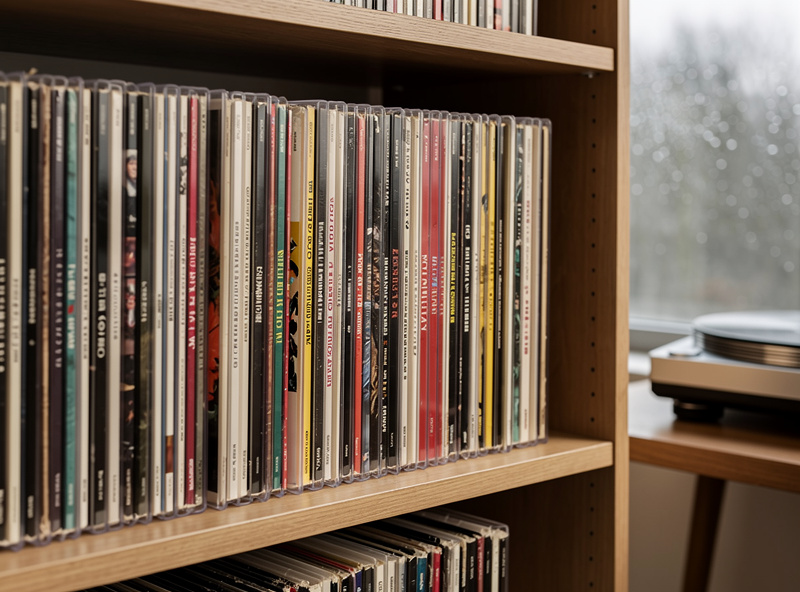
Always store records vertically. Stacking records flat causes the bottom record to bear the weight of the entire stack, leading to warping over weeks or months. Vertical storage distributes weight evenly across the edge of each record, which is the structurally strongest orientation. Records stored vertically in a stable environment do not warp. The nuances of storing vinyl records vertical or horizontal — including the one exception where brief flat storage is tolerated — are covered in their own guide.
Maintain temperature between 65–75°F (18–24°C). Avoid locations near heat sources (radiators, heating vents, direct sunlight). PVC is thermoplastic — it softens with heat and takes a permanent set when cooled under stress. A record warped at 140°F is irreparable.
Keep humidity between 40–50%. Too dry (below 30%) increases static buildup. Too humid (above 60%) promotes mold growth on jackets and can cause paper sleeves to stick to the record surface. A hygrometer near your collection costs $10 and lets you monitor conditions passively.
Climate Control: Temperature and Humidity Management
Vinyl records are stable across a wide range of conditions, but extreme temperatures and humidity cause permanent damage. The two most important parameters are temperature (which affects warping) and humidity (which affects static, mold, and paper degradation).
Temperature. PVC softens at 140°F and becomes brittle below freezing. The ideal storage range is 65–70°F (18–21°C), which is a comfortable room temperature. Avoid attics (heat), basements (dampness), garages (temperature swings), and exterior walls (cold in winter). Interior rooms with climate control are ideal.
Humidity. 40–50% relative humidity is optimal. Below 30%, static charge accumulates rapidly, attracting dust and causing pops. Above 60%, mold can grow on paper jackets and sleeves. In humid climates, a small dehumidifier in the storage room costs $30–$50 and protects your entire collection. In dry climates, a small humidifier or simply keeping a water source nearby maintains adequate moisture.
Temperature fluctuations are worse than consistently elevated temperatures. Rapid changes cause differential expansion between the record’s outer edge and center, creating dishing or warping. Keep records away from exterior walls, heating vents, and windows. If your storage room has a south-facing window, use blackout curtains to prevent solar heat gain.
Preserving Valuable and Collectible Records
First pressings, limited editions, and autographed records require additional protection beyond standard care practices. The goal is to maintain both the playing condition and the physical condition of the jacket, sleeve, and any inserts (lyric sheets, posters, stickers).
Archive-grade outer sleeves. Use acid-free, archival-quality polypropylene sleeves for valuable records. Standard polypropylene sleeves are fine for everyday collections, but archival sleeves prevent long-term chemical interaction between the sleeve material and the jacket surface. Archival sleeves cost $0.30–$0.50 each.
Original inserts. Keep all original inserts — lyric sheets, inner sleeves, download cards, stickers, and posters — inside the jacket. Missing inserts reduce the value of collectible pressings. If the original inner sleeve is damaged, store the record in a MOFI-style replacement and keep the damaged original separately inside the jacket as documentation.
Separate storage for high-value records. Records worth $100+ benefit from individual archival storage in dedicated boxes or shelves away from the main collection. This prevents accidental damage during browsing and reduces handling frequency. Limit plays of irreplaceable pressings — if a recording is available on streaming, listen digitally and reserve the vinyl for special occasions.
Document your collection. Photograph each record and jacket, noting matrix numbers, pressing details, and condition grades. Apps like Discogs let you catalog your collection digitally, providing insurance documentation and facilitating future sales. A complete catalog with photos makes insurance claims straightforward if disaster strikes.
Common Care Mistakes That Destroy Records
Cleaning with tap water. Tap water contains minerals that deposit on the groove surface as it dries, creating a fine mineral film that increases surface noise. Always use distilled water for cleaning. Distilled water leaves zero residue because it contains no dissolved minerals.
Using household cleaners. Glass cleaner, dish soap, and rubbing alcohol (isopropyl) can damage PVC and strip protective coatings from the groove surface. Purpose-made record cleaning solutions are formulated for PVC compatibility. If you want a DIY solution, use a drop of Kodak Photo-Flo surfactant in distilled water — it reduces surface tension and lets the fluid penetrate grooves without residue.
Cleaning with circular motions. Always clean along the groove direction — radially, from label to edge. Circular cleaning pushes contaminants across grooves rather than out of them. It also risks embedding particles into the groove walls instead of lifting them away.
Leaving records in sunlight. Even indirect sunlight through a window causes UV degradation over months. Records displayed on walls should be in a location with no direct or indirect sun exposure. UV-filtering window film reduces but does not eliminate the risk.
Using the turntable dust cover as permanent storage. The dust cover protects the turntable mechanism, not the record. A record left on the turntable under the dust cover is exposed to whatever dust settles through gaps, and the dust cover can trap heat if the turntable is near a window. Always return records to their sleeves after playing.
Building a Care Routine
Effective record care is not a single event — it is a set of habits. Here is a simple routine that takes under 2 minutes per play session and preserves your collection for decades.
Before every play: Remove the record from its inner sleeve, holding it by the edges. Place it on the turntable. Give it 3–4 rotations with a carbon fiber brush to remove surface dust. Lower the tonearm and enjoy.
After every play: Return the record to its inner sleeve immediately. Do not leave it on the turntable or set it aside. If the record came from a used collection and has not been wet-cleaned yet, clean it before the next play.
Every 20–50 plays: Wet clean the record with a velvet brush and cleaning solution. Wipe dry with a microfiber cloth. If you own a vacuum or ultrasonic machine, use that instead for deeper cleaning.
Every 6 months: Inspect your shelves for signs of warping, moisture, or pest damage. Check that records are stored vertically and not leaning at an angle. Verify temperature and humidity with a hygrometer. Replace any damaged inner sleeves.
This routine takes minimal time and prevents the vast majority of record damage. The turntable buying guide covers how proper cartridge alignment also protects records from unnecessary groove wear — care and playback setup work together.
Frequently Asked Questions
How often should I clean my vinyl records?
Use a carbon fiber brush before every play to remove surface dust. Wet clean records every 20–50 plays or whenever you hear increased surface noise. Deep clean used records immediately after purchase before their first play on your turntable.
Can warped vinyl records be fixed?
Mild warps can sometimes be corrected using two heavy glass panes and gentle heat from a sunlit window over 24–48 hours. Severe warps are usually permanent. Professional flattening services exist but cost $20–$50 per record. Prevention through proper storage is far cheaper than repair.
Is it safe to use rubbing alcohol to clean records?
Isopropyl alcohol can damage PVC if used in concentrations above 5–10% or applied too frequently. Most commercial record cleaning solutions contain trace alcohol safely balanced with surfactants. For DIY cleaning, use distilled water with a drop of Photo-Flo instead of alcohol.
Should I keep records in their shrink wrap?
Remove shrink wrap from records you intend to play. Shrink wrap contracts over time, exerting pressure on the jacket edges that can cause warping. For sealed collectible records intended for resale, leave the shrink wrap intact but store vertically in archival outer sleeves.
Do paper inner sleeves damage records?
Yes, standard paper inner sleeves cause micro-scratches every time the record slides in and out. Paper fibers shed into the grooves and increase surface noise. Replace all paper sleeves with anti-static polyethylene or MOFI-style rice paper sleeves. A pack of 50 costs $15–$30.
What is the best way to store records long term?
Store records vertically in archival outer sleeves with MOFI-style inner sleeves. Maintain 65–70°F temperature and 40–50% humidity. Use sturdy shelving that prevents leaning. Keep away from direct sunlight, heat sources, and moisture. Check condition every 6 months.
How do I prevent static on my records?
Use anti-static inner sleeves, maintain humidity above 40%, and use a carbon fiber brush before each play. Anti-static guns (Zerostat) discharge static with a targeted ion stream. Avoid playing records in rooms with synthetic carpet, which generates static through friction.
Related Articles
- Turntable Buying Guide 2026: How to Choose Your First Record Player
- Best Record Cleaners 2026: Manual, Ultrasonic, and Vacuum Compared
- How to Clean Vinyl Records: Step-by-Step Guide
- Record Storage Tips: Keep Your Vinyl Collection Safe
- Cartridge Alignment Guide: Get the Best Sound from Your Turntable