
Grading vinyl records for sale means scoring each disc against the Goldmine Standard — Mint, Near Mint, VG+, VG, Good, Poor — using a raking light to read the surface and a careful listen to confirm the play. The single rule that matters is to grade conservatively: the gap between two adjacent grades can halve a record’s value, and an over-graded disc comes straight back as a return. I grade visual and play separately, and when they disagree the play grade wins.
Buyers cannot hold your record before they pay for it, so your grade is the entire contract. Get it right and you build the kind of repeat trust that makes selling easy; inflate it and you trade one sale for a refund, a return-shipping bill, and a feedback hit. This is the method I use on every disc that leaves my collection, including the parts most listing guides skip — how the light has to fall, why the jacket gets its own grade, and where the honest sellers draw the line.
What Is the Goldmine Grading Standard?
The Goldmine Standard is the grading scale almost every serious vinyl marketplace uses, running from Mint (M) at the top through Near Mint (NM), Very Good Plus (VG+), Very Good (VG), Good (G), down to Poor (P). Most real-world used records land between VG and NM, and VG+ is the pivot point where serious buyers start paying. Knowing exactly what each grade allows is what lets you price and describe accurately.
The reason the standard matters is that it gives you and the buyer a shared language. When I list a record as VG+, a pressing-literate buyer knows precisely what to expect: light hairlines under a raking light, no scratches you can feel, and faint surface noise only in quiet passages. Without that shared definition, “good condition” means nothing — one seller’s “good” is another’s “barely playable.” The Goldmine scale removes that ambiguity, which is exactly why returns drop when you grade to it strictly.
How to Grade a Record Visually
Grade visually by holding the disc at a low angle under a single bright light so the beam rakes across the grooves, then rotating it to catch every mark. Flat overhead light hides hairlines; raking light reveals them. I use one bare bulb or a desk lamp pulled to the side, disc out of the sleeve, fingers on the edge and label only, never on the playing surface.
What you are looking for separates the grades. Scuffs that you can see but not feel with a fingernail are usually surface marks that play quietly; a scratch you can catch a nail in will almost always be audible. Spindle marks around the centre hole, fingerprints, and a grey haze of fine hairlines all pull a grade down from NM toward VG+. Rotate the record fully — damage hides at the angle you are not looking from. The same raking-light discipline that makes me clean a disc properly before judging it is why a record that grades VG dirty so often comes up to VG+ after a clean — my full record cleaning routine is the step I run before every final grading call.

Why Play Grading Beats Visual Grading
Play grading means actually listening to the record, because what a disc sounds like is what the buyer pays for — and visual condition does not always predict it. A record can look VG+ and play VG because of groove damage you cannot see, or look VG and play VG+ because the marks are superficial. When the visual and play grades disagree, the play grade is the one that goes in the listing.
I do not play-grade every common record start to finish, but I spot-check the lead-in, a loud passage, and a quiet passage on anything I am unsure about, and I always play-grade a record before listing it at a premium grade. The noise that matters is the noise in the quiet bits — a ticking in a soft passage tells a buyer far more than pops over a loud chorus. Cleaning first is non-negotiable here, because a proper wet clean removes the dust that fakes a worse grade than the record deserves.
Grade the Sleeve and Jacket Separately
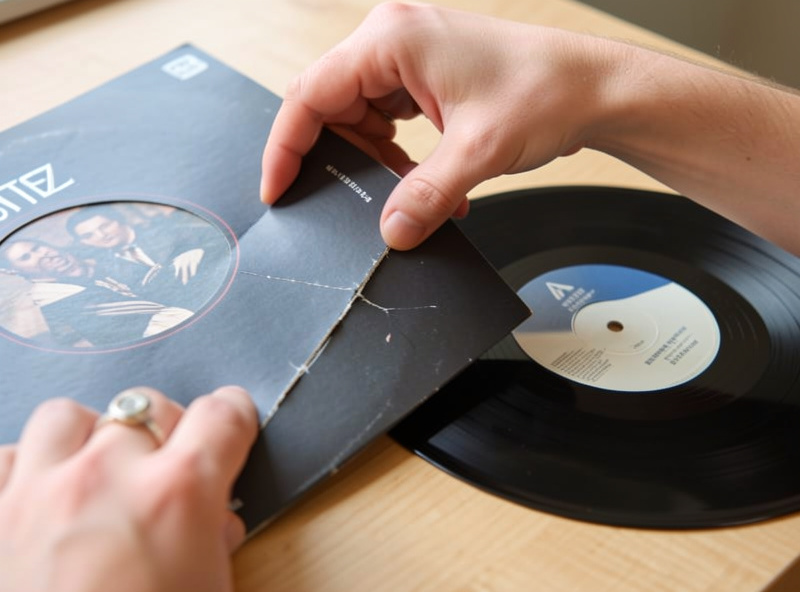
The jacket gets its own grade because cover condition is a separate value driver from the disc, and buyers expect both. A NM record in a ringworn, split-seam jacket is not a NM sale; it is a NM disc with a VG cover, and you say exactly that. Standard practice writes the grade as disc/sleeve, for example “VG+/VG,” so the buyer reads both at a glance.
Cover faults have their own vocabulary: ringwear (the circular imprint of the disc on the cardboard), seam splits, spine wear that obscures the title, writing, stickers, and water damage. I note each one plainly. A common mistake sellers make is letting a clean disc carry a beaten jacket in the listing photos — buyers notice, and an unmentioned split seam is a return waiting to happen. Storing records upright in proper outer sleeves is what keeps the jacket grade from sliding while the record waits to sell.
The Grading Mistakes That Cause Returns
The most expensive grading mistake is optimism — talking yourself up half a grade because you want the record to be worth more. An inflated grade leads directly to a return, and the cost of that return (refund plus return shipping plus a feedback hit) wipes out several honest sales. Grade the record you have, not the record you wish you had.
The other recurring errors are gradeable by checklist: grading under flat light so you miss the hairlines, skipping the play check on a record listed at a premium grade, forgetting to grade the jacket, and not cleaning first so dust masks the true surface. I have made the optimism mistake myself early on, and every record that came back to me was one where I rounded up instead of down. Now I list the lower grade whenever I genuinely cannot decide, and I say so in the note — an under-promised record that over-delivers is how you earn the buyer who comes back.
Goldmine Grades at a Glance
Here is the quick-reference table I keep in my head when a stack of records needs grading fast. Use it as the shorthand, but always confirm a premium grade by play before you list it. The descriptions below are the practical, sellable version of the standard — what a buyer will actually accept for each grade.
| Grade | Abbreviation | What the Buyer Accepts | Typical Listing Note |
|---|---|---|---|
| Mint | M | Sealed or provably unplayed | “Still sealed” — used sparingly |
| Near Mint | NM | No visible marks, silent play | “Plays silent, no marks under raking light” |
| Very Good Plus | VG+ | Light hairlines, faint noise in quiet parts | “Light surface marks, plays clean with minor noise” |
| Very Good | VG | Visible wear, audible surface noise | “Surface noise throughout, no skips” |
| Good | G | Scuffs/scratches, may skip | “Plays through with heavy noise, possible skip” |
| Poor | P | Heavy damage, often unplayable | “For collection/decor only” |
As a small disclosure: some links on this site are affiliate links, and I may earn a commission on qualifying purchases at no extra cost to you. A basic grading kit is cheap — a good carbon-fibre record brush for the pre-grade dust pass and a set of anti-static inner sleeves to hold graded records while they wait to list pay for themselves on the first avoided return.
Frequently Asked Questions
What grading standard should I use to sell vinyl records?
Use the Goldmine Standard: Mint, Near Mint, VG+, VG, Good, Poor. It is the scale Discogs, eBay sellers, and record dealers all recognise, so grading to it gives you and the buyer a shared definition of condition and sharply reduces returns from mismatched expectations.
Should I grade vinyl by sight or by playing it?
Both, and the play grade wins when they disagree. Visual grading under a raking light catches surface marks, but groove damage you cannot see only shows up on playback. Spot-check the lead-in, a loud passage, and a quiet passage before listing any record at a premium grade.
What does VG+ mean for a record I want to sell?
Very Good Plus means light hairlines visible under raking light but no scratches you can feel, with faint surface noise only in quiet passages. VG+ is where most serious buyers start, so it typically holds roughly half to two-thirds of a Near Mint copy’s value.
Do I grade the record cover separately from the disc?
Yes. The disc and jacket get separate grades, written as disc/sleeve such as VG+/VG. Note ringwear, seam splits, spine wear, writing, and stickers on the cover. An unmentioned split seam on an otherwise clean record is a common cause of buyer returns.
Why does cleaning a record change its grade?
Most groove noise is dust and fingerprints, not damage. A wet clean removes that debris and reveals the true surface, so a disc that grades VG while dirty often plays VG+ once cleaned. Always clean before making the final grading call so you grade the record, not the grime.
Related Reading
- How to Sell Vinyl Records Online — the full selling workflow this grading step feeds into.
- Vinyl Record Cleaning Guide — clean before you grade to recover a full grade of value.
- Wet Cleaning Vinyl Records — the deep clean that reveals a record’s true surface.
- Outer Sleeve Protectors — keep the jacket grade from sliding while a record waits to sell.