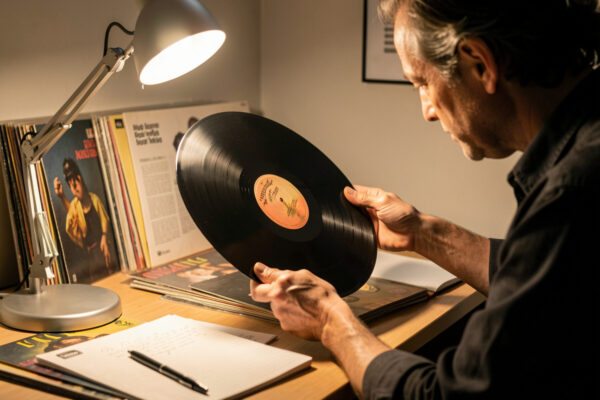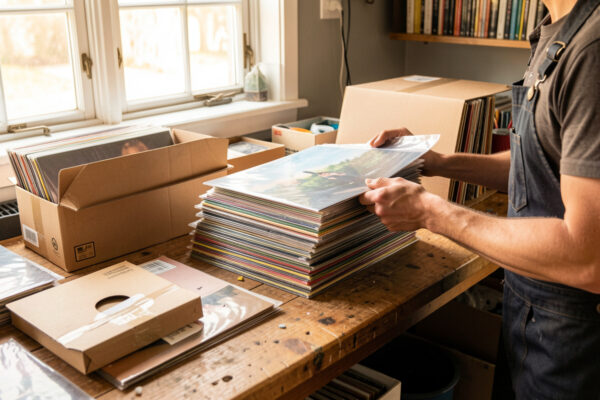
Selling vinyl records on Discogs means matching each record to its exact release in the database, listing it at the right grade and price using the platform’s own sold-price history, and packing it to arrive flat. Discogs is the best place for catalogue records because every listing attaches to a specific pressing, so a buyer knows the precise label variant and country of issue. I sell most of my catalogue records here for exactly that reason — the audience is pressing-literate and they want certainty.
The platform rewards accuracy over salesmanship. There is no headline or auction theatre; buyers search the database, filter by grade and country, and sort by price. That means your job is to identify the right release, grade it honestly, and price it sensibly, then let the structure do the selling. Here is the full workflow I follow, including the steps that trip up new sellers — finding the correct release among near-identical pressings, and reading the price history instead of guessing.
How Selling on Discogs Works
Discogs works by building every listing on top of a shared release database, so you do not write a free-form ad — you find your exact pressing in the catalogue and attach your copy to it. The buyer then sees your grade, price, location, and notes alongside every other copy of that same release. Discogs charges a small percentage selling fee on the sale plus payment processing, which is lower than most auction platforms.
This database-first design is the whole reason catalogue collectors prefer it. When someone wants the 1973 UK first pressing rather than a later reissue, Discogs lets them filter to exactly that, and your listing only competes with other copies of the same pressing. The discipline it demands is identification: you must attach your record to the correct release entry, because attaching a reissue to the first-pressing entry is both wrong and a fast route to a return. Getting the pressing match right is the single most important skill on the platform.
Finding the Exact Release for Your Record
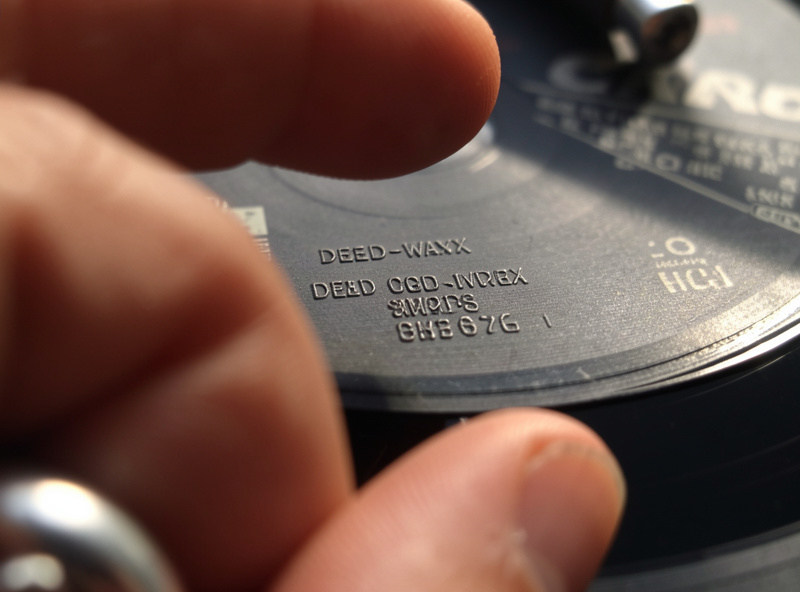
Find your exact release by matching the catalogue number and the dead-wax matrix codes etched in the run-out groove, not just the album title — the same album can have dozens of pressings that look identical on the cover but differ in pressing plant, year, and country. The catalogue number is printed on the label and spine; the matrix is scratched into the run-out between the last track and the label.
This is where new sellers go wrong most often. Two copies of the same famous album can differ in value enormously depending on whether one is an original pressing and the other a 1990s reissue, and the cover alone will not tell them apart. I check the label catalogue number first, then read the matrix codes under a light, then compare against the candidate releases in the database until the details line up. When I genuinely cannot confirm which pressing I have, I list it against the most generic matching release and say so in the notes rather than claiming a pressing I cannot prove.
Grading Your Records for a Discogs Listing
Grade Discogs listings to the Goldmine Standard exactly as the platform expects: Mint, Near Mint, VG+, VG, Good, Poor, with the disc and sleeve graded separately. Discogs buyers are unforgiving of optimistic grades because the marketplace runs on a feedback reputation that a single over-graded sale can dent. Grade conservatively and the platform rewards you with repeat buyers.
The grading discipline matters more here than almost anywhere because Discogs buyers tend to know exactly what each grade means. A record I would describe loosely as “nice” to a casual buyer needs a precise VG+ or NM call here, backed by a note describing the marks. I clean every disc before the final grade — a proper wet clean reveals the true surface so I am grading the record, not the grime. The full method, including play-grading premium copies and grading the jacket, is in the dedicated grading guide.
Using Discogs Price History to Set Your Price
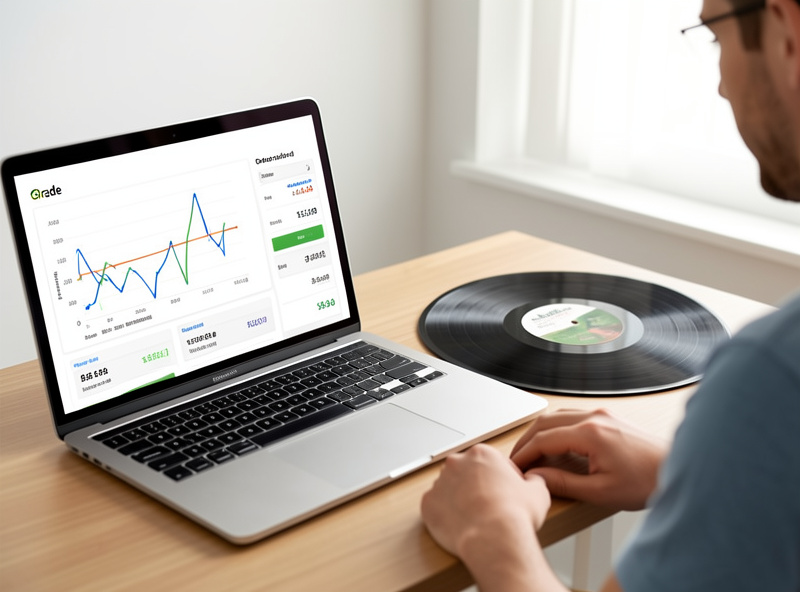
Price your listing from the Discogs sales history for that exact release, which shows the lowest, median, and highest prices that copies of your pressing have actually sold for. Use the median as your anchor and adjust for your grade, then treat the figure as a reference rather than a guarantee — condition, demand, and timing all move it. The price history is real completed-sale data, which is far more useful than what other sellers are currently asking.
The trap is pricing against the active listings instead of the sales history. The cheapest copy currently for sale and the highest are both just asking prices; only the sold history tells you what buyers paid. I price at or slightly below the median for a fast sale, or hold at the median if the record is uncommon and I can wait. For rare pressings with only a handful of past sales the data is thin, and I widen my reference range accordingly. Pricing always starts from an honest grade, which is why I run the full grading method before I ever look at a number.
Shipping Records Sold on Discogs
Ship Discogs sales in a proper LP mailer with the disc removed from the jacket and sandwiched between rigid stiffeners, because most shipping damage is seam splits and warping from under-protected parcels. Set your shipping prices in your seller settings before you list, so the buyer sees an accurate total at checkout. A record that arrives damaged earns a return and a feedback hit no matter how well you graded it.
Packing is where an otherwise perfect Discogs transaction goes wrong. The disc rides outside the jacket in its own sleeve so a flexed parcel cannot push the record edge through the cardboard, and the rigid board on both sides stops the warping that a soft envelope allows. I keep a stock of true record mailers rather than improvising with generic boxes. Storing the disc in a fresh anti-static inner sleeve and a protective outer sleeve before it goes in the mailer is what gets it to the buyer in the grade you listed.
As a small disclosure: some links on this site are affiliate links, and I may earn a commission on qualifying purchases at no extra cost to you. For Discogs shipping I keep a supply of cardboard LP record mailers and protective outer sleeves so a sold record can be graded, sleeved, and packed in one pass.
Frequently Asked Questions
How does selling vinyl records on Discogs work?
You match your record to its exact release in the Discogs database, then attach your copy with a Goldmine grade, price, and notes. Buyers filter by pressing and grade and sort by price. Discogs charges a small percentage selling fee plus payment processing on each completed sale.
How do I find the exact release for my record on Discogs?
Match the catalogue number on the label and spine and the dead-wax matrix codes etched in the run-out groove, not just the album title. The same album has many pressings that look identical on the cover but differ by plant, year, and country, which changes value significantly.
How should I price a record on Discogs?
Use the release’s sales history, which shows the lowest, median, and highest prices copies of that exact pressing actually sold for. Anchor to the median and adjust for your grade. Ignore current asking prices, which only reflect hope, and treat any figure as a reference.
Are Discogs buyers strict about grading?
Yes. Discogs buyers are typically pressing-literate and unforgiving of optimistic grades, and the marketplace runs on feedback reputation that one over-graded sale can dent. Grade conservatively to the Goldmine Standard, clean before grading, and describe marks in the notes to avoid returns.
How do I ship a record sold on Discogs?
Use a proper LP mailer with the disc removed from the jacket and placed between two rigid stiffeners cut larger than the record. Set your shipping prices in seller settings before listing so the checkout total is accurate. Soft envelopes cause the warping and seam splits that trigger returns.
Keep Reading
- How to Sell Vinyl Records Online — the complete selling workflow Discogs fits into.
- Grading Vinyl Records for Sale — grade to the Goldmine Standard before you list.
- Vinyl Record Cleaning Guide — clean before grading to recover a full grade of value.
- Outer Sleeve Protectors — protect the jacket grade while the record waits to sell.