The best turntable around $1,000 isn’t always a $1,000 turntable — the smartest spend often puts $600 into the deck and $400 into a phono stage and cartridge. If you want it all in one table, the Rega Planar 3 is the class benchmark for its arm and speed stability. But “where the money goes” is the real question at this tier, and the honest answer surprises people.
This is the price where buyers most often overspend on the table and underspend on everything downstream, then plateau and blame the deck. I run a Rega Planar 3 as my belt-drive reference, so I’m not talking anyone out of a good $1,000 table — I’m telling you that a $1,000 source feeding a weak phono stage is a bottleneck you’ll hear on every record. Let me give you the shortlist of decks worth the money and, more importantly, the spending logic that makes $1,000 sound like $1,000.
Should You Put the Whole $1,000 Into the Turntable?
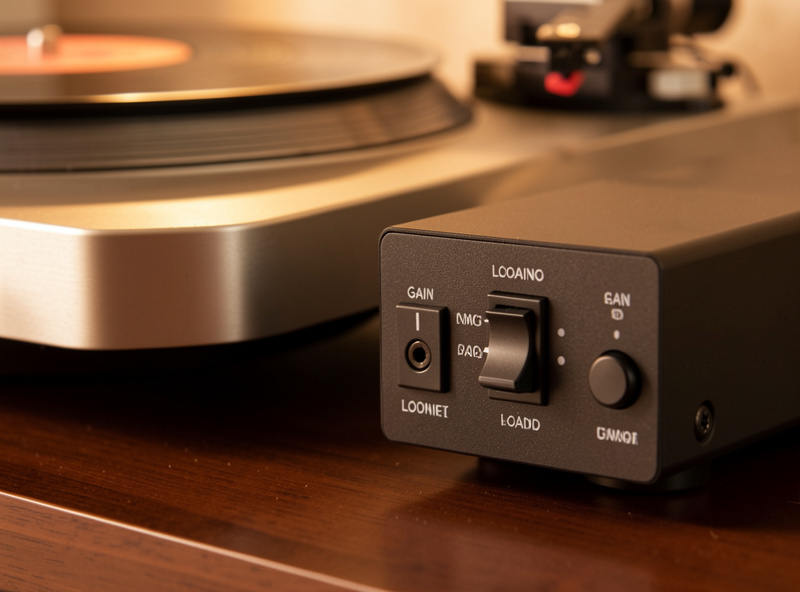
Usually not. The chain from groove to speaker is only as good as its weakest link, and at $1,000 the phono stage and cartridge are where a bottleneck most often hides. Splitting the budget — say $600 deck, $250 phono stage, $150 cartridge upgrade — frequently beats a $1,000 all-in table fed through a cheap preamp.
Here’s the logic I keep coming back to on the bench. The phono stage does two hard jobs: it applies the RIAA equalization curve every record is cut with, and it amplifies a tiny signal — a moving-magnet cartridge outputs around 5mV — without adding noise. A great table with a mediocre phono stage sounds like a mediocre system. A very good $600 deck through a proper external stage with switchable gain and loading routinely outperforms the $1,000 table someone bought with the preamp as an afterthought. That’s why the phono stage guide is required reading before you spend at this tier. The “spend it in the right order” framing — cleaning, setup, phono stage, cartridge, table — matters more here than anywhere, because the numbers are big enough that a misallocation costs real money and real sound.
Best All-In Table: Rega Planar 3
At ~$1,150 with an Elys cartridge (or less bare), the Rega Planar 3 is the reference arm at this price. Its RB330 tonearm is the benchmark the industry measures against, the float-glass platter and 24V motor give excellent speed stability, and the whole deck is rigid and low-mass in Rega’s signature way. It’s the table you buy if you want one great source and no compromises on the arm.
The Rega Planar 3’s RB330 is the reason it’s a fixture on every shortlist at this price — the one-piece casting and hand-tuned bearings hold azimuth and effective mass with a consistency you feel as clean, confident tracking through the busiest passages. There’s no VTA tower and no built-in preamp, which is on-brand: Rega spends the budget on the arm and structure. If you’re the set-and-forget listener who wants the best mechanics, this is the pick, and I make the fuller case in Are Rega Turntables Worth the Price?. Just remember to budget for a phono stage on top, because the Planar 3 doesn’t include one.
Best Adjustable Table: Pro-Ject X2
At ~$999 the Pro-Ject X2 is the pick for buyers who want a heavier, more adjustable deck. It brings a mass-loaded plinth, a 9-inch single-piece aluminum/carbon arm with VTA and azimuth adjustment, a true acrylic platter, and a Sumiko Moonstone cartridge. It’s the anti-Rega: where the Planar 3 is fixed and light, the X2 is heavy and configurable.
The Pro-Ject X2 rewards the tinkerer — its adjustable arm lets you fit a taller moving-coil and correct the geometry, which the fixed-arm Rega can’t do. The heavier plinth and acrylic platter give a planted, low-noise presentation that some listeners prefer immediately. If you came up through the Debut line and want to keep adjusting, the X2 is the natural top of that ladder; I trace the step below it in the Debut Carbon vs EVO breakdown and pit its smaller sibling against the Fluance RT85 in the RT85 vs X1 comparison.
Best Split-Budget Play: Fluance RT85 Plus a Real Phono Stage
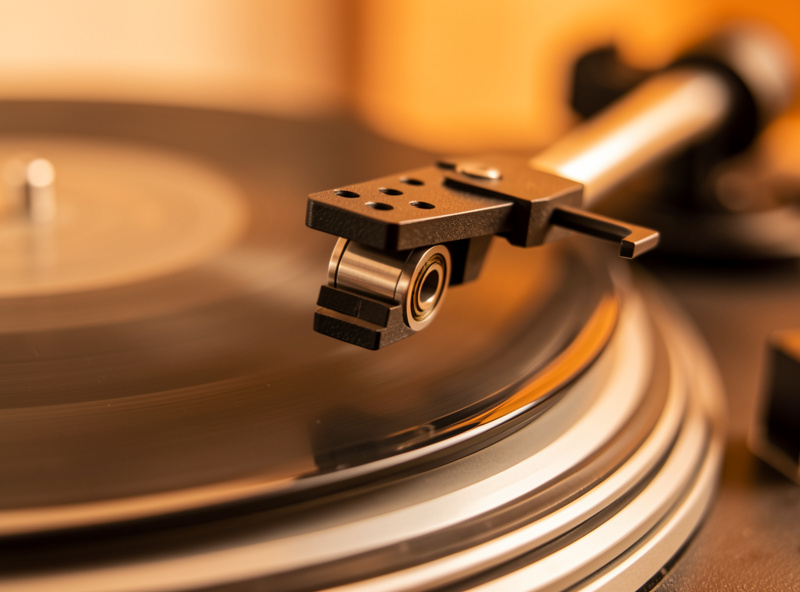
The sleeper option: buy a ~$500 Fluance RT85 and spend the other $500 on a good external phono stage and a cartridge upgrade. This split often outperforms a $1,000 all-in table, because you’ve put money where the bottleneck actually is instead of into more platter mass.
The Fluance RT85 already gives you an acrylic platter and an Ortofon 2M Blue, so it’s punching well above $500 as a source. Add a $250–$350 phono stage with switchable gain and loading and a stylus upgrade to a 2M Bronze, and you have a system that resolves detail a $1,000 table with a built-in preamp can’t touch. This is the setup-tech move that unboxing videos never make, because it’s less glamorous than one shiny expensive deck. But it’s how I’d actually spend $1,000 for maximum sound. I broke the RT85 down against pricier decks in the best turntable around $500 shortlist, and at $1,000 it becomes the foundation of the smartest split.
Best Turntable Around $1,000: Comparison Table
Every row is something I check on the bench. Prices are 2026 street figures and drift.
| Approach | Rough cost | Arm | Standout strength | Best for |
|---|---|---|---|---|
| Rega Planar 3 | ~$1,150 | RB330 (reference) | Best arm, speed stability | Set-and-forget purists |
| Pro-Ject X2 | ~$999 | 9in adjustable | Mass, adjustability | Tinkerers |
| U-Turn Orbit Theory | ~$999 | Gimbal, US-made | Domestic build, design | Customizers |
| RT85 + phono stage | ~$500 + $500 | Fluance S-arm | Money where it counts | Value-maximizers |
The table’s real lesson is the bottom row: the split-budget approach isn’t a compromise, it’s a strategy. The three all-in tables are each excellent for their buyer, but none of them beats putting money where your system is actually weakest. That’s the theme of spending at this tier.
Where the U-Turn Orbit Theory Fits
At ~$999 the U-Turn Orbit Theory is U-Turn’s flagship — a US-made deck with a refined gimbal tonearm, an acrylic platter, and the company’s clean design language. It’s the pick for buyers who want domestic manufacturing and a distinctive look alongside solid engineering, and it slots neatly against the Rega and Pro-Ject at the top of this tier.
The U-Turn Orbit Theory is the grown-up version of the Orbit that started so many buyers off — I compared that entry deck to the Fluance RT81 in the Orbit vs RT81 matchup, and the Theory is where that lineage lands with a properly refined arm. It won’t out-arm the Rega, but it brings design and domestic build to the conversation, and it’s a genuinely good deck. Whichever of these three all-in tables you choose, put it on a solid surface — at this price it’s a crime to let a bouncy shelf inject rumble, and the isolation guide covers how to fix it cheaply.
What I’d Actually Buy With $1,000
I’d split it: a Fluance RT85 or a used Rega Planar 2 as the source, a good external phono stage with switchable loading, and a cartridge upgrade — money spread across the whole chain rather than piled onto the platter. If I wanted one no-fuss table and already owned a phono stage, the Rega Planar 3, every time.
That’s the honest answer from someone who’s A/B’d these setups on the same records in the same room. The single most common $1,000 mistake I see is the all-in table with the preamp bought as an afterthought — it’s a fast car with a clogged fuel line. Get the setup right first, put money where the bottleneck is, and $1,000 delivers the kind of sound that makes people rediscover their record collection. These decks and the spending logic all sit inside the wider modern belt-drive picture I map in the Rega vs Pro-Ject vs Fluance showdown, which is the place to start if you’re still choosing between brands. And whatever you buy, dial it in with the setup and calibration guide — the geometry under the stylus outranks the badge on the plinth every single time.
As an Amazon Associate I earn from qualifying purchases.
Shop the options: Rega Planar 3, Pro-Ject X2, Fluance RT85, and a switchable phono stage to finish the chain.
What is the best turntable for around 1000 dollars?
For a single all-in table the Rega Planar 3 is the class benchmark at around 1150 dollars because of its RB330 tonearm and speed stability. But the smartest 1000 dollar spend for many buyers is a 500 dollar Fluance RT85 plus a good external phono stage and cartridge upgrade, which puts money where the system is actually weakest.
Should I spend the whole budget on the turntable at this price?
Usually not. At 1000 dollars the phono stage and cartridge are where a bottleneck most often hides. Splitting the budget, for example 600 dollars on the deck and 400 on a phono stage and cartridge, frequently beats a 1000 dollar all-in table fed through a cheap built-in preamp.
Is the Rega Planar 3 or Pro-Ject X2 better?
They suit different buyers. The Planar 3 has the reference RB330 arm and a light, rigid design for set-and-forget listeners. The X2 is heavier and fully adjustable with VTA and azimuth, which rewards tinkerers who want to fit different cartridges. Pick by whether you value the arm or the adjustability.
Do I need an external phono stage at this price?
Strongly recommended. The Rega Planar 3 and Pro-Ject X2 do not include a preamp, and even decks that do benefit from a good external stage with switchable gain and loading. Past a certain quality point the phono stage moves the sound more than another step up in table.
Is a used higher-end turntable a better buy than a new one?
Often, yes. A clean used deck from a reputable brand like Rega can put a better arm and build in your budget than a new table at the same price, since arms and bearings age gracefully. Inspect the bearing, belt, and arm for play, and budget for a fresh cartridge.
How much of a difference does the cartridge make at this level?
A significant one, but only after setup and the phono stage are sorted. A stylus profile upgrade, such as moving to a MicroLine or a 2M Bronze stylus, sharpens inner-groove detail noticeably. Spend on the cartridge once the deck is aligned and the phono stage is capable, not before.
Where to Go Next
- Rega vs Pro-Ject vs Fluance: A Setup Tech’s Belt-Drive Showdown
- Best Turntable Around $500: A Setup Tech’s Shortlist
- Are Rega Turntables Worth the Price? An Honest Assessment
- Phono Stage Guide: Gain, Loading, MM/MC, and Where to Spend