Yes, you can play records outside — I do it all summer — but vinyl and the outdoors are a genuine mismatch you have to manage. Heat softens PVC, direct sun warps it, and airborne grit grinds under the stylus. Get a battery portable with a safe cartridge, keep everything in the shade, brush before every side, and you’ll have music on the patio without sacrificing your records. Ignore those rules and you’ll cup a favorite pressing in one hot afternoon.
The appeal is obvious: there’s something deeply good about a record spinning while you’re out in the yard on a warm evening. But vinyl was engineered for a climate-controlled shelf, not a picnic table, and the failure modes are quiet until they’re permanent. This is the practical setup I actually use — the gear, the temperature limits, and the exact routine that lets me play records outdoors without paying for it later.
Can You Safely Play Records Outdoors?
You can, as long as you control three things: heat, sun, and dust. None of them stops you from playing outside; each just needs a specific precaution. Play in shade, keep records out of the sun and off hot surfaces, brush every side, and outdoor listening costs your vinyl nothing. The danger isn’t the act of playing outside — it’s leaving records exposed to conditions their material can’t take.
Records are polyvinyl chloride, a thermoplastic that stays rigid at room temperature and goes pliable when it warms. Archival guidance from the Library of Congress collections-care program recommends storing discs at 65–70°F, and warns that PVC becomes increasingly prone to warping above about 75°F. That’s a low ceiling — a shaded patio on a mild evening is fine, but a record left on a sun-baked table, or in a closed car that can exceed 130°F, is already past it.
The cartridge side of “safely” is the same as it is indoors, only more so: outdoor dust makes a heavy-tracking ceramic cartridge even harder on records, because grit dragged under 6 grams of force grinds fast. A battery portable with a moving-magnet cartridge under about 3.5 grams handles the outdoor environment far more gently — which is exactly why cartridge choice, not the battery, decides record safety, as I covered in are battery-powered turntables safe for vinyl.
What Temperature Warps Vinyl?
Vinyl starts to soften and warp above roughly 75°F under load or direct sun, and the risk climbs steeply from there. The Library of Congress keeps its own collections at 50°F and recommends a home ceiling around 70°F precisely because PVC’s rigidity falls off as it warms. You don’t need oven temperatures to ruin a record — you need a sunny afternoon and a black disc absorbing that heat while it sits flat on a hot surface.
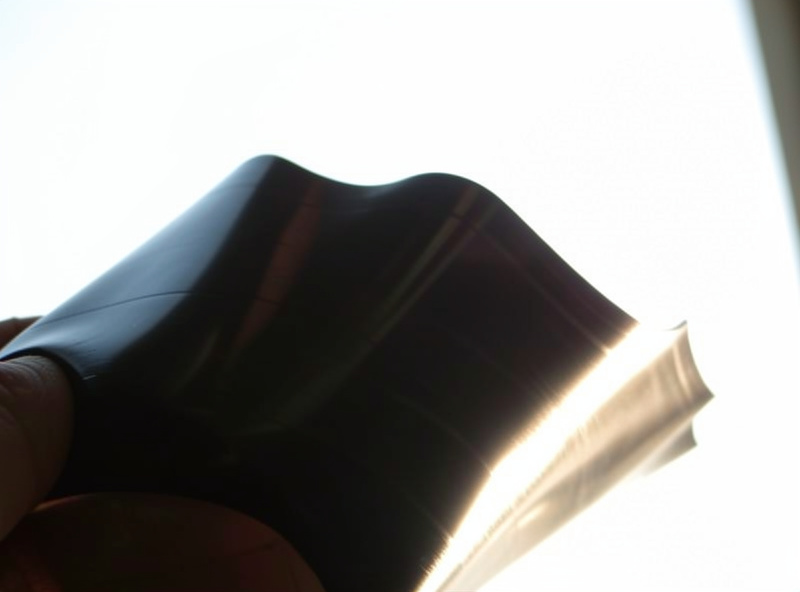
Direct sun is worse than ambient heat because black vinyl absorbs radiant energy and heats well above air temperature, the same way a dark car seat scorches in summer. A record leaning in a sunny window or lying on a hot table can reach warping temperature even when the air feels merely warm. The National Archives audio storage guidance makes the same point about avoiding heat and direct light for disc media — the sun is the fastest way to turn a flat record into a taco.
I learned this one viscerally. I once left a couple of records propped on a table in direct afternoon sun for maybe an hour while I did something else. When I came back, one had cupped into a shallow bowl — you could see the warp catch the light, and on the deck the tonearm rode up and down with it, the volume dipping on every rotation like a slow breath. It never played flat again. Now nothing I care about sits in the sun for even a few minutes; records live in the crate in the shade until the instant they go on the platter.
What Gear Do You Need for Outdoor Vinyl?
The core outdoor kit is a battery-powered portable with a safe cartridge, a Bluetooth speaker, a carbon-fiber brush, and a crate that keeps records shaded. That’s it — nothing exotic. The battery portable frees you from running an extension cord across the yard, and Bluetooth output sends the sound to a speaker without a cable to trip over. I keep an Audio-Technica Sound Burger for exactly this; Audio-Technica’s published specs put it at a safe 3.5-gram tracking force with a roughly 12-hour battery, which covers a full afternoon.
The speaker matters more outdoors than the turntable, because open air and distance rob detail fast. A decent rugged Bluetooth speaker will do more for how your records sound in the yard than any turntable tweak, which is the counterintuitive lesson I unpack in my guide to the best Bluetooth portable turntable for the backyard. Put your budget into the speaker; the portable just needs to play cleanly and not wear your records.
Skip anything with built-in speakers and a ceramic cartridge for outdoor use with records you value — those are the decks that turn dust plus heat plus heavy tracking force into fast wear. And bring a brush. Outdoors is a dust bath, and a carbon-fiber brush before each side is the cheapest insurance you can carry. For the full ranked field of portables that suit this, I put them together in the best portable turntable guide.
How Do You Keep Dust and Grit Off Records Outside?
Brush every side before it plays, keep records sleeved until the moment they go on, and don’t stack bare discs on outdoor furniture. Outdoor air carries pollen, fine soil dust, and grit that settle on any exposed record in minutes, and that debris under the stylus is the number-one cause of the pops people blame on the vinyl itself. A quick pass with a carbon-fiber brush lifts most of it before the needle drops.
The distinction between dust noise and real damage matters here, because outdoors generates a lot of the former. Most outdoor crackle is surface dust that a brush and a proper clean will remove, not permanent groove damage — I walk through how to tell them apart in crackle on every record. If a record gets genuinely dirty outside, I don’t keep playing it; grinding grit into the groove is how surface noise becomes permanent. It comes inside for a real clean before it plays again.
Sleeving discipline is the other half. A record left bare on a table collects dust on both sides and picks up grit that scratches when you pick it up. I pull each disc from its sleeve, play it, and return it before the next one comes out — never a bare stack building up in the sun and pollen. It’s a small habit that saves a lot of cleaning, and it keeps the outdoor session from quietly degrading everything you brought.
My Actual Backyard Setup Routine
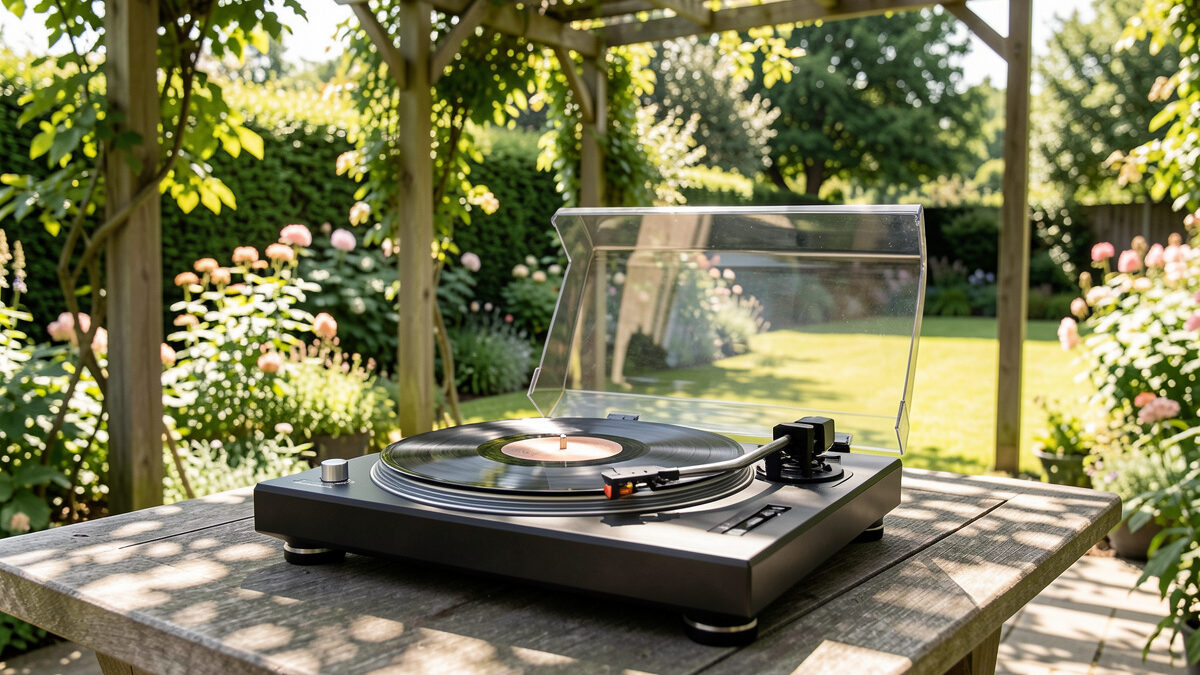
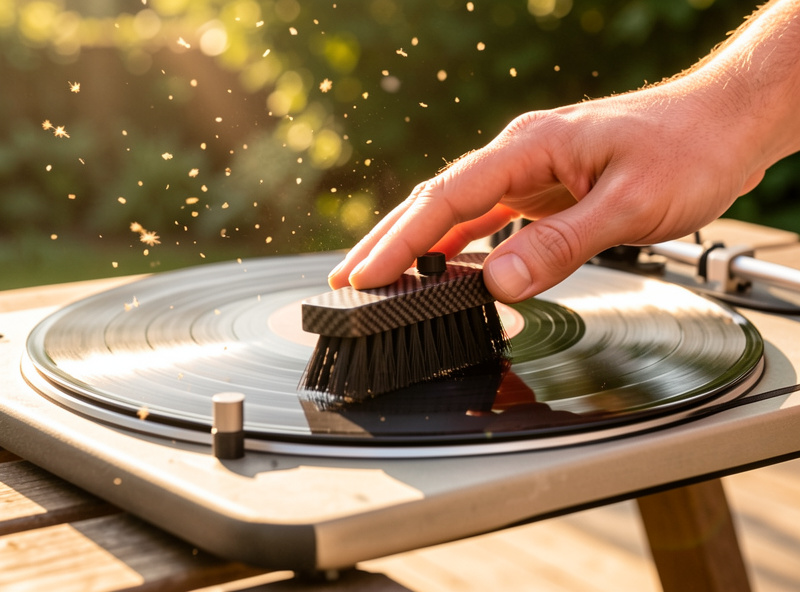
My routine is four steps: find shade, level the deck, brush and play one side at a time, and never let a record sit out. I set the portable on a solid, shaded table — under the pergola or a tree, never in the sun — because shade solves the heat problem and a solid surface tames the wow that portables already fight. A tilted or flimsy table exaggerates speed instability, which is the portable’s real weak point anyway, as I measured in portable turntable speed stability.
Then I level it with a small bubble level, because an outdoor table is rarely flat and a tilted deck loads the stylus unevenly. I pair the Bluetooth speaker, put it a few feet away so its vibration can’t feed back into the platter, and I’m ready. Each record comes out of its sleeve, gets a brush, plays, and goes straight back — one at a time, no stacking, no sun. When the light gets hot I move the whole operation into deeper shade rather than push my luck with the vinyl.
That’s the entire system, and it’s held up across a lot of summer evenings without costing me a record. The mindset is simple: treat vinyl outdoors like it’s on loan from a climate-controlled vault, because materially it is. Give it shade, a light stylus, a brush, and a quick return to its sleeve, and you get the pure pleasure of a record playing in the open air — the warm evening, the faint mechanical whir under the music — without the cupped, unplayable disc that punishes everyone who forgets the rules.
Outdoor-friendly portable turntables on Amazon. As an Amazon Associate I earn from qualifying purchases.
Further Reading
- Best Portable Turntable: What Won’t Wreck Your Records
- Best Bluetooth Portable Turntable for the Backyard
- Are Battery-Powered Turntables Safe for Vinyl?
- Portable Turntable Speed Stability: Why Wow Is the Weak Point
Can you play vinyl records outside?
Yes, if you manage heat, sun, and dust. Use a battery portable with a safe moving-magnet cartridge, keep the deck and records in the shade, brush every side before playing, and return each record to its sleeve right away. Under those conditions outdoor listening does not harm your vinyl.
At what temperature does vinyl warp?
Vinyl begins to soften and warp above about 75 degrees Fahrenheit under load or direct sun. The Library of Congress stores discs at 65 to 70 degrees for this reason. Black vinyl in direct sunlight heats well above air temperature, and a closed car in summer can exceed 130 degrees, which warps records quickly.
Does playing records outside damage them?
Not if you take precautions. The real risks are heat warping the disc, sun softening it, and airborne grit grinding under the stylus. Keep records shaded and sleeved, brush before every side, and use a light-tracking cartridge, and outdoor play is safe. Leaving records in sun or heat is what causes damage.
What is the best turntable for outdoor use?
A battery-powered portable with Bluetooth output and a moving-magnet cartridge, such as the Audio-Technica Sound Burger, is ideal. It runs without a power cord, streams to a speaker wirelessly, and tracks lightly enough to protect records. Pair it with a good portable speaker, which matters more outdoors than the turntable.