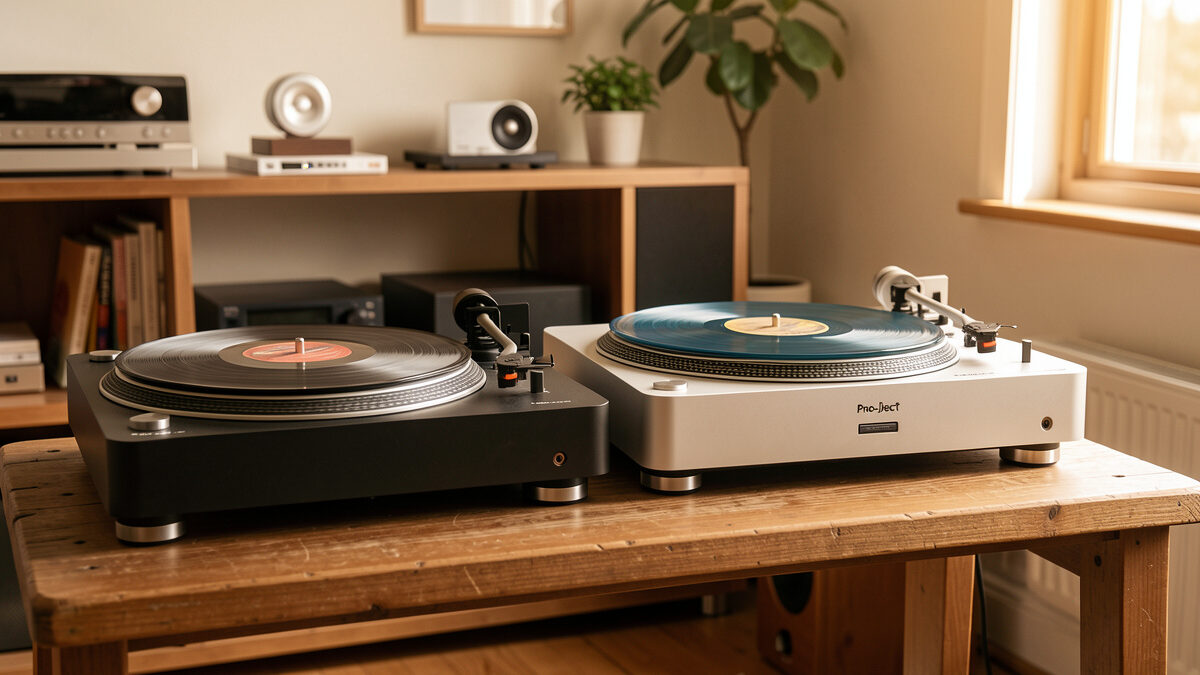
The Pro-Ject Debut Carbon EVO is the roughly $599 successor to the beloved Debut Carbon, and the upgrade is more substantial than the shared name suggests. For about $150 more than the older deck’s street price, the EVO adds electronic speed change, a heavier damped platter, height-adjustable feet, motor decoupling, and a better cartridge. It’s not a facelift — it’s a genuine mechanical revision.
I’ve had both generations on the bench, and the interesting question isn’t “is the EVO better” — it clearly is — but whether the upgrade is worth paying for versus hunting a used original Debut Carbon or jumping straight to a Pro-Ject X1. The answer depends on which of the EVO’s changes you’ll actually feel, because a couple of them matter a lot and one or two are conveniences you could live without. Let me break down exactly what the extra money buys.
What Changed From the Debut Carbon to the EVO?
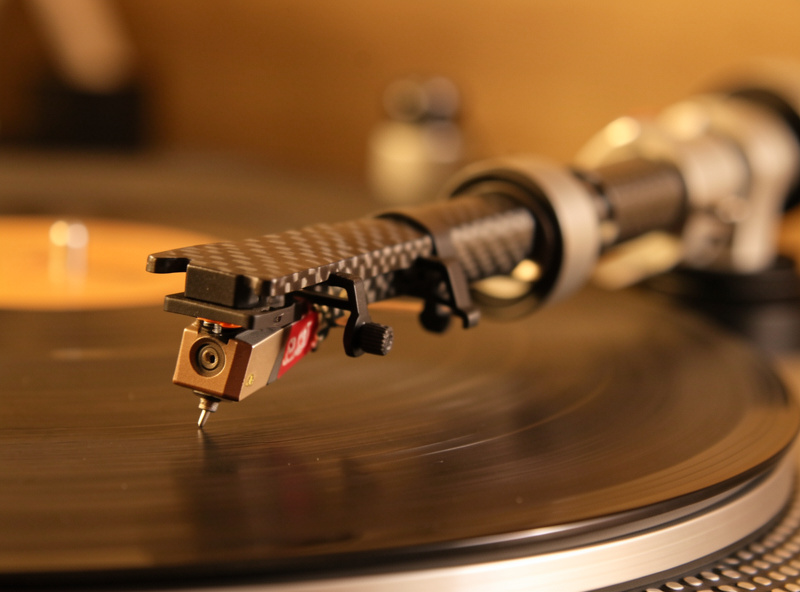
The EVO revised the platter, motor, feet, speed control, and cartridge. It swaps to a heavier steel platter with thermoplastic-elastomer damping, adds electronic 33/45 speed switching (plus 78 with a belt move), decouples the motor to cut vibration, fits height-adjustable damped feet, and ships with a Sumiko Rainier instead of the older Ortofon 2M Red. The carbon tonearm carries over.
The carried-over part matters: the single-piece carbon-fiber tonearm that made the original Debut Carbon famous is still here, and it’s still the deck’s headline feature — light, stiff, and adjustable for VTA and azimuth. The Pro-Ject philosophy of handing you knobs survives intact. What changed is everything around that arm, and the theme is vibration control. The heavier TPE-damped platter stores and releases less energy; the decoupled motor keeps its buzz out of the plinth; the damped feet isolate the whole deck from the shelf. Individually small, together they lower the noise floor in a way you can actually hear on quiet passages.
The cartridge swap is a real change too. The Sumiko Rainier on the EVO is a capable moving-magnet with an elliptical stylus, voiced a little differently from the Ortofon 2M Red the older deck shipped with. Neither is clearly superior, but the Rainier is a legitimate cartridge, not a downgrade to hit a price.
Pro-Ject Debut Carbon vs EVO: Spec Comparison
Every row is something I check on the bench. Prices are 2026 figures — the original Debut Carbon is now mostly a used-market deck, so its price is a street/used estimate.
| Feature | Debut Carbon (original) | Debut Carbon EVO |
|---|---|---|
| Price | ~$400 (used/closeout) | ~$599 |
| Platter | Steel, lighter | Steel + TPE damping, heavier |
| Speed change | Manual belt move | Electronic 33/45 |
| Motor | Fixed mount | Decoupled/suspended |
| Feet | Fixed | Height-adjustable, damped |
| Cartridge | Ortofon 2M Red | Sumiko Rainier |
| Tonearm | Carbon, adjustable | Carbon, adjustable (same) |
Read the table and the pattern is clear: the EVO wins every row except the tonearm, where they tie. The two upgrades I’d rank as genuinely meaningful are the damped platter and the decoupled motor, because those directly lower noise. Electronic speed change and adjustable feet are quality-of-life wins. Whether that bundle is worth the price step is the whole question.
Which Upgrades Actually Matter?
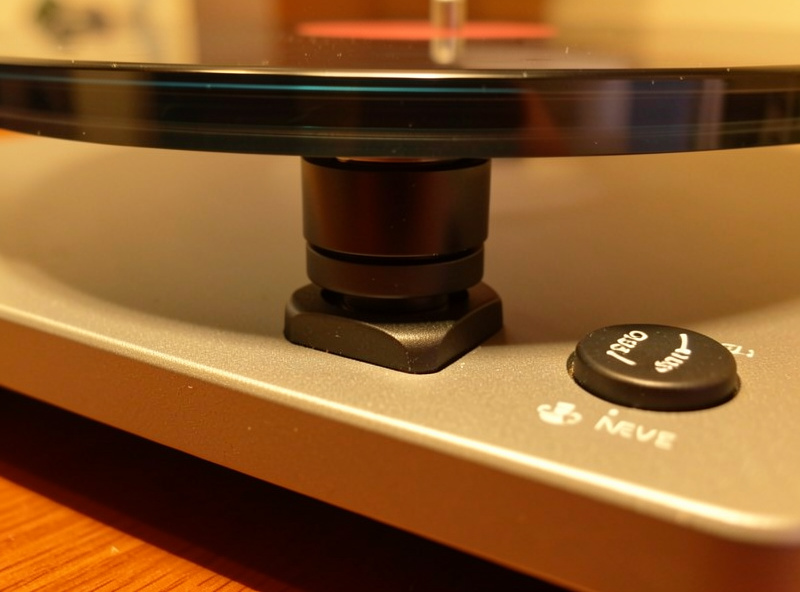
The damped platter and decoupled motor matter most because they lower the noise floor you hear on every record. Electronic speed change and adjustable feet are conveniences — real, but not sound-defining. The cartridge swap is lateral. If you rank the EVO’s changes by audible impact, vibration control leads and everything else follows.
Here’s what I hear when I A/B them on my own system. The EVO’s heavier, damped platter gives a slightly blacker background — the space between notes is quieter, which makes quiet passages feel more composed. The decoupled motor reinforces that by keeping its mechanical buzz out of the platter. On the original Debut Carbon you can chase some of that yourself with an aftermarket platter or better isolation, but the EVO bakes it in. The adjustable feet are genuinely useful because they let you level the deck precisely on an uneven shelf without shims — a small thing that pays off if your furniture isn’t perfectly flat. And electronic speed change is pure convenience: no lifting the platter to move the belt when you switch from an LP to a 45. None of it replaces good setup, though — dial the tracking force and align the cartridge on either deck before you credit or blame the hardware.
How Does the Cartridge Swap Change the Sound?
Subtly, and less than the platter and motor changes do. The EVO’s Sumiko Rainier and the original’s Ortofon 2M Red are both elliptical moving-magnet cartridges in the same class, voiced a touch differently. The Rainier leans slightly warmer and fuller; the 2M Red is a hair more forward and detailed. Neither is a clear upgrade, and setup swings the difference more than the cartridge choice.
What actually matters here is that both cartridges reward correct alignment, and both have clean upgrade paths. The 2M Red on the older deck steps up to a 2M Blue stylus that drops into the same body — Ortofon documents the compatible styli on Ortofon, and it’s one of the cheapest meaningful upgrades in vinyl. The Rainier sits in Sumiko’s Oyster line with its own step-up path. So the cartridge question is less “which came in the box” and more “which upgrade ladder do you want to be on.” On my bench I set either one to its rated tracking force with a digital gauge, align overhang on a two-point protractor to the Baerwald nulls, and use the carbon arm’s VTA and azimuth adjustments to get the cartridge sitting square — the same procedure I walk through in the setup and calibration guide. Do that, and the platter and motor differences between the two decks become the audible story, not the cartridge. Skip it, and neither deck sounds like what you paid for.
Is the EVO Worth the Extra Money?
Yes, if you’re buying new — the EVO’s vibration improvements and electronic speed change justify the ~$150 step over a new-old-stock Debut Carbon. But if you find a clean used original Debut Carbon cheap, it’s still a fine deck, and the smarter upgrade money might go to a phono stage or a better cartridge instead of the newer platter.
This is where I push back on upgrade fever. The original Debut Carbon earned its reputation for a reason — that carbon arm is the same one, and a well-set-up original with a good phono stage will outperform an EVO fed through a weak preamp. So if the choice is “new EVO” versus “used Debut Carbon plus a real phono stage for the same total,” I’d often take the latter, because past a certain point the phono stage moves the sound more than the platter does. The phono stage guide lays out why. But at full retail, buying new, the EVO is the better deck and the natural pick — it’s simply more refined for a modest premium.
Should You Skip Both and Buy the X1?
Consider it if your budget stretches to ~$799. The Pro-Ject X1 sits one rung above the EVO with a more refined single-piece arm, a true acrylic platter, and a heavier build. If you’re already debating the EVO’s price step, the X1 is the logical “spend a bit more once” option rather than upgrading again later.
The X1 isn’t a small step — it’s a genuinely more serious deck, which is why I compare it against the Fluance RT85 in the RT85 vs X1 matchup rather than against the Debut line. For a lot of buyers the honest path is EVO if $599 is the ceiling, X1 if you can find another couple hundred and want to stop upgrading. Either way, both live inside the broader modern belt-drive picture I map in the Rega vs Pro-Ject vs Fluance showdown, and if you’re cross-shopping Rega, the Planar 1 vs Debut comparison covers the other side of the entry decision. Whatever you land on, the cartridge wears eventually — my guide to stylus and cartridge wear tells you when to retip versus replace so you don’t grind your records on a dead stylus.
As an Amazon Associate I earn from qualifying purchases.
Shop them here: Pro-Ject Debut Carbon EVO and Pro-Ject X1. Add a digital stylus gauge either way — it protects the records you’re buying the deck to play.
What is the main difference between the Debut Carbon and the EVO?
The EVO adds a heavier thermoplastic-damped platter, a decoupled motor, electronic 33 and 45 speed switching, height-adjustable damped feet, and a Sumiko Rainier cartridge. The single-piece carbon tonearm carries over unchanged. The theme of the revision is vibration control, which lowers the noise floor you hear on every record.
Is the Debut Carbon EVO worth the extra money?
Yes if you are buying new. The vibration improvements and electronic speed change justify the roughly 150 dollar step over a new-old-stock Debut Carbon. If you find a clean used original cheaply, it is still a fine deck, and the extra money might do more as a phono stage upgrade.
Does the EVO have a better cartridge than the Debut Carbon?
It has a different one. The EVO ships with a Sumiko Rainier while the original came with an Ortofon 2M Red. Both are capable elliptical moving-magnet cartridges. The change is lateral rather than a clear upgrade, so it should not be the deciding factor between the two decks.
Should I buy the Pro-Ject X1 instead of the EVO?
Consider it if your budget reaches about 799 dollars. The X1 has a more refined single-piece arm, a true acrylic platter, and a heavier build. If you are already debating the EVO’s price step, the X1 is the logical spend-a-bit-more-once option rather than upgrading again later.
Further Reading
- Rega vs Pro-Ject vs Fluance: A Setup Tech’s Belt-Drive Showdown
- Fluance RT85 vs Pro-Ject X1: Which Belt Table Wins?
- Phono Stage Guide: Gain, Loading, MM/MC, and Where to Spend
- Turntable Setup and Calibration: The Complete Guide