Rega turntables are worth the price if you value the tonearm and set-and-forget accuracy above bundled features — and overpriced if you’re shopping for hardware you can count on a spec sheet. That’s the honest one-line verdict from someone who runs a Rega on the bench. A Planar 1 costs more than a feature-packed Fluance, and you get fewer knobs, no built-in preamp, and no free acrylic platter. What you get instead is the best tonearm at the price and a deck that’s simply correct out of the box.
I run a rebuilt Planar 3 with an RB330 arm as my belt-drive reference, so I’m not neutral — but I’m also the person who tells buyers when a Fluance or Pro-Ject is the smarter spend. Rega inspires a peculiar loyalty and an equally loud backlash, and both camps miss the point. The question isn’t “is Rega good” — it obviously is. The question is whether what Rega spends its money on is what you actually want to pay for. Let me break down exactly where your dollars go.
What Are You Actually Paying For With Rega?
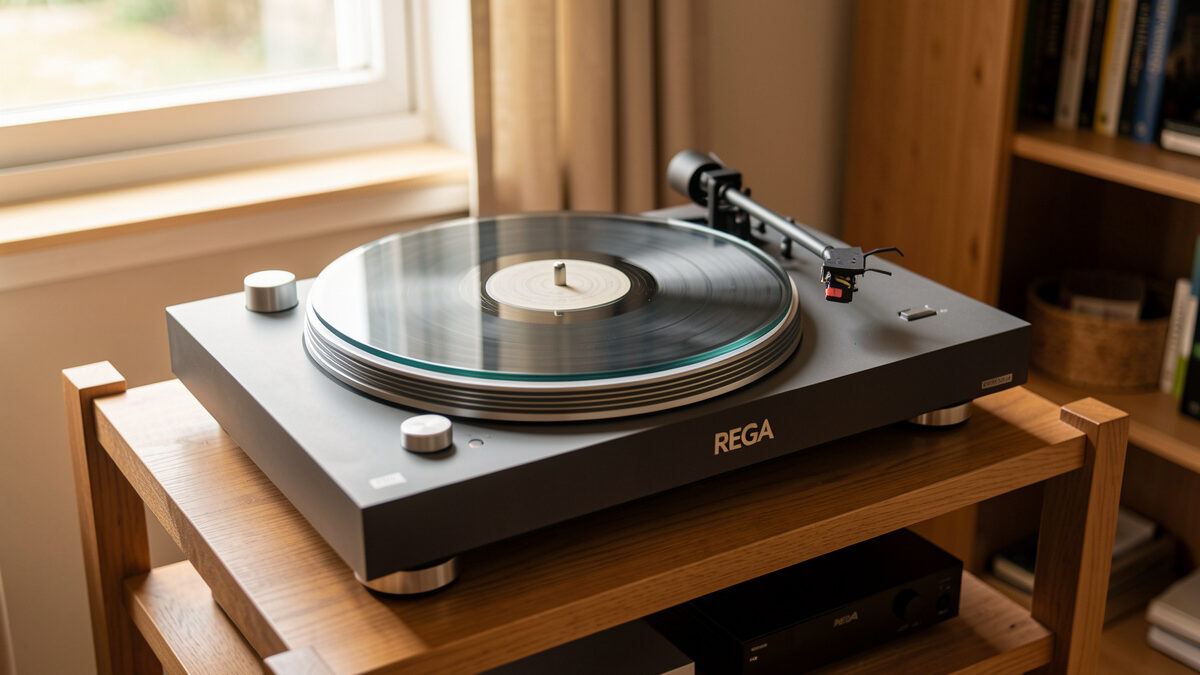
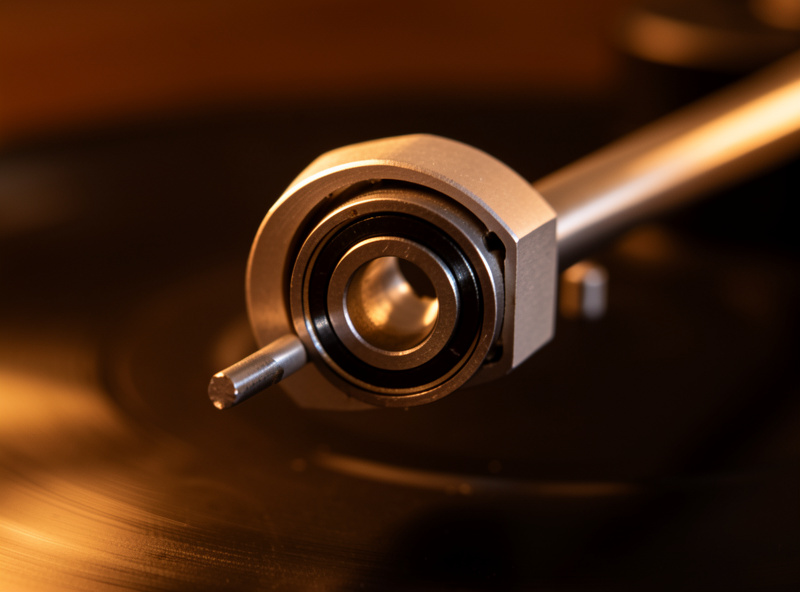
You’re paying for the tonearm, the bearing, and a rigid low-mass plinth — not bundled extras. Rega’s RB-series arms are the industry benchmark, machined as one-piece castings with hand-tuned bearings. The company spends its budget on mechanics you can’t see on a spec sheet, which is exactly why Rega looks expensive next to decks that staple on an acrylic platter and a preamp.
Rega’s engineering religion, going back decades, is “low mass, high rigidity.” The Rega plinths are deliberately light because a light, stiff structure stores and releases less energy than a heavy, resonant one. The arms — RB110, RB220, RB330 — use a single-piece aluminum casting to eliminate the joints where lesser arms flex, and their bearings are assembled to a tolerance that holds azimuth and effective mass consistently. On my RB330 I can set tracking force with a gauge, trust the arm won’t drift, and know azimuth is square because the casting made it square. That confidence is the product. It doesn’t photograph well and it doesn’t list well, which is why value-hunters overlook it.
The flip side is real: Rega gives you almost nothing to adjust. No VTA tower, no azimuth adjustment, and the deck assumes you’ll run a Rega cartridge at its fixed geometry. If you love tinkering, that’s a frustration, not a feature — and it’s the single biggest reason a Rega might not be worth it to you specifically.
Where Rega Is Genuinely Worth the Money
Rega is worth it for the buyer who wants the best arm at each price, will use a compatible cartridge, and doesn’t want to fiddle. The fixed geometry that frustrates tinkerers is a gift to set-and-forget listeners: there’s simply less to get wrong. A factory-cartridge Planar 1 or Planar 2 is close to perfect the moment you level it.
Here’s the Rega lineup and what each tier actually buys, using 2026 street figures that drift.
| Model | Street price | Arm | What the money buys |
|---|---|---|---|
| Planar 1 | ~$375 | RB110 | Best entry arm, factory cartridge |
| Planar 2 | ~$675 | RB220 | Float-glass platter, better arm |
| Planar 3 | ~$1,150 | RB330 | Reference arm, bare (add cartridge) |
| Planar 6 | ~$1,900 | RB330-derived | Outboard PSU, lower noise floor |
The pattern in that table is Rega’s whole argument: every tier spends on the arm, the platter, and speed stability rather than on bundled convenience. If those are the things you care about, the money is well spent. The Planar 1 in particular is a genuine bargain — its RB110 arm outclasses anything else near $375, which is why I recommend it constantly in the Planar 1 vs Pro-Ject Debut comparison.

Where Rega Is Not Worth It
Rega isn’t worth it if you want bundled hardware value, adjustability, or a built-in preamp. A Fluance RT85 gives you an acrylic platter and an Ortofon 2M Blue for less than a bare Planar 2. A Pro-Ject hands you an adjustable arm. If you’re a tinkerer or a value-per-dollar shopper, Rega’s priorities aren’t yours, and that’s fine.
I’ve watched people buy a Rega because of its reputation, then feel boxed in when they wanted to mount a tall moving-coil and discovered there’s no VTA adjustment to correct the geometry. For that person, a Pro-Ject was always the right call. Rega also makes you supply the cartridge on the bare Planar 3 and up, so the sticker isn’t the whole cost — factor in an Elys or an Ortofon on top. And because Rega spends nothing on a built-in preamp, you’ll need a phono stage, which is a real added cost if you don’t own one. That’s not a knock; it’s a mismatch. The phono stage guide explains why that outboard stage matters, but it’s still money the Fluance buyer didn’t have to spend up front.
Does Rega Hold Its Value?
Yes, better than most. Rega decks have a strong reputation and a long production life, so used Planars hold their price well and the RB arms are sought after on their own. That resale strength is part of the value equation — a Rega you tire of is easier to sell for close to what you paid than a feature-deck that’s been superseded.
The used market tells you what the hobby actually values, and it values Rega arms. I’ve seen RB-series arms sell secondhand for a healthy fraction of new because people buy them to upgrade other decks. That durability of value is invisible when you’re comparing sticker prices against a Fluance, but it’s real money over time. If you’re weighing new against used, my vintage turntable shortlist covers how to judge a used deck’s condition — and a used Rega is one of the safer secondhand buys precisely because the arm and bearing age gracefully.
How Does Rega’s Upgrade Path Work?
Rega’s upgrade path runs through cartridges, then platters and power supplies, not through modding the arm. Because the arm is fixed and excellent, you improve a Rega by fitting a better compatible cartridge, upgrading the platter or sub-platter on some models, or adding an outboard power supply on the Planars that support one. It’s a curated ladder rather than a parts bin.
The cartridge is where most owners start, and Rega assumes you’ll stay near its designed geometry — its own Elys and Exact cartridges are built to the arm’s fixed height, so they drop in cleanly. You can absolutely run a third-party cartridge like an Ortofon 2M, and Ortofon publishes the mounting dimensions on Ortofon so you can confirm it sits close to the right height; just know that a cartridge much taller or shorter than Rega’s spec will put VTA off with no tower to correct it. That’s the trade for the fixed-arm simplicity. Beyond cartridges, the higher Planars accept an outboard power supply that lowers the noise floor by isolating the motor’s electronics — a genuine, measurable upgrade rather than a cosmetic one. The point is that Rega’s ladder is deliberate: each rung is a real improvement Rega has validated, which suits the set-and-forget owner and frustrates the tinkerer who wanted to mod the arm itself.
So, Should You Buy a Rega?
Buy a Rega if you want the best tonearm at your budget, you’ll run a compatible cartridge, and you’d rather listen than tinker. Skip it if you want bundled value, an adjustable arm, or a built-in preamp — a Fluance or Pro-Ject serves you better. Rega is not overpriced; it’s priced for a specific buyer, and the trick is knowing whether that’s you.
For me, the Rega on my bench is the deck I trust to be right — I set the tracking force, confirm it on the gauge, and stop thinking about it, and the reward is a clean, rhythmically confident sound with a background that stays quiet through the busiest inner grooves. That’s what the money bought, and I’d spend it again. But I’ve handed friends a Fluance RT85 with a clear conscience, because they wanted the most sound per dollar and didn’t care about pedigree. Both choices are correct; they’re just answering different questions. If you’re still deciding between brands rather than models, start with the wider Rega vs Pro-Ject vs Fluance showdown, and if the budget is the constraint, the entry-tier U-Turn Orbit vs Fluance RT81 fork is where most first buyers actually land. Whatever you choose, dial the tracking force first — a perfectly aligned budget deck beats a carelessly set Rega every time.
Are Rega turntables overpriced?
No, but they are priced for a specific buyer. Rega spends its budget on the tonearm, bearing, and a rigid low-mass plinth rather than on bundled extras like acrylic platters or built-in preamps. If you value mechanics over features, the price is fair. If you want hardware value on a spec sheet, a Fluance or Pro-Ject looks like the better deal.
Why do Rega turntables not come with a cartridge on higher models?
Rega leaves the Planar 3 and up bare so you can choose a cartridge to match your taste and phono stage. It keeps the deck flexible for buyers who already have a preferred cartridge, but it means the sticker price is not the full cost. Budget for a cartridge on top.
Is a Rega Planar 1 worth it for a beginner?
Yes, for a beginner who wants set-and-forget accuracy. The Planar 1’s RB110 arm outclasses anything near its price, and it arrives with the cartridge fitted and aligned, so you only level it and confirm tracking force. It is a poor choice only for buyers who want to tinker and adjust.
Do Rega turntables hold their resale value?
Yes, better than most. Rega has a strong reputation and long production runs, so used Planars sell for a healthy fraction of new, and the RB-series arms are sought after on their own for upgrading other decks. That resale strength is part of the long-term value.
Do you need a phono preamp with a Rega?
Yes. Rega turntables do not include a built-in phono stage, so you need an amp with a phono input or a separate preamp. This is an added cost to factor in, especially compared with decks like the Fluance RT81 or RT85 that include a switchable preamp.
Keep Building
- Rega vs Pro-Ject vs Fluance: A Setup Tech’s Belt-Drive Showdown
- Rega Planar 1 vs Pro-Ject Debut: The Real Differences
- Turntable Setup and Calibration: The Complete Guide
- Phono Stage Guide: Gain, Loading, MM/MC, and Where to Spend