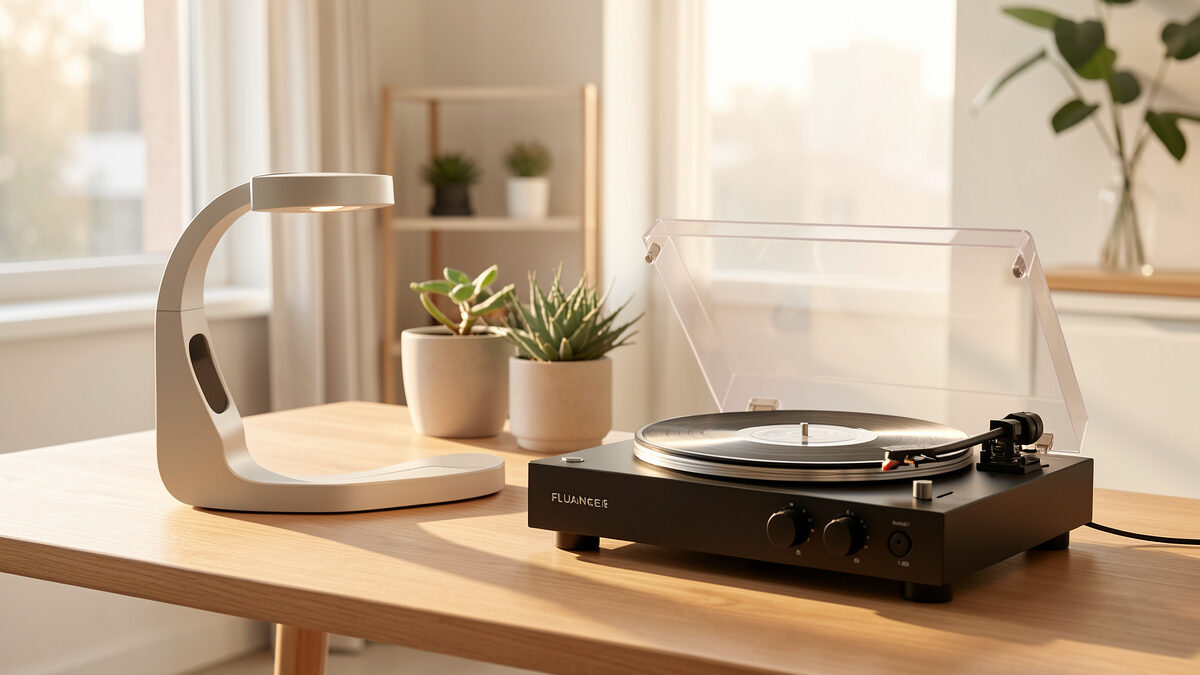
The U-Turn Orbit and the Fluance RT81 are the two decks I get asked about most by first-time buyers, and they sit within about $50 of each other around the $250 mark. The RT81 hands you more features out of the box — a built-in preamp, auto-stop, a cueing lever. The Orbit hands you a US-made, minimalist deck you configure to order. Your first belt table comes down to whether you want convenience or customization.
I’ve set up both, and neither is a mistake. But they’re built on different instincts, and picking the wrong one for how you actually listen is how people end up quietly disappointed with a perfectly good turntable. Let me walk through where each one spends its money, because at this price every dollar shows up as either a feature you use or one you don’t.
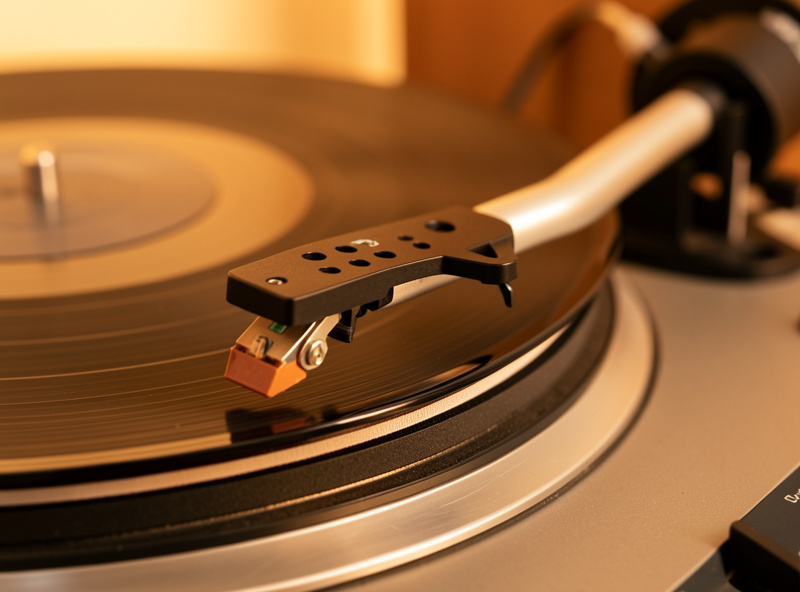
What’s the Core Difference for a First Turntable?
The RT81 is feature-loaded and ready to plug into anything; the Orbit is minimalist and customizable. Fluance builds in a switchable preamp, auto-stop, cueing lever, and isolation feet. U-Turn strips the deck to essentials, builds it in the US, and lets you add an acrylic platter, a better cartridge, or a built-in preamp as options. One is finished; one is a starting point.
Both ship with the excellent Audio-Technica AT-VM95E cartridge, which is the great equalizer here — its elliptical stylus tracks far better than the conical tips you find on cheaper decks, and the Audio-Technica VM95 body accepts stylus upgrades all the way to a MicroLine, so both decks share a genuinely high ceiling. That shared cartridge means the base sound quality is closer than the price or the marketing suggests. Where they diverge is everything around the cartridge.
The Fluance RT81 leans into convenience: a servo-controlled motor with auto-stop at the end of a side, a metal S-type tonearm with a proper cueing lever, a switchable built-in phono stage so it plays into powered speakers immediately, and factory isolation feet. It’s a deck designed so a beginner can’t easily get it wrong.
The U-Turn Orbit takes the opposite road: a clean, low-mass MDF plinth built in Woburn, Massachusetts, an external belt you move by hand to change speed, and a base model stripped of extras — no auto-stop, and the preamp and cueing lever are options you add. What you get is a deck you spec to your needs and a company that sells you the upgrade parts directly.
U-Turn Orbit vs Fluance RT81: Spec Comparison
Every row is something I check on the bench. Prices are 2026 street figures for the base configurations and drift.
| Feature | U-Turn Orbit (base) | Fluance RT81 |
|---|---|---|
| Street price | ~$219 | ~$250 |
| Cartridge | AT-VM95E | AT-VM95E |
| Platter | MDF (acrylic optional) | Aluminum |
| Built-in preamp | Optional add-on | Yes, switchable |
| Auto-stop | No | Yes |
| Cueing lever | Optional | Yes |
| Made in | USA | Designed in Canada |
The table shows the split cleanly: the RT81 wins the convenience rows — preamp, auto-stop, cueing lever all standard — while the Orbit wins on US assembly and configurability. They tie on the cartridge, which is the thing you actually hear. That tie is why this comparison is closer than the feature list makes it look.
Which One Is Easier to Live With Day to Day?
The RT81, clearly. Auto-stop lifts the load off the motor and stops the platter when a side ends, so you can fall asleep to a record without the stylus riding a locked groove all night. The cueing lever lets you drop the needle gently. The built-in preamp means it plugs into anything. The Orbit asks you to do all of that manually.
This is the part beginners underrate until they live with a deck. On my bench the RT81’s auto-stop and cueing lever are small conveniences that add up to a deck you never have to babysit. The Orbit’s manual approach isn’t a flaw — plenty of purists prefer no auto-stop because the mechanism can, in theory, transmit a tiny bit of vibration — but it means you’re the one lifting the arm at the end of every side, and moving the belt by hand every time you switch from an LP to a 45. If you’re the kind of person who finds that ritual satisfying, the Orbit rewards you. If you just want music, the RT81 is lower-friction. Either way, both need the same first step: confirm the tracking force with a gauge, which I walk through in the tracking force guide, and if this really is your first deck, setting up a turntable for the first time covers the whole sequence.

Which Has the Better Upgrade Path?
The U-Turn Orbit, if you plan to grow. U-Turn sells the acrylic platter, better cartridges, and the built-in preamp as direct upgrades, so you can start with a base Orbit and climb without changing decks. The RT81 is more of a fixed package — excellent as-is, but you upgrade it by moving up Fluance’s line to an RT82 or RT85.
Here’s the strategic read. Both decks share the AT-VM95E body, so the first and cheapest upgrade on either is the same: swap the elliptical stylus for a MicroLine, which drops into the existing body and sharpens inner-groove detail dramatically for a fraction of a new cartridge. Beyond that, the Orbit’s modular philosophy lets you add an acrylic platter (which rings less than the RT81’s aluminum) and a better cartridge à la carte. The RT81’s path is to buy up the Fluance ladder. Neither is wrong, but if you enjoy tweaking, the Orbit’s parts-store approach is more fun. And past a certain point on either deck, the phono stage matters more than the table — the phono stage guide explains why an external stage often beats another platter.
How Do the Two Actually Sound?
Closer than you’d expect, because they share the AT-VM95E cartridge that does most of the sonic work at this price. The audible differences come from the platter and the plinth: the RT81’s aluminum platter and heftier build give a slightly fuller, more planted sound, while the base Orbit’s lighter MDF platter is a touch leaner until you add the acrylic upgrade. Neither is bright or harsh.
On my own system the RT81’s extra mass shows up as marginally more weight in the low end and a slightly quieter background — the kind of difference you notice on a direct A/B and forget about in normal listening. The base Orbit sounds clean and honest but a little lighter on its feet; drop U-Turn’s acrylic platter on it and that gap closes, because acrylic stores and releases less energy than either MDF or aluminum, which you hear as a blacker background between notes. This is exactly why I tell first-time buyers not to obsess over the sound-quality difference between two decks sharing a cartridge — it’s real but small, and setup swings it more than the spec sheet does. The bigger sonic lever on both is cleaning your records, since most of the pops and haze people blame on a cheap deck are dust in the groove, not the turntable.
Does the Acrylic Platter Upgrade Matter on the Orbit?
It’s the single upgrade I’d make first on a base Orbit. Swapping the MDF platter for U-Turn’s acrylic one lowers the noise floor and tightens the bass by damping resonance the lighter platter passes through. It’s not transformative, but it’s the cheapest way to close the gap to the RT81’s fuller sound and then some.
What makes the acrylic platter smart on the Orbit specifically is that it doubles as a mat — the record sits directly on the acrylic, coupling better than a rubber mat over MDF. I’ve felt the difference as a slightly more defined leading edge on transients, the attack of a plucked string sounding a hair crisper. If you buy a base Orbit, budget for the acrylic platter before you think about a new cartridge; it’s the higher-value move. The RT81 doesn’t offer that particular upgrade — you’d step up to an RT82 or RT85 for a better platter — which is the trade-off for its more finished, less modular design.
The Setup Mistake That Levels the Playing Field
Whichever you buy, the biggest variable isn’t the brand — it’s whether you set the tracking force correctly and put the deck on a solid surface. A carelessly assembled Orbit will lose to a carefully set RT81, and vice versa. Ten minutes with a stylus gauge outranks the entire feature comparison above.
I learned this the hard way early on, trusting a budget deck’s “factory” tracking force and later measuring it well over the cartridge’s spec — enough to wear a stylus faster and add grit to inner grooves. Now I gauge everything. Both the Orbit and the RT81 ship with the AT-VM95E rated at 2.0 grams; set it there with a digital gauge, match the anti-skate, and level the deck. Then worry about placement: these are light, entry-level plinths, so a bouncy shelf near the speakers will inject rumble and footfall noise that no feature list can fix. A solid surface — or a proper platform from my isolation platform roundup — does more for the sound than the difference between these two decks. That’s the sensory tell of a good setup: an inner groove that stays clean instead of turning to haze near the label.
So which is the best first belt-drive table? If you want the most convenience and the fewest ways to get it wrong, buy the Fluance RT81. If you want a US-made deck you can customize and grow, buy the U-Turn Orbit. Both punch above their price, both share the cartridge that matters, and both sit at the entry of the wider field I map in the Rega vs Pro-Ject vs Fluance showdown. When you’re ready to step up, the Fluance RT85 vs Pro-Ject X1 matchup is the next tier — and the Rega Planar 1 vs Pro-Ject Debut comparison covers where the money goes just above these two.
As an Amazon Associate I earn from qualifying purchases.
Shop them here: U-Turn Orbit and Fluance RT81. A digital stylus gauge belongs in the cart with either — it’s the cheapest thing that protects your records.