The best turntable around $500 for most people is the Fluance RT85 — it bundles an acrylic platter and an Ortofon 2M Blue cartridge that would cost most of that budget bought separately. But “best” depends on whether you want finished sound, an upgrade path, or the best arm, so this is a shortlist of four decks, each the right answer for a different buyer.
I set up turntables for a living’s worth of hobby hours, and the $500 tier is the sweet spot where the deck stops being the weak link and your records and phono stage start to matter more. Every deck here is one I’d happily live with. The trick isn’t finding a good $500 turntable — they all are — it’s matching the deck to how you actually listen, and then spending the money around it in the right order. Let me give you the shortlist and the setup logic that makes any of them sing.
What Does $500 Actually Buy in a Turntable?
At $500 you get a genuine step up from entry decks: an acrylic or well-damped platter, a good elliptical or nude-elliptical cartridge, an adjustable arm on some models, and build quality that isolates the motor properly. This is where wow and flutter drop below audibility and the cartridge, not the table, becomes your limiting factor.
The important mental shift at this tier is that you’re no longer buying your way out of a bad deck — all four picks below are mechanically sound. You’re buying a specific set of strengths. One deck bundles a great cartridge; another gives you an adjustable arm to grow into; another gives you the best tonearm at any price; another is US-made and endlessly configurable. None is wrong. And crucially, at $500 the smartest money often isn’t the deck at all — it’s a good phono stage and ten minutes with a stylus gauge, which I’ll come back to.
Best Overall Value: Fluance RT85
The Fluance RT85 is the value champion at ~$500. It stacks an acrylic platter and an Ortofon 2M Blue — a cartridge people happily buy for $200 on its own — into a deck with a switchable built-in preamp and isolation feet. On a parts-cost basis nothing else here comes close.
The Fluance RT85’s 2M Blue is the star: its nude elliptical stylus tracks inner grooves cleanly where cheaper styli smear, and it upgrades to a 2M Bronze stylus later without a new cartridge body. The acrylic platter rings less than aluminum, and the built-in preamp means it plays into anything out of the box, then switches out of the path when you get a better external stage. If you want the most finished sound per dollar and you’ll do a careful setup, this is the one — I put it head-to-head with the pricier Pro-Ject X1 in the RT85 vs X1 comparison, and the RT85 holds its own against a deck costing $300 more.
Best for Tinkerers: Pro-Ject Debut Carbon EVO
Just over budget at ~$599, the Pro-Ject Debut Carbon EVO is the pick for buyers who want to adjust and upgrade. Its single-piece carbon arm allows VTA and azimuth adjustment, the damped platter and decoupled motor lower the noise floor, and electronic speed change adds convenience. It’s a platform, not a finished product.
If you enjoy the mechanical side of this hobby, the Pro-Ject EVO rewards it — the adjustable arm means you can fit a taller cartridge and correct the geometry, which the fixed-arm decks here can’t. I break down exactly what the EVO’s upgrades buy over the older Debut Carbon in the Debut Carbon vs EVO breakdown. Yes, it’s $99 over the $500 line, but it’s close enough that if adjustability matters to you, it belongs on the shortlist.
Best Tonearm: Rega Planar 1
At ~$375 the Rega Planar 1 leaves room in the budget for a cartridge or phono stage, and its RB110 tonearm outclasses anything else near the price. It’s the set-and-forget pick: factory-aligned, rigid, and simply correct out of the box, with no adjustments to get wrong.
The Rega Planar 1’s appeal is the arm and the accuracy. There’s no VTA tower, no built-in preamp, and no bundled acrylic platter — Rega spends its money on mechanics you can’t see on a spec sheet. That makes it a poor value-per-feature buy and a superb set-and-forget one. If you’d rather listen than tinker, this is your deck, and the leftover budget is best spent on a phono stage. I make the full case for and against Rega in Are Rega Turntables Worth the Price? — the short version is that you’re buying the arm, and at $375 that arm is a bargain.
Best US-Made and Customizable: U-Turn Orbit Plus
Around $449, the U-Turn Orbit Plus adds an acrylic platter to the Orbit’s clean, US-made design, and you can spec the cartridge and add a built-in preamp to taste. It’s the pick for buyers who want to configure their deck and support domestic manufacturing.
The U-Turn Orbit’s minimalist plinth and modular options make it the most personalizable deck here — you choose the cartridge, add the acrylic platter, and can grow it piece by piece rather than replacing the whole table. It’s lighter and simpler than the Fluance or Pro-Ject, which some listeners prefer, and the direct-from-maker upgrade parts keep it relevant for years. I pit the base Orbit against the Fluance RT81 in the entry-tier Orbit vs RT81 comparison; the Plus is the step up that brings it into this $500 conversation.
Best Turntable Around $500: Comparison Table
Every row is something I check on the bench. Prices are 2026 street figures and drift.
| Deck | Price | Cartridge | Standout strength | Best for |
|---|---|---|---|---|
| Fluance RT85 | ~$500 | Ortofon 2M Blue | Bundled hardware value | Most sound per dollar |
| Pro-Ject Debut Carbon EVO | ~$599 | Sumiko Rainier | Adjustable carbon arm | Tinkerers, upgraders |
| Rega Planar 1 | ~$375 | Rega Carbon | Best arm at the price | Set-and-forget listeners |
| U-Turn Orbit Plus | ~$449 | Your choice | US-made, configurable | Customizers |
The table makes the trade-offs concrete: the RT85 wins bundled value, the EVO wins adjustability, the Planar 1 wins the arm, the Orbit wins configurability. There’s no single winner because “best” is a question about you, not the hardware.
How to Spend the $500 in the Right Order
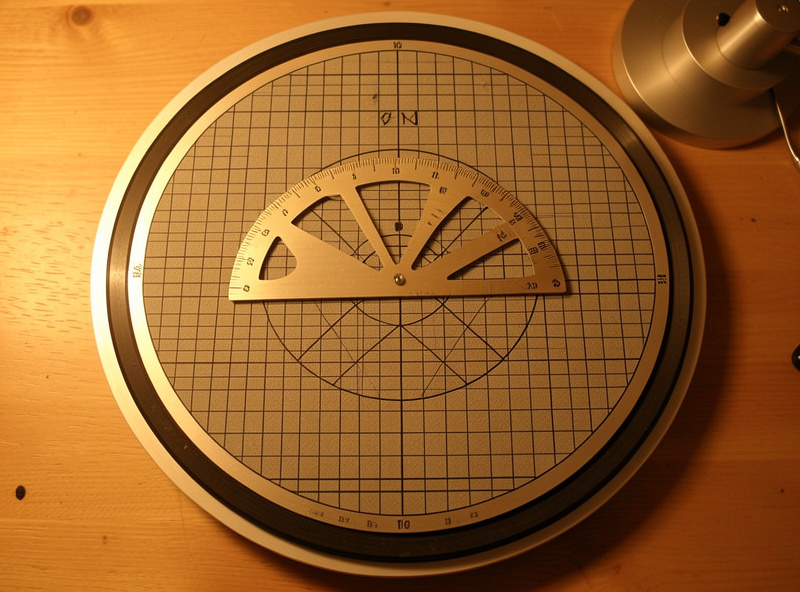
Spend on cleaning, setup, and the phono stage before you spend up on the table. A carefully aligned $375 deck through a good phono stage beats a $500 deck fed through a weak built-in preamp. The order that actually buys sound is: clean records, correct setup, phono stage, cartridge, then table.
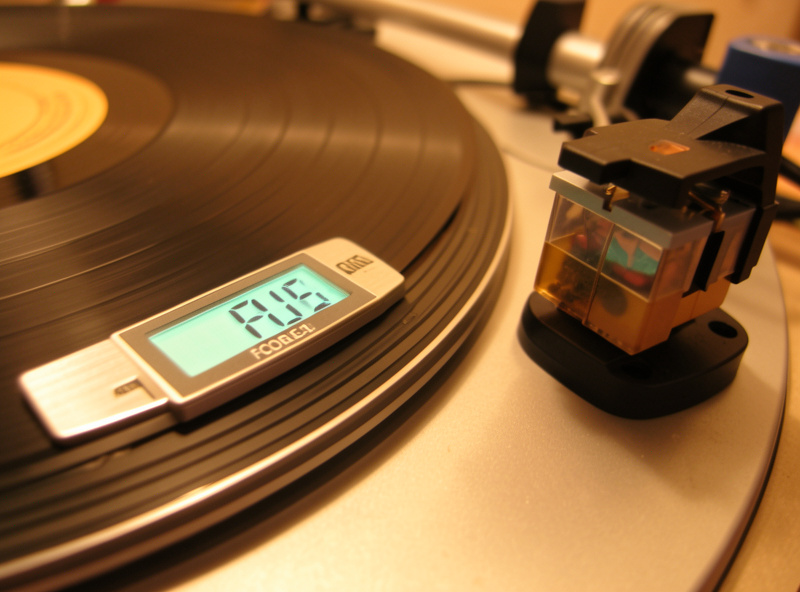
This is the framing that separates a setup tech from an unboxing video. I’ve watched people spend the whole $500 on the fanciest deck and then wonder why it doesn’t sound transformative — the answer is almost always a bottleneck downstream. My rule: buy the cheapest deck on this list that has the strengths you want, then put the remaining money into a phono stage, because past a certain point the phono stage moves the sound more than another slab of platter. The phono stage guide lays out gain and loading. And whichever deck you buy, the first thing I do on the bench is confirm the tracking force with a digital gauge — the one time I trusted a “factory” setting years ago I measured it well over spec and paid for it in a worn stylus. Ten minutes with the tracking force guide protects your records and outranks any brand argument.
What I’d Buy Starting Today
If someone handed me $500 and said “make it sound great with the least fuss,” I’d buy the Fluance RT85 and a decent record brush, set the tracking force, and enjoy it. If they said “I want to tinker,” I’d stretch to the Pro-Ject Debut Carbon EVO. If they said “best arm, I’ll add a cartridge later,” the Rega Planar 1 with the leftover going to a phono stage.
All three answers are right for the person who gave them. That’s the whole point of a shortlist over a single “winner” — the $500 tier is good enough that the deciding factor is temperament, not quality. These decks all sit inside the broader modern belt-drive picture I map in the Rega vs Pro-Ject vs Fluance showdown, and if your budget stretches further, the next tier up is its own conversation about where the money should and shouldn’t go.
As an Amazon Associate I earn from qualifying purchases.
Shop the shortlist: Fluance RT85, Pro-Ject Debut Carbon EVO, Rega Planar 1, and U-Turn Orbit Plus. Add a digital stylus gauge to whichever you pick.
What is the best turntable for around 500 dollars?
For most buyers the Fluance RT85 is the best value at around 500 dollars because it bundles an acrylic platter and an Ortofon 2M Blue cartridge that would cost most of the budget separately. The Rega Planar 1 is the best arm, the Pro-Ject Debut Carbon EVO is best for tinkerers, and the U-Turn Orbit Plus is the most configurable.
Should I spend the whole 500 dollars on the turntable?
Usually not. A carefully set up cheaper deck through a good phono stage often beats a pricier deck fed through a weak built-in preamp. Spend in this order: record cleaning, setup, phono stage, cartridge, then the table. That order buys more actual sound quality than the biggest sticker price.
Is the Fluance RT85 or Rega Planar 1 better at this price?
They serve different buyers. The RT85 gives more bundled hardware, including a better cartridge and a built-in preamp, so it is the value pick. The Planar 1 has the superior tonearm and set-and-forget accuracy but leaves you to supply a cartridge budget and a phono stage. Pick by whether you value features or the arm.
Do turntables in this range need a separate phono preamp?
It depends on the deck. The Fluance RT85 includes a switchable built-in preamp, while the Rega Planar 1 and most Pro-Ject decks need a separate phono stage. Factor that added cost in when comparing prices, and remember an external stage is often the best upgrade at this tier.
Related Articles
- Rega vs Pro-Ject vs Fluance: A Setup Tech’s Belt-Drive Showdown
- Fluance RT85 vs Pro-Ject X1: Which Belt Table Wins?
- Are Rega Turntables Worth the Price? An Honest Assessment
- Phono Stage Guide: Gain, Loading, MM/MC, and Where to Spend