A vinyl collecting guide that actually helps you starts with one uncomfortable truth: the records matter more than the gear, and a clean, well-pressed copy on a $400 deck beats a beat-up thrift find on a $2,000 deck every time. After years of mounting cartridges, aligning by protractor, and A/B-ing pressings on the same table, my advice is to collect for condition and pressing first, then let the playback chain catch up.
This is the pillar guide for everything that happens before the stylus drops: where to buy, how to read condition, original press versus repress, the genres that reward a good setup, and how to start a collection without drowning in dead wax you will never play. I run a Technics direct-drive deck next to a Rega P3 and a Pro-Ject belt table, and every record I bring home gets graded, cleaned, and sleeved before it touches a platter. That discipline is the whole game.
What Vinyl Collecting Actually Means in 2026
Vinyl collecting today splits into two camps: people building a listening library and people chasing pressings as objects. Most readers land in the first camp, and that is the easier, cheaper, more rewarding path. A working collection of a few hundred records you actually spin will teach you more about sound than a sealed shelf of “investment” pressings ever could.
The market has changed the math. New repressings are everywhere, used bins are picked over, and prices for clean originals have climbed. That means your skills — grading, cleaning, spotting a good pressing — are worth more than your budget. The collector who can read a record’s surface in store light walks out with VG+ copies for the price of VG, and that edge compounds across hundreds of records. I treat every purchase as a condition problem first and a want-list problem second.
The other shift is that the playback side has gotten genuinely good and cheap. A modern entry deck with a decent cartridge tracks better than mid-tier gear did twenty years ago. So the bottleneck is rarely the hardware now — it is the records, the setup, and the cleaning. Get those right and the collection sounds better than the spec sheet suggests.
Where to Buy: Stores, Online, Fairs
There is no single best place to buy vinyl — each channel has a different mix of price, selection, and risk. Record stores let you inspect and audition but charge a premium for curation. Online gives you the widest selection and sold-price data but ships condition risk to your mailbox. Record fairs sit in between: deep selection, in-person grading, and room to haggle.
My rule is simple. Anything where condition is critical and the price is high, I want to hold it first — that is store or fair territory. Anything common, cheap, or where I trust the seller’s grading history, I buy online. I have walked out of a shop with a flawless original I would never have risked sight-unseen, and I have filled gaps in my collection online for a fraction of local prices. Both channels earn their place once you know which records belong in which.
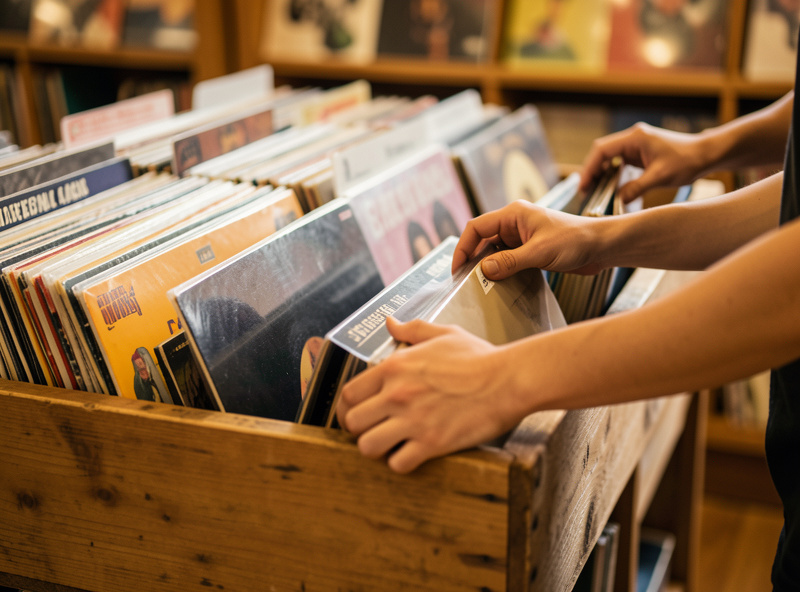
For the deep dives, I have separate guides on buying vinyl at record stores and buying vinyl online safely, because the grading you do in a store and the grading you trust from a photo are two different skills. Start with whichever channel matches the records you are chasing right now.
Condition Is Everything: Learn to Grade First
If you learn one skill before spending real money, make it grading. The Goldmine Standard is the shared language of used vinyl — Mint, Near Mint, VG+, VG, Good — and the gap between VG+ and VG is the gap between a record you enjoy and one you tolerate. A single grade of difference can double or halve a fair price, so a sharp eye pays for itself fast.
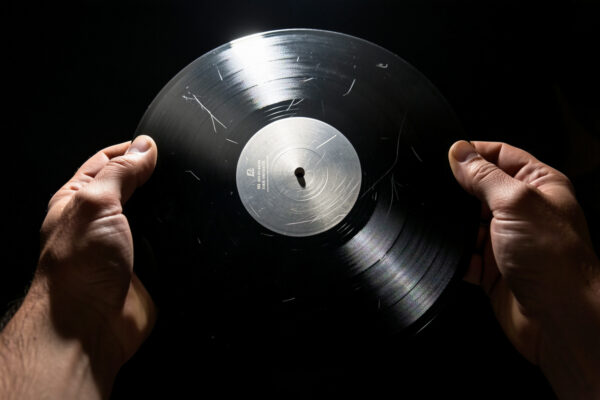
Grading is part visual and part audible. Light scuffs that catch the light often play silent; a single deep scratch across the grooves does not. Paper scuffs and spindle marks tell you how a record was handled. I grade under raking light, tilt the disc to read the sheen, and check the dead wax and label for wear. The full method — what to look for, how to test-play, how the visual grade maps to what you hear — is in my guide to grading vinyl records.
One caution: not every pop is the record’s fault. Some are pressing defects baked into the stamper, some are dust that a proper clean removes entirely. Before you write off a record as noisy, clean it. I have rescued plenty of “VG, surface noise” bargains with nothing more than a wet clean and a fresh inner sleeve.
Original Press vs Repress: When It Matters
The original-versus-repress debate gets louder than it deserves. Sometimes the first pressing genuinely sounds better — cut from the original tapes, lower in the catalog, pressed when the stampers were fresh. Just as often a modern reissue from a good mastering source beats a worn original that has been played a thousand times. The pressing that sounds best is the one cut well and pressed cleanly, regardless of date.
What you are really buying with an original is sometimes sound and sometimes collectibility, and it pays to know which. A clean modern repress can deliver 95% of the sonic experience at a fraction of the price, while an original commands a premium that is partly nostalgia and partly genuine fidelity. I break down how to tell them apart — matrix numbers, mastering credits, when to pay up and when to save — in original press vs repress vinyl.
The trap to avoid is paying first-pressing money for a copy that has been thrashed. A premium original that grades VG with groove wear will sound worse than a sealed reissue, no matter how impressive the matrix code reads. I weigh three things before paying up for an original: the mastering source, the condition in hand, and whether a respected modern reissue exists. If a well-regarded reissue is out there and the original in front of me is anything below VG+, the reissue almost always wins on sound per dollar — and I save the premium for an original that is genuinely clean.
Which Genres Reward a Good Pressing
Not every record stresses your system the same way. Dynamic, wide-band music — large-ensemble jazz, classical, well-recorded acoustic and audiophile pressings — exposes everything your setup does, good and bad. Loud, compressed, heavily-limited modern masters are far more forgiving, which is why a cheap deck can make a rock record sound fine and a string quartet sound thin.
If you are collecting partly to hear what your gear can do, lean into the genres that carry detail and dynamics. I cover which styles reward a careful setup, and which pressings are worth seeking out, in best vinyl genres for sound quality. The short version: jazz and classical reveal the most, but a great pressing in any genre beats a mediocre one in the “best” genre.
This is also where matching your collection to your gear pays off. If your setup is still entry-level, a heavily dynamic audiophile pressing can actually disappoint, because the deck cannot track the loud passages cleanly and you hear mistracking instead of detail. Build toward those demanding records as your alignment and cartridge improve, and in the meantime collect the well-recorded but forgiving titles that sound great today. There is no point owning a reference pressing your stylus cannot do justice to yet.
The Buying Channels Compared
Here is how the three main ways to buy stack up on the things that matter — price, the selection you can reach, your ability to grade before paying, and the overall risk. Use it to decide where a given record on your want-list belongs.
| Factor | Record Store | Online (Discogs/marketplace) | Record Fair |
|---|---|---|---|
| Typical price | Higher (curated) | Lowest for common titles | Negotiable, often mid |
| Selection depth | Limited to local stock | Effectively unlimited | Very deep for a day |
| Grade before buying | Yes, in hand | No — trust seller grade | Yes, in hand |
| Condition risk | Low | Medium to high | Low |
| Best for | High-value or fragile records | Common titles, sealed repress | Volume hunting, rarities |
| Haggle room | Limited | On open offers | Expected |
Cleaning and Storage Protect the Investment
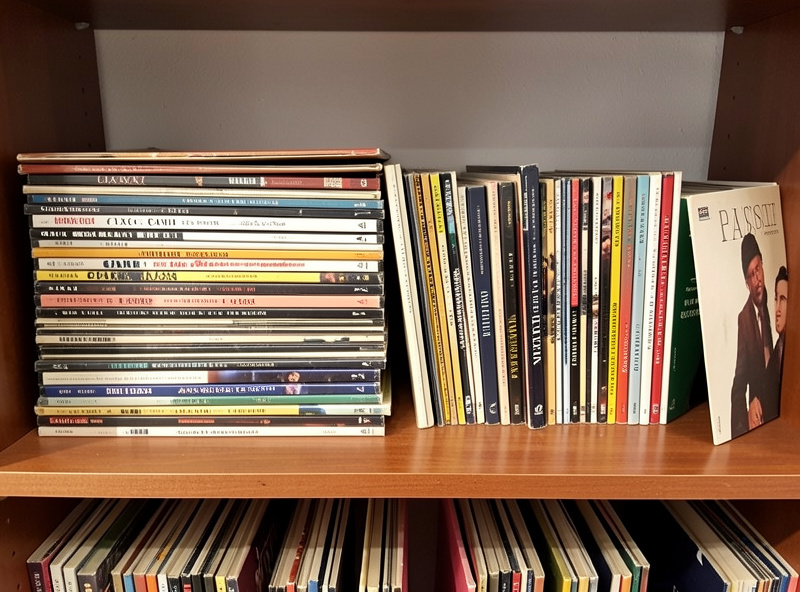
A record you bought VG+ stays VG+ only if you treat it right. Every disc I bring home gets a clean before first play and an anti-static inner sleeve, no exceptions. Most of the “noise” people blame on cheap vinyl is dust sitting in the groove, and it transfers straight to your stylus. A carbon-fiber brush before each play and a periodic wet clean keep both the record and the cartridge healthy.
Storage is the other half. Records stored flat warp, records stored loose ring-wear their sleeves, and records in a humid room grow problems you cannot clean off. Vertical storage, snug but not crushed, away from heat and sun, is the whole secret. I keep the detail in my vinyl record care guide, the cleaning walkthrough, and the storage guide. Spend ten minutes here and your collection outlives your turntable.
Spend in the Right Order
Beginners almost always buy the upgrade ladder backwards — new table first, then a cartridge, then maybe cleaning supplies if there is money left. The order that actually buys sound is the reverse: cleaning and setup, then the phono stage, then the cartridge, then the table. Setup and a clean groove are nearly free and move the needle more than a $300 deck swap.
I have measured this on my own bench. A correctly aligned budget cartridge on a clean record beats a misaligned premium cartridge every time, and a good phono stage often does more than a pricier table. If you are choosing hardware, start with the record player guide and the cartridge guide, and don’t lose sleep over belt versus direct drive — it is the most over-fought non-issue at the hobbyist tier.
Setting Up the Deck So the Records Sound Their Best
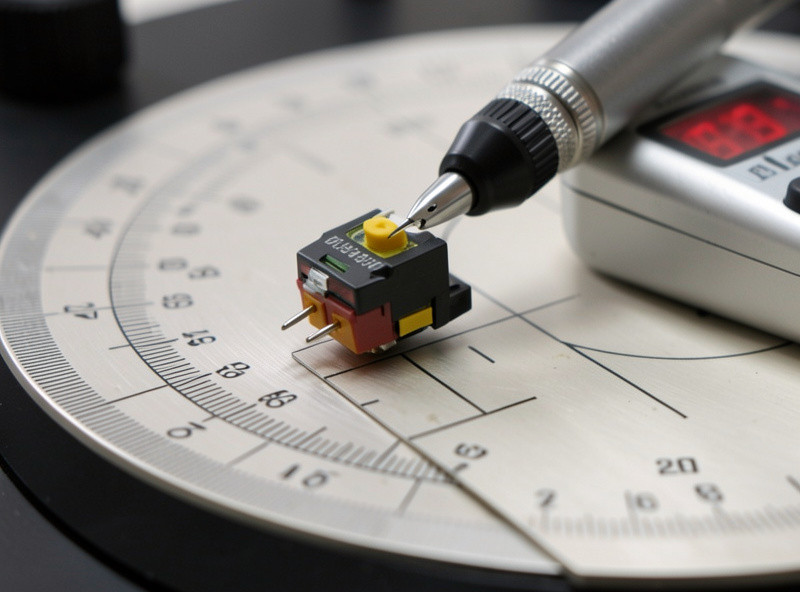
A collection only sounds as good as the setup playing it, and setup is where most of the free performance hides. The four numbers that matter are tracking force, anti-skate, overhang, and VTA, and you set them with a gauge and a protractor, not by ear. Most entry moving-magnets like the Audio-Technica AT-VM95 family track at 2.0g; an Ortofon 2M Red wants about 1.8g. A digital stylus gauge reading to 0.01g takes the guesswork out, and it costs less than two records.
Tracking force is the one beginners get wrong most often, and I was no exception. The first cartridge I mounted I set light — around 1.2g, because I assumed lighter meant gentler on the record — and got mistracking and a hard edge on loud vocals until I put a gauge on it and brought it up to spec. An under-weighted stylus chatters in the groove and carves the kind of wear that correct, heavier tracking never would. Set the force to the cartridge’s spec, match anti-skate to roughly the same number, then check overhang against a two-point protractor so the stylus sits square in the groove from the lead-in to the run-out. Azimuth and VTA matter too, but they are fine-tuning; nail tracking force, anti-skate, and overhang and you have done ninety percent of what separates a rig that sings from one that grinds.
The reason this belongs in a collecting guide and not just a gear guide is that bad setup damages records — the very thing you are spending all this effort to protect. A misaligned or under-weighted cartridge adds groove wear to every disc it plays, permanently downgrading copies you graded VG+ the day you bought them. I re-gauge tracking force and re-level the plinth on every deck about a month after setup, once the stylus suspension has settled, then a couple of times a year. None of it costs more than a gauge and a bubble level, and it is the cheapest insurance a collection can have.
This is the same logic as the spend-in-the-right-order rule, applied to your hands instead of your wallet: the protractor and the gauge buy more sound than the next price bracket of turntable. I run the same routine across my Technics, my Rega P3, and my Pro-Ject belt table — three very different decks that all disappear behind the music once the geometry is right. Get the setup dialed and an honest budget rig will play your best pressings without wearing them out.
How to Read a Pressing: Labels, Matrix Numbers, and Dead Wax
The single most useful collecting skill after grading is reading a record’s identity off the disc itself. The label tells you the catalog number and often the era; the dead wax — the smooth run-out between the last groove and the label — carries the matrix and stamper numbers etched at the cutting lathe. Two copies of the same album can have different dead-wax codes, and those codes are how you separate a first pressing from a later run without trusting a seller’s word.
You do not need to memorize catalog systems to benefit from this. Tilt the run-out under a light, read the etched characters, and cross-reference them against a release database like Discogs, which catalogs pressings by their matrix and stamper codes. A low stamper number generally means an early strike from a fresh stamper, which is exactly when pressings sound their best. I check the dead wax on anything I am paying a premium for, because the jacket can be swapped and reprinted but the etched matrix is the record’s birth certificate. It is the difference between buying a pressing and buying a story.
Labels matter too. Color, font, and the small print around the rim shifted over the years for most catalogs, and a mismatched label inside an “original” jacket is a red flag for a later disc in an older sleeve. None of this requires expertise — just the habit of looking before you pay. The connoisseur-level matrix study is a rabbit hole I leave to the dead-wax specialists, but the basics here protect your wallet on every meaningful purchase.
Setting a Budget and Building a Want-List
The fastest way to waste money collecting is to shop without a plan. A want-list — even a rough one in your phone — turns aimless bin-flipping into targeted hunting and stops you re-buying the same three records every shop stocks. I split my spending roughly into thirds: known wants I will replay for years, condition upgrades of records I already own but in rough shape, and a small discretionary slice for the unplanned find that makes digging fun.
Be honest about replay value. A record you buy because you “should” own it sits unplayed while the ones you actually love wear out. I would rather own fifty records I spin constantly than five hundred I shelf and forget. Quality of selection beats quantity of shelf space every time, and a tight, loved collection sounds better simply because you keep its records cleaner and play them on a better-maintained rig.
Budget the playback chain into the plan too. If your records routinely outclass your setup, the next dollar belongs in cleaning, alignment, or a phono stage rather than another armful of discs. The collection and the rig grow together, and the right ratio keeps both moving forward instead of one starving the other.
Mistakes That Cost Beginners the Most
Most early collecting regrets trace back to a handful of avoidable errors. The biggest is ignoring condition to chase titles — buying a VG copy of a wanted album when patience would have landed a VG+ for a little more, then living with the noise for years. Condition is permanent; a title you missed today comes around again. Buy the copy, not the cover.
The second is skipping cleaning. New collectors play thrift finds dirty, blame the vinyl, and grind grit into both the groove and a fresh stylus. A five-minute clean before first play protects a cartridge that costs far more than the record. The third is bad storage — stacking records flat, jamming shelves too tight, or leaving them in a sunny, humid room — which quietly warps and ring-wears a collection that cost real money to assemble. Fix those three habits and you avoid the regrets that fill collector forums.
Building a Collection That Lasts
The collections that survive a decade are built deliberately, not impulsively. A want-list keeps you from buying the same three records every shop has and missing the ones you actually love. Buy condition over completeness, buy what you will replay over what you think you should own, and let the collection grow around the records that earn repeat spins.
If you are at the very start, my starting a vinyl collection guide lays out the first fifty records, the budget order, and the mistakes that cost beginners the most. And if you ever need to thin the herd, knowing how to grade for sale and sell the right way recovers more than you would expect. A collection is a living thing — it grows, it trades, and the discipline you bring to buying is the discipline that keeps it worth owning.
Frequently Asked Questions
Is vinyl collecting worth it in 2026?
Yes, if you collect to listen rather than to flip. Entry decks now track better than mid-tier gear did decades ago, so a clean, well-graded record sounds excellent for modest money. The skill that pays off is grading and cleaning, not big spending.
How much should a beginner spend to start collecting vinyl?
A capable deck with a decent cartridge, a carbon-fiber brush, anti-static inner sleeves, and your first records is achievable for a few hundred dollars total. Spend on setup and cleaning before chasing a pricier table, because a clean, aligned budget rig beats an expensive misaligned one.
What is the most important skill in vinyl collecting?
Grading. Reading a record’s condition under raking light separates a copy you enjoy from one you tolerate, and a single grade of difference can double or halve a fair price. Learn the Goldmine Standard before you spend real money.
Are original pressings always better than repressings?
No. A first pressing can sound better when cut from original tapes and pressed with fresh stampers, but a worn, heavily-played original often loses to a clean modern reissue from a good source. The pressing cut well and pressed cleanly wins, regardless of date.
Do I need to clean used records before playing them?
Yes. Most surface noise on used vinyl is dust sitting in the groove, not damage, and it transfers to your stylus. A wet clean and a fresh anti-static inner sleeve rescue many records graded down for noise, and a brush before each play keeps them quiet.
Where is the cheapest place to buy vinyl records?
Online marketplaces are cheapest for common titles, because you reach unlimited stock and sold-price data. The trade-off is you cannot grade in hand, so reserve online for common records or trusted sellers and inspect high-value records in a store or at a fair.