Starting a vinyl collection well comes down to one principle most beginners get backwards: spend on setup and cleaning before chasing gear or rare records. A clean, well-aligned entry deck playing clean records beats an expensive deck playing dirty ones, every time. Get the order right — cleaning and setup, then a decent cartridge and phono stage, then records you will actually replay — and you build a collection that sounds good and lasts, for a few hundred dollars rather than a few thousand.
I have set up enough first decks, my own and others’, to know exactly where beginners waste money. The good news is that the modern entry point is genuinely capable: a current budget turntable tracks better than mid-tier gear did decades ago. The bottleneck is rarely the hardware — it is setup, cleaning, and choosing records with intent. This guide walks the order that actually works.
Spend in the Right Order
The single most valuable lesson for a new collector is the upgrade order: cleaning and setup first, then the phono stage, then the cartridge, then the table. Beginners almost always reverse it, buying a pricier deck before a brush or a protractor — but setup and a clean groove are nearly free and move the sound more than a $300 table swap. A correctly aligned budget cartridge on a clean record outperforms a misaligned premium one.
Concretely, that means your first dollars after the turntable go to a carbon-fiber brush, anti-static inner sleeves, and a basic cleaning method — not another armful of records or a fancier cartridge. These cheap steps protect both your records and your stylus and deliver an immediate, audible improvement. Only once the cleaning and setup basics are handled does spending on the cartridge and phono stage start to pay off. I cover the hardware choices in the record player guide.
Your First Setup: Deck, Cleaning, Storage
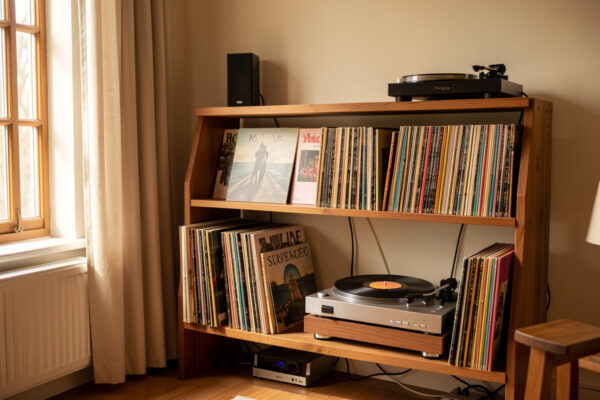
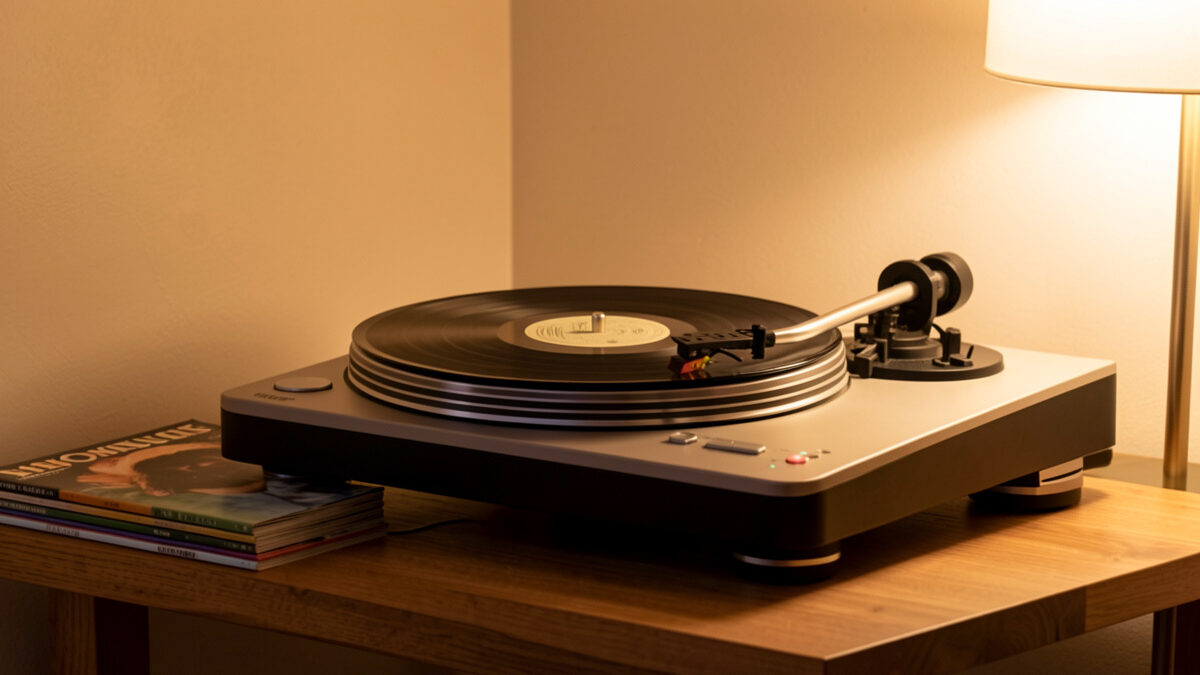
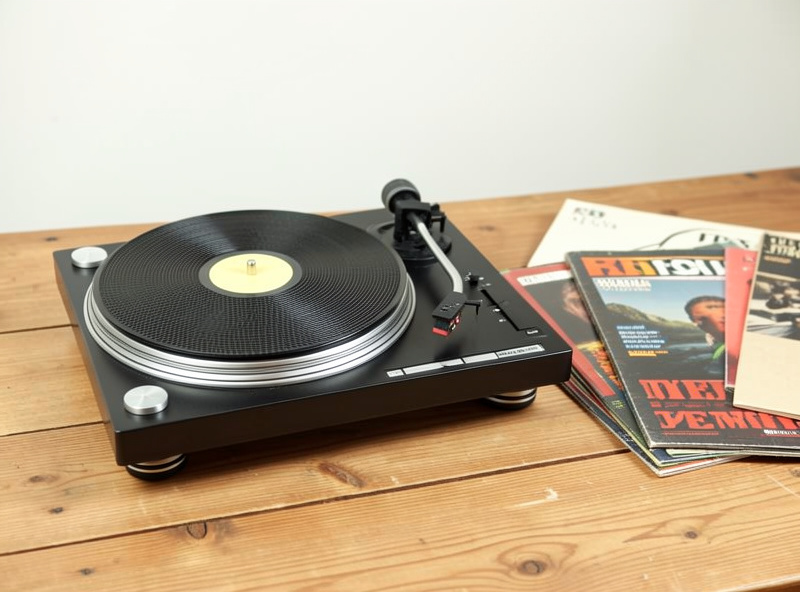
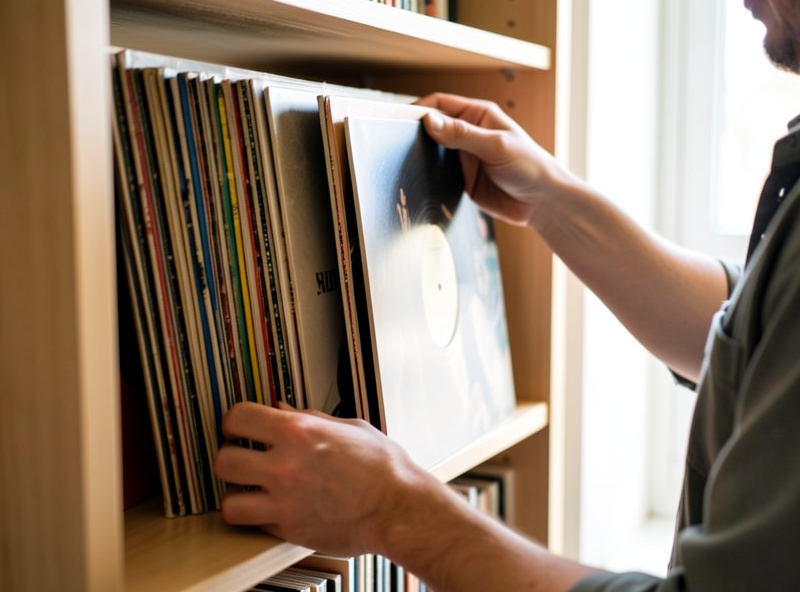
A complete starting kit is simpler than the marketing suggests. You need a turntable with a decent factory cartridge, a phono stage (built into many entry decks or your amp, or added as a small external box), a carbon-fiber brush for every play, anti-static inner sleeves, and somewhere to store records vertically. That is the whole foundation, and it fits a modest budget.
Cleaning is the step beginners skip and regret. Every used record should be cleaned before its first play, because most “surface noise” is dust in the groove that transfers straight to your stylus. A carbon-fiber brush before each play plus a periodic wet clean keeps records quiet and your cartridge healthy. A simple vinyl record cleaning kit with a brush and fluid covers everything a beginner needs to start. As an Amazon Associate I earn from qualifying purchases. The full method is in my cleaning walkthrough, and protecting records long-term is covered in the care guide.
How to Choose Your First Records
Buy records you will actually replay, not records you think you should own. The collections that last are built around music the owner returns to, not a checklist of canonical titles gathering dust. Start with a couple dozen albums you love and know well, because hearing familiar music on vinyl is how you learn what your setup does and what to listen for.
Favor condition and good pressings over completeness. A clean, well-pressed copy of an album you love beats a worn “important” record you rarely play, and on an entry setup the well-recorded but forgiving genres sound best — see best vinyl genres for sound quality for which to reach for first. Resist the urge to buy in bulk early; a focused start teaches you more and wastes less money than a hundred impulse grabs you never spin.
A Sensible Starter Budget
Here is how I would allocate a modest first-year budget to get the best sound per dollar. The proportions matter more than the totals — scale them to whatever you can spend, but keep the order.
| Priority | What | Rough share of budget |
|---|---|---|
| 1 | Turntable with decent cartridge | ~45% |
| 2 | Phono stage (if not built in) | ~15% |
| 3 | Cleaning + anti-static sleeves | ~10% |
| 4 | Storage (vertical, sturdy) | ~10% |
| 5 | First records | ~20% |
Where to Buy as a Beginner
New collectors do best splitting their buying across channels. Record stores let you inspect and audition, which is the safest way to buy while you are still learning to grade — see buying vinyl at record stores. Online gives you selection and the sold-price history on Discogs once you can read a remote seller’s grade, covered in buying vinyl online safely. Start in stores where you can hold the record, and add online buying as your confidence grows.
Either way, grading is the skill that protects your money from day one. Learning to read condition — the Goldmine scale, reading surfaces under raking light, separating dirt from damage — is covered in how to grade vinyl records, and it is the first thing I would tell any beginner to learn before spending real money. The full strategy ties together in the vinyl collecting guide.
Dialing In Your First Cartridge
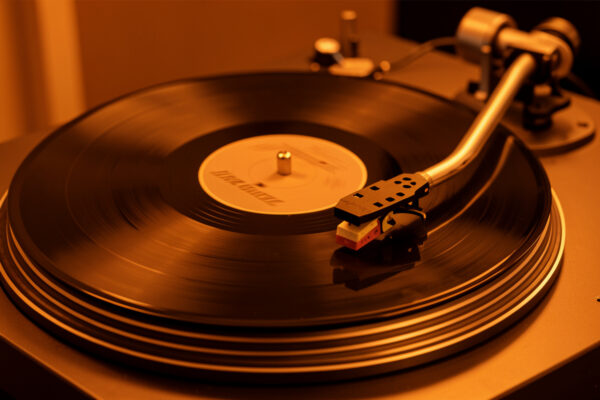
Set tracking force to the cartridge’s spec with a digital gauge, not by eye: most entry moving-magnets like the Audio-Technica AT-VM95 family track at 2.0g, while an Ortofon 2M Red wants about 1.8g. A cheap 0.01g scale removes all the guesswork.
The mistake I made on my first deck was setting tracking force light — around 1.2g — because I assumed lighter meant gentler on the record. It does the opposite: an under-weighted stylus chatters in the groove, mistracks loud passages, and carves the kind of wear that heavier-but-correct tracking never would. The sibilance on vocals only cleaned up once I put a gauge on the cartridge and brought it back up to spec. Match anti-skate to that same number, then check overhang against a two-point protractor so the stylus sits square in the groove from the lead-in to the run-out. Get those two right and you have done most of what separates a budget rig that sings from one that grinds.
Recheck the numbers after the first few weeks. A new stylus and its suspension settle in, tracking force drifts as the cantilever beds down, and a deck dialed at setup can quietly fall out of spec. I re-gauge VTF and re-level the plinth on every deck I set up — the same routine on my Technics and my Rega P3 — about a month in, then a couple of times a year. None of it costs more than a gauge and a bubble level, and it is the single cheapest upgrade a beginner can give a collection, worth far more than swapping the table.
Beginner Mistakes to Avoid
A handful of errors cost new collectors the most. The first is buying gear in the wrong order — a pricier deck before cleaning and setup basics. The second is skipping cleaning and grinding dust into a fresh stylus on the first play. The third is bad storage: stacking records flat warps them, and a tight, sunny, humid shelf quietly damages a collection that cost real money.
The fourth is buying for completeness instead of replay value, filling shelves with records you never spin while the ones you love wear out. And the fifth is neglecting setup — running a cartridge at the wrong tracking force or without proper alignment, which wears records and sounds worse than a correctly dialed budget rig. Avoid those five and you will be ahead of most collectors who have been at it for years.
Frequently Asked Questions
How much money do I need to start a vinyl collection?
A capable entry turntable with a decent cartridge, a carbon-fiber brush, anti-static sleeves, basic cleaning supplies, and a first stack of records is achievable for a few hundred dollars total. Spend on setup and cleaning before a pricier deck, because a clean, aligned budget rig beats an expensive misaligned one.
What should I buy first when starting a vinyl collection?
A turntable with a decent cartridge, then cleaning supplies and anti-static sleeves before anything else. Setup and a clean groove improve sound more than a costlier deck, so a brush, sleeves, and a basic cleaning method come before extra records or a fancier cartridge.
How many records should a beginner start with?
Start with a couple dozen albums you love and know well rather than buying in bulk. Familiar music teaches you what your setup does, and a focused start wastes less money than a hundred impulse grabs you never replay. Build around records you actually return to.
Do I need a separate phono stage to start?
Not necessarily. Many entry turntables include a built-in phono stage, and many amplifiers have a phono input, so you may already be covered. If neither does, a small external phono stage is an affordable addition and often improves sound more than a pricier turntable would.
Should beginners buy new or used records?
Both work. New sealed reissues remove condition risk and are ideal while you learn to grade, and they often sound excellent. Used records are cheaper and deeper in selection but require grading skill, so buy used in stores where you can inspect until your eye is trained.
What is the biggest mistake new vinyl collectors make?
Spending in the wrong order — buying a pricier deck before cleaning and setup. Setup and a clean groove are nearly free and improve sound more than expensive hardware, so a correctly aligned budget cartridge on clean records outperforms a misaligned premium one every time.