Learning how to grade vinyl records is the skill that pays for itself faster than any piece of gear. Grading is the shared language of used vinyl — the Goldmine Standard runs Mint, Near Mint, VG+, VG, Good, Poor — and the single grade between VG+ and VG often doubles or halves a fair price. Read condition accurately and you buy better copies for less, every time.
I grade the way a setup tech grades: under raking light, disc tilted to read the sheen, with the understanding that what I see has to predict what I will hear. Most of grading is visual, but the visual grade is only a forecast of the playback grade, and the two diverge in ways worth knowing before you spend real money.
The Goldmine Grading Scale
The Goldmine Standard is the de facto grading system for used vinyl, and learning its grades is non-negotiable if you buy secondhand. Each grade describes both the disc and, separately, the sleeve — a record can be Near Mint while its jacket is only VG. The grades that matter most in practice are the middle ones, because that is where the bulk of the used market lives and where pricing is most sensitive to your read.
Mint is essentially unplayed and unhandled; most sellers should never use it. Near Mint is the realistic top grade for a clean used record — glossy, no visible marks, plays silent. VG+ shows light signs of play but still sounds excellent. VG is where surface noise becomes audible between and sometimes during tracks. Good means it plays through without skipping but with significant noise. Knowing exactly where a copy falls on this ladder is the whole skill.
Reading the Surface Under Light
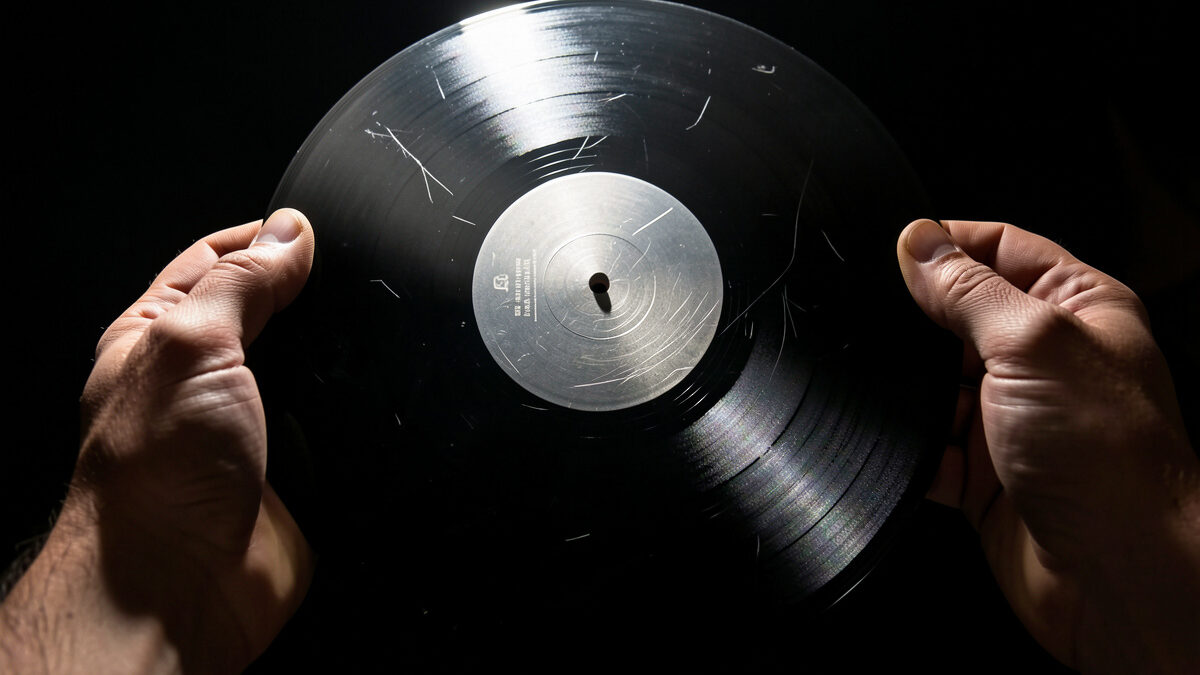
Visual grading happens under raking light — a single light source, the disc tilted so the surface catches the beam at an angle. Flat overhead light hides everything; raking light reveals scuffs, scratches, and haze that a casual glance misses. I hold the record by its edges and label, tilt it slowly, and let the reflection sweep across the playing surface.
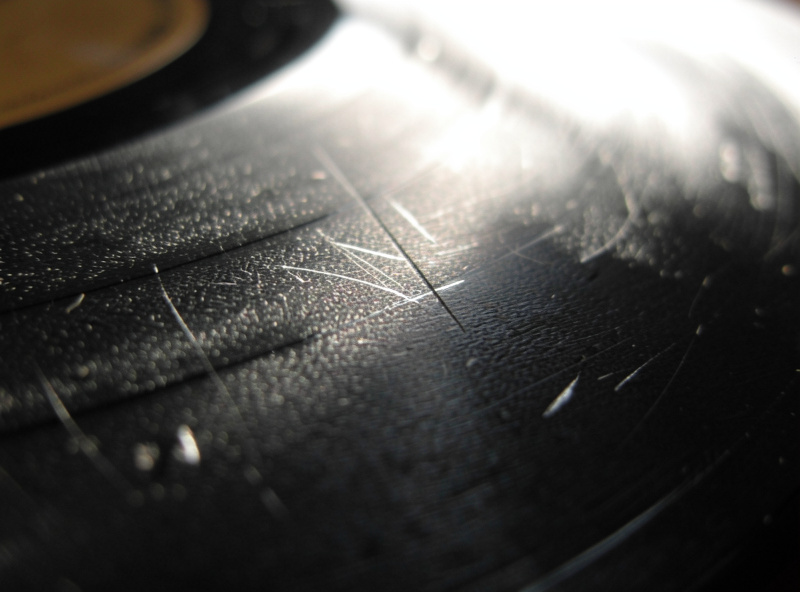
The crucial distinction is between marks that play and marks that do not. Light hairlines and paper scuffs — the haze from decades in a paper sleeve — usually play silent because they sit shallower than the groove. A scratch you can feel with a fingernail crossing the grooves almost always clicks or pops. Spindle marks around the center hole and ring wear on the label tell you how heavily the record was handled, even when the playing surface looks clean. I weight a feelable scratch far more heavily than a field of light scuffs.
Visual Grade vs Play Grade
The visual grade is a prediction; the play grade is the verdict. A record that looks VG can play VG+ if its marks are shallow, and a glossy-looking copy can hide a warp or a pressing defect that only reveals itself on the platter. Whenever the value justifies it, I test-play before trusting the visual grade — particularly the first and last tracks of each side, where handling damage and inner-groove distortion concentrate.
Test-playing also separates dirt from damage, which is the most expensive mistake in grading. A great deal of “surface noise” on used records is dust packed into the groove, not wear, and it vanishes with a proper clean. I have brought home plenty of records graded VG for noise that played VG+ after a wet clean and a fresh sleeve. Before you grade a record down for noise, clean it — my cleaning walkthrough and the wet-cleaning method cover exactly how.
The Goldmine Grades at a Glance
This table maps each grade to what you see, what you hear, and roughly how it should price against a Near Mint copy. Use it as a field reference when you are standing in a shop or reading a seller’s listing.
| Grade | Visual | Sound | Typical price vs NM |
|---|---|---|---|
| Near Mint (NM) | Glossy, no marks | Silent surfaces | 100% |
| VG+ | Light scuffs, no deep scratches | Excellent, faint noise in quiet passages | ~50% |
| VG | Visible scuffs, light scratches | Audible surface noise | ~25% |
| Good (G) | Heavy marks, scratches | Plays through, significant noise | ~10-15% |
| Poor (P) | Damaged, may skip | Unreliable playback | Near zero |
Grading the Sleeve and Inserts
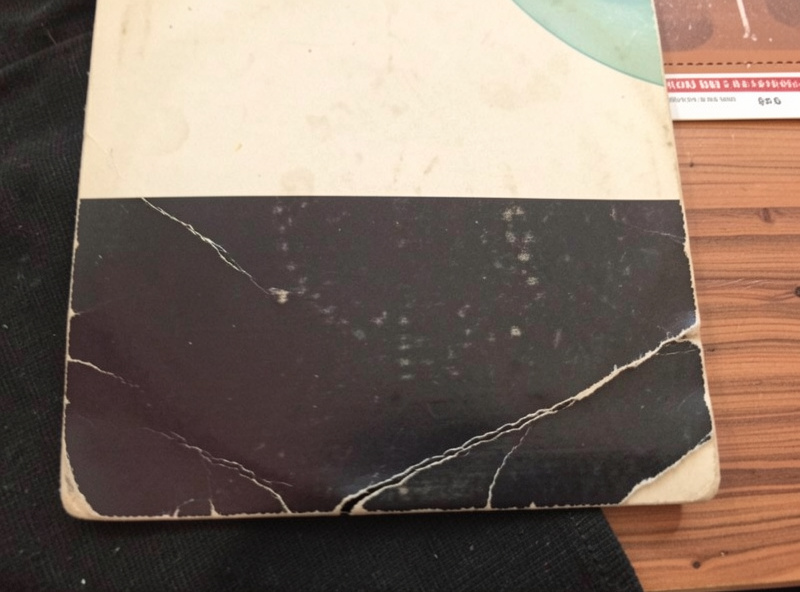
The jacket carries its own grade, and on collectible titles it can matter as much as the disc. Seam splits, ring wear, water damage, writing, and price stickers all pull a sleeve down the scale, and missing inserts — inner sleeves, lyric sheets, posters, hype stickers — knock value off a complete-original price. I grade the cover separately and note inserts explicitly, because “VG+ disc / VG sleeve, complete” tells a buyer far more than a single blended grade.
For a listening collection, sleeve condition matters less and you can save money buying clean discs in rough jackets. For collectible originals, the jacket is half the object. Knowing which mode you are in keeps you from overpaying for cardboard or overlooking a great-playing record in a tired sleeve.
Common Grading Mistakes
The most common error is overgrading from optimism — wanting a record to be VG+ and grading it there despite a feelable scratch. Grade against the copy, not against your hope for it. The second is grading under bad light; flat fluorescent light makes everything look clean, which is exactly why some shops use it. Bring the disc toward a window or a single bright source and tilt it.
The third mistake is confusing dirt for damage and walking away from a cheap record that a clean would have rescued. The fourth is ignoring warps, which a visual pass over a flat-lying record misses entirely — sight along the disc edge against the light to catch a dish or edge warp before it ruins a side. Avoid those four and your grading will be more honest than most of the listings you read.
The Grade That Cost Me
The most expensive grading mistake I ever made went the opposite way from the usual one: I underpriced a record I was selling. I graded a copy VG for a field of light scuffs without cleaning it first, sold it cheap, and the buyer later told me it played dead silent after a wet clean — it was a true VG+. I had handed over the difference between 25% and 50% of Near Mint money because I trusted my eyes over a brush.
That taught me the rule I grade by now: clean first, grade second, and never let visible haze alone pull a record down a full grade. The Goldmine Standard the whole market runs on — the same scale Discogs uses across its release database — describes what a record looks like and plays like, not how dirty it is. Dust is reversible; wear is not. Separate those two before you assign a grade and you will buy and sell more accurately than the person on the other side of the table.
The same discipline applies to warps, which I used to wave off until one cost me a side. Sight along the disc edge against a light before you commit: an edge warp that lies flat in the sleeve can still send the stylus riding a swell on every revolution, and no grade printed on the label warns you about it. A record that looks Near Mint and dishes under the light is a VG buy at best.
None of this is hard, but it is a habit you build copy by copy. Grade a hundred records honestly — clean, raking light, fingernail test, sight for warps — and the scale stops being a chart you consult and becomes something you read at a glance across a crate.
Putting Grading to Work
Grading is the foundation skill that makes every other collecting decision better. It tells you what to pay, what to walk away from, and what to clean rather than reject. It also feeds directly into buying smart — see the vinyl collecting guide for the full picture, and apply your new eye at the counter with buying vinyl at record stores or from photos with buying vinyl online safely. When the time comes to thin your shelves, the same standard runs in reverse in grading vinyl records for sale.
Frequently Asked Questions
What is the Goldmine grading standard?
Goldmine is the standard system for grading used vinyl, running Mint, Near Mint, VG+, VG, Good, and Poor. It grades the disc and sleeve separately and is the shared language sellers and buyers use to describe condition and set fair prices.
How do I grade a record without playing it?
Grade visually under raking light, tilting the disc so the surface catches a single light source at an angle. Light scuffs that do not catch a fingernail usually play silent, while a scratch you can feel crossing the grooves almost always clicks. Visual grading is a forecast of how it will sound.
Will a scratch you can see always be audible?
Not always. Shallow hairlines and paper scuffs often play silent because they sit above the groove depth. A scratch deep enough to catch a fingernail crossing the grooves almost always produces an audible click or pop. Feel the mark to judge it, not just look.
Does cleaning a record change its grade?
Cleaning can raise the play grade even though the visual grade is fixed. Much surface noise is dust packed in the groove, not wear, so a wet clean and a fresh sleeve can move a record graded down for noise back up to its true condition.
How much less is a VG record worth than VG+?
Roughly half. As a rule of thumb, VG+ prices near 50% of a Near Mint copy and VG near 25%, so the single grade between them often doubles or halves the fair price. That gap is why accurate grading saves real money.