Turntable arms split into two camps: universal, where the headshell detaches with a quarter-turn bayonet collar so you can swap cartridges in seconds, and fixed, where the cartridge bolts straight to an integrated arm end with no removable shell at all. The classic universal example is the S-shaped arm on a Technics SL-1200; the classic fixed example is the one-piece Rega RB330. Which one you own changes how you mount, align, and upgrade everything downstream.
People ask “which is better” as if there is a winner. There is not — there is a tradeoff between convenience and rigidity, and the right answer depends on whether you swap cartridges often or chase the last few percent of resonance control. I run both philosophies on my bench precisely because they teach different lessons, and I will tell you honestly which jobs each one wins.
How Do You Tell Which Headshell Mount You Have?
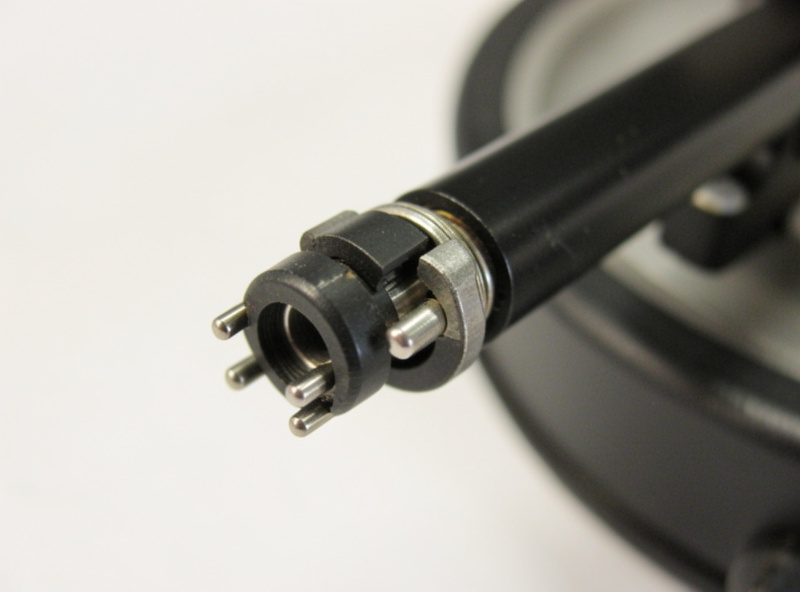
Look at the end of the tonearm. If there is a collar or nut where a removable headshell plugs in — usually on an S-shaped arm — you have a universal mount. If the cartridge bolts directly to the arm tube with no seam, connector, or collar, you have a fixed integrated headshell. The presence of a bayonet collar is the giveaway.
A universal mount has a visible junction: the headshell is a separate piece that clicks into the arm and locks with a threaded collar, and you can wiggle-test it (gently) to feel that it is a detachable part. A fixed arm is one continuous casting from pivot to cartridge, so the cartridge sits in a slot machined into the arm itself and the only removable pieces are the cartridge and its screws. Most straight arms on Rega, many Pro-Ject, and various budget-to-mid decks are fixed; most S-shaped arms and the DJ-favorite Technics lineage are universal. If you are not sure, the mount type is usually stated in your turntable’s manual, and it determines everything about how you approach cartridge work — which is why the turntable headshell guide treats it as the first question to answer.
What Are the Advantages of a Universal Headshell?
The universal mount’s headline advantage is swappability: you keep each cartridge permanently mounted and aligned in its own headshell and change the whole shell in seconds, so switching between a mono cartridge, a stereo cartridge, and a backup takes no re-alignment. It also lets you work on the cartridge at the bench instead of hunched over the deck.
That bench-work advantage is underrated. On a universal deck I pull the headshell off, sit at a well-lit workbench with my protractor and stylus gauge, mount and align the cartridge in comfort, and drop the finished assembly back onto the arm. No awkward angles, no dropped screws into the plinth. The bayonet collar also builds in an azimuth adjustment — the shell can rotate slightly before locking, letting you square the stylus to the groove. The costs are real too: every extra connector is an extra electrical junction that can oxidize, and the detachable joint is slightly less rigid than a one-piece arm, which the fixed-arm camp will remind you of at length. For most hobbyists, the convenience wins, especially if you own more than one cartridge. Keeping those bayonet contacts clean matters, which ties into how you wire and maintain the shell in the first place, covered in how to wire a headshell.
Why Do High-End Arms Use Fixed Headshells?
Fixed integrated headshells win on rigidity. A one-piece arm from pivot to cartridge has no detachable joint to flex or resonate, so it transmits the stylus’s job to the bearing more cleanly and eliminates a connector that could loosen or corrode. That mechanical purity is why arms like the Rega RB330 are built as single castings.
The tradeoff is everything the universal camp enjoys. With a fixed arm you mount and align the cartridge in place on the deck, which is fiddlier; you cannot swap cartridges without a full re-mount and re-alignment each time; and you have no rotating collar for azimuth, so azimuth is fixed by the arm’s build. VTA adjustment also works differently — instead of a headshell you shim, many fixed arms adjust height at the arm base with spacers, and where they do not, you shim under the cartridge. The rigidity payoff is genuine and measurable, which is why it dominates at the higher end, but it asks more of you at setup time and locks you into one cartridge at a time. If you rarely change cartridges and you value ultimate resonance control, that is a trade worth making; if you like swapping, it is a real inconvenience.
Universal vs Fixed Headshells Compared
Here is the tradeoff laid out on the axes that actually matter when you are choosing a deck or planning cartridge work.
| Factor | Universal (detachable) | Fixed (integrated) |
| Cartridge swapping | Seconds, no re-alignment | Full re-mount each time |
| Rigidity | Very good; one extra joint | Best; one-piece |
| Electrical junctions | More (bayonet + clips) | Fewer (clips only) |
| Azimuth adjustment | Yes, via collar rotation | Fixed by build |
| VTA method | Shim under cartridge/shell | Arm-base spacers or shim |
| Bench-mounting cartridge | Easy, off the deck | Must work on the deck |
| Typical examples | Technics SL-1200, S-arms | Rega RB330, many straight arms |
Neither column is “better” — they are optimized for different priorities. Read the table against how you actually use a turntable: a one-cartridge listener who wants maximum rigidity leans fixed, while a tinkerer with several cartridges leans universal.
Can You Convert Between Universal and Fixed?
Not practically. The mount type is built into the tonearm, so you cannot turn a fixed arm into a universal one or vice versa without replacing the entire arm. A few universal arms accept different headshells and a few fixed arms accept aftermarket cartridge carriers, but you cannot bolt a bayonet collar onto a one-piece Rega casting.
What you can do is change the arm itself, which is a real upgrade path — some people replace a fixed arm with a universal one specifically to gain swappability, or the reverse to gain rigidity, and that is a proper project rather than a headshell tweak. If you are weighing that, it belongs in the wider conversation about arm upgrades and rewiring, covered in the turntable tonearm upgrade guide. For most people the smarter move is to work with the mount you have rather than fight it — learn its VTA method, its azimuth situation, and its alignment quirks, and it will serve you well. The mount type also shapes how you handle the rest of the setup chain, from tracking force to overall calibration.
For the definitive description of each philosophy from the source, see the one-piece arm design notes published by Rega and the detachable-headshell heritage documented by Technics — the two makers whose arms define these two camps.
How do I know if my turntable has a removable headshell?
Look at the end of the tonearm. If there is a collar or nut where a separate headshell plugs into the arm, usually on an S-shaped arm, you have a universal detachable mount. If the cartridge bolts directly to a seamless one-piece arm with no connector, you have a fixed integrated headshell.
Is a fixed or universal headshell better?
Neither is universally better. Fixed integrated arms win on rigidity because they have no detachable joint, which is why high-end arms use them. Universal arms win on convenience, letting you swap pre-aligned cartridges in seconds and adjust azimuth via the collar. Choose based on whether you value rigidity or swappability.
Can I put a universal headshell on a Rega arm?
No. The Rega RB330 and similar arms are one-piece castings with the cartridge mounting built in, so there is no bayonet fitting to accept a universal headshell. Changing mount type means replacing the entire tonearm, which is a full upgrade project rather than a simple swap.
How do you adjust VTA on a fixed headshell arm?
Fixed arms usually adjust vertical tracking angle either at the arm base with height spacers or, where the base does not adjust, by shimming under the cartridge. This substitutes for the on-the-fly VTA collar found on some universal setups. Re-check tracking force after any VTA change.
Does the Mount Type Change the Sound?
In theory a fixed one-piece arm is marginally more rigid than a universal detachable one, and rigidity affects how cleanly stylus energy transfers to the bearing. In practice, at the hobbyist tier, the difference is small enough that it sits well below cartridge choice, alignment quality, and cleaning in the order of things that actually move the sound.
I want to be honest here because this is where forum arguments go to die. The extra bayonet joint on a universal arm does add a connection and a tiny amount of flex, and a measurement bench can find it. But when I A/B a well-set-up universal deck against a well-set-up fixed one, the audible gap is dwarfed by whether the cartridge is aligned to its null points, whether the record is clean, and whether the tracking force is right. If you have a universal deck, you are not handicapped; spend your energy on setup, not on envying one-piece arms. The people getting the most out of either mount are the ones who dialed in the fundamentals, and a sloppily aligned cartridge on the most rigid arm in the world still sounds worse than a carefully aligned one on a humble universal shell.
Which Mount Suits DJs vs Home Listeners?
DJs and anyone who swaps cartridges constantly want a universal mount, because changing a whole pre-aligned headshell in seconds is exactly what battle and club use demands. Dedicated home listeners with a single favorite cartridge often prefer a fixed arm for its rigidity and its one-less-thing-to-loosen simplicity.
This is really a use-case question, not a quality one. The Technics universal lineage became the DJ standard partly because a spare headshell with a pre-mounted cartridge is a thirty-second swap when a stylus gets damaged mid-set. A home listener who mounts one cartridge and plays it for years gets no benefit from that speed and may value the fixed arm’s rigidity and lack of connectors instead. Think about how you actually use the deck: if you own or plan to own several cartridges, universal saves you real frustration; if you are a set-it-and-forget-it listener, fixed is a clean, robust choice. Either way, the setup discipline that follows — from mounting hardware to final calibration — matters far more than the badge on the arm.
Related Articles
- Turntable Headshell Guide: Wiring, Weight, Mounting & VTA
- Aluminum vs Carbon vs Wood Headshells: Does Material Matter?
- Turntable Tonearm Upgrade Guide: Rewire, Headshell, or New Arm
- Turntable Setup and Calibration: The Complete Guide