For most turntables, the smartest tonearm “upgrade” isn’t a new arm at all — it’s setting the arm you already own correctly, then rewiring it or fitting a better headshell. A full arm swap only pays off when your current arm has a worn bearing or a mass that fights your cartridge. Spend $40 on a rewire and an alignment before you spend $400 on an arm, because nine times out of ten the alignment was the real problem.
I’ve lived with the Rega RB330 on my rebuilt P3, the arm on a Technics SL-1200-class deck, and a Pro-Ject arm, and I’ve rewired, re-headshelled and re-aligned all of them. The tonearm is the part of the deck where money is most easily wasted, because the arm and cartridge have to agree on mass and compliance or you create a resonance problem no amount of money fixes. This guide is the order I’d actually work through a tonearm upgrade — cheapest, highest-payoff first — and it sits inside the broader turntable upgrades and mods spending logic.
Set the Arm Right Before You Buy Anything
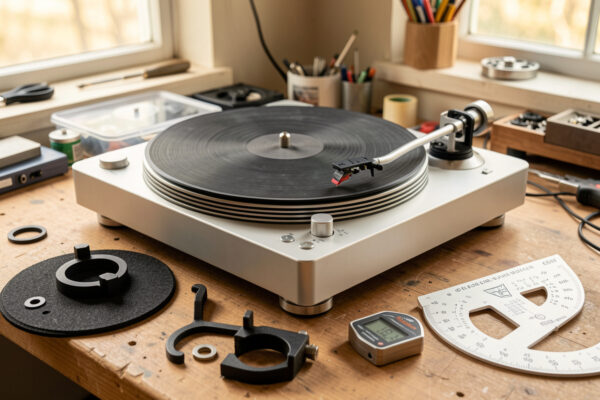
The free upgrade comes first: align the cartridge on a two-point protractor to the Baerwald or Stevenson nulls, set tracking force in the cartridge’s spec window with a digital gauge, set anti-skate against that, and set azimuth so the stylus sits vertical in the groove. A correctly set stock arm beats a premium arm set by eye, every time. This is the single biggest improvement available on most decks and it costs nothing but care.
The reason this comes before any purchase is that a misaligned arm mistracks the inner grooves and smears the high end, and people misread that distortion as “the arm isn’t good enough.” It usually is good enough — it’s just set wrong. Work through the setup and calibration guide and the cartridge alignment guide first, then judge whether the arm itself is actually limiting you. Most of the time you’ll find it isn’t.
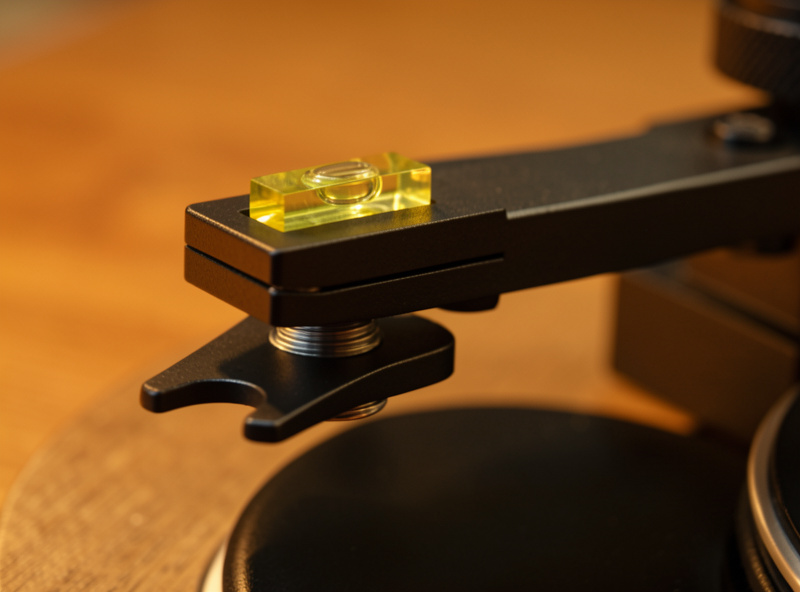
The Headshell: The Cheapest Real Upgrade
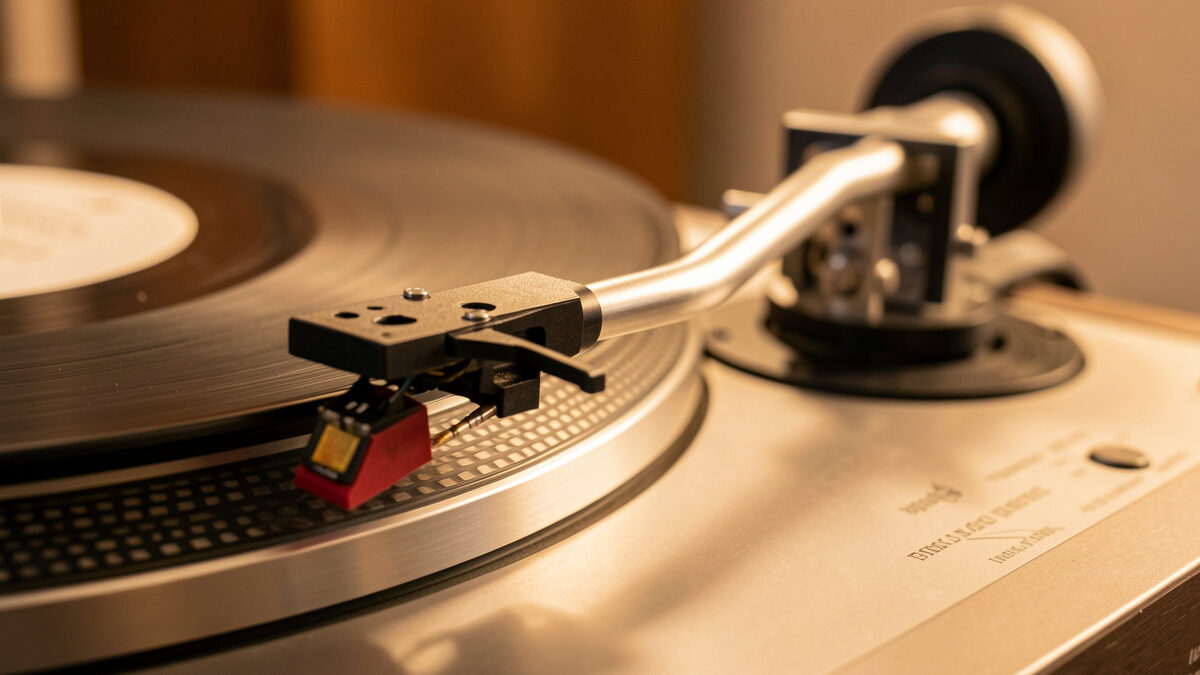
On an arm with a removable headshell (the universal SME-type bayonet), the headshell is a genuine, cheap upgrade. A better headshell adds rigidity and lets you tune effective mass to match your cartridge’s compliance — a heavier headshell lowers the arm-cartridge resonant frequency, a lighter one raises it. A loose, flimsy stock headshell flexes and smears transients; a rigid one tightens tracking for $20–60.
The headshell also makes azimuth and overhang far easier to set because you can adjust the cartridge in the headshell off the deck. If your arm has a fixed headshell (like the Rega), this option is off the table and you go straight to rewire or alignment. For removable-headshell arms, though, this is where I’d spend first after a free alignment — it’s reversible, cheap, and it lets you dial mass to compliance. A quality tonearm headshell is one of the best-value tweaks on the deck.
Rewiring: Lower Noise Floor for $40
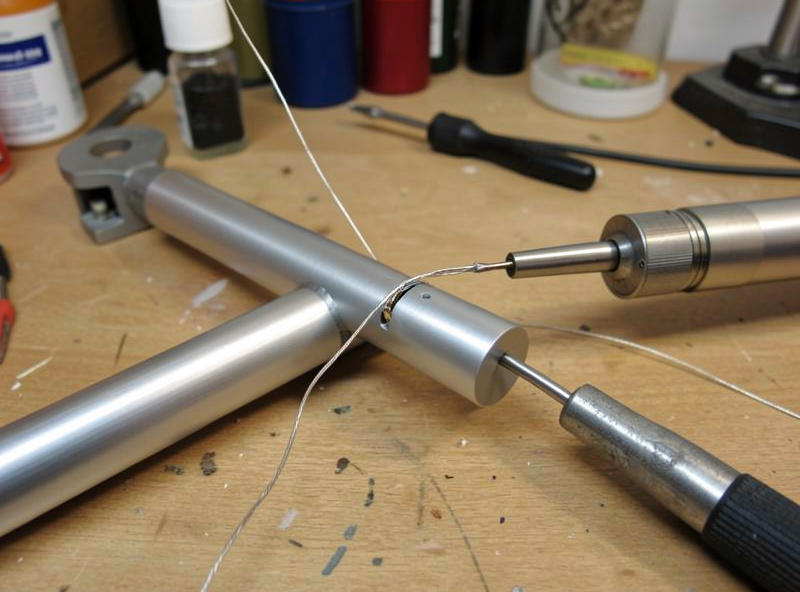
A tonearm rewire replaces the thin internal wire and the external phono leads with continuous, low-mass litz wire from the cartridge clips all the way to the RCA plugs and ground. The payoff is a lower noise floor and, on old arms, the removal of a corroded or intermittent connection that was adding hash. It’s the upgrade that most reliably does something audible without changing the arm’s geometry or mass.
It’s fiddly — you’re threading hair-thin wire through an arm tube and soldering tiny cartridge clips — but it’s $30–60 in parts and a couple of careful hours. On a vintage arm with original wiring, a rewire is often the single best thing you can do short of replacing it. If you’re not comfortable with a soldering iron, this is a job to hand to a tech, but the parts cost is trivial. Pair it with clean grounding, covered in the turntable grounding guide, because a rewire and a solid ground path solve overlapping noise problems.
When a New Arm Is Actually Worth It
A whole new tonearm is justified in three cases: the bearing is worn (notchy or with play, which no rewire fixes), the arm’s effective mass badly mismatches the cartridge you want to run, or you’ve outgrown a basic arm and want features like adjustable VTA on the fly. Outside those cases, a new arm is usually buying geometry you could have set on the old one. Bearing condition is the deciding factor — check it before anything else, per the bearing maintenance guide.
The mass match matters most. Effective arm mass and cartridge compliance together set the arm-cartridge resonant frequency, which you want to land between roughly 8 and 12 Hz — below audible bass and above record warp frequencies. A low-compliance moving-coil on a light arm pushes resonance too high; a high-compliance moving-magnet on a heavy arm pushes it too low. Get this wrong and you get woofer pumping or mistracking. That’s the whole reason a new arm is a measure-first purchase, with background on arm types in the foundation tonearm guide.
VTA and Azimuth: The Settings a New Arm Buys You
Part of what a better arm gives you is finer adjustment of VTA (vertical tracking angle / stylus rake) and azimuth. VTA sets the angle the stylus meets the groove wall; getting it right sharpens the high end and centers the image. Azimuth sets the stylus vertical in the groove so left-right crosstalk is balanced. Basic arms fix these; better arms let you tune them, which is where the last few percent of performance hides.
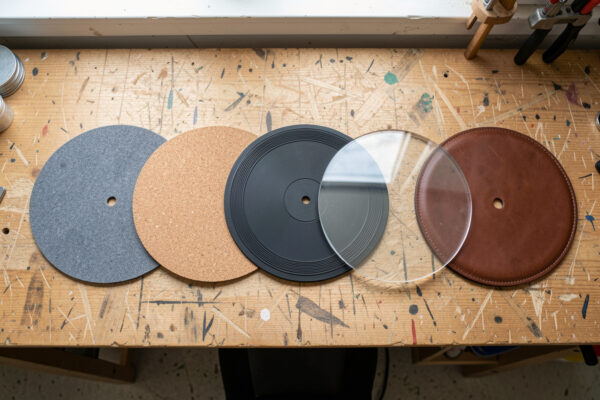
You don’t need an expensive arm to benefit — even a stock arm can be shimmed for VTA via a thicker or thinner platter mat, which ties straight into the platter mat comparison. But if you’re chasing the last bit of resolution from a good cartridge, on-the-fly VTA is the feature most worth paying for. Set azimuth by reflection first and by crosstalk if you have the tools, and recheck both after any mass or height change.
Tonearm Upgrade Options Compared
| Option | Typical cost | Difficulty | Main benefit | Do it when |
|---|---|---|---|---|
| Realign existing arm | $0–30 | Easy | Biggest single jump | Always, first |
| Better headshell | $20–60 | Easy | Rigidity, mass tuning | Removable-headshell arms |
| Internal rewire | $30–60 | Hard | Lower noise floor | Old / corroded wiring |
| New tonearm | $150–600 | Hard | Better bearing, mass match, VTA | Worn bearing or mass mismatch |
Work down that table in order and stop as soon as the problem is solved. Most people never need the bottom row.
Frequently Asked Questions
Is upgrading a turntable tonearm worth it?
Sometimes, but rarely first. Realigning the arm you own is the biggest single improvement and costs nothing. A better headshell or a rewire are cheap, audible upgrades. A whole new arm is only worth it when the bearing is worn or the arm mass badly mismatches your cartridge.
What does a tonearm rewire actually do?
It replaces the thin internal arm wire and phono leads with continuous low-mass litz wire from cartridge clips to RCA plugs. The payoff is a lower noise floor and the removal of corroded or intermittent connections on older arms. It costs about $30 to $60 in parts plus careful soldering.
How do I match a tonearm to a cartridge?
Match effective arm mass to cartridge compliance so the arm-cartridge resonant frequency lands between roughly 8 and 12 Hz. Low-compliance moving-coils suit heavier arms; high-compliance moving-magnets suit lighter arms. A mismatch causes woofer pumping or mistracking no other upgrade can fix.
Should I upgrade the headshell or the whole tonearm?
Start with the headshell if your arm accepts a removable one. A rigid headshell tightens tracking and lets you tune effective mass for $20 to $60, fully reversible. Replace the whole arm only when the bearing is worn or you need features the current arm cannot provide.
What is VTA and does a tonearm upgrade change it?
VTA is the vertical tracking angle, the angle at which the stylus meets the groove. Better arms let you adjust it precisely, which sharpens the high end and centers the image. On a basic arm you can approximate VTA changes with a thicker or thinner platter mat.
As an Amazon Associate I earn from qualifying purchases.