Upgrading headshell leads is worth it in exactly one situation: when your existing leads are old, oxidized, or loose, and you are restoring a connection that was quietly degrading. Fresh leads with clips that grip properly fix real problems — channel imbalance, intermittent crackle, a fading channel. Paying $90 for exotic silver-litz cryo-treated leads to “improve” a perfectly good connection is where the measurements stop and the marketing takes over.
I have swapped a lot of leads, and I will give you the honest split: connection quality is real and audible, conductor exotica is mostly not. A $12 set of decent copper leads with well-made clips does the same job as a set costing seven times more, because at this point in the signal chain what matters is contact integrity, not metallurgy. Let me show you what actually changes, what does not, and how to tell the difference by ear so you never get talked into an upgrade you do not need.
What Do Headshell Leads Actually Do?
Headshell leads are the four short wires that carry the cartridge’s output from its pins to the headshell’s connector, handing off a signal measured in fractions of a millivolt at high impedance. Because that signal is so tiny and so sensitive to a poor connection, the leads’ job is almost entirely about making clean, secure contact — not about the wire in the middle.
The signal a moving-magnet cartridge produces is on the order of a few millivolts, and a moving-coil’s is a fraction of that, down in the tenths of a millivolt. At that level, a resistive or intermittent connection does audible damage that a line-level signal would shrug off. The lead is really two clips with a bit of wire between them, and the clips are where the action is: the cartridge-pin clip and the headshell-pin clip both have to grip firmly and stay clean. A gorgeous conductor with a loose clip is worse than a plain conductor with a tight one. This is the same lesson that runs through the whole mounting layer covered in the turntable headshell guide — the mechanical connection outranks the material every time.
When Is Replacing Headshell Leads Actually Worth It?
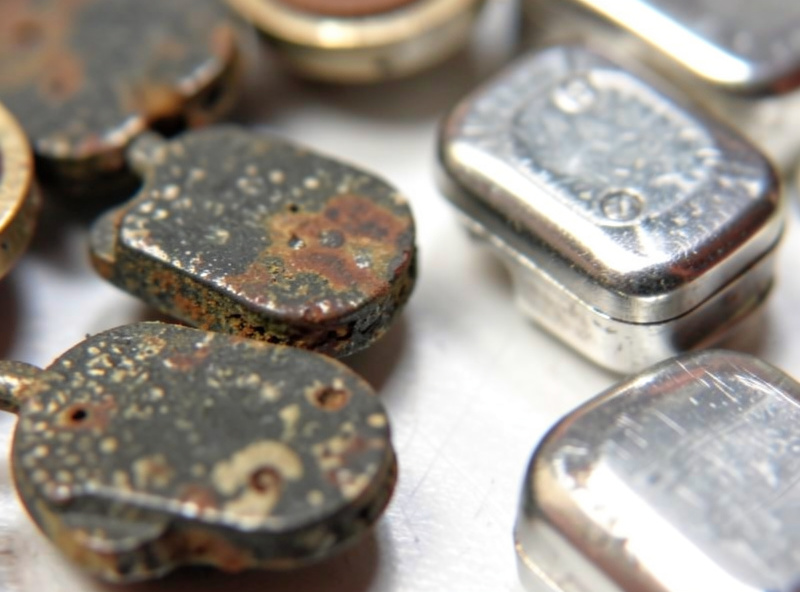
Replace your leads when they show any sign of trouble: a channel that fades in and out, visible green or dull oxidation on the clips or pins, a clip that has gone loose and no longer clicks onto the pin, or crackle that changes when you wiggle the headshell. In every one of those cases you are fixing a genuine fault, and the improvement is immediate and obvious.
Old leads are the usual suspect on secondhand gear. A headshell that has sat in a drawer for twenty years almost always has clips that have relaxed and pins that have tarnished, and swapping in fresh leads transforms it — not because the new wire is magic, but because the old connection was failing. This is the single most common “upgrade” that people misattribute: they buy pricey leads to fix a dead channel, the channel comes back, and they credit the silver when the real fix was any set of leads with working clips. I keep a set of decent copper leads on the bench for exactly this, and I fit them to any used headshell before I even mount a cartridge, because I trust clips I have inspected over clips of unknown age. If your symptom is crackle rather than a dead channel, work through the crackle diagnostic first, because dirty leads and dirty records produce similar noise.
Do Expensive Silver or Litz Leads Sound Better?
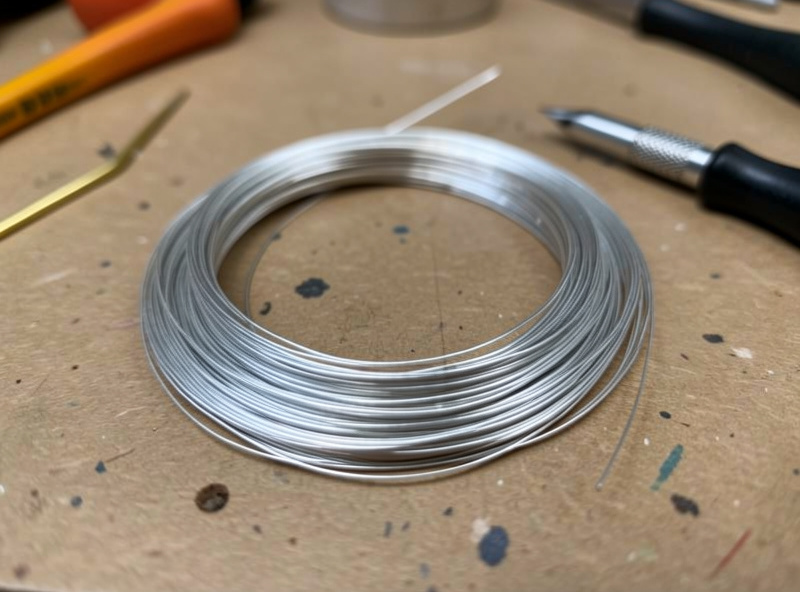
At this signal level, the conductor material and construction make no reliably audible difference once the connection is sound. Silver, copper, litz geometry, and cryogenic treatment are the marketing frontier of the hobby, and the resistance of a two-inch lead is utterly negligible against the cartridge’s own coil impedance and the loading at the phono stage. Fix the contact; ignore the metallurgy.
I want to be precise about why, because “trust me” is not an argument. A headshell lead is roughly two inches of thin wire. Its resistance is a tiny fraction of an ohm, insignificant next to a moving-magnet’s coil resistance of hundreds to over a thousand ohms and the phono stage’s loading. Swapping copper for silver changes that negligible resistance by an amount you could not measure at the cartridge output, let alone hear. What people report as an improvement from boutique leads is, on inspection, almost always one of two things: their old leads were bad and any replacement helped, or expectation bias did the rest. Where I will happily spend a little more is on build quality and clip fit — a lead whose clips are well-formed and grip reliably is worth a few extra dollars — but that is buying mechanical quality, not sonic metallurgy. If a vendor’s pitch is about the metal rather than the clips, keep your money.
How Do You Test Whether New Leads Made a Difference?
The honest test is a channel-balance check by ear before and after. Play a mono track and confirm the image sits dead-center with equal level in both channels; if one channel was weak or intermittent before and both are now solid and balanced, the new leads fixed a real fault. If the before-and-after sounds identical, your old leads were fine and you changed nothing but your wallet.
This is the discipline that protects you from upgrade fever. Before you swap, listen deliberately: put on a familiar mono recording, sit in your usual spot, and note whether the center is solid and the two channels are even. Then swap the leads and listen again to the same track. A genuine fix — a restored dead channel, a crackle gone quiet, a wandering image now locked center — is unmistakable. A non-fix sounds exactly the same, and that is your answer. I ran this test the first time I was tempted by fancy leads, heard no difference against clean copper on a healthy cartridge, and have recommended cheap-but-clean ever since. Doing this before-and-after honestly is the difference between spending on connection quality, which is real, and spending on conductor claims, which are not.
How Do You Install Headshell Leads Without Damaging Anything?
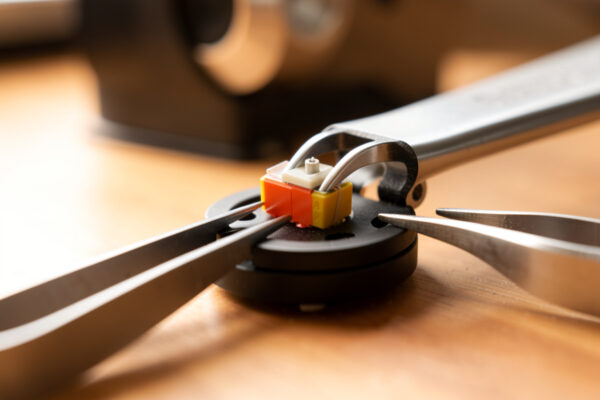
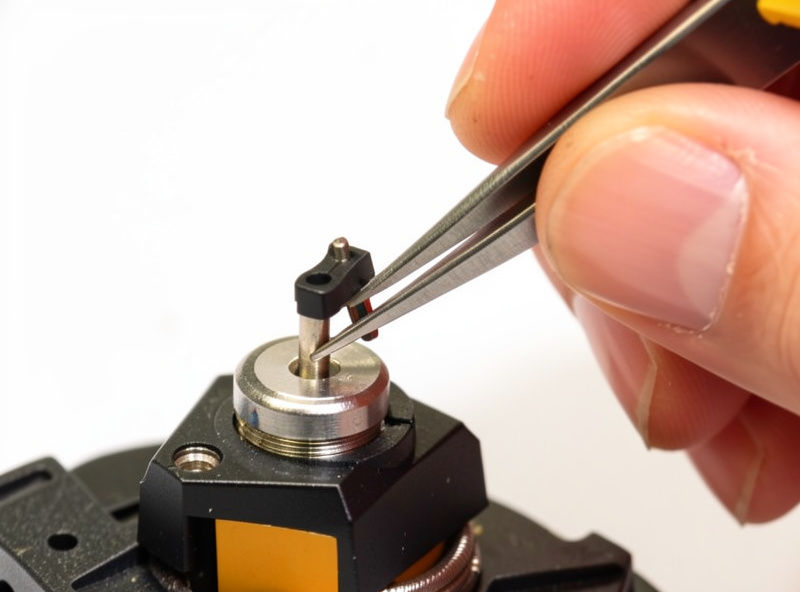
Work one lead at a time under good light with fine tweezers, matching each clip to its color and pin — red to R+, green to R−, white to L+, blue to L−. Slide each clip straight onto the pin, never at an angle, until it clicks and grips with light, positive resistance. Do the hard-to-reach far pins first, then the near ones, so nothing tangles.
The two ways to ruin this simple job are bending a cartridge pin by forcing a clip on crooked, and over-splaying a clip so it never grips again. Both come from impatience. If a clip is too loose, remove it and squeeze its open end a hair with tweezers to restore tension before refitting; if it is too tight, do not force it, because these split-tube clips are delicate. Get the colors right — a reversed pair swaps channels or, worse, wires a channel out of phase, which thins the bass and smears the center image in a way that mimics a bad pressing. The full color code and the phase-error trap are covered in how to wire a headshell. Once the leads are on and gripping, a quick contact-cleaner wipe on the pins before final fitting ensures you are not sealing oxidation under a fresh clip. After that, confirm channel balance with the mono test, and you are done.
If you want to understand why the conductor length and resistance matter so little, the cartridge loading and impedance figures that dominate this part of the chain are published on datasheets from makers like Ortofon and Audio-Technica — read the coil resistance and recommended loading and the negligible role of a two-inch lead becomes obvious. Fresh, clean, well-fitting leads are foundational; exotic ones are jewelry. Spend where it counts — cleaning, alignment, and the headshell mass match in headshell weight and tonearm resonance — and keep your leads honest.
Leads, Clips, or a Full Rewire — Where Does the Real Gain Live?
For most people, the meaningful gain lives in the clips and the cleanliness, not in the wire or a full tonearm rewire. Replace tired leads with clean, well-fitting ones and you have captured almost all of the available improvement. A complete tonearm rewire — new wire from the cartridge clips all the way to the phono output — is a real project with real benefits on a specific class of arm, but it is far down the priority list for a typical setup.
Here is how I rank the connection chain when someone asks where to spend. First, clean every contact — cartridge pins, clips, and the headshell-to-arm junction — because oxidation is the number-one cause of channel problems and it costs nothing to fix. Second, fit fresh leads with clips that grip, which handles the mechanical side end to end at the headshell. Third, and only if you have a genuinely old or damaged arm with degraded internal wiring, consider a full rewire, which reaches the arm tube and the output cable that headshell leads never touch. That third step is worthwhile on a tired vintage arm whose internal wire is corroded, and it belongs in the wider conversation about arm upgrades in the turntable tonearm upgrade guide. But do not skip straight to it. I have seen people spend on a boutique rewire when a five-minute contact clean and a $12 lead set would have solved their actual complaint. Diagnose the fault, fix the cheapest thing that addresses it, and only escalate when the symptom genuinely points deeper into the arm.
The sensory tell I trust most is simple: reach up, gently wiggle the headshell while a record plays, and listen. If a channel crackles or drops with the wiggle, your problem is a contact — a loose clip or an oxidized junction — and no amount of exotic wire fixes a mechanical connection. That wiggle test has saved me from misdiagnosing more channel faults than any meter, and it costs nothing but a careful hand.
Further Reading
- Turntable Headshell Guide: Wiring, Weight, Mounting & VTA
- How to Wire a Headshell: Cartridge Lead Colors Explained
- Headshell Weight and Tonearm Resonance: Getting the Match Right
- Crackle on Every Record: Static, Dust, or Worn Stylus?