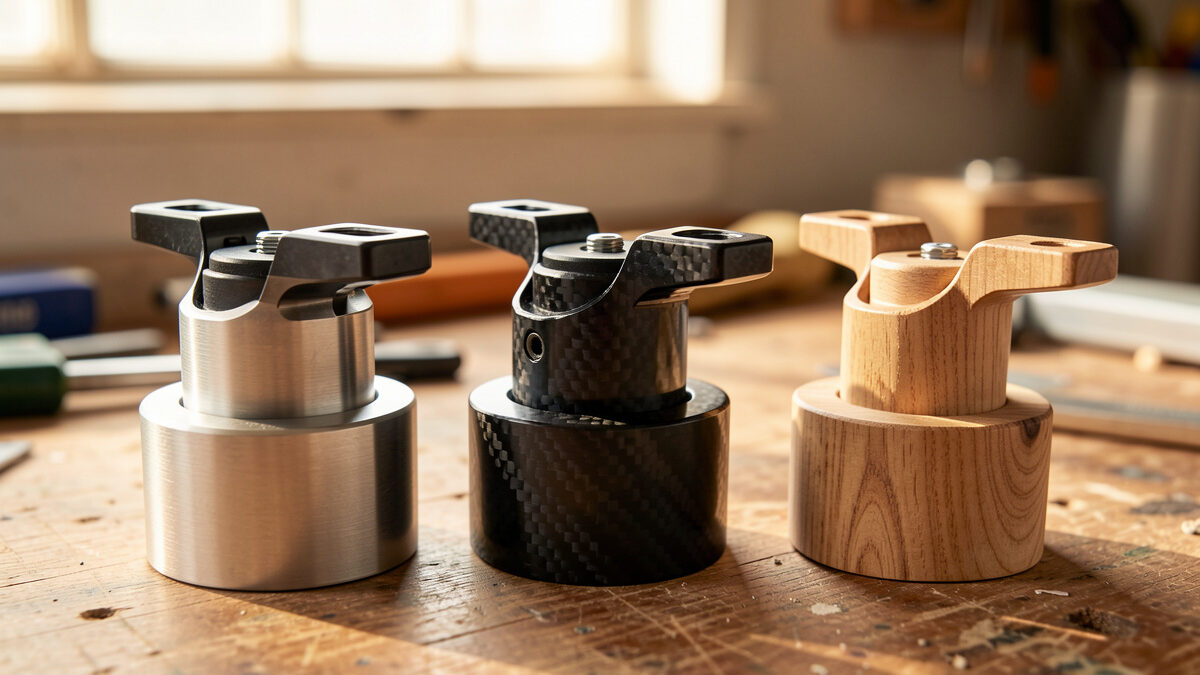
Headshell material matters for exactly two measurable reasons — mass and vibration damping — and for a long list of reasons that are pure marketing. Aluminum is the neutral, predictable default. Carbon fiber is lighter for the same stiffness and damps ringing well. Magnesium is well-damped and mid-weight. Wood is a boutique wildcard whose behavior depends entirely on species and construction. Everything else you read about material “voicing” is usually mass in disguise.
I say that as someone with an aluminum, a carbon, and a heavier shell sitting on the bench right now, swapped onto the same arm and cartridge more times than I can count. The honest finding is uncomfortable for the upgrade industry: most of what people attribute to material is really the change in effective mass, and once you weight-match two shells the differences shrink to almost nothing. Let me separate the part that is real physics from the part that is jewelry.
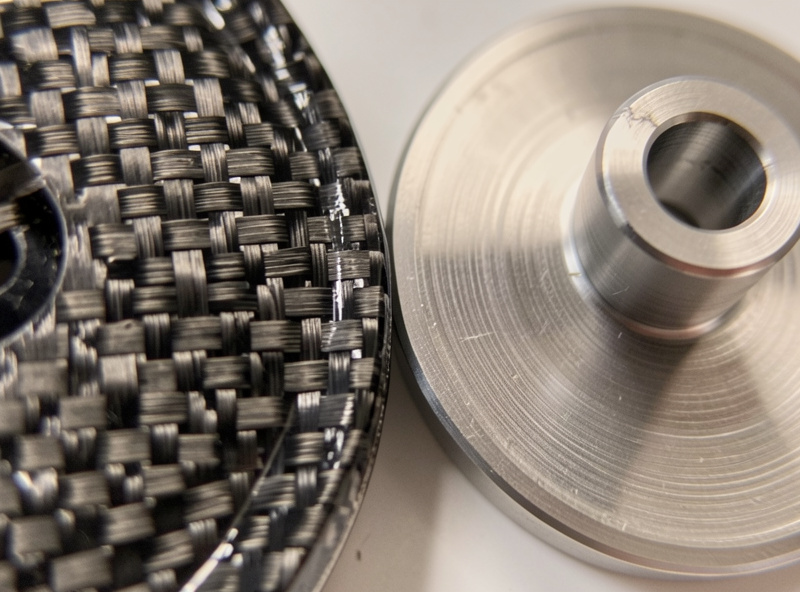
Does Headshell Material Actually Change the Sound?
Material changes sound only through two mechanisms: how much mass it adds to the tonearm, and how well it converts stylus-induced vibration into heat instead of ringing. A shell that rings adds a resonant coloration; a well-damped shell stays quiet. But because different materials naturally come at different weights, most “material” differences you hear are really resonance shifts caused by the weight change.
This is the crux, and it is why so many online comparisons are worthless — they compare a 12 g wood shell against an 8 g aluminum one and conclude “wood sounds warmer,” when what they actually measured was a four-gram mass increase pushing the tonearm resonance down. To hear material alone you must weight-match, adding tiny weights to the lighter shell until both assemblies weigh the same, and only then A/B. When I do that carefully, the remaining difference between a decent aluminum and a decent carbon shell is small — real, but small, and swamped by cartridge choice and alignment. The mass side of this is the bigger lever, and it deserves its own calculation, which is why the turntable headshell guide treats weight and material as two separate decisions.
Why Is Aluminum the Default Headshell Material?
Aluminum is the default because it is rigid, cheap, easy to machine, and lands in a useful mass range of roughly 8 to 10 grams that suits the majority of mid-compliance moving-magnet cartridges on common arms. It is the known quantity every other material gets compared against.
Aluminum’s one honest weakness is that it rings a little — tap an aluminum headshell and you hear a faint high-pitched ping, which is the material telling you it stores and releases energy rather than absorbing it. In practice this ring is low enough in level that a well-made aluminum shell is entirely competent, and the stock aluminum shell that came with your arm is not holding you back the way upgrade marketing implies. On my SL-1200-class deck the stock aluminum shell has aligned cartridges that measure and sound excellent, and I have never felt the aluminum itself was the limiting factor. If you are chasing better sound, your cleaning, your alignment, and your phono stage all outrank the headshell material by a wide margin — the spend-order argument I make throughout this site.
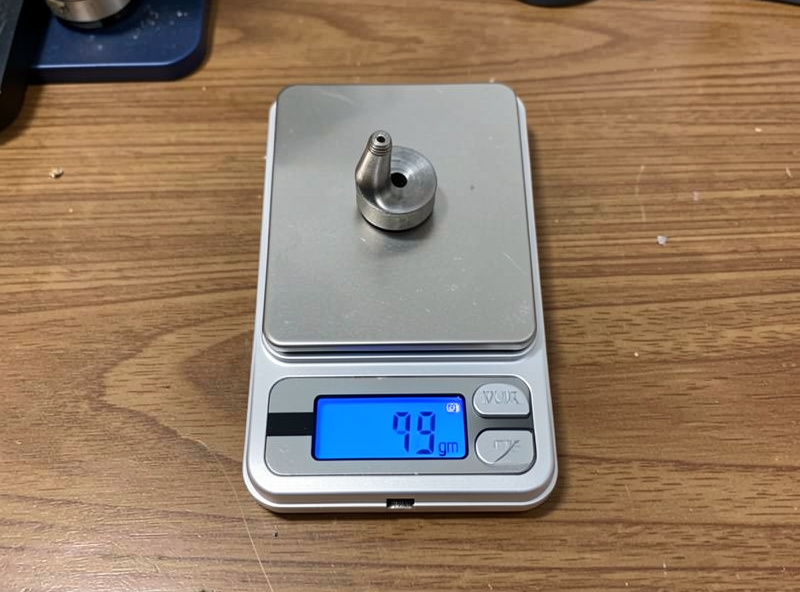
Is a Carbon Fiber Headshell Better?
Carbon fiber’s genuine advantage is a high stiffness-to-weight ratio with good internal damping — it can be lighter than aluminum for the same rigidity and rings less when tapped. For a low-mass arm or a high-compliance cartridge that wants less effective mass, a light carbon shell is a legitimately useful tool, not just a cosmetic one.
The caveats are real, though. “Carbon fiber” covers a huge range of construction quality — a properly laid-up carbon shell damps well, while a cheap one with a thin carbon skin over a resonant core is aluminum’s problem with a fashionable wrapper. And carbon’s low weight is only an advantage if your setup actually wants low mass; pair a light carbon shell with a stiff, low-compliance moving-coil and you can drop the resonant frequency out the bottom of the safe window into warp-wobble territory. I reach for carbon when I specifically need to shed effective mass, not as a blanket upgrade. When someone tells me a carbon shell “transformed” their sound, my first question is what it weighed compared to the shell it replaced, because that usually explains the whole thing. Confirming the resulting resonance is well worth a quick check against your cartridge’s compliance spec.
Headshell Materials Compared
Here is the practical rundown across the properties that drive a real decision. Treat the mass figures as typical class ranges — weigh your actual shell before you calculate resonance, because individual designs vary widely.
| Material | Typical mass | Damping | Best paired with | Honest verdict |
| Aluminum | 8–10 g | Fair (light ring) | Mid-compliance MM, most arms | Neutral, cheap, hard to beat on value |
| Carbon fiber | 6–9 g | Good | Low-mass arms, high-compliance carts | Real tool when you want less mass |
| Magnesium | 7–10 g | Very good | Low-output MC on medium arms | Well damped; oxidizes, costs more |
| Wood | 9–14 g | Variable | Heavier low-compliance MC | Species-dependent; mostly looks-led |
| Brass / steel | 14–20 g | Dead but heavy | Very low-compliance MC | Adds mass on purpose; niche |
The column that should decide your choice is “best paired with,” not the material name. Match the shell’s mass to your cartridge compliance first, then let material break any ties. A shell that looks incredible but lands your resonance at 6 Hz is worse than a plain one that lands it at 10 Hz.
Do Wood and Magnesium Headshells Live Up to the Hype?
Magnesium largely does; wood is a mixed bag. Magnesium has genuinely excellent internal damping and a sensible mid-weight, which is why several respected arms use it. Wood’s behavior depends so heavily on the species, grain, and how it is braced that “wood headshell” tells you almost nothing about how it will perform — some are beautifully dead, others are resonant and inconsistent.
With magnesium the tradeoffs are practical rather than sonic: it is more expensive and it oxidizes, so a magnesium shell needs a little care that aluminum shrugs off. With wood, my honest take is that you are usually buying it because it looks stunning under a nice cartridge, and there is nothing wrong with that as long as you go in with clear eyes. A good wood shell can be a fine performer; a bad one is a resonant liability; and you often cannot tell which you have until it is on the arm. I have run a wood shell that measured and sounded perfectly good, and I would happily use it again — but I chose it knowing the mass suited a heavier low-compliance cartridge, not because “wood sounds warm.” Where the hobby goes wrong is treating material as a sound-quality dial when it is really a mass-and-damping decision with a cosmetic bonus. The parts that genuinely move the needle — clean records, correct alignment and calibration, a solid connection through properly wired leads — matter far more than which pretty shell holds the cartridge.
Which Headshell Material Should You Actually Buy?
Buy the shell whose mass suits your cartridge’s compliance, then choose material for damping and looks among the shells that pass the weight test. For most people running a mid-compliance moving-magnet on a common arm, a good aluminum or magnesium shell in the 8 to 10 gram range is the right, boring answer.
If your cartridge is a springy high-compliance moving-magnet on a light arm, favor a lighter carbon shell; if it is a stiff low-compliance moving-coil, favor a heavier aluminum, wood, or brass shell. That is the entire decision, and it flows from your cartridge outward, not from a material’s reputation inward. Do not spend big on an exotic shell before you have nailed the cheaper, higher-impact steps — cleaning, alignment, screws, and leads. When you do upgrade, weigh the new shell, confirm it keeps your tonearm resonance in the safe 8 to 12 Hz band, and enjoy the fact that it looks great, because at that point looks are honestly most of what you are buying. The starting hardware and the mounting workflow that make any shell perform are covered in the cartridge mounting screws guide and the wider headshell guide.
For the material-science side stated plainly, the damping and stiffness properties that separate these materials are documented in engineering references and in arm makers’ own material notes, such as those published by Rega, whose one-piece arm castings are a deliberate argument about rigidity and resonance, and cartridge makers like Ortofon, who publish compliance figures you need for the pairing.
As an Amazon Associate I earn from qualifying purchases. If you want to experiment, a mid-priced carbon fiber headshell or a magnesium headshell is the low-risk way to hear the difference for yourself.
Does headshell material really affect sound quality?
Only through two mechanisms: the mass it adds to the tonearm and how well it damps vibration instead of ringing. Because different materials come at different weights, most differences people hear are actually mass-driven resonance shifts, not the material itself. Weight-match two shells and the difference shrinks dramatically.
Is a carbon fiber headshell better than aluminum?
Not universally. Carbon fiber offers high stiffness for low weight and good damping, which helps on low-mass arms or with high-compliance cartridges that want less effective mass. But quality varies widely, and a light carbon shell can push a stiff cartridge’s resonance too low. It is a tool for shedding mass, not a blanket upgrade.
Are wood headshells good?
It depends entirely on the species and construction. Some wood shells are beautifully damped and perform well, while others are resonant and inconsistent. Wood tends to be heavier, suiting low-compliance cartridges, but you often cannot predict its behavior until it is mounted. Most people buy wood for looks, which is fine with clear expectations.
What headshell material should I buy?
Choose based on mass first: match the shell’s weight to your cartridge’s compliance so the tonearm resonance lands between 8 and 12 Hz. Then pick material for damping and appearance among the shells that pass that weight test. For most mid-compliance moving-magnet setups, a good aluminum or magnesium shell is the right answer.
Further Reading
- Turntable Headshell Guide: Wiring, Weight, Mounting & VTA
- Cartridge Mounting Screws and Nuts: Sizes, Lengths, and Nylon
- How to Wire a Headshell: Cartridge Lead Colors Explained
- Turntable Setup and Calibration: The Complete Guide