What Is a Record Player?
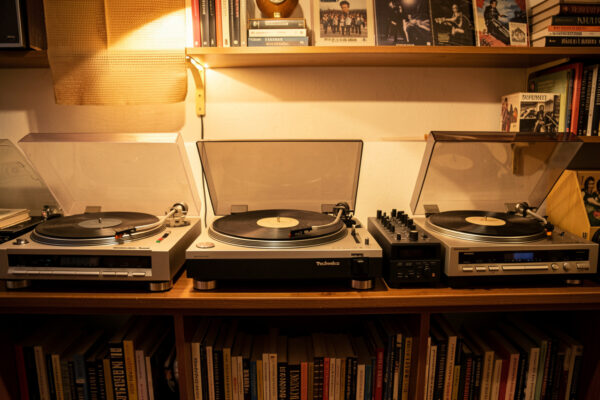
A record player is a turntable-based audio device that reads the grooves of a vinyl record using a stylus, converts those mechanical vibrations into an electrical signal, and plays the music through speakers. Vinyl record sales reached 43 million units in the US in 2023, marking the highest figure since 1991 and proving that the record player is far from obsolete. Whether you call it a turntable, a record player, or a vinyl player, the core technology remains the same: a spinning platter, a tonearm with a cartridge, and a signal chain that delivers warm analog sound no digital format quite replicates.
Choosing the right record player in 2026 means understanding drive types, cartridge options, phono preamps, and how each component affects the sound you hear. This guide covers every decision point from your first record player purchase through long-term upgrades, so you can invest confidently at any budget.
Why Vinyl Record Sales Keep Growing
Vinyl record revenue in the US exceeded $1.2 billion in 2023, growing for the 18th consecutive year according to the RIAA. This resurgence is not nostalgia — it reflects a genuine preference for the tactile experience, album-art collectibility, and analog sound characteristics that streaming cannot replicate. Record players today serve three audiences: nostalgic collectors returning to the format, younger listeners discovering vinyl for the first time, and audiophiles who value the uncompressed analog signal chain.
The practical result is that record player manufacturers now compete across every price tier, from $100 entry-level models to $3,000+ reference turntables. More competition means better products at every budget, making 2026 one of the best years to buy your first record player or upgrade from a starter model.
Record Player vs Turntable: What Is the Difference?
The terms record player and turntable are often used interchangeably, but there is a technical distinction. A turntable is the standalone component — platter, tonearm, motor — that spins the record and reads the groove. A record player traditionally refers to an all-in-one unit that includes the turntable, an amplifier, and sometimes built-in speakers. In modern usage, most people say record player regardless of whether the system is all-in-one or separates, and this guide uses both terms to mean the same thing.
What matters is the quality of the components inside, not the label on the box. A $500 turntable with a separate phono preamp and powered speakers will dramatically outperform a $500 all-in-one record player with built-in speakers, because the separates let you optimize each part of the signal chain independently.
How Record Players Work: Understanding the Core Components
A record player converts vinyl grooves into sound through four essential components working together: the platter spins the record at a precise speed, the tonearm guides the cartridge across the grooves, the stylus reads the microscopic ridges, and the motor provides consistent rotation. Understanding these parts is the foundation of any record player buying process and helps you avoid overpaying for features you do not need or underpaying for a system that damages your records.
The platter is the circular platform your record sits on. Heavier platters made from aluminum, acrylic, or glass resist vibration and maintain speed stability. A platter weighing 2 kg or more provides noticeably better speed consistency than a lightweight stamped-metal design. The felt, cork, or rubber mat on top dampens resonance between the record and platter surface — our turntable mat guide compares every material option.
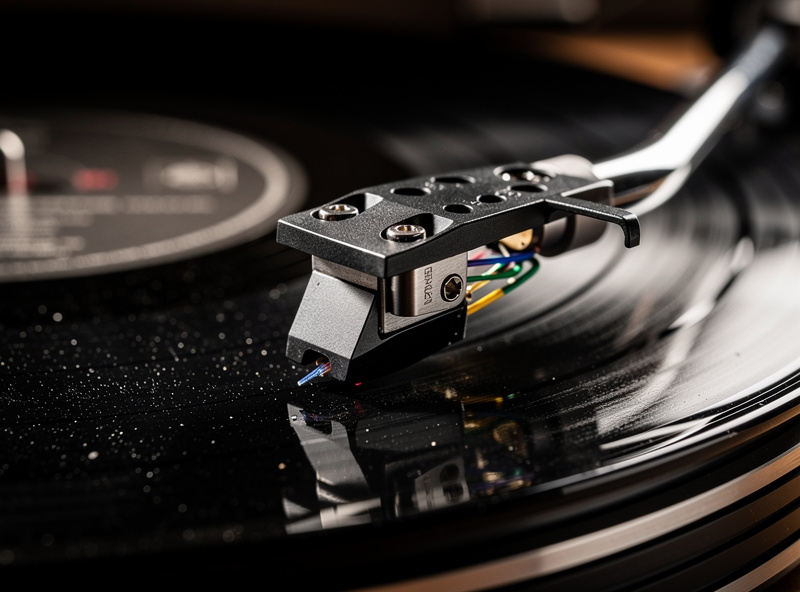
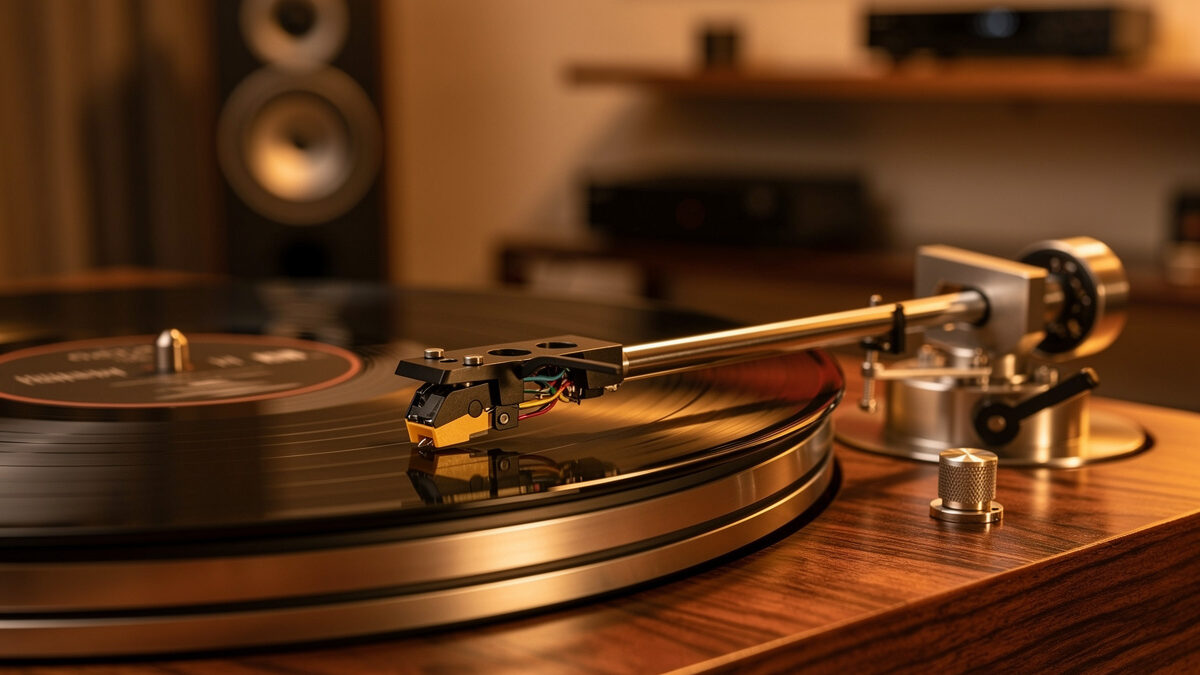
The tonearm holds the cartridge and allows it to track the groove from the outer edge to the center. Tonearm design affects tracking accuracy, resonance control, and setup flexibility. Straight tonearms are common on DJ and mid-range turntables, while S-shaped and J-shaped arms are preferred by audiophiles for their anti-skate characteristics. The headshell at the end holds the cartridge, and a removable headshell lets you swap cartridges quickly. Our tonearm types and upgrades guide covers S-shaped vs straight vs unipivot designs in detail.
The cartridge houses the stylus (needle) and the generator that converts mechanical movement into an electrical signal. Moving Magnet (MM) cartridges are affordable and user-replaceable, making them ideal for beginners. Moving Coil (MC) cartridges offer superior detail retrieval but cost more and often require a dedicated MC phono preamp. For most first-time record player buyers, a quality MM cartridge in the $50–$150 range delivers excellent performance. See our best phono cartridges guide for specific MM and MC recommendations.
The motor drives the platter at exactly 33⅓ or 45 RPM. Motor quality directly impacts speed accuracy, measured as wow and flutter. A wow and flutter rating below 0.25% is acceptable for casual listening, while audiophile-grade record players target 0.1% or lower. The motor’s relationship to the platter — belt drive or direct drive — is one of the most important decisions in choosing a record player.
Belt Drive vs Direct Drive: A Quick Overview
Belt drive record players use an elastic belt to connect the motor to the platter. The belt acts as a vibration filter, absorbing motor noise before it reaches the stylus. This design prioritizes sonic purity and is preferred for critical listening. Direct drive turntables mount the motor directly under the platter, offering instant start/stop, high torque, and precise speed control — features that DJs and broadcast professionals require.
For a complete comparison including specific model recommendations, see our dedicated guide on belt drive vs direct drive turntables. The short version: if you plan to listen at home and prioritize sound quality, belt drive is the standard recommendation. If you need pitch control, scratch capability, or rapid cueing, direct drive is the practical choice.
Manual vs Automatic Record Players
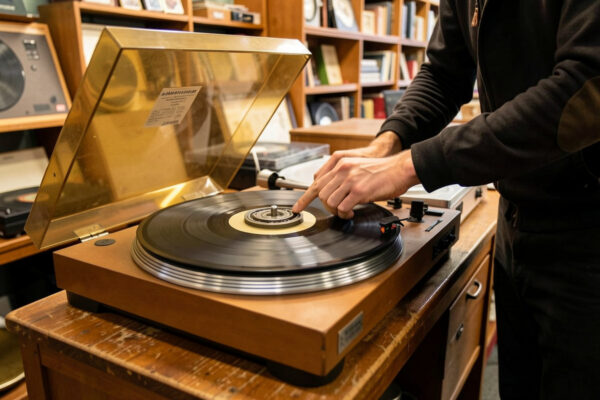
Manual record players require you to lift the tonearm, place it on the record, and return it when the side finishes playing. This hands-on approach eliminates mechanical components that can introduce noise or break over time. Most high-end turntables are fully manual because fewer moving parts mean less potential for resonance and mechanical failure.
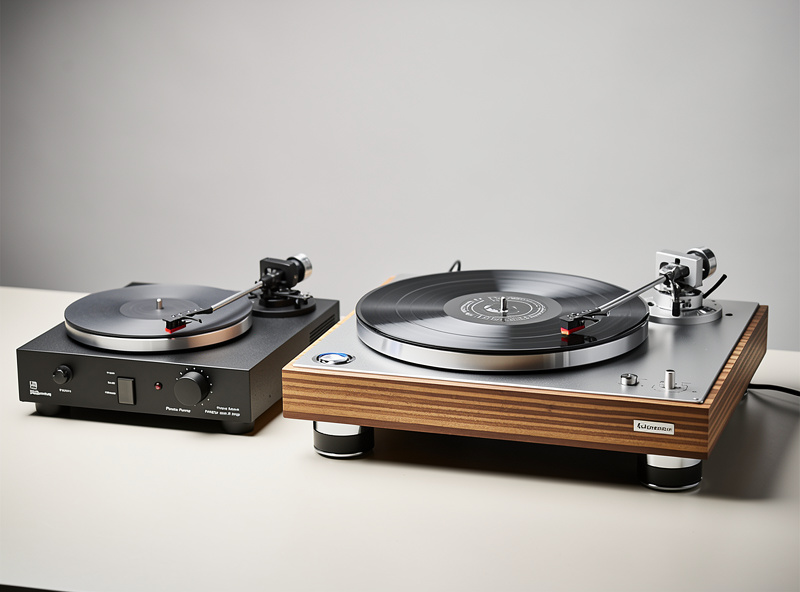
Semi-automatic turntables lift the tonearm and return it to the rest when the record finishes, but you still place the stylus manually. Fully automatic models handle the entire process with a single button press. Automatic mechanisms add convenience but also add plastic parts and springs that can wear out, vibrate, or break after several years of use.
For beginners buying their first record player, a semi-automatic model strikes a good balance — you get the experience of cueing a record by hand without worrying about the stylus riding in the run-out groove indefinitely, which causes unnecessary wear. However, if you leave your record player unattended often, a full auto mechanism prevents stylus damage.
Key Specifications to Compare
Manufacturers list several specifications that seem technical but are straightforward once you understand what they measure. Focus on these four numbers when comparing record players at any price point.
Wow and Flutter: This measures speed variation — how much the platter speed fluctuates during rotation. Expressed as a percentage, lower is better. Under 0.25% is the minimum for enjoyable listening. Record players under 0.15% wow and flutter are considered high fidelity. Premium models from Technics, Rega, and Pro-Ject achieve 0.05–0.08%.
Signal-to-Noise Ratio (S/N): This tells you how much background noise the motor and bearing introduce relative to the music signal. A rating of 60 dB or higher is good. Audiophile record players target 70 dB or above, meaning the music signal is 70 decibels louder than the mechanical noise floor. Lower S/N ratios produce audible hum or rumble during quiet passages.
Plinth Quality: The plinth is the turntable’s base or chassis. Materials range from thin MDF to multi-layer composites with resonance-damping cores. A heavy, well-dampened plinth prevents external vibrations from reaching the stylus. Look for plinths that feel solid and heavy for their size, with adjustable feet for leveling on uneven surfaces.
Tonearm Bearings: Smooth, low-friction bearings allow the tonearm to track the groove with minimal resistance. Gimballed bearings are standard and reliable. Unipivot designs offer lower friction but can be less stable. For first-time buyers, a well-made gimbaled arm is the safest choice because it requires less adjustment.
Price Tiers: What You Get at Every Budget
Record player prices span from under $100 to over $10,000, but the meaningful performance jumps happen at specific price points. Below are four tiers that define what you can realistically expect at each level.
$150–$300: Entry Level. Record players in this range include a built-in phono preamp, a basic MM cartridge, and a lightweight plinth. Models like the Audio-Technica AT-LP60X ($149) and the Crosley C6 ($179) are popular starting points. You get automatic or semi-automatic operation and USB output for digitizing records. Sound quality is acceptable for casual listening but limited by the stock cartridge and plinth construction. Expect wow and flutter around 0.2–0.25% and S/N ratios near 50–55 dB. The price difference between a $200 record player and a $1,000 model is not about louder volume — it is about accuracy, detail, and longevity. Budget models use plastic parts and stamped-metal tonearms that degrade over time, while higher-end turntables use machined aluminum and precision bearings designed to last decades.
$300–$700: Mid-Range Sweet Spot. This tier delivers a major jump in build quality and sound. The Audio-Technica AT-LP120X ($249), Fluance RT85 ($499), and Pro-Ject Debut Carbon EVO ($499) sit here. You get heavier platters, better tonearms with carbon fiber tubes, and higher-quality cartridges included. Belt drive becomes standard. Wow and flutter drops to 0.1–0.15%, and S/N ratios reach 60–65 dB. Most audiophiles recommend starting here if your budget allows because the performance gap between $200 and $500 is the largest in the entire record player market. At this tier, the tonearm and cartridge combination traces smaller groove modulations, revealing reverb tails, room ambience, and subtle dynamic shifts that budget setups smear.
$700–$1,500: Serious Listening. Record players like the Rega Planar 3 ($945), MoFi StudioDeck ($999), and Technics SL-1500C ($1,199) occupy this tier. You get precision-machined sub-platters, advanced motor isolation, and premium cartridges (often Ortofon 2M Blue or Nagaoka MP-200). Speed accuracy approaches 0.05–0.08% wow and flutter, and S/N ratios exceed 65 dB. The plinths use multi-layer construction with dedicated resonance control. These turntables reward system upgrades — a better phono preamp or cartridge swap reveals more detail.
$1,500+: Audiophile and Reference. The Rega Planar 6 ($1,695), VPI Prime ($2,995), and Clearaudio Concept ($2,000) define this category. Carbon fiber plinths, magnetic-bearing tonearms, and outboard power supplies are common. Wow and flutter drops below 0.05%, and S/N ratios exceed 70 dB. At this level, the record player is no longer the bottleneck — room acoustics, speaker quality, and phono preamp matching become the limiting factors. These turntables use replaceable components designed to last decades with routine maintenance like belt replacement every 3–5 years.
Record Player Comparison Table
| Model | Price | Drive | Cartridge | Wow & Flutter | S/N Ratio | Preamp | Best For |
|---|---|---|---|---|---|---|---|
| Audio-Technica AT-LP60X | $149 | Belt | AT3600L (MM) | 0.25% | 50 dB | Built-in | First record player |
| Audio-Technica AT-LP120X | $249 | Direct | AT-VM95E (MM) | 0.2% | 55 dB | Built-in | DJ and home use |
| Fluance RT85 | $499 | Belt | Ortofon 2M Blue (MM) | 0.12% | 65 dB | External required | Value audiophile |
| Pro-Ject Debut Carbon EVO | $499 | Belt | Ortofon 2M Red (MM) | 0.13% | 63 dB | External required | Stylish mid-range |
| Rega Planar 3 | $945 | Belt | Elys 2 (MM) | 0.1% | 67 dB | External required | British audiophile |
| Technics SL-1500C | $1,199 | Direct | Ortofon 2M Red (MM) | 0.025% | 70 dB | Built-in | Precision listening |
| Rega Planar 6 | $1,695 | Belt | Ania (MC) | 0.06% | 72 dB | External required | High-end audiophile |
| VPI Prime | $2,995 | Belt | Sumiko Blue Point (MM) | 0.04% | 75 dB | External required | Reference playback |
Setting Up Your First Record Player
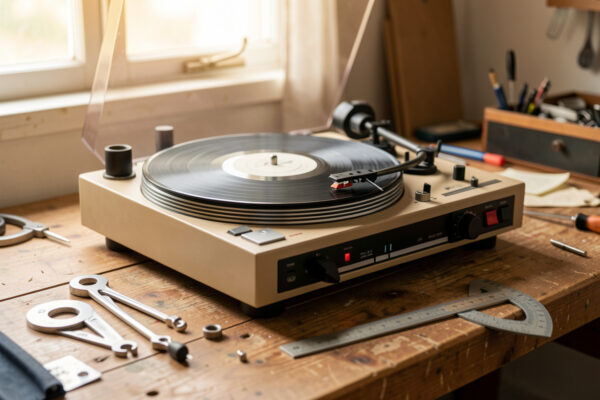
Proper setup makes the difference between a record player that sounds thin and distorted and one that delivers full, detailed sound. Most first-time buyers skip setup steps and blame the equipment when the sound disappoints. These five steps take 20 minutes and eliminate 90% of common problems.
Step 1: Level the surface. Place your record player on a rigid, level surface away from speakers. Turntables are sensitive to footfall and surface vibrations — a wall-mounted shelf is ideal for apartments with suspended floors. Use a bubble level on the platter and adjust the turntable feet until perfectly flat.
Step 2: Balance the tonearm. Remove the stylus guard, then rotate the counterweight at the back of the tonearm until the arm floats horizontally. This is the zero-tracking-force position. Our tracking force and anti-skate setup guide walks through this process step by step.
Step 3: Set tracking force. Once the arm balances, rotate the counterweight dial to zero without moving the weight itself, then rotate the entire counterweight to the cartridge manufacturer’s recommended tracking force — typically 1.5–2.5 grams for MM cartridges. A digital tracking force gauge ($10–$15) verifies accuracy within 0.01g. Incorrect tracking force is the most common cause of record damage and poor sound.
Step 4: Align the cartridge. Use a protractor to align the cartridge stylus so it traces the groove arc correctly. Misalignment causes distortion, channel imbalance, and accelerated groove wear. Our cartridge alignment guide covers Baerwald, Stevenson, and Lofgren alignment methods.
Step 5: Connect your signal chain. Route the RCA cables from the turntable to either a phono preamp or directly to powered speakers if your record player has a built-in preamp. Verify the phono/line switch matches your connection — phono for preamp input, line for direct-to-speaker. Our phono preamp explained guide details the RIAA equalization that makes this connection necessary.
Essential Accessories for Your First Record Player
Buying the record player is step one. These accessories protect your records, improve sound, and make the experience enjoyable.
Carbon Fiber Brush ($15–$25). Use this before every play to remove surface dust that causes pops and crackle. A quick sweep across the spinning record takes 5 seconds and dramatically reduces groove noise. The how to clean records guide covers dry and wet cleaning methods in detail.
Inner Sleeves ($15–$30 for 50). Replace the paper sleeves that ship with most records. Anti-static polyethylene or MOFI-style rice paper sleeves prevent scratches and reduce static buildup. This is the single cheapest upgrade with the biggest impact on long-term record condition. Our vinyl record care guide covers sleeves, storage, and handling in depth.
Phono Preamp ($50–$300). If your record player lacks a built-in preamp, you need an external one. The phono preamp explained article details why RIAA equalization is essential and how to choose between MM and MC models. Even a $50 external preamp typically outperforms the built-in preamps on turntables under $300.
Stylus Tracking Force Gauge ($10–$15). Accurate tracking force is critical — too light and the stylus skips, too heavy and it wears grooves prematurely. A digital gauge ensures you set the manufacturer-recommended force within 0.01g. Our cartridge alignment guide covers tracking force setup step by step.
Record Cleaning Kit ($20–$50). A basic kit with cleaning solution, a microfiber cloth, and a velvet brush handles 90% of cleaning needs. For deeper cleaning of used records, consider a dedicated wet-wash system. See our reviews of the best record cleaners for options at every budget.
Proper Record Storage ($30–$100). Store vinyl records vertically in anti-static inner sleeves and sturdy outer sleeves. Our record storage tips guide covers temperature control, shelving, and organization methods that prevent warping and ring wear.
Common Mistakes First-Time Record Player Buyers Make
Avoiding these pitfalls saves money and prevents record damage.
Buying a suitcase turntable. The $50–$80 all-in-one suitcase players from Crosley and Victrola use a ceramic cartridge with tracking force exceeding 5 grams — double what a proper MM cartridge applies. They physically wear out grooves within 20–30 plays. If your budget is under $150, the Audio-Technica AT-LP60X is a safer starting point with a proper MM cartridge tracking at 3.5 grams.
Skipping the preamp. If you plug a turntable without a built-in preamp directly into powered speakers, the output will be extremely quiet and thin. The RIAA equalization curve boosts bass by 20 dB during playback — without a preamp, music sounds like it is coming through a telephone. Always verify whether your record player has a built-in preamp before connecting to speakers. Our powered speakers vs amp guide helps you choose the right speaker setup for your turntable.
Ignoring cartridge alignment. A misaligned cartridge causes distortion, channel imbalance, and accelerated groove wear. Many budget turntables ship with the cartridge pre-aligned, but mid-range record players often require manual alignment. Investing 30 minutes in proper alignment, as described in our cartridge alignment guide, makes a bigger difference than spending an extra $200 on the turntable itself.
Setting the record player on a wobbly surface. Turntables are sensitive to footfall, speaker vibrations, and surface resonance. Place your record player on a rigid, level surface away from speakers. Wall-mounted shelves are ideal for apartments with suspended floors because they decouple the turntable from foot traffic vibrations.
Not planning for upgrades. Budget record players with fixed cartridges and non-adjustable tonearms cannot be upgraded. If you think you might want better sound later, choose a turntable with a standard-mount headshell and adjustable tonearm. Mid-range and audiophile record players accept any half-inch cartridge, letting you incrementally improve sound by upgrading the cartridge or adding an external phono preamp. Our turntable upgrade guide covers the priority order and cost-to-improvement ratio for every upgrade path.
How to Match a Record Player to Your Existing System
Your existing audio equipment determines which record player features matter most. Here is how to match a turntable to common setups.
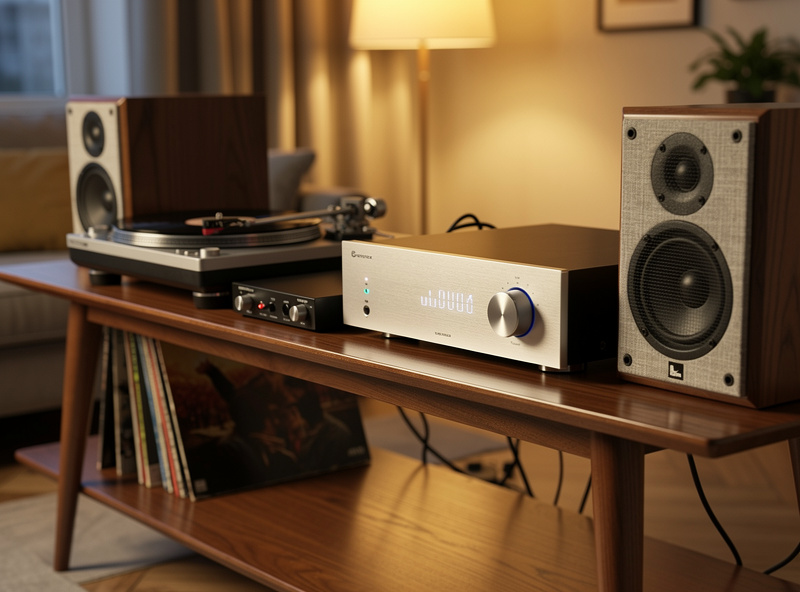
Powered speakers (no separate amplifier). Choose a record player with a built-in phono preamp, or budget $50–$100 for an external preamp. The Audio-Technica AT-LP120X or Fluance RT82 connect directly to powered speakers via RCA cables with no additional equipment. Our powered vs passive speaker guide compares the two approaches in detail.
AV receiver with a Phono input. Many receivers include a built-in phono preamp. You can buy a turntable without a built-in preamp and save money. Verify the receiver’s phono input supports MM cartridges — most do, but MC support is rare on receivers under $500.
Dedicated stereo amplifier without phono input. You need an external phono preamp. Budget $100–$200 for a quality unit like the Schiit Mani 2 or iFi Zen Phono. Connect the turntable to the preamp, then the preamp to the amplifier’s line-level input. For vinyl listeners considering tube amplification, our tube amp comparison for vinyl explains why even-order harmonic distortion produces the warm sound many collectors prefer.
Headphone listening. Pair your record player and phono preamp with a headphone amplifier. This setup is ideal for apartment dwellers or late-night listening. The signal chain is: turntable → phono preamp → headphone amp → headphones.
Frequently Asked Questions
How much should I spend on my first record player?
Budget at least $300 to $500 for a first record player with acceptable sound quality. The $150 to $300 tier produces audible wow and flutter and uses basic cartridges. Spending $500 gets you a Fluance RT85 or Pro-Ject Debut Carbon EVO with an Ortofon 2M cartridge, which is the performance sweet spot.
What is the difference between a record player and a turntable?
A turntable is the standalone spinning component with tonearm and motor. A record player traditionally means an all-in-one unit with built-in amplifier and speakers. In modern usage both terms describe the same device that plays vinyl records.
Do I need a separate phono preamp for my record player?
You need a phono preamp unless your turntable or amplifier has one built in. The preamp applies RIAA equalization that restores the correct frequency balance. Without it, music sounds thin and quiet. Check your turntable specs for a phono or line switch, or your receiver for a Phono input.
What is the difference between 33 and 45 RPM?
33 1/3 RPM is the standard speed for full-length LP albums. 45 RPM is used for 7-inch singles and some audiophile pressings. 45 RPM records have wider grooves and higher linear velocity, which can produce better sound quality. Most turntables support both speeds.
Will a record player damage my vinyl records?
A properly set up record player with correct tracking force does not damage records. Budget turntables with tracking force above 4 grams can accelerate groove wear. Set the tracking force to the cartridge manufacturer specification and replace the stylus after 500 to 1,000 hours of play to prevent damage.
Can I connect a record player to Bluetooth speakers?
Yes, if the turntable has Bluetooth output or if you add a Bluetooth transmitter. However, Bluetooth compresses the audio signal, negating some of vinyl analog advantage. For the best experience, use a wired connection to powered speakers or an amplifier. Bluetooth is acceptable for casual background listening.
What is wow and flutter on a record player?
Wow and flutter measures speed variation during platter rotation. Wow is slow variation below 6 Hz causing pitch wavering on sustained notes. Flutter is rapid variation above 6 Hz causing a warbling effect. A rating below 0.25 percent is acceptable, below 0.1 percent is audiophile grade.
Should I buy a record player with a built-in preamp?
Built-in preamps add convenience but are typically lower quality than $100 plus external units. If you are starting out and want simplicity, a built-in preamp lets you connect directly to powered speakers. For the best sound, buy a turntable without a built-in preamp and pair it with a dedicated external unit.
How do I set up a record player for the first time?
Level the surface, balance the tonearm, set tracking force to the cartridge spec using a digital gauge, align the cartridge with a protractor, and connect the RCA cables to a phono preamp or powered speakers. The entire setup takes about 20 minutes and eliminates 90 percent of common sound problems.
Related Guides
- Belt Drive vs Direct Drive Turntables: Which Is Better for Vinyl?
- Phono Preamp Explained: Why You Need One and How to Choose
- Cartridge Alignment Guide: Get the Best Sound from Your Turntable
- Vinyl Record Care Guide: Protect Your Collection for Decades
- How to Clean Vinyl Records: Step-by-Step Guide
- Best Record Cleaners 2026: Manual, Ultrasonic, and Vacuum
- Record Storage Tips: Keep Your Vinyl Collection Safe
- Turntable Upgrade Guide: Cartridges, Platters, Mats, and Tonearms
- Best Phono Cartridges 2026: Moving Magnet vs Moving Coil
- Powered Speakers vs Amp + Speakers for Turntables
- How to Set Tracking Force and Anti-Skate: Step-by-Step
- Turntable Mat Guide: Rubber, Cork, Leather, and Felt Compared
- Turntable Tonearm Guide: Types, Counterweights, and Upgrades
- Tube Amps for Vinyl: Why Even-Order Distortion Sounds Warm
- Turntable Platter Upgrades: Acrylic, Glass, and Metal