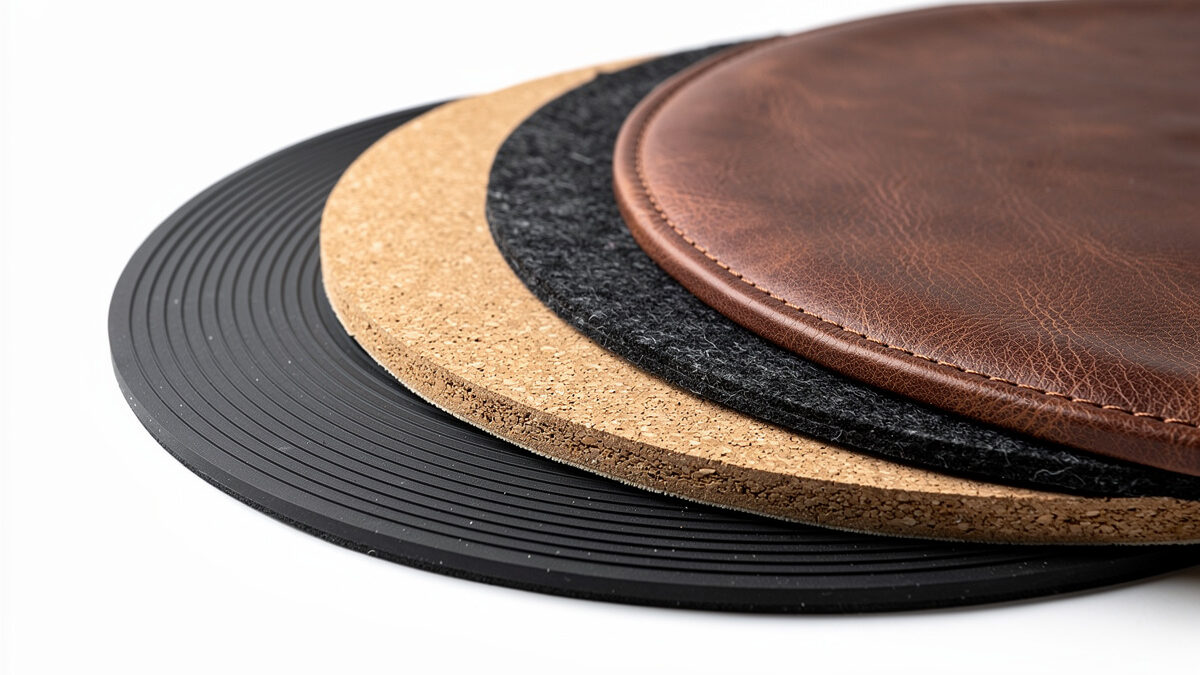
What Does a Turntable Mat Do?
A turntable mat sits between the vinyl record and the platter, controlling how vibrations transfer between the two surfaces. The mat damps resonance from the platter, reduces static buildup on the record, and can subtly alter the tonal character of playback by changing how the record couples to the platter material beneath it.
Stock turntable mats are typically thin felt pads that cost pennies to produce. They work adequately for casual listening but generate static electricity, attract dust, and offer minimal damping. Upgrading to a purpose-designed mat made from rubber, cork, leather, or composite materials reduces unwanted resonance and can tighten bass response, improve midrange clarity, and extend high-frequency detail. The improvement is subtle compared to a cartridge upgrade but costs a fraction of the price.
Rubber Mats
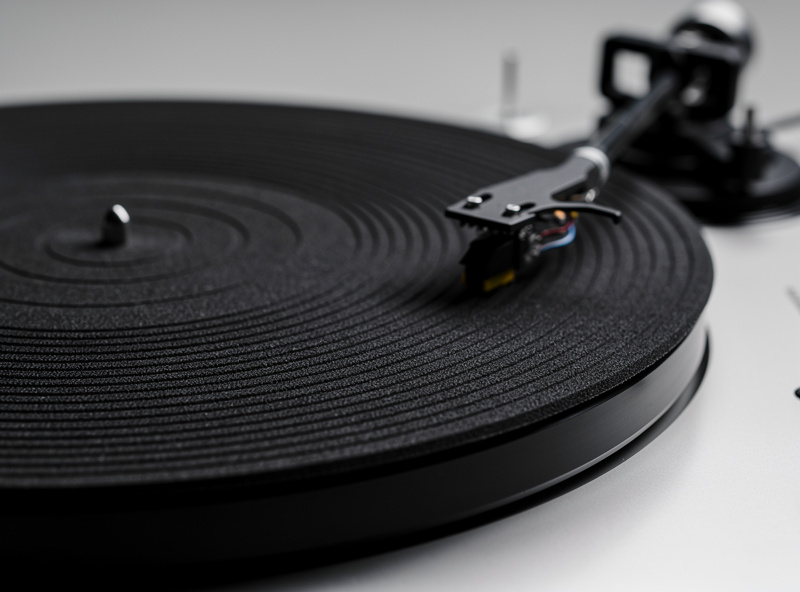
Rubber mats are the most neutral-sounding option and the best choice for listeners who want minimal coloration. They dampen platter resonance effectively without adding warmth or brightness to the sound. High-quality rubber mats use dense butyl rubber that absorbs vibration across the full frequency range without compressing under the record’s weight.
The Thorens TD 160 replacement mat ($18) and the Herbie’s Way Excellent II ($52) are the most popular rubber options. The Herbie’s mat uses a proprietary rubber compound that is slightly softer than standard rubber, providing additional damping for aluminum and steel platters. Rubber mats also eliminate static buildup almost entirely because rubber is a natural anti-static material—unlike felt, which is a static generator.
One drawback of rubber mats is that they can grip the record surface slightly, making it harder to remove the record quickly. Some rubber mats also have a faint smell when new, which dissipates within a few days. For most turntable setups, rubber is the safest upgrade because it improves damping without changing the sonic character of the system.
Cork Mats
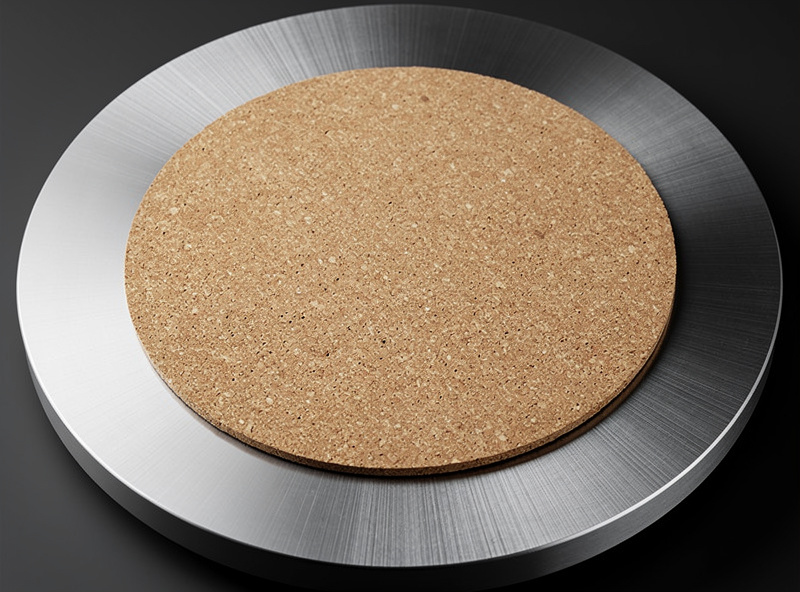
Cork mats add a slight brightness and openness to the sound compared to rubber. They are lighter and less dense than rubber, which means they dampen less vibration but allow the record to couple more directly with the platter surface. This can be beneficial on heavy glass or acrylic platters where the platter itself provides good damping.
The Pro-Ject Cork It ($15) is the most widely used cork mat and the most popular turntable mat upgrade overall. It is 3mm thick, fits any standard 12-inch platter, and provides noticeable improvement over stock felt mats in both sound and static reduction. Cork is naturally anti-static, so records do not attract dust the way they do on felt.
Cork mats work best on heavier platters (glass, acrylic, or thick aluminum) where the platter provides the primary damping and the mat mainly serves as a static barrier and vibration interface. On lightweight stamped-steel platters, cork may not dampen enough resonance, and rubber would be a better choice. Cork mats also degrade faster than rubber—replace them every 2–3 years as the cork compresses and loses its damping properties.
Leather Mats
Leather mats add warmth and midrange richness to the sound. They are denser than cork and provide moderate damping, sitting between rubber and cork in terms of sonic neutrality. Leather absorbs midrange resonance particularly well, which can smooth out sibilance and harsh treble on bright recordings.
Herbie’s Tenderfeet leather mat ($48) and the Hudson Hi-Fi leather mat ($25) are the most accessible options. Leather mats are the most durable of all mat materials—a quality leather mat lasts 5–10 years with minimal degradation. They also look premium and complement wood-finish turntables aesthetically.
The trade-off is that leather can be slightly warm or colored compared to rubber. On systems that already lean warm (tube preamps, warm-sounding cartridges like the Nagaoka MP-110), a leather mat may push the tonal balance too far toward the bass and lower midrange. If your system sounds bright or analytical, leather is an excellent choice. If it already sounds warm, choose rubber instead.
Felt Mats
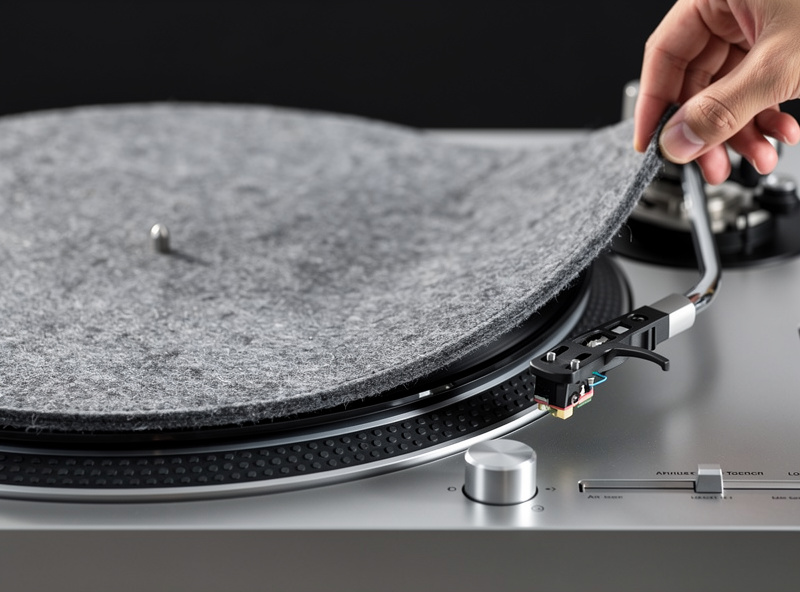
Felt mats are the lightest and least damped option. They provide minimal resonance control but offer one unique advantage: low friction. DJs use felt mats because the record can slip on the surface, enabling slip-cueing, scratching, and beat-matching techniques that require the record to move independently of the platter.
For home listening, felt mats are the worst choice. They generate significant static electricity, attract dust and lint, and dampen almost no platter resonance. Most entry-level turntables ship with felt mats because they cost under $1 to produce. Replacing a felt mat with a $15 cork or $18 rubber mat is one of the cheapest and most noticeable improvements you can make to a budget turntable.
If you own a felt mat and do not DJ, replace it immediately. The static buildup alone will accelerate record wear by attracting dust particles into the groove. Any rubber, cork, or leather mat is an upgrade over felt for home listening purposes.
Mat Material Comparison
| Material | Damping | Static Control | Tonal Character | Durability | Price Range | Best For |
|---|---|---|---|---|---|---|
| Rubber | High | Excellent | Neutral | 5–8 years | $15–$55 | Most systems |
| Cork | Medium | Good | Slightly Bright | 2–3 years | $12–$25 | Heavy platters |
| Leather | Medium-High | Good | Warm | 5–10 years | $25–$55 | Bright systems |
| Felt | Very Low | Poor | None | 1–2 years | $5–$10 | DJs only |
| Silicone | High | Excellent | Neutral | 5+ years | $20–$40 | Resonance control |
| Acrylic (no mat) | High | Good | Neutral-Bright | Indefinite | N/A (platter) | Acrylic platters |
Mat Thickness and Its Effect
Mat thickness changes the vertical distance between the record surface and the platter, which affects the vertical tracking angle (VTA) of the cartridge. Standard mats are 2–3mm thick. Thicker mats (4–6mm) raise the record surface, tilting the cartridge slightly backward. Thinner mats (1–2mm) lower the surface, tilting it forward.
VTA changes are subtle but audible on high-resolution systems. A slightly tail-up cartridge (thicker mat) tends to add warmth and body. A slightly tail-down cartridge (thinner mat) tends to add brightness and detail. Most tonearms with adjustable VTA let you compensate for mat thickness changes by raising or lowering the arm pillar. If your tonearm lacks VTA adjustment, stick with a mat close to your stock mat’s thickness.
For turntables without VTA adjustment, 3mm is the safe default thickness. Going thicker than 4mm or thinner than 1.5mm without VTA compensation may cause audible tracking angle distortion, particularly with microline or Shibata styli that are sensitive to groove contact angle.
Do You Need a Mat on an Acrylic Platter?
No. Acrylic platters are designed to hold the record directly without a mat. The acrylic surface has a similar impedance to vinyl, which means the record couples to the platter without a resonance-inducing interface layer. Adding a mat on an acrylic platter reintroduces an unnecessary material boundary and can actually reduce sound quality by creating a double-damped system.
If your turntable has an acrylic platter, remove any mat and place the record directly on the acrylic surface. Clean the acrylic surface regularly with a microfiber cloth to prevent dust buildup that could elevate the record. Acrylic is naturally anti-static, so no mat is needed for static control either.
For turntables with metal platters, a mat is mandatory. Metal platters ring when tapped, and without a mat, this resonance transfers directly into the record. The mat acts as a decoupling layer between the resonant metal and the sensitive vinyl surface.
How to Choose the Right Mat for Your System
Choose a mat based on your platter material, cartridge character, and tonal preference. For aluminum or steel platters, rubber provides the best damping. For glass or acrylic platters, cork or no mat at all is appropriate. For warm-sounding systems, rubber or cork avoids adding more warmth. For bright, analytical systems, leather tames excess treble.
If you are unsure, start with a rubber mat—it is the most universally compatible and neutral option. The Pro-Ject Cork It is the best budget choice if you want to try cork. Avoid felt unless you DJ. For more guidance on matching turntable components, see Turntable Upgrade Guide.
Frequently Asked Questions
What is the best turntable mat material?
Rubber is the most neutral and universally compatible mat material. It dampens platter resonance effectively, eliminates static, and does not add tonal coloration. The Herbie’s Way Excellent II ($52) and Thorens replacement mat ($18) are top choices for most systems.
Do turntable mats really make a difference?
Yes, especially when upgrading from a stock felt mat. Rubber or cork mats reduce static buildup, dampen platter resonance, and can tighten bass response. The improvement is subtle but audible on any system above entry-level quality.
Can I use a mat on an acrylic platter?
No. Acrylic platters are designed for direct record contact. Adding a mat on acrylic reintroduces an unnecessary interface layer and can degrade sound quality. Place the record directly on the acrylic surface and clean it regularly with a microfiber cloth.
How thick should a turntable mat be?
3mm is the standard safe thickness for most turntables. Thicker mats (4–6mm) change the vertical tracking angle and add warmth. Thinner mats (1–2mm) add brightness. If your tonearm lacks VTA adjustment, stay within 2–4mm.
How often should I replace my turntable mat?
Rubber mats last 5–8 years. Cork mats should be replaced every 2–3 years as cork compresses and loses damping. Leather mats last 5–10 years. Replace any mat that shows visible wear, compression, or loss of anti-static properties.
Is a cork or rubber mat better for reducing static?
Both are far better than felt. Rubber is slightly more effective at static elimination because it is a natural anti-static material. Cork is also anti-static but less effective than rubber in very dry environments where static is worst.
Silicone Mats
Silicone mats are a newer option that combines the damping properties of rubber with even better static control. Silicone is naturally anti-static and provides high internal damping across the frequency range. These mats typically cost 20 to 40 dollars and are available from companies like Hudson Hi-Fi and Turntable Lab.
Silicone performs similarly to butyl rubber in most systems but tends to grip the record surface more firmly, which some listeners prefer for coupling and others find annoying when removing records. For turntables with aluminum or steel platters, silicone provides excellent decoupling without adding tonal coloration. If rubber is unavailable for your platter size, silicone is the closest alternative.
Related Articles
- Turntable Upgrade Guide: Cartridges, Platters, Mats, and Tonearms
- Turntable Platter Upgrades: Acrylic, Glass, and Metal
- Vinyl Record Care Guide: Protect Your Collection for Decades
- Best Record Cleaners 2026: Manual, Ultrasonic, and Vacuum
- Turntable Buying Guide 2026: How to Choose Your First Record Player