What Is a Turntable Tonearm?
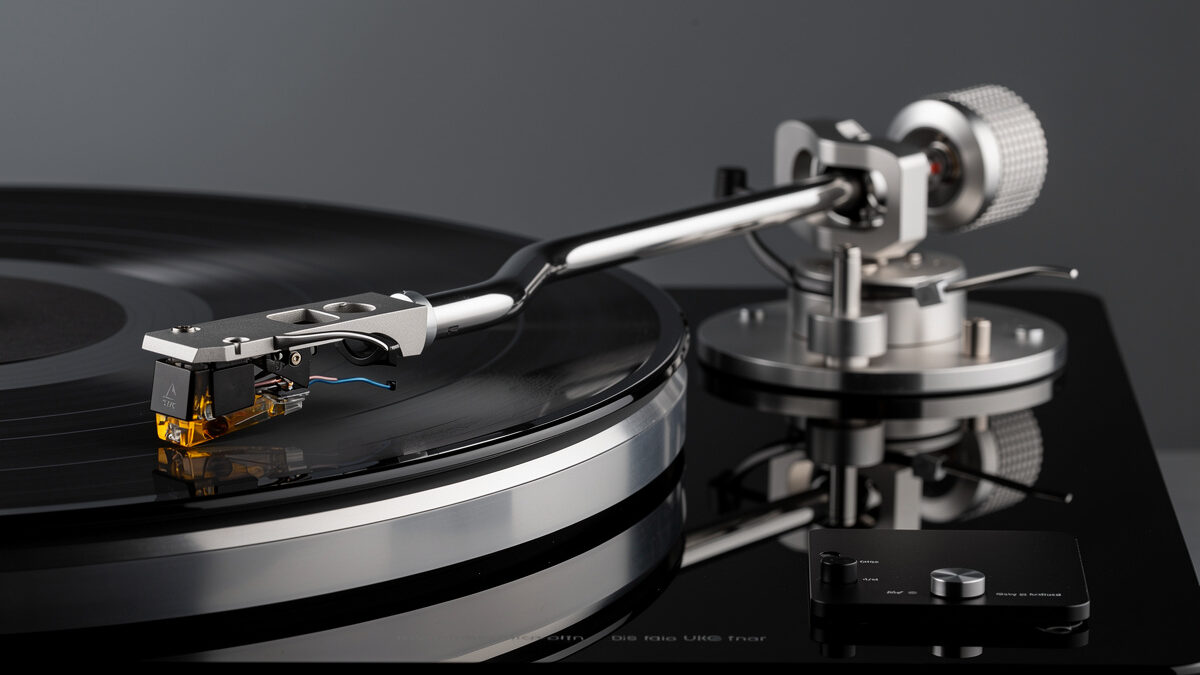
A tonearm is the pivoting arm that holds the phono cartridge and allows the stylus to track the record groove from the outer edge to the center. The tonearm’s geometry, mass, bearing type, and rigidity directly affect tracking accuracy, resonance behavior, and how much detail the cartridge can retrieve from the groove.
A well-designed tonearm maintains the cartridge at the correct tracking angle while minimizing friction at the pivot point. Any bearing play, excess mass, or resonance in the arm tube translates into audible distortion, muddy bass, or sibilance. Upgrading the tonearm is one of the highest-impact modifications for mid-range and high-end turntables, though it requires compatibility with the existing armboard or mounting system.
Tonearm Types: Straight, S-Shaped, and J-Shaped
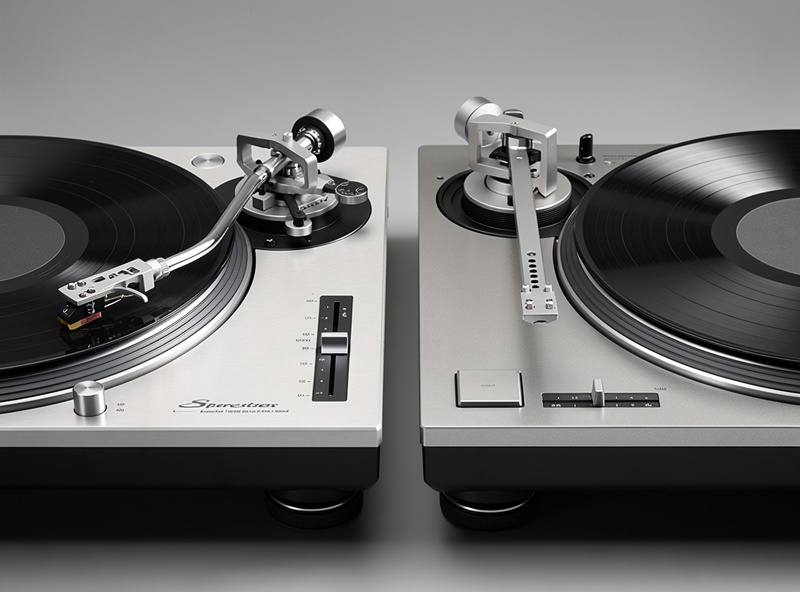
Turntable tonearms come in three basic geometries: straight, S-shaped, and J-shaped. Straight tonearms are the simplest design—a single rigid tube from pivot to headshell. S-shaped arms curve back toward the pivot before extending to the headshell. J-shaped arms are a hybrid, curving slightly at the headshell end only.

Straight arms like those on Rega turntables minimize bearing friction and tube mass. They are the preferred design for high-end audiophile decks because fewer curves mean fewer resonance points. S-shaped arms like the Audio-Technica AT-LP120X’s stock arm naturally counteract some skating force due to their offset geometry, but they add mass and create resonance nodes at the curve points. J-shaped arms attempt to combine the offset angle benefit of S-arms with the lighter mass of straight arms.
For most listeners, the geometry is less important than the bearing quality and total effective mass. A well-built S-shaped arm outperforms a poorly built straight arm every time. Focus on bearing smoothness and arm rigidity rather than geometry when evaluating tonearms.
Bearing Types: Gimbal, Unipivot, and Magnetic
The tonearm bearing determines how freely the arm moves horizontally and vertically. Gimbal bearings use precision ball bearings on both axes and are the most common design in consumer turntables. Unipivot bearings rest the arm on a single sharp point, offering near-zero friction but requiring careful balancing. Magnetic bearings use opposing magnets to float the arm with no physical contact at the pivot.
Gimbal bearings like those in the Rega RB330 ($395) provide stable, predictable tracking with minimal play. They are the best choice for listeners who do not want to fuss with setup. Unipivot arms like the MoFi StudioDeck’s arm deliver lower friction than gimbal designs but can wobble on warped records if the weight distribution is not perfectly centered. Magnetic bearings eliminate mechanical wear entirely but are expensive and rare, found primarily on high-end arms from companies like Kuzma and Graham Engineering.
| Bearing Type | Friction | Stability | Maintenance | Price Range | Best For |
|---|---|---|---|---|---|
| Gimbal | Low | Excellent | Minimal | $100-$1,000+ | Most listeners |
| Unipivot | Very Low | Good (requires balance) | Periodic re-centering | $200-$2,000+ | Experienced users |
| Magnetic | Near Zero | Excellent | None | $1,500-$5,000+ | Reference systems |
Effective Mass and Cartridge Matching
Effective mass is the total mass of the tonearm as seen by the cartridge—everything from the pivot point to the stylus tip. This value must be matched to the cartridge’s compliance to produce a resonant frequency between 8 and 12 Hz, which falls below the audible range but above the record warp frequency.
Light tonearms (10-12 grams effective mass) pair with high-compliance cartridges (20+ u/mN). Medium-mass arms (12-16 grams) suit medium-compliance cartridges (12-20 u/mN). Heavy arms (16-25 grams) match low-compliance cartridges (8-12 u/mN). The formula is straightforward: resonant frequency equals 159 divided by the square root of compliance multiplied by effective mass in grams.
Mismatched combinations produce audible problems. A high-compliance cartridge on a heavy arm drops below 8 Hz resonance, causing the stylus to skip on warped records. A low-compliance cartridge on a light arm pushes above 15 Hz, creating a peaky, boomy bass response. Most modern MM cartridges fall in the 15-25 u/mN compliance range, making medium-mass arms the safest all-around choice.
Counterweight and Anti-Skate Adjustment
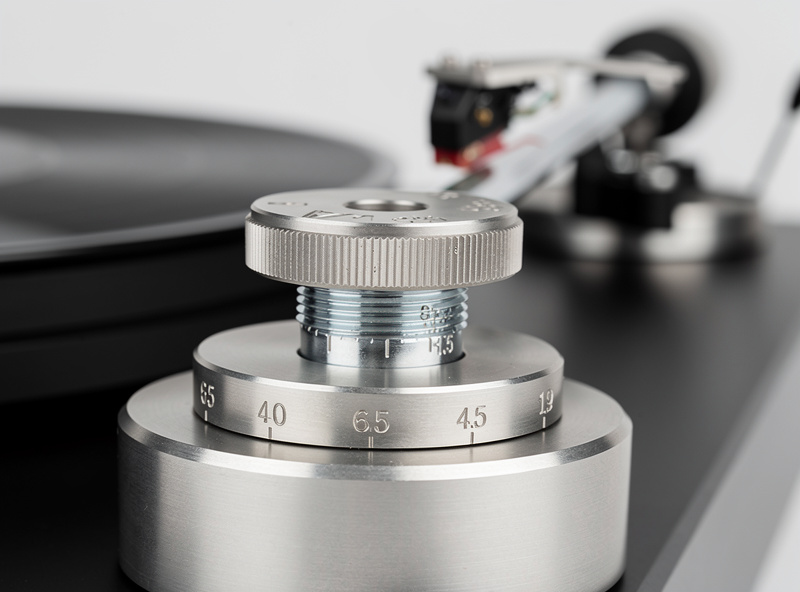
The counterweight at the back of the tonearm balances the cartridge’s downward force, which is set to the manufacturer’s recommended tracking force—typically 1.5 to 2.5 grams. Anti-skate applies a small outward force to counteract the inward pull that tonearm geometry creates, ensuring equal stylus pressure on both groove walls.
To set counterweight: first balance the arm so it floats horizontally with the counterweight slid all the way back. Rotate the graduated dial to zero without moving the counterweight itself. Then rotate the entire counterweight forward until the dial reads the cartridge’s recommended tracking force. This two-step process ensures the dial reads accurately rather than relying on feel.
Anti-skate is typically set to match the tracking force value. A 2.0-gram tracking force gets 2.0 on the anti-skate dial. Some listeners prefer setting anti-skate slightly lower (1.5 for 2.0 tracking force) because the skating force varies across the record surface—the outer grooves experience more skating force than the inner grooves. A detailed step-by-step process is in our tracking force and anti-skate setup guide.
Headshell Types and Their Impact
The headshell connects the cartridge to the tonearm tube. Fixed headshells are permanently attached to the arm and offer the most rigid connection. Detachable headshells use a standard half-inch mount and allow quick cartridge swapping but add a mechanical joint that can introduce play or resonance.
S-shaped and J-shaped arms almost always use detachable headshells, while straight arms typically have fixed headshells. Detachable headshells come in aluminum, carbon fiber, and magnesium variants. Aluminum is standard and adequate. Carbon fiber reduces mass and adds stiffness, which benefits high-compliance cartridges on lightweight arms. Magnesium offers a middle ground in damping characteristics.
The Technics-style bayonet mount is the most common detachable standard, used on Audio-Technica, Pioneer, and Technics turntables. Rega uses a proprietary three-point mount on its RB-series arms. When upgrading a tonearm, verify the headshell standard is compatible with your existing cartridge or plan to purchase a new headshell along with the arm.
Aftermarket Tonearm Upgrades
Replacing a tonearm is the most advanced common turntable upgrade because it requires either a compatible armboard or direct mounting that matches the turntable’s existing cutout. Many turntable manufacturers offer their own upgraded arms—Rega sells the RB330 ($395) and RB880 ($1,295) as direct replacements for Rega turntables. Third-party arms from Jelco, MoFi, and Kuzma require custom armboards.
The tonearm upgrade makes the most sense on turntables in the $500-$1,500 range where the stock arm is adequate but not exceptional. Upgrading the arm on a $200 turntable is rarely cost-effective—the plinth, motor, and bearing cannot resolve the improvement. Conversely, a $2,000 turntable with a mediocre stock arm can benefit enormously from a $500 aftermarket arm.
Before purchasing an arm, measure the mounting distance (pivot to spindle), effective length, and overhang of your current arm. The new arm must fit within the existing mounting hole or armboard cutout, or you will need to drill a new hole—measure twice before committing. For turntables under $500, invest in the cartridge and preamp first; see our turntable upgrade guide for the recommended upgrade order.
VTA Adjustment: Fine-Tuning Cartridge Angle
Vertical Tracking Angle (VTA) is the angle of the stylus relative to the record surface when viewed from the side. The ideal VTA matches the angle at which the cutting stylus carved the original master disc—typically 20 degrees from vertical. Most tonearms allow VTA adjustment by raising or lowering the arm pillar or the rear bearing housing.
VTA changes are audible when switching between mat thicknesses or playing records of different weights (120g vs 180g vinyl). A slightly tail-up cartridge (higher VTA) tends to add warmth and body. A slightly tail-down cartridge (lower VTA) adds brightness and analytical detail. The adjustment is measured in fractions of a millimeter—a 1mm change at the arm pillar produces a noticeable shift in tonal balance on resolving systems. Turntables with fixed arm pillars cannot adjust VTA; choose a mat thickness that keeps the arm approximately level with the record surface. Our turntable mat guide covers how mat thickness affects VTA.
Tonearm Maintenance
Tonearm bearings require occasional cleaning and lubrication to maintain low friction. Gimbal bearings should be checked annually for play by gently wiggling the arm horizontally and vertically—any perceptible movement indicates bearing wear. Unipivot bearings need the pivot point cleaned with isopropyl alcohol and a drop of light machine oil every 6-12 months.
Counterweight and anti-skate mechanisms should operate smoothly without sticking. If the counterweight dial does not turn freely, the internal thread may need cleaning. Anti-skate mechanisms that use a hanging weight on a thread should have the thread checked for fraying. Replace worn threads with monofilament fishing line of the same weight rating.
Internal tonearm wiring can degrade over time, especially on turntables older than 15 years. The thin copper leads from the headshell pins to the RCA output jacks develop micro-fractures that cause intermittent channel dropout or increased noise. Rewiring a tonearm is a delicate operation best left to a technician unless you have soldering experience with fine-gauge wire.
Frequently Asked Questions
What is the best tonearm upgrade for a Rega turntable?
The Rega RB330 at $395 is the most popular direct upgrade for Rega Planar 1, 2, and 3 turntables. It drops into the existing mounting hole without drilling and offers a stiffer, lighter arm tube with improved bearing tolerance over the stock RB220 or RB330.
How does tonearm effective mass affect sound?
Effective mass determines the resonant frequency when combined with cartridge compliance. Medium-mass arms (12 to 16 g) produce 8 to 12 Hz resonance with most MM cartridges, avoiding audible distortion. Mismatched combinations cause skipping or boomy bass.
Should I upgrade my tonearm or cartridge first?
Always upgrade the cartridge first. A $150 cartridge on a stock tonearm delivers more improvement than a $400 tonearm with a stock cartridge. The cartridge-to-groove interface has the largest impact on sound quality per dollar spent.
What is the difference between gimbal and unipivot tonearms?
Gimbal bearings use two perpendicular axes of ball bearings for stable tracking. Unipivot bearings rest on a single point for lower friction but require careful balancing. Gimbal arms suit most listeners; unipivot arms suit experienced users seeking maximum transparency.
Can I install any tonearm on my turntable?
No. The tonearm must match the turntable mounting hole diameter, armboard cutout, and mounting distance. Rega arms fit Rega tables directly. Third-party arms like Jelco or Kuzma require custom armboards that may involve drilling.
How often should I service my tonearm bearings?
Gimbal bearings need annual inspection for play. Unipivot bearings require cleaning and a drop of light oil every 6 to 12 months. Internal wiring should be checked every 10 to 15 years for micro-fractures that cause channel dropout.
Related Articles
- Turntable Upgrade Guide: Cartridges, Platters, Mats, and Tonearms
- Best Phono Cartridges 2026: Moving Magnet vs Moving Coil
- How to Set Tracking Force and Anti-Skate: Step-by-Step
- Cartridge Alignment Guide: Get the Best Sound from Your Turntable
- Record Player Guide 2026: How to Choose, Set Up, and Enjoy Vinyl