Yes, a worn stylus can damage your records — but not as fast or as dramatically as the internet claims. A moderately worn tip sounds bad long before it does real harm. The genuine record-killers are a badly worn or chipped diamond, or any stylus tracking far too light so it bounces and chatters against the groove walls. Keep the tip clean, track at the correct 1.8–2.0 grams for most cartridges, and retire it when the sound tells you, and you will never damage a record.
The honest framing here is risk management, not panic. There is a lot of fear-mongering that treats any wear as an emergency that is grinding your collection to dust with every play. That is not how it works. Wear is gradual, its first consequence is worse sound, and the point where it starts carving permanent damage is well-defined and avoidable. Here is where the real danger actually lies and how to stay on the safe side of it.
How a stylus damages a groove — and when
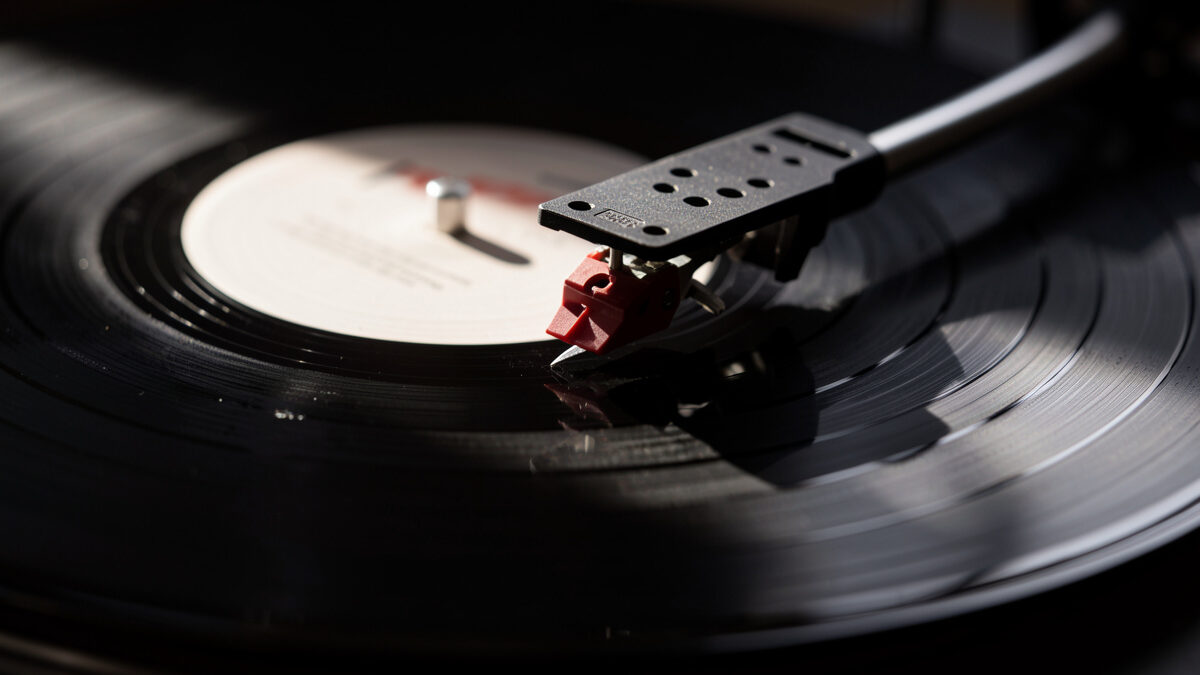
Groove damage happens when the diamond contacts the vinyl at an angle or with a shape it was never meant to, concentrating force on parts of the groove wall that should not carry it. A fresh, correctly shaped tip rides the groove walls smoothly and distributes its load the way the geometry intends. A worn tip with a polished flat sits differently, but a moderate flat still rides the groove — it sounds duller and sibilant before it starts removing material.
The line into actual damage gets crossed in two situations. One is severe wear: a heavily flatted or chipped diamond has sharp edges and a wrong contact patch that gouge the groove. The other is mistracking, where the tip loses contact and slams back into the walls — and that can happen even with a decent tip if tracking force is set too light. So “worn stylus damages records” is really two failure modes: a bad tip, and a good tip forced to mistrack. Both are avoidable, and I dig into telling one from the other in stylus damage vs mistracking.
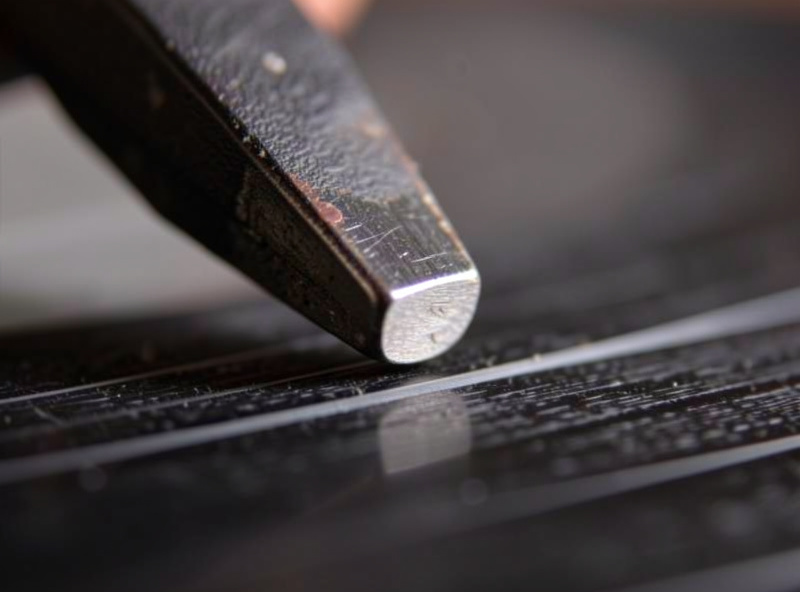
The counterintuitive part: too light damages faster
Most people assume tracking as light as possible is gentle on records. The opposite is true. Below the cartridge’s recommended force, the tip cannot stay seated in the groove; on loud passages it loses contact, bounces, and slams back down against the groove walls at an angle it was never designed to hit. That mistracking is what shears off the fine high-frequency detail permanently, and it is far more destructive than a properly set, slightly heavier force.
A well-shaped tip tracking at the correct 1.8 to 2.0 grams does far less harm than a “gentle” 1.2 grams that chatters. This is why I set force with a digital gauge to the middle of the recommended range rather than trusting the counterweight dial or erring light — the tracking force guide covers the method. The record-safety lever is not “track as light as possible.” It is “track at spec, with a tip in good shape, on a clean record.” Get that right and even a moderately worn stylus is not damaging anything.
What damage actually sounds and looks like
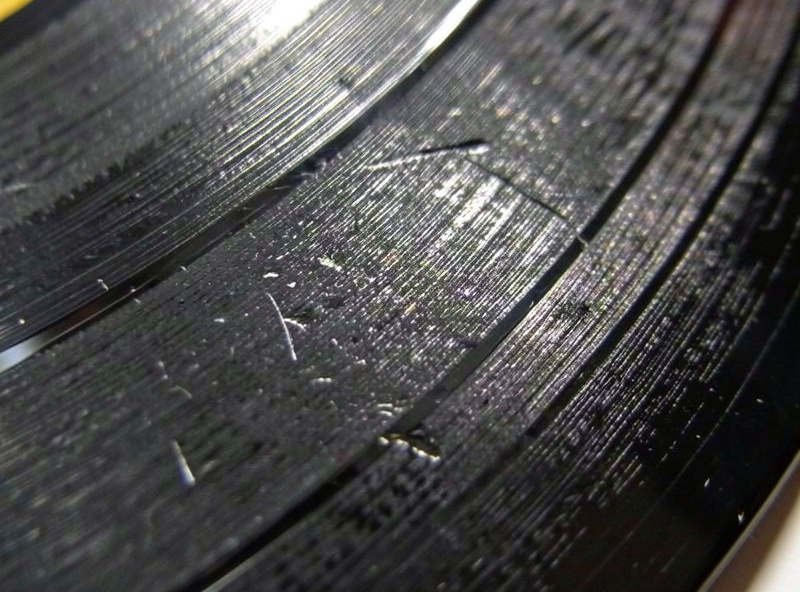
Genuine groove damage is permanent and has a signature: a persistent distortion or a gritty, torn quality baked into the same spot on every play, unchanged by cleaning and present regardless of which cartridge you use. That last part is the tell — if a fault follows the record across different turntables, it is in the groove; if it changes when you swap or clean the stylus, it was the tip or setup, not damage. My piece on whether cleaning removes surface noise covers that distinction from the noise angle.
Under magnification, a damaged groove can show grey stress marks or a scuffed, deformed wall, but you rarely need to look — the sound is diagnostic. Contrast that with a worn stylus, which makes every record sound worse, worst on inner grooves, and improves the moment you fit a fresh tip. Damage stays with the record; wear travels with the stylus. Keeping those two straight stops you from either ignoring a real problem or blaming your records for a tip fault.
The chipped-stylus emergency
There is one scenario that genuinely warrants urgency: a chipped or broken diamond. If a stylus is dropped hard, mishandled, or was defective, the diamond can chip, leaving a sharp edge that will scratch grooves quickly and audibly. This is the real version of the “worn stylus destroys records” fear, and it is why I stop playing immediately if a cartridge suddenly sounds harsh and scratchy in a way that was not there yesterday.
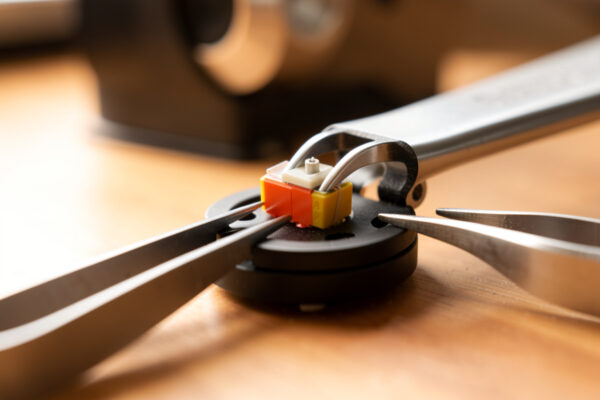
The difference from normal wear is speed and character. Wear creeps in over months and dulls the sound; a chip appears suddenly and adds a scratchy, distorted edge. If you suspect a chip, pull the record, inspect the tip under a loupe or USB scope — the method is in how to inspect a stylus for wear — and do not play anything you care about until you have confirmed the diamond is intact. A chipped tip is the one wear-adjacent situation where “keep playing to save money” can cost you records.
It is worth being clear about how rare that is, though, so the fear stays proportionate. In normal use a diamond does not just chip on its own; it takes a drop, a cueing accident, or manufacturing bad luck. If you handle the cartridge carefully, cue with the lever rather than by hand, and store the deck where it will not get knocked, you may never see a chipped stylus in years of playing. The everyday reality is gradual wear that warns you in the sound, not sudden catastrophe — which is exactly why the calm, routine approach beats living in fear of your own turntable.
Staying on the safe side
The whole record-safety picture comes down to a short, cheap routine. Clean your records so grit is not dragged through the groove — the record cleaning guide covers it. Clean the stylus so a dust ball is not changing its contact geometry. Set tracking force with a gauge to spec, never featherlight. Keep the cartridge aligned so the tip loads the groove evenly. And retire the stylus when sibilance and inner-groove harshness tell you it is worn, rather than riding it for another hundred hours to save money.
Do those things and the answer to “is my stylus damaging my records” is a confident no. Skip them — play a chipped or heavily worn tip, or track a good one far too light — and yes, you can carve damage that no cleaning will ever remove. It is entirely within your control, which is the honest and reassuring truth underneath the fear. For the full lifecycle this sits inside, the stylus and cartridge wear hub is the map, and how long a stylus lasts tells you when retirement is due.
Related Guides
- Stylus and Cartridge Wear: The Complete Guide
- How to Inspect a Stylus for Wear
- How Long Does a Phono Stylus Last?
- Stylus Damage vs Mistracking
- Tracking Force Adjustment Guide
Frequently Asked Questions
Can a worn stylus damage my records?
Yes, but not quickly or dramatically. A moderately worn tip sounds bad before it harms records. Real damage comes from a severely worn or chipped diamond, or any stylus tracking far too light so it chatters in the groove. Keep the tip clean, track at correct force, and retire it on time to avoid it.
Does tracking too light protect my records?
No, it does the opposite. Below the recommended force the tip cannot stay seated and mistracks, bouncing against the groove walls and shearing off detail permanently. A correctly set, slightly heavier force is gentler than a featherlight one that chatters. Set force with a gauge to the middle of the recommended range.
How can I tell record damage from a worn stylus?
Damage stays with the record: the same distortion in the same spot on every play, unchanged by cleaning, present on any turntable. Stylus wear travels with the tip: every record sounds worse and improves the moment you fit a fresh stylus. If a fault follows the record across decks, it is groove damage.
Is a chipped stylus an emergency?
Yes. A chipped diamond has a sharp edge that scratches grooves quickly and audibly, unlike gradual wear. It appears suddenly and adds a scratchy, distorted edge. Stop playing, inspect the tip under a loupe or USB microscope, and do not play records you care about until you confirm the diamond is intact.
How worn is too worn to keep playing?
When sibilance and inner-groove harshness appear across many records and survive a clean record and correct setup, the stylus is worn enough to replace. A moderate flat is not yet damaging records but sounds poor. A visible chip or heavy flat is the point where continuing to play risks real groove damage.
What is the single best way to protect my records?
Track at the correct force with a tip in good shape on clean records. That one combination prevents nearly all stylus-caused damage. Add regular record and stylus cleaning and correct alignment, and retire the stylus when it sounds worn rather than riding it to save money. It is entirely within your control.