Something real does happen when you break in a new cartridge, but it is not the mystical “burn-in” audiophile forums describe. The rubber suspension behind the cantilever is stiff when new and relaxes over the first 10 to 30 hours of play, so compliance settles and tracking gets slightly more secure. That is measurable mechanical behavior. What is myth is the idea that hundreds of hours transform the sound — the generator does not change, and most of what people hear past the first few hours is their own ears adapting.
I set up every new cartridge the same way: mount it, align it, dial in tracking force and anti-skate, play it for a handful of hours, and then recheck the numbers, because the settled suspension can shift them a touch. That recheck is the entire practical value of break-in. Everything beyond it is either genuine but tiny, or story. Here is what actually changes, what does not, and what to do about it.
What genuinely changes in the first hours
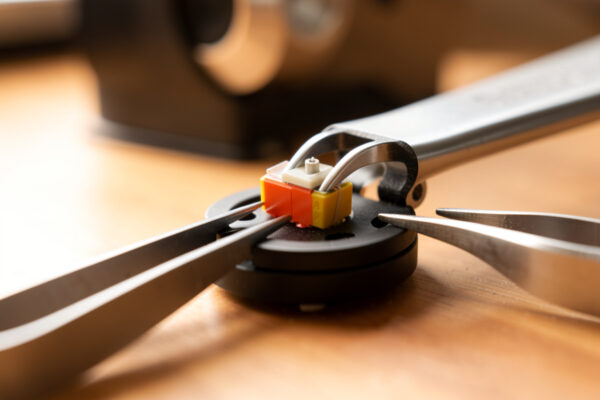
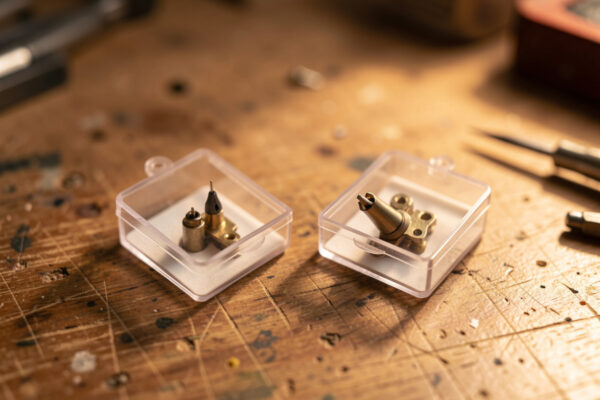
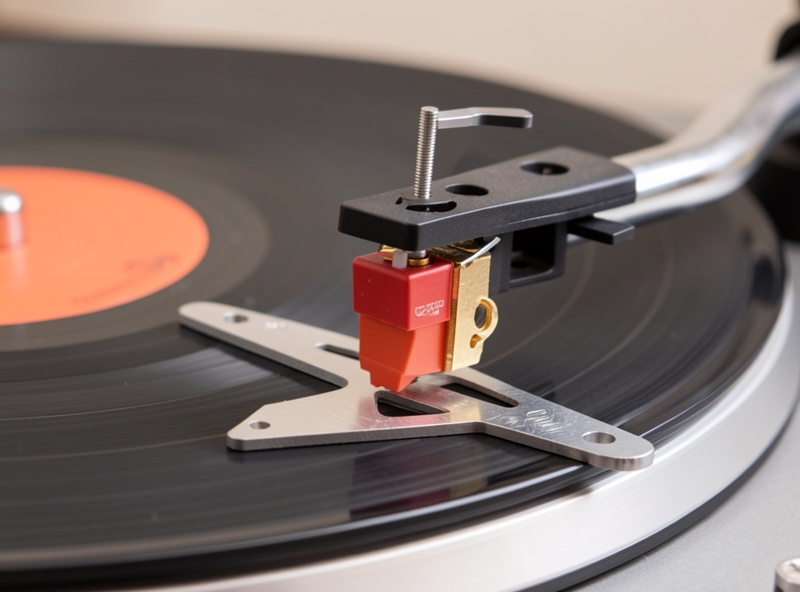
The one component that changes is the elastomer suspension — the small rubber bushing that lets the cantilever pivot and sets the cartridge’s compliance. Fresh from the factory it is at its stiffest. As you play the cartridge, the rubber flexes through thousands of cycles and relaxes toward its designed working compliance. A stiffer-than-spec suspension tracks a hair less freely and can sound slightly tight or edgy; once it loosens, tracking of high-amplitude passages becomes a touch more composed.
This is real and it is mechanical, but keep the scale honest: it is a small settling over the first roughly 10 to 30 hours, not a dramatic transformation. On the bench the most reliable evidence is not the sound at all — it is that the effective tracking force and the anti-skate needed can drift slightly as the suspension relaxes, which is exactly why I recheck them. If you want to understand why those settings matter so much, the tracking force guide and anti-skate guide cover the mechanics.
A useful way to picture it: the suspension is like a new pair of leather shoes. There is a genuine, short break-in where the material flexes and conforms, and after that it is simply working as designed — it does not keep “improving” indefinitely. Compliance is the spec being settled into here, and once the rubber reaches its intended working range, more play does not soften it further; it just accumulates hours on the diamond. So the correct mental model is a brief settling followed by a long plateau, not a slow climb toward some hidden peak that rewards patience.
What does not change — the myths
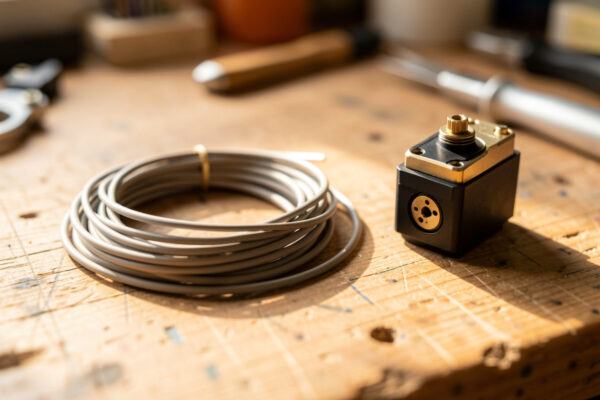
The generator does not break in. The magnets, coils, and wiring inside a moving-magnet or moving-coil cartridge are fixed electrical components; they produce the same signal on hour one and hour five hundred. So the folklore that a cartridge needs 100 or 200 hours to “open up” and reveal its true sound does not hold up against how the thing is actually built. There is nothing in the electrical path that meaningfully changes with play.
Most of the perceived “it got so much better after 100 hours” is your hearing adapting to a new component’s balance, plus the genuine but small suspension settling in the first tens of hours getting mentally stretched across a much longer window. This is not a knock on anyone — ear adaptation is powerful and real. But it means you should not withhold judgment on a cartridge for hundreds of hours, and you certainly should not buy expensive “burn-in” records or run a cartridge on a locked groove for days. That does nothing the first few normal listening sessions do not.
The one break-in step that matters: recheck your settings
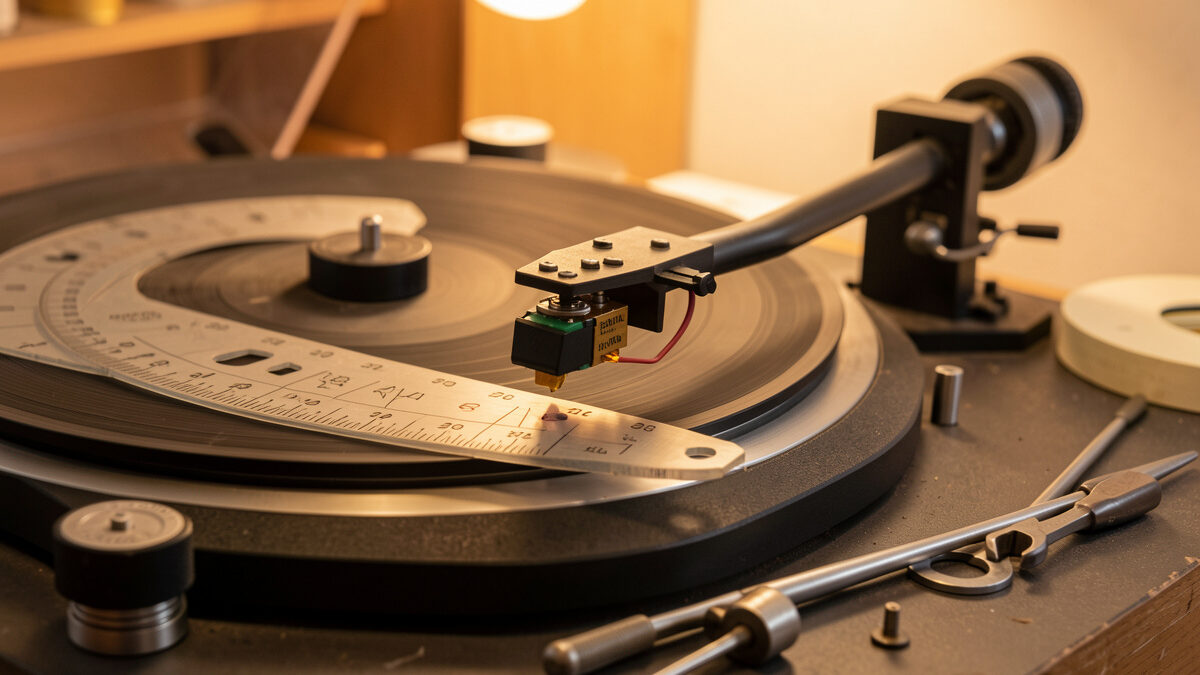
Here is the practical routine that captures all the real benefit and none of the ritual. Mount and align the cartridge properly from the start — overhang and null points on a protractor, tracking force set with a gauge to the middle of the recommended range, anti-skate matched, azimuth checked. Play music normally for the first several hours; there is no need to baby it or use special material.
After roughly 10 to 20 hours, recheck tracking force and anti-skate. As the suspension relaxes, the cantilever can sit slightly differently and the effective force at the tip can move a few hundredths of a gram, which is enough to be worth correcting. Confirm it is still in spec, nudge anti-skate if the cartridge now tracks a busy passage differently, and re-verify VTA/SRA if the ride height shifted. That recheck — not any amount of passive “burn-in” — is what makes a new cartridge settle in correctly.
Does a used or re-mounted cartridge need break-in?
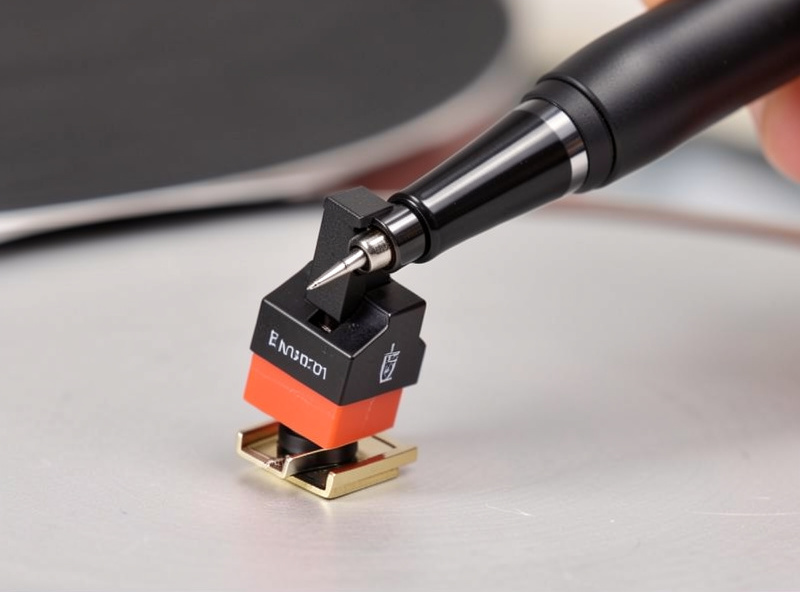
A cartridge that already has hours on it does not need breaking in again — its suspension relaxed long ago and has settled at its working compliance. If you buy a used cartridge or move a cartridge you have been playing to a new deck, it is ready immediately; there is no second break-in period. What it does need is a full re-alignment on the new arm, because overhang, azimuth, and VTA are properties of the mounting, not the cartridge, and they reset to zero the moment you unbolt it.
The only wrinkle is a cartridge that has sat unused for a very long time. Rubber does not just relax with play; it hardens with age. A cartridge stored for many years can have a stiffened suspension that a few hours of play will not fully limber up, because that is age-hardening, not new-part stiffness. If an old-but-low-hours cartridge tracks tight and never loosens, you are looking at a perished suspension rather than an unfinished break-in — a different problem with a different fix. That is the same age clock I flag in the lifespan discussion, just seen from the front end of a cartridge’s life instead of the back.
Why the ritual persists
It is worth understanding why burn-in mythology is so sticky, because it helps you resist it. New gear arrives with expectation attached, and the first hours of listening are when you are most actively evaluating — so any change you perceive gets logged as “the cartridge improving.” Add the genuine small suspension settling in the first tens of hours, and the story writes itself: it really did get slightly better early on, so surely it keeps getting better for hundreds of hours. It does not, but the extrapolation feels reasonable.
The commercial layer does not help. There is money in selling burn-in records and in the general idea that gear needs a long ceremony before it performs, and that narrative gets repeated until it sounds like established fact. My advice is to trust the mechanism over the marketing: the suspension settles quickly, the generator never changes, and your ears adapt. Judge a cartridge on how it sounds correctly set up in its first few sessions, recheck the settings once after the suspension relaxes, and move on to actually listening to records.
Break-in versus a suspension that is simply wrong
There is an important distinction people miss. Normal break-in is a small, one-time settling in the first tens of hours. If a cartridge still tracks poorly, sounds edgy, or sits at the wrong height after 30 or 40 hours, that is not “needs more break-in” — that is a setup or compliance mismatch, and no amount of extra play will fix it. Chasing endless burn-in to cure a real setup problem is how people waste months on a cartridge that needed a five-minute adjustment.
The usual culprits are tracking force outside the recommended window, an anti-skate that fights the arm, or a compliance mismatch between the cartridge and the tonearm. If break-in does not settle a problem quickly, stop waiting and start measuring — go back to the setup and calibration guide and work through the numbers. A correctly matched cartridge sounds right within its first sessions and only improves slightly from there; a mismatched one never comes good no matter how many hours you put on it.
How this fits the bigger wear picture
Break-in sits at the very start of a cartridge’s life, and it is worth understanding alongside the rest of the lifecycle. The same suspension that settles during break-in is the part that, decades later, hardens with age and defines one end of a stylus’s usable life — the two ends of the same rubber’s story. A new cartridge settles into spec; a very old one drifts out of it. In between is the hours-based wear on the diamond itself.
If you are setting up a new cartridge, the honest takeaway is simple: enjoy it from day one, recheck your settings after the first several hours, and ignore the burn-in mythology. Do not spend money on burn-in records or hold off judgment for hundreds of hours. For the full arc — from a fresh cartridge through wear inspection to eventual replacement — the stylus and cartridge wear hub ties it together, how long a stylus lasts covers the middle of that life, and how to inspect a stylus for wear covers the end of it.
Keep Building
If break-in has you dialing in a new cartridge, the natural next steps are the settings it interacts with: nail your tracking force, match your anti-skate, and once the suspension has settled, sanity-check VTA and SRA. If the cartridge is brand new to your system, the cartridge guide covers choosing and mounting from scratch, and the wear hub is the map for everything that happens after break-in.