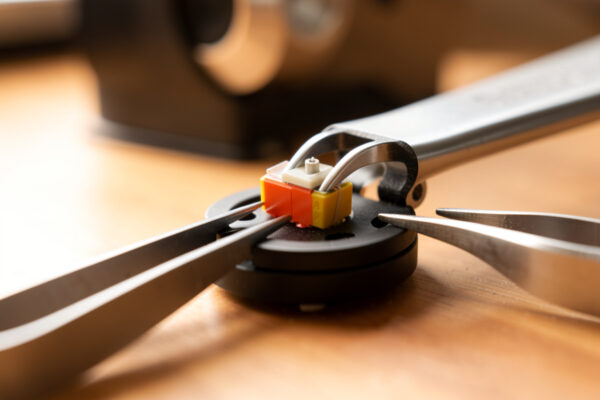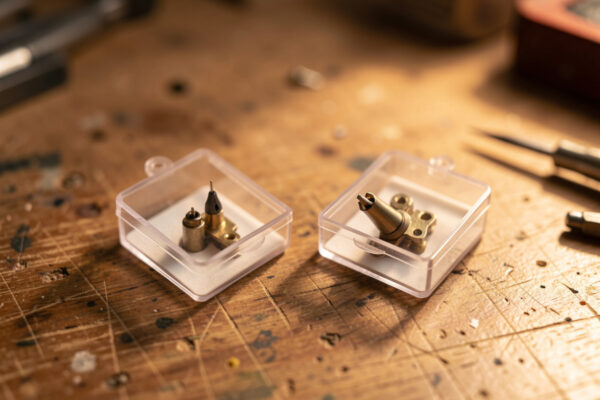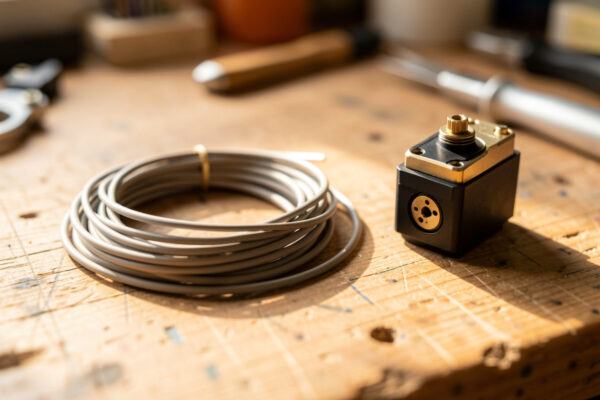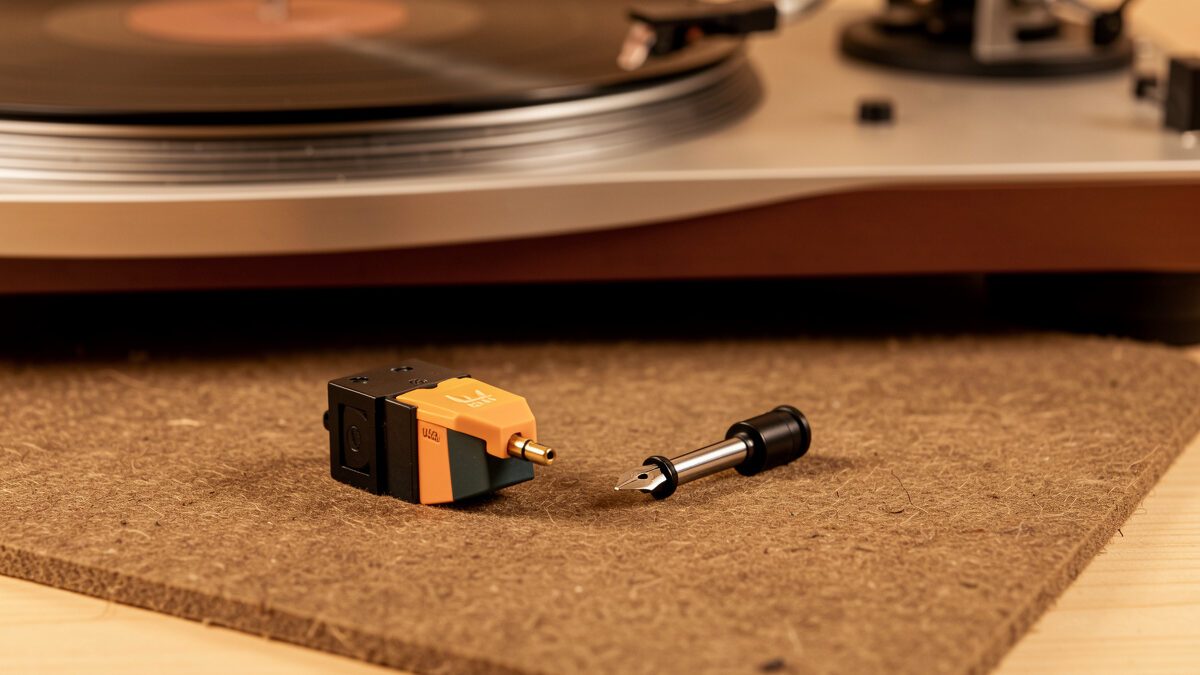
When people say they need a new cartridge, they usually need a new stylus — and those are different parts at very different prices. The stylus is the diamond tip, the cantilever it rides on, and the tiny rubber suspension behind it. The cartridge is the whole body: that stylus plus the generator that turns groove wiggles into an electrical signal. On most moving-magnet cartridges the stylus clips off and replaces in ten seconds for $30–$120, while the body lasts for decades.
Getting this distinction right is the single biggest money-saver in analog playback. I have watched people bin a perfectly good $250 cartridge because the sound went harsh, when a $60 replacement stylus would have made it new again. So before you buy anything, understand exactly which part has worn and which part is fine — because in vinyl, one of those parts is a consumable and the other essentially is not.
What the stylus actually is
The stylus assembly is three things working together. First, the diamond tip — the only part that touches the record, shaped as conical, elliptical, or a line-contact profile like Shibata or MicroLine. Second, the cantilever, the thin aluminum, boron, or ruby tube the diamond is mounted to, which transmits the groove’s motion back to the generator. Third, the elastomer suspension, a small rubber bushing that lets the cantilever pivot and sets the cartridge’s compliance.
All three of those wear or age. The diamond polishes a flat after hundreds of hours; the cantilever can bend if the cartridge is dropped; the rubber suspension hardens over years whether you play it or not. That is the whole consumable side of a cartridge, and on a replaceable-stylus design you renew all three at once by clipping in a fresh assembly. It is the cheapest genuine upgrade path in the hobby, which is why I cover profile choices separately in stylus profiles compared.
What the cartridge body is — and why it lasts
The cartridge body holds the generator: on a moving-magnet cartridge, tiny magnets on the cantilever move past fixed coils; on a moving-coil, the coils are on the cantilever and move past fixed magnets. Either way, the body’s coils, magnets, and pins do not touch the record and do not wear in normal use. I own cartridge bodies decades old that measure and sound perfect — only their styli have ever been replaced.
That is why the body-versus-stylus split maps so cleanly onto cost. The expensive, hand-assembled engineering lives in the body; the consumable lives in the stylus. When a cartridge “sounds worn,” the electrical generator is almost never the culprit. The exception is physical damage — snapped pins, a cracked body, corrosion — but that is accident, not wear. Understanding this is what lets you decide intelligently between a stylus swap, a retip or rebuild, or a whole new cartridge.
Replaceable stylus vs bonded: which do you have?
The fork that decides everything is whether your cartridge has a user-replaceable stylus. Most moving-magnet cartridges — the Audio-Technica VM95 family, the Ortofon 2M line, countless others — use a plastic stylus assembly that slides or clips off the front of the body. You pull the old one, push the new one on, and you are done, no alignment needed because overhang and azimuth are set by the body, which never moved.
Most moving-coil cartridges, and some high-end moving-magnets, have a bonded stylus — the cantilever is fixed into the body and cannot be user-swapped. For those, renewing the tip means sending the cartridge to a lab for a retip or rebuild, or buying a new cartridge. Knowing which camp you are in tells you your whole cost and effort picture before you spend a cent.
| Part | Wears or ages? | Typical fix | Cost band |
|---|---|---|---|
| Diamond tip | Yes — hundreds of hours | Replace stylus or retip | $30–$300 |
| Cantilever | Only if bent or dropped | Replace stylus or rebuild | $60–$450 |
| Rubber suspension | Yes — hardens over years | Replace stylus or rebuild | $60–$450 |
| Generator (body) | No — lasts decades | Rarely needs anything | — |
The trap: a new stylus that does not fix it
There is one situation where a stylus swap disappoints, and it catches people out. If the cartridge was dropped or badly mistracked for a long time, the damage may be in the body’s cantilever mount or the suspension rather than in the removable stylus — but on a bonded design you cannot separate those, so a “new stylus” is not even an option without a rebuild. On a replaceable-stylus design, a fresh stylus fixes worn diamonds and aged suspension in one go, because the suspension lives in the removable assembly, not the body. That is a genuine advantage of the clip-on design that rarely gets mentioned: you renew the aging rubber every time you renew the tip.
The other near-miss is buying the wrong replacement. A stylus assembly must match your specific body — the mounting shape, the generator type, and the tracking-force window all have to line up. Fitting a stylus rated for a different compliance range will track poorly even though it physically clicks on. So “any stylus that fits” is not the standard; it has to be the correct stylus for that cartridge, which is exactly the concern I unpack in aftermarket vs genuine styli. Get the right assembly and the swap is foolproof; guess at it and you can undo the whole benefit.
When replacing the whole cartridge is the right call
Sometimes new is genuinely correct. If your cartridge is inexpensive, a replacement stylus can cost nearly as much as a whole new cartridge, so you may as well get a fresh body too. If you want a different sound — moving from a moving-magnet to a moving-coil, or from a conical to a line-contact profile that your current body cannot accept — that is a cartridge decision, not a stylus one, and it is worth reading MM vs MC first.
Replacing the whole cartridge also means re-doing setup from scratch: mounting, overhang and alignment, tracking force, anti-skate, and azimuth. A stylus swap skips all of that. So the real cost of “just buy new” includes an hour on the protractor, which is another reason the replaceable-stylus path is such a bargain when your body is still good. If you are shopping fresh, the cartridge guide and the moving-magnet shortlist are where I would start.
Put real numbers on it and the logic gets obvious. Say you run a mid-tier moving-magnet that cost about $180 with an elliptical stylus. The worn tip’s replacement stylus is roughly $60, and it renews the diamond and the suspension in one click, no realignment. Buying a whole new cartridge of the same class costs the full $180 and buys you an hour on the protractor you did not need to spend. The only time that math flips is when the replacement stylus creeps toward the price of a new body, which happens on the cheapest cartridges — a $40 cartridge whose stylus costs $30 is a “just buy new” situation. Everywhere above that floor, matching the right stylus to a good body wins on both money and time.
The decision in one line
Good body, worn tip, replaceable stylus? Clip in a new stylus — cheap and instant. Good body, worn tip, bonded stylus, and a cartridge worth real money? Retip or rebuild. Cheap cartridge, or you want a different sound? Buy new. That is the entire logic, and it flows out of one fact: the stylus is the consumable and the body is not. For the full lifecycle and the economics behind each fork, the stylus and cartridge wear hub ties it together, and how long a stylus lasts tells you when the clock is up.
Further Reading
- Stylus and Cartridge Wear: The Complete Guide
- Cartridge Retip vs New Cartridge
- How to Inspect a Stylus for Wear
- MM vs MC Cartridges Compared
- Turntable Cartridge Guide
Frequently Asked Questions
What is the difference between a stylus and a cartridge?
The stylus is the diamond tip, the cantilever, and the rubber suspension that ride the groove. The cartridge is the whole body, including that stylus plus the generator that produces the signal. The stylus is a consumable that wears; the cartridge body lasts for decades. Many stylus assemblies clip off and replace on their own.
Do I need a new cartridge or just a new stylus?
Usually just a stylus. The diamond and suspension wear, but the generator in the body does not. If your cartridge has a user-replaceable stylus, clip in a new one for $30 to $120 and it plays like new. Buy a whole cartridge only if it is cheap, damaged, or you want a different sound.
How do I know if my stylus is replaceable?
Most moving-magnet cartridges use a plastic stylus assembly that slides or clips off the front of the body with no tools. Most moving-coil cartridges have a bonded cantilever fixed into the body that cannot be user-swapped. Check your model: replaceable means a cheap DIY fix, bonded means a lab retip or a new cartridge.
Does replacing the stylus require realignment?
No. Overhang, azimuth, and alignment are set by the cartridge body, which does not move when you swap a clip-on stylus. That is why a stylus swap is a ten-second job while replacing the whole cartridge means mounting and aligning from scratch on a protractor, plus resetting tracking force and anti-skate.
Can the cartridge body itself wear out?
Not from normal play. The generator, magnets, coils, and pins never touch the record, so they last for decades. Bodies only fail from physical damage such as snapped pins, a cracked housing, or corrosion. If a cartridge sounds worn, the diamond or rubber suspension has aged, not the electrical generator inside the body.