Rhythmic ticking on a record is the signature of physical damage — a scratch, gouge, or debris that the stylus meets once per revolution. At 33⅓ RPM the platter turns roughly every 1.8 seconds, so a single scratch produces a tick on that exact beat, in the same spot regardless of the music. If you can tap your foot to the noise, you are hearing damage, not dust.
This is the easiest noise to identify by ear because periodicity gives it away instantly. Dust is random and continuous; a pressing tick can repeat too but usually much faster; a scratch ticks at the rotation rate and nothing else does. Once you internalize the 1.8-second beat, you can diagnose a scratch across the room without even looking at the disc — and then decide whether it is playable or terminal.
Why a Scratch Ticks Once Per Revolution
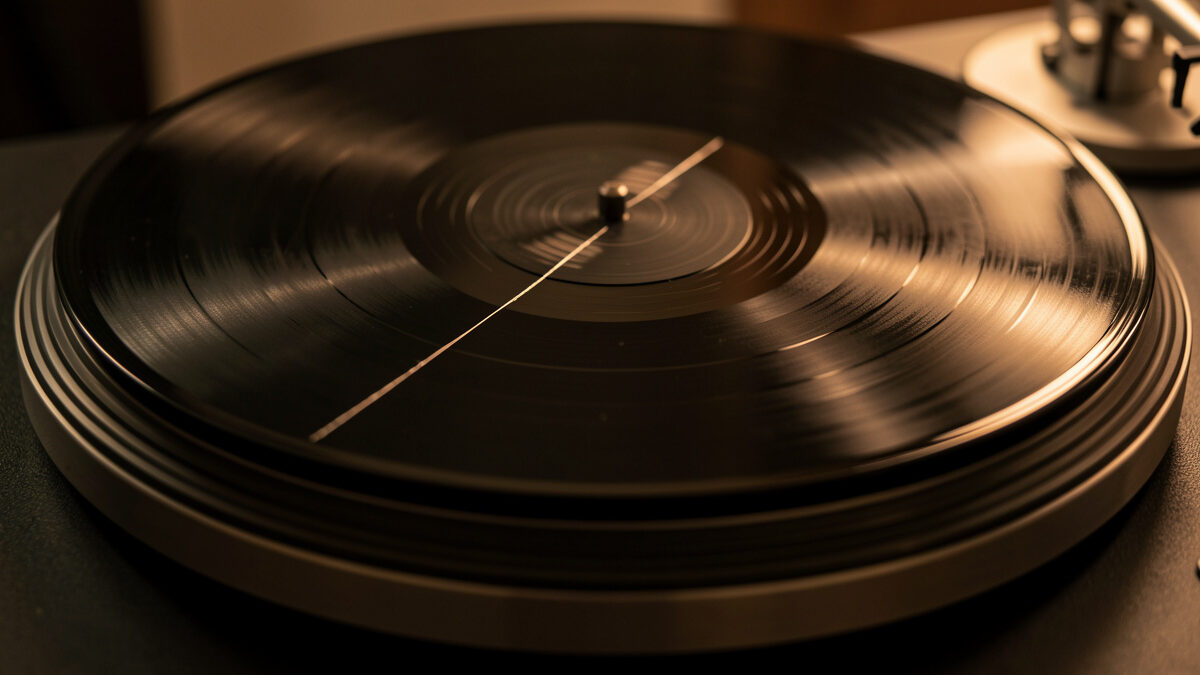
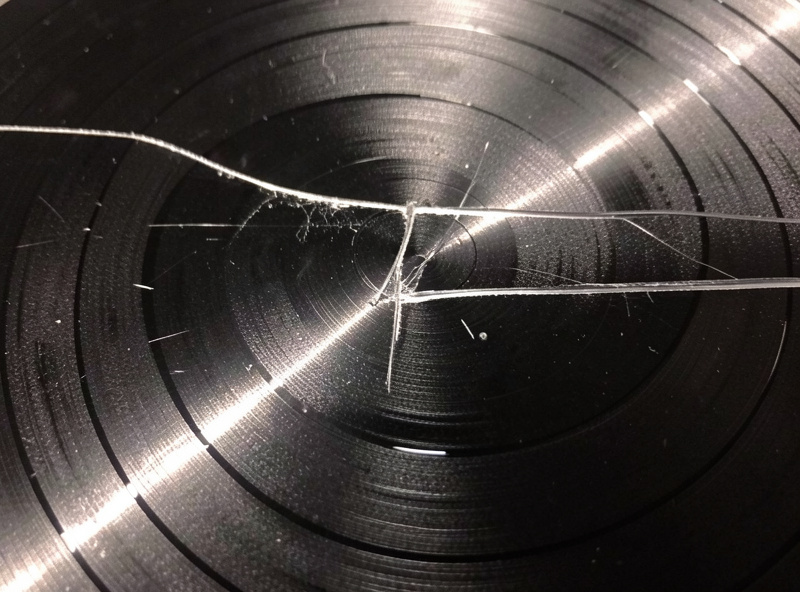
The physics is worth understanding because it makes the diagnosis foolproof. A record groove is one continuous spiral, and the stylus travels along it while the disc spins beneath. A radial scratch — a line running across the grooves — crosses the stylus path once for every full turn of the platter. So the stylus hits that damaged spot at the rotation frequency: about once every 1.8 seconds at 33⅓ RPM, or every 1.33 seconds at 45 RPM for a single.
That fixed interval is the fingerprint. Change the record to a 45 and the ticking, if it is damage on that disc, would speed up to the 45 rate — but of course each record carries its own damage. The practical test is simple: count the beat. If the tick lands on a steady ~1.8-second pulse and stays there no matter what part of the music is playing, it is a scratch turning past the stylus. This is one branch of the broader surface-noise diagnosis, and it is the branch you can be most certain about.
Ticking vs Crackle vs a Pressing Tick
Not every repeating noise is a scratch, so separate the three. A scratch ticks at the rotation rate — slow, steady, roughly every 1.8 seconds. Dust crackle is fast and random, a continuous fizz with no beat you can count. A pressing tick from a stamper flaw also repeats once per revolution, so it can sound identical to a scratch by ear — the difference is that it appears on every copy of the title and survives from the day the record was pressed.
So rhythm alone tells you “damage or pressing flaw,” and you resolve the tie by cleaning and comparing. Clean the record: if a dust-related component of the noise drops but the steady tick remains, the tick is structural — either a scratch or a pressing flaw. If the same tick shows up at the same musical moment on a friend’s copy, it is the pressing; if it is unique to your disc, it is a scratch you inflicted or inherited. For the crackle side of that comparison, the guide on crackle on every record covers the random, non-rhythmic noises.
Finding the Scratch by Eye
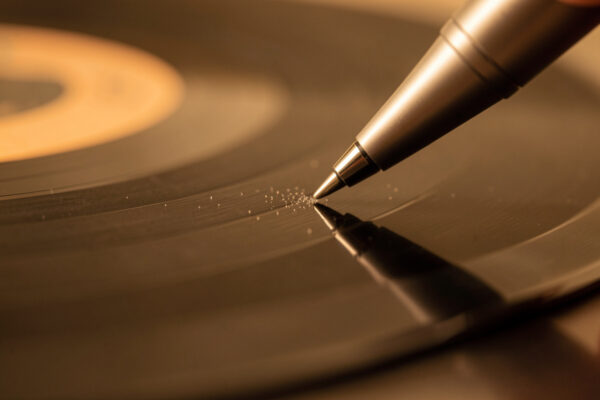
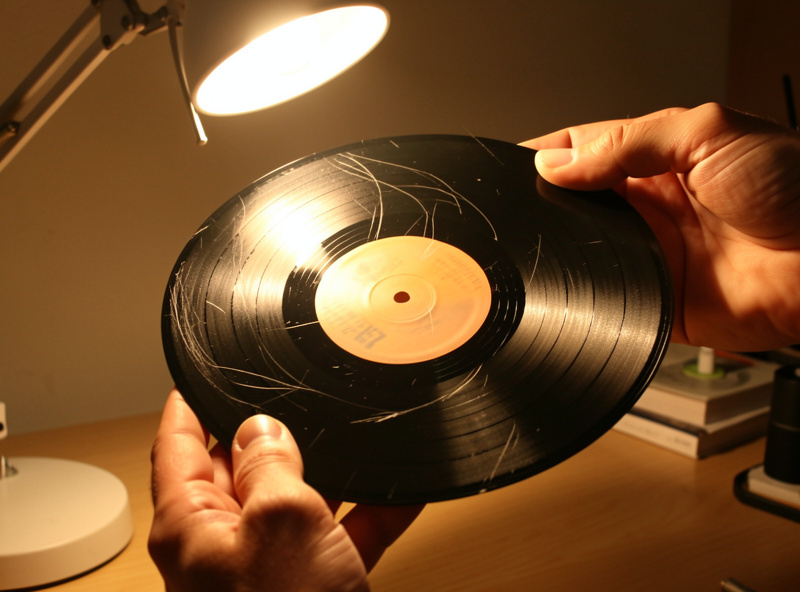
Once your ears say “scratch,” confirm it visually, because seeing it tells you how bad it is. Hold the record under a single bright light at a low, raking angle and tilt it slowly — a scratch throws a visible line or a glint that moves as you tilt. A radial scratch (running across the grooves toward the center) is the classic once-per-revolution ticker; a circumferential scuff that follows the groove can cause a longer burst of noise instead of a single tick.
Note where the damage sits, because location predicts severity. A scratch that only nicks the groove wall may just tick harmlessly; one deep enough to break through into the adjacent groove can make the stylus jump, which pushes you from a noise problem into a skipping problem. A phone torch held low across the surface is all the tool you need — the same raking-light trick I use to spot non-fill and pressing flaws.
Can You Fix or Play Through a Scratch?
Sometimes. A shallow scratch that only ticks — the stylus rides through it without jumping — is livable, and a fresh, well-aligned stylus with correct tracking force will often track it more cleanly than a worn or mis-set one. If a scratch is making the stylus mistrack or jump, a slightly higher tracking force within the cartridge’s spec range, plus correct anti-skate, can sometimes coax it through — but a deep gouge is permanent and no setting recovers it.
What will not fix a scratch is cleaning; the damage is physical, not particulate, so a wet clean removes any dust caught in the scratch but leaves the tick untouched. Be skeptical of internet “repair” tricks — wood glue peels, toothpicks, sandpaper. At best they remove loose debris; at worst they add damage and contaminate your stylus. My honest position after years at the bench is that a scratch is either playable as-is or it is not, and the productive move is to prevent new ones: careful handling, good sleeves, and never dropping the stylus by hand. Prevention beats every repair myth on the internet.
Frequently Asked Questions
What does a scratch on a record sound like?
A steady tick or pop that repeats once per revolution — about every 1.8 seconds at 33 RPM — landing in the same spot regardless of the music. Unlike random dust crackle, you can tap your foot to it. That fixed rhythm at the platter’s rotation rate is the signature of a scratch.
How can I tell a scratch from dust by ear?
Dust is fast, random, and continuous with no countable beat. A scratch is slow and rhythmic, ticking once per platter revolution. Cleaning removes dust crackle but leaves a scratch tick untouched, so if a steady tick survives a wet clean, it is physical damage, not dust.
Why does the tick happen at the same point every time?
A record groove is one continuous spiral and the disc rotates under the stylus, so a radial scratch crosses the stylus path once per full turn. At 33 RPM that is roughly every 1.8 seconds. The fixed interval is why the tick is so regular and easy to identify.
Can a scratched record be repaired?
Not really. Cleaning removes debris caught in the scratch but not the scratch itself, and internet fixes like wood glue or toothpicks risk adding damage and contaminating the stylus. A shallow scratch may play through tolerably with a fresh stylus and correct tracking force; a deep gouge is permanent.
Will a scratch damage my stylus?
A shallow scratch that the stylus rides through is generally harmless to the tip. Debris lodged in a scratch can foul the stylus, so clean the record first. The bigger risk is a deep scratch making the stylus jump, which stresses the suspension — better to lift the arm than let it slam.
Related Guides
- Vinyl Surface Noise: Causes and How to Diagnose It by Ear
- Why Does My Record Skip? A Diagnostic Guide
- Loud Pops in Quiet Passages: Dust, Damage, or Both
- Crackle on Every Record: Static, Dust, or Worn Stylus?
- Tracking Force Adjustment Guide