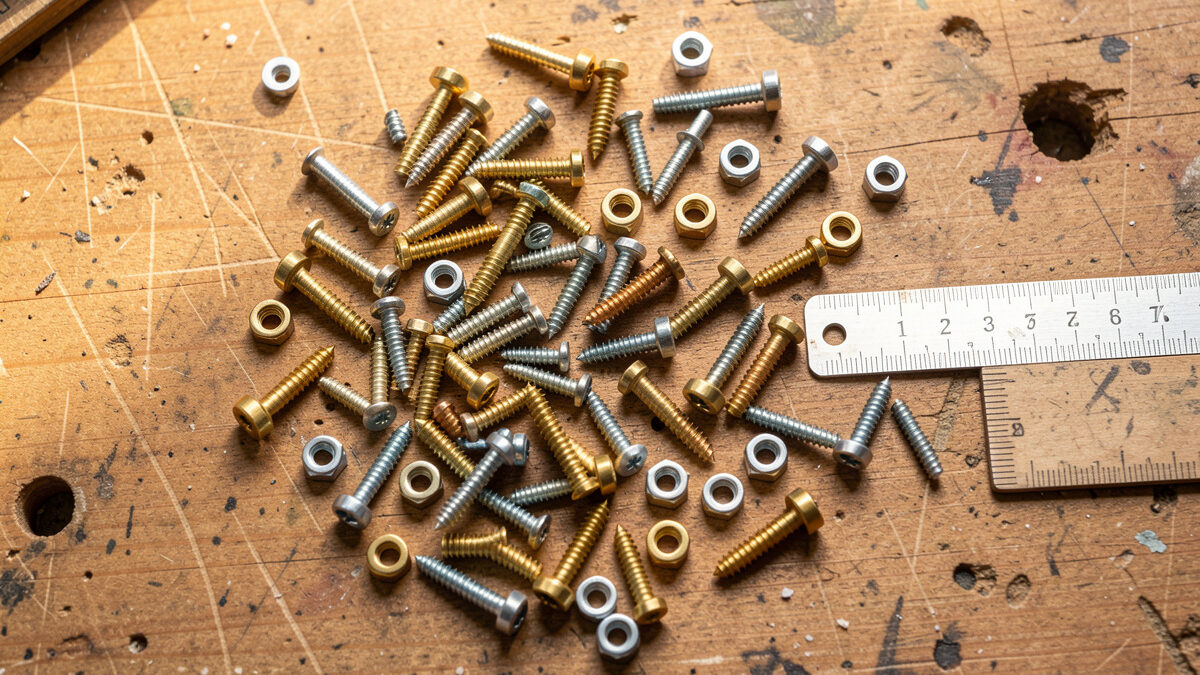
Almost every phono cartridge mounts with M2.5 metric screws — a 2.5 mm thread diameter at 0.45 mm pitch — in lengths from about 8 mm to 20 mm, plus a matching nut when the cartridge body has a smooth through-hole rather than tapped threads. A small number of older or American cartridges use imperial 2-56 screws instead, which are close enough to look identical but will cross-thread if you force the wrong one.
This is the least glamorous part of a turntable, and it is where I have seen more damaged cartridges than anywhere else. Too long a screw bottoms out before it clamps; too short and it barely catches; a steel screw cranked into a plastic cartridge body cracks the housing; and the wrong thread pitch strips a set of threads you cannot easily replace. Getting the hardware right costs a couple of dollars and five minutes of attention, and getting it wrong can cost you a cartridge. Let me save you mine.
What Thread Size Do Cartridge Screws Use?
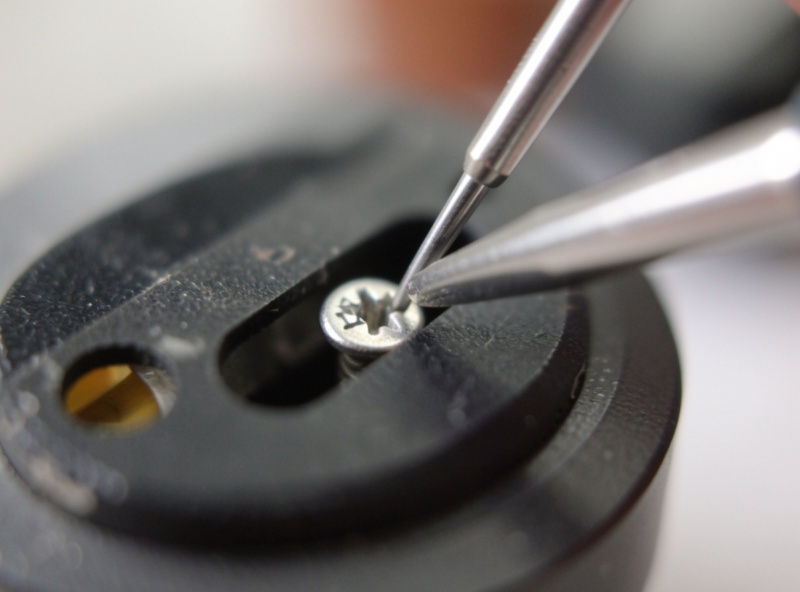
The near-universal cartridge thread is M2.5, meaning a 2.5 mm major diameter with a standard 0.45 mm pitch. This is the standard for the overwhelming majority of modern cartridges from Audio-Technica, Ortofon, Nagaoka, and most others, so an M2.5 hardware kit covers almost any mount you will encounter.
The exception worth knowing is the imperial 2-56 thread — 2.2 mm diameter, 56 threads per inch — used on some vintage and some American-made cartridges. It is close enough to M2.5 that a careless hand will start one into the other and strip the threads. If a screw resists after a turn or two when the hole looked clear, stop and check the thread standard rather than forcing it. On my bench I keep the M2.5 kit as the default and a small stash of 2-56 for the odd vintage cartridge, clearly separated so I never grab the wrong one. When in doubt, the safe move is to test-thread a screw by hand with zero downward force — the correct thread turns in freely, the wrong one binds immediately. This hardware step is one link in the broader mounting chain covered in the turntable headshell guide.
How Long Should a Cartridge Mounting Screw Be?
The right length is the shortest screw that passes through the headshell, spans any gap, and threads fully into the cartridge without bottoming out — typically 8 to 12 mm for a top-mounted screw into a tapped cartridge, and longer, 15 to 20 mm, when a nut is used underneath. Excess length is not free; it can foul the arm or the record surface.
Length matters more than people expect because cartridges vary in body height and headshells vary in thickness. A screw that is perfect on a slim cartridge bottoms out inside a taller one, clamping on the screw tip instead of the cartridge, which feels tight but holds nothing. Conversely, a screw so long it protrudes below the headshell can catch the record on a deep cut or throw off the mass at the wrong place. I keep screws in 3 mm increments — 8, 10, 12, and up — and I test-fit before I commit, running the screw down by hand to feel it seat against the cartridge rather than bottom in the thread. When a screw suddenly goes tight but the cartridge is still loose, that is the bottom-out signal, and the answer is a shorter screw, never more torque.
Are Nylon Cartridge Screws Worth Using?
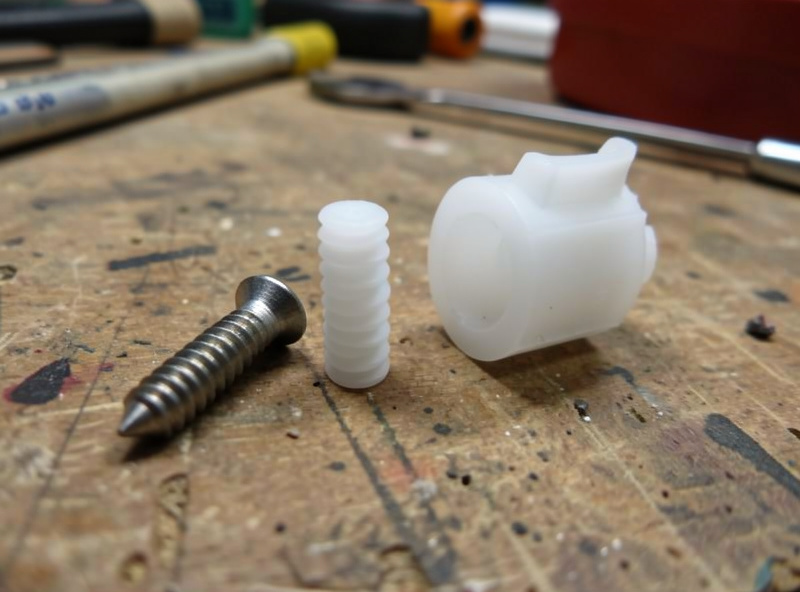
Nylon screws are genuinely useful for two reasons, and neither is the sonic-tuning claim you will read on forums. First, nylon strips before it cracks — over-torque a nylon screw and it fails harmlessly instead of splitting a plastic cartridge body. Second, being non-metallic and low-mass, a nylon screw slightly changes the mounting resonance, which some people use as a subtle tuning tweak.
I care about the first reason far more than the second. Early on I destroyed a plastic-bodied cartridge by giving a steel screw “just a bit more” past snug — the body cracked around the threaded insert and the cartridge was scrap. Since then, anything with a plastic housing gets nylon hardware, because I would rather strip a ten-cent screw than kill a cartridge. The resonance argument is real but small: swapping two steel screws for nylon shaves a little mass and changes how vibration couples, and a few setups genuinely benefit, but it is a fine-tuning move, not a foundational one. If you want to experiment, change one variable at a time and listen. The bigger structural picture — how screw choice feeds into overall headshell mass and the tonearm resonance window — is covered in the resonance section of the turntable headshell guide.
Cartridge Screw Types Compared
Here is how the common screw materials and forms stack up on the things that actually matter at the bench — mass, strip behavior, and where each one earns its place.
| Screw type | Relative mass | Strips before cracking? | Best use | Watch out for |
| Stainless steel | Highest | No | Metal-bodied cartridges, max clamp | Can crack plastic bodies if over-torqued |
| Aluminum | Low | Somewhat | Weight-sensitive setups | Softer heads strip if driver slips |
| Brass | High | No | Adding a touch of mass on purpose | Heavier than steel; deliberate choice |
| Nylon | Lowest | Yes | Plastic-bodied cartridges; resonance tweak | Lower clamp force; can loosen over time |
| Steel with nut (through-hole) | Highest | No | Cartridges with no tapped threads | Needs longer screw; watch clearance |
Read that against your specific cartridge: a metal-bodied moving-coil is happy with steel and wants firm clamping, while a plastic-bodied budget moving-magnet is exactly the case where nylon saves you from yourself. There is no single best screw, only the right screw for the body in front of you.
How Tight Should Cartridge Screws Be?
Snug, not gorilla-tight — firm enough that the cartridge cannot shift under the tracking-force spring and stylus drag, but no tighter. There is no torque spec printed on a cartridge because the safe answer is “just past finger-tight with a proper driver, then stop.” Over-torquing gains nothing and risks cracking the body or stripping the thread.
The practical test is that a correctly torqued cartridge will not rotate or slide when you press a fingernail against its side, yet the screws came up to that point with light, controlled effort rather than a grunt. I bring both screws up evenly, alternating a quarter turn each so the cartridge seats flat rather than tilting, and I keep a fingertip on the cartridge holding it against the protractor grid as the screws seat, because the final snugging drags the cartridge a hair and can spoil your alignment. Then I re-check overhang, because a screw that shifts the cartridge undoes the geometry — and skewed geometry is exactly what produces the inner-groove distortion people blame on worn records. After that, a final check of tracking force confirms nothing shifted during mounting.
What Screws Come With a Cartridge — and Should You Trust Them?
Most cartridges ship with a small hardware bag containing two or more screw lengths, nuts, and sometimes washers, and those included screws are usually the correct thread and a sensible starting length. Trust the thread standard, but not automatically the length — the maker cannot know your headshell thickness.
The included bag is where you should look first, because the manufacturer knows the thread and provides options. What they cannot provide is the exact length for your particular headshell, which is why I keep a length assortment even though I mostly use what comes in the box. Do not discard the spare screws and nuts from a cartridge you mount — label the bag and keep them, because the day you need a 12 mm M2.5 and only have 10 mm is the day the shops are closed. For the wider setup workflow that this hardware step feeds into, from mounting through calibration, see the turntable setup and calibration guide.
If you want the thread standards from the source, the mounting hardware and dimensions are documented in the cartridge datasheets published by makers like Ortofon and Audio-Technica — always worth a glance before you buy hardware that has to fit a specific body.
As an Amazon Associate I earn from qualifying purchases. A simple assorted cartridge mounting screw kit with steel and nylon in several lengths is the one accessory that pays for itself the first time you mount a cartridge.
What size screws do phono cartridges use?
The near-universal standard is M2.5, a 2.5 mm thread at 0.45 mm pitch, in lengths from about 8 mm to 20 mm. Some older or American cartridges instead use imperial 2-56 screws, which look similar but will strip if cross-threaded with M2.5.
Do nylon cartridge screws sound better?
Not measurably, but they have a real practical benefit: nylon strips before it cracks, so it protects a plastic cartridge body from over-torquing. Being low-mass and non-metallic, nylon also slightly shifts mounting resonance, which some people use as a subtle tuning tweak.
How long should a cartridge mounting screw be?
Use the shortest screw that passes through the headshell and threads fully into the cartridge without bottoming out, usually 8 to 12 mm for a tapped body and 15 to 20 mm when a nut is used underneath. Too long a screw can foul the arm or catch the record.
How tight should I make cartridge screws?
Snug, not maximum. Tighten just past finger-tight with a proper driver so the cartridge cannot shift under stylus drag, then stop. Over-torquing risks cracking the body or stripping the thread and gains nothing. Re-check alignment afterward, since final tightening can drag the cartridge slightly.
Keep Building
- Turntable Headshell Guide: Wiring, Weight, Mounting & VTA
- How to Wire a Headshell: Cartridge Lead Colors Explained
- How Overhang Errors Cause Distortion at the Record’s End
- Tracking Force Adjustment Guide for Turntables