Yes, anti-skate affects inner-groove distortion, and it is one of the few setup variables whose effect you can hear in a clean A/B. Set the bias too high and it pushes the stylus into the inner groove wall, so the right channel distorts first on loud passages near the label; set it to zero and the opposite wall takes the wear. I tested it deliberately — the same loud inner passage with anti-skate dialled high, off, and correctly set — and the result was obvious enough that I now treat anti-skate as a required part of any end-of-side distortion diagnosis.
This spoke is part of the inner-groove distortion cluster. The anti-skate setting guide covers the general method; here I narrow in on the specific question of whether anti-skate changes what you hear at the end of a side, and what the test actually showed.
What Anti-Skate Is Actually Doing
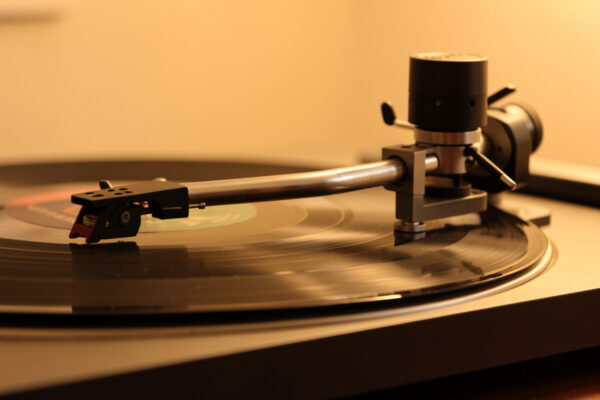
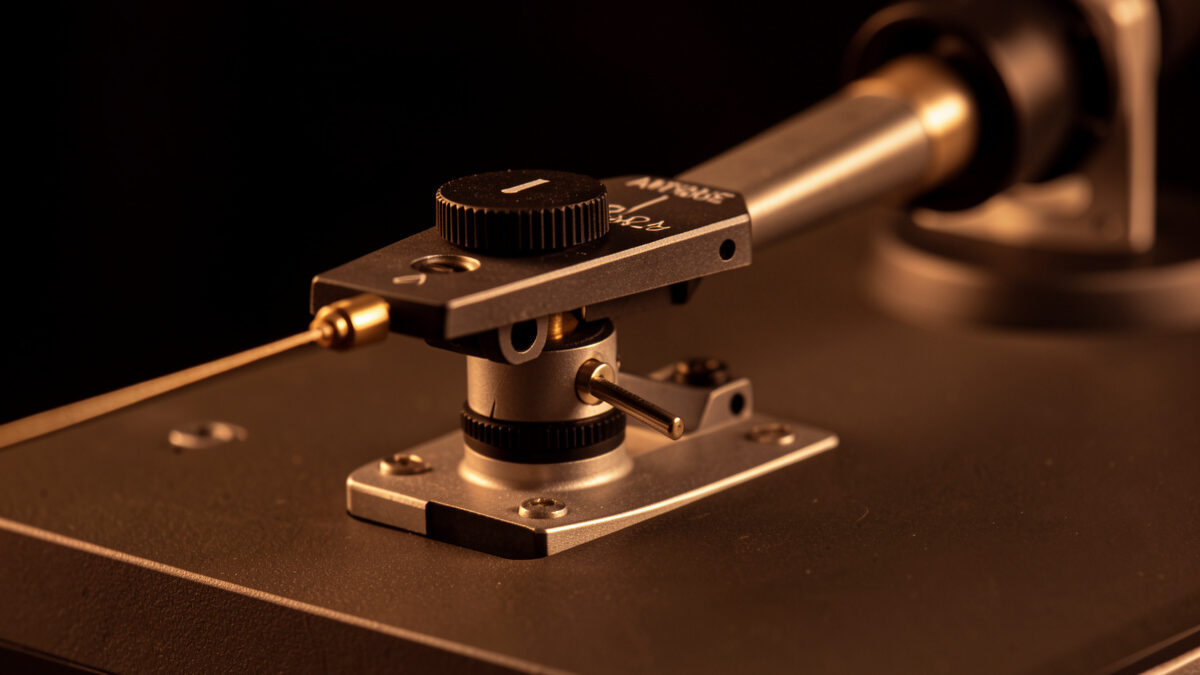
Anti-skate exists because of a sideways force built into every pivoting tonearm. The arm is angled — the cartridge is offset from the tonearm tube — and that offset, combined with the friction of the stylus dragging through the groove, generates a force that pulls the whole arm inward toward the centre of the record. Without a counter-force, the stylus rides harder against the inner groove wall than the outer one, tracing that wall with more pressure and the opposite wall with less. Anti-skate applies a small outward bias — via a weighted thread, a spring, or a magnetic mechanism depending on the arm — to cancel that inward pull and keep the stylus centred.
The reason this matters for distortion is that an unbalanced stylus does not track both walls equally. The stereo signal is the difference between the two walls, so when one wall is pressed harder it gets traced harder and the other is under-traced. The audible consequence is a channel imbalance that gets worse on loud, heavily modulated passages — exactly the kind of passage that lands at the end of a side, where the inner groove is already working hardest.
How I Tested It
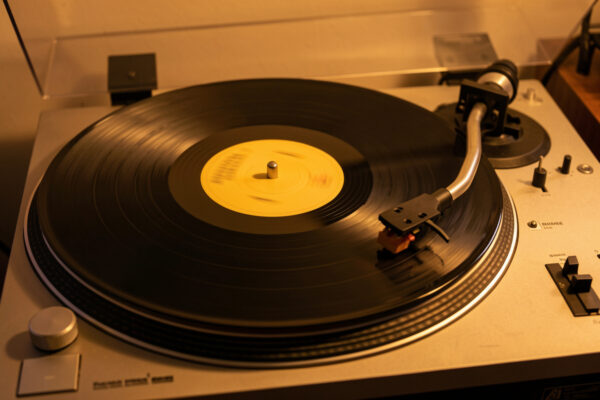
To answer the question honestly I set up a deliberate comparison rather than relying on memory. I used a record I know well with a loud, bright passage in the final two minutes of a side — the kind of passage that starts to show strain on a marginal setup. I confirmed tracking force and overhang first, so the only variable was anti-skate, then played the same passage three ways: with the bias set well above the tracking-force value, with it set to zero, and with it dialled in by the blank-groove drift method.
Between each pass I listened specifically for which channel broke up first on the loudest inner passage, and whether the breakup was symmetric or one-sided. The point of the test was not to chase a number on a dial but to hear whether anti-skate actually moves the distortion — and if so, in which direction and on which channel.
What I Heard
The result was clear and consistent with the physics. With anti-skate set high, the right channel was the first to splatter on the loud inner passage — a hard, grainy breakup on the right while the left held together a moment longer. That matches the inward pull pushing the stylus against the right-channel wall. With anti-skate set to zero, the effect reversed in character: the breakup moved toward the left channel and the arm also audibly rode the outer wall, and there was a slightly more general congestion as the stylus was no longer centred. With the bias set by the drift method — the arm drifting slowly inward on a blank lead-in groove, then backed off a fraction — both channels tracked the same loud passage more equally, and the inner-groove breakup was reduced to the point that a passage that had been clearly strained became merely loud rather than distorted.

The takeaway was not that anti-skate is magic — set it correctly and the inner groove is still the hardest part of the record to track, and force, overhang, and stylus profile still matter more overall. The takeaway was that a badly wrong anti-skate setting is enough on its own to tip a borderline inner passage from clean to distorted, and that the symptom is characteristically one-sided. If only one channel distorts at the end of a side, anti-skate is the first thing I check.
Why the Effect Shows Up at the Inner Groove
The skating force is not constant across the record. It varies with the tracking angle and the friction at the stylus, and it tends to be at its most problematic exactly where the groove is already most fragile — near the label, where groove speed is lowest and the wavelengths are tightest. So the combination of a hard-to-track passage and an off-centre stylus stacks at the inner groove, which is why an anti-skate error so often masquerades as an inner-groove distortion complaint. This is also why the symptom is so specific: the same setting can track the outer and middle of the record fine and only reveal itself in the last two minutes.
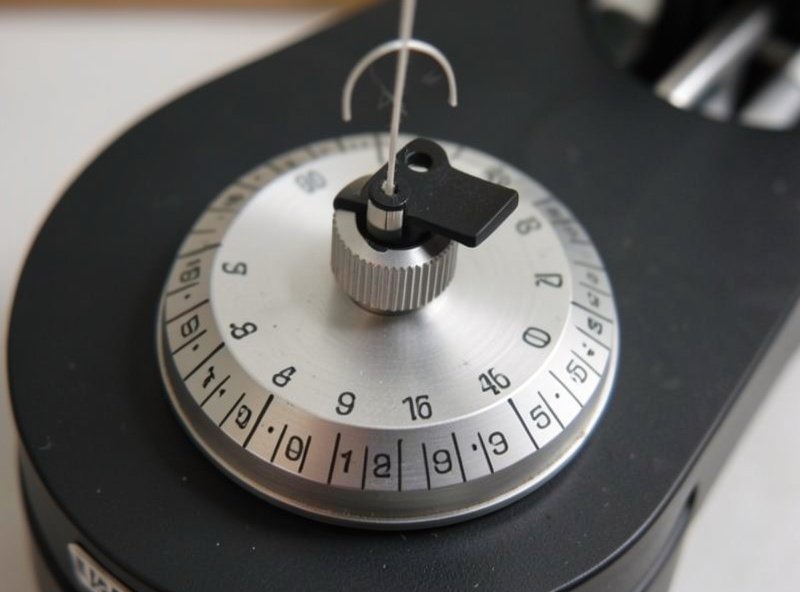
One practical caveat: the numbered markings on a consumer anti-skate dial are a guide, not a calibration. The same number means different things on different arms, and the mechanism itself — a weighted thread on a lever, a spring, a magnet — changes how the bias varies across the record. Treat the dial as a starting point and let the drift test and the listening check be the final authority. I have set the “correct” number on a dial and still heard one-sided breakup until I nudged it by ear, which is why I never trust the marking alone for an inner-groove complaint.
Setting Anti-Skate Without a Test Record
You do not need a dedicated test disc to get anti-skate close. The practical method is the blank-groove drift test: cue the stylus onto a blank, unrecorded lead-in groove — the smooth band before the music starts — and watch which way the arm drifts. With anti-skate set correctly it should drift slowly inward toward the music, not skate rapidly inward or sit perfectly still. Start with the bias set to match your tracking-force value as a baseline, then nudge it until the drift is slow and even, and back it off a fraction from there. The goal is not a number on the dial; it is symmetric tracking, which you confirm by listening for one channel breaking up before the other on a loud passage. The full general method, including the bearing-check for arms that drift for the wrong reason, is in the tonearm drifts across the record article.
When Anti-Skate Is Not Your Inner-Groove Problem
It is worth being clear about when anti-skate is innocent. If both channels distort equally at the end of a side — a symmetric grainy breakup, not a one-sided splatter — anti-skate is not the cause, because a bias error by definition unbalances the channels. Symmetric inner-groove distortion points at tracking force, overhang, or stylus profile instead, and chasing anti-skate in that case just wastes time. The diagnostic is the one-sidedness: if the breakup favours one channel, look at anti-skate and azimuth; if it is even across both, look at force and geometry. That single distinction is why the last track on the side spoke and the overhang spoke are the first stops for symmetric end-of-side distortion, while this one is the stop when the breakup is one-sided.
Frequently Asked Questions
Does anti-skate affect inner-groove distortion?
Yes. A wrong anti-skate setting unbalances the stylus in the groove, so one channel distorts before the other on loud inner passages. In a controlled test, too much bias made the right channel splatter first; zero bias shifted the wear the other way; correct bias tracked the passage far more evenly.
Should anti-skate be set to zero on a turntable?
No. Zero anti-skate lets the built-in skating force pull the stylus against one groove wall, which causes one-sided distortion and uneven record wear. It should be set so the arm drifts slowly inward on a blank groove, then backed off a fraction, with both channels tracking loud passages equally.
How do I set anti-skate for the inner groove?
Start with the bias matching your tracking-force value, then refine with the blank lead-in groove drift test: the arm should drift slowly inward, not skate or sit still. Back it off a fraction from the drift point. Confirm by listening that both channels track a loud inner passage equally.
Why does the right channel distort when anti-skate is too high?
Too much outward bias over-corrects the inward skating force and pushes the stylus against the inner groove wall, which carries the right channel. That wall gets traced too hard and distorts first on loud passages. Reducing the bias toward the drift-tested value clears it.
Is anti-skate the cause of my end-of-side distortion?
Only if the distortion is one-sided. If a single channel breaks up first at the end of a side, anti-skate or azimuth is the likely cause. If both channels distort equally, the cause is tracking force, overhang, or stylus profile, and anti-skate is not to blame.
Related Guides
- Inner-Groove Distortion Fix: The Complete Setup Guide
- Anti-Skate Setting Guide for Turntables
- Last Song on the Side Sounds Distorted: The Inner-Groove Problem
- Right Channel Quieter Than Left on Vinyl: Azimuth and Wiring
- Tracking Force Adjustment Guide for Turntables