If one channel plays noticeably quieter than the other on vinyl, the turntable is the most likely suspect, and within the table the cause is almost always one of three things: an azimuth tilt that presses the stylus harder against one groove wall, a tonearm wire or RCA connection with high resistance, or a cartridge body that has shifted in the headshell. The fastest diagnostic is to swap the left and right cables at the phono stage input before touching anything else — if the quiet channel follows the cable, the table is innocent.
This spoke belongs to the inner-groove distortion and channel balance cluster. It is specifically about a level imbalance — one side playing quieter — which is a different branch from one channel sounding noisier; that symptom is covered in one channel noisier than the other, because the diagnosis does not overlap the way you might expect.
What Channel Imbalance Means on Vinyl
By channel imbalance I mean a steady difference in level between left and right — one side is audibly a few decibels down across the whole record, not a noise floor problem and not intermittent dropout. A small imbalance of under a decibel is normal and below what most rooms reveal; anything you can clearly hear is typically two decibels or more, and that is worth tracking down because it collapses the stereo image toward the loud side and is almost always fixable.
The thing to establish first is that the imbalance is real and not your ears, your room, or your speakers. A quick balance test: play a mono record, or sum to mono if your preamp allows it, and stand in the sweet spot. A true imbalance pulls the phantom centre image off to one side. If the centre is solid and central, what you are hearing is probably a recording or a speaker-placement issue, not the table.
The Cable-Swap Test: Do This First
Before adjusting anything on the turntable, isolate where the loss is happening. Pull the two RCA plugs out of the phono stage input and swap them — left into the right input, right into the left. Play the same passage.
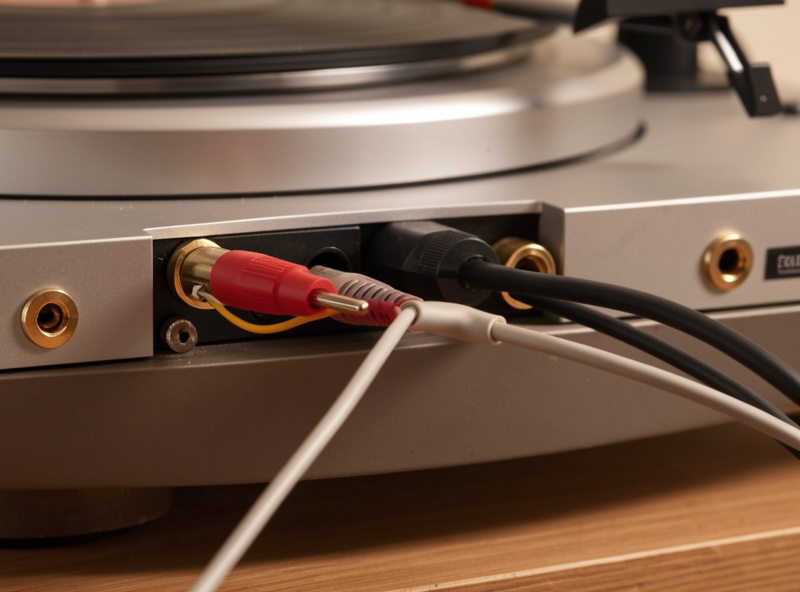
If the quiet channel follows the cable — the opposite side is now quiet — the problem is downstream of the turntable: the interconnect, the phono stage input, the amplifier, or a speaker. If the same physical side stays quiet after the swap, the turntable itself is the variable, and you move on to azimuth and wiring. This single test saves more wasted adjustment time than any other, because it stops you chasing geometry when the real fault is a half-oxidised RCA plug.
Azimuth: The Most Common In-Table Cause
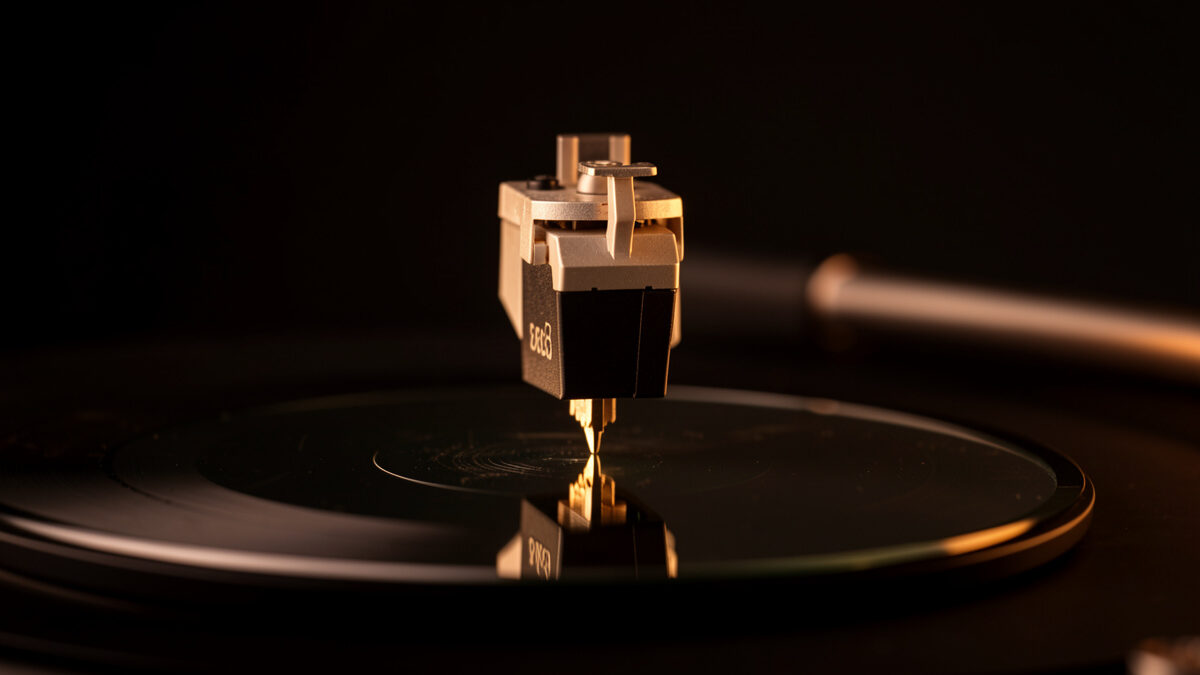
If the table is at fault, azimuth is the first place I look. Azimuth is the front-to-back lean of the stylus in the groove — whether the cantilever sits perpendicular to the record or tilts left or right when you view it from the front. The stereo signal is encoded as the difference between the two groove walls: the left wall carries the left channel, the right wall the right. Lean the stylus even a degree or two and it presses harder into one wall than the other, tracing that wall with more energy and the opposite wall with less. The result is a direct level imbalance between the channels, plus added crosstalk where one channel bleeds into the other.

I set azimuth in two stages. First by eye, using a small mirror laid flat on the platter: when the stylus is perpendicular, the cantilever and its mirror image meet in a straight line with no kink at the surface. That gets you within a fraction of a degree. Then I confirm with a crosstalk measurement, because the ear-and-mirror method is close but not exact, and the right final number is the one that gives equal crosstalk in both directions. The full method, including the crosstalk check, is in the azimuth adjustment guide.
One reason the mirror alone is not the final word: on some cartridges the stylus tip is not mounted perfectly perpendicular to the cantilever at the factory, so a cantilever that looks dead-vertical in the mirror can still be tracing the two walls unequally. The crosstalk reading is what tells the truth, because it measures the actual electrical output of each channel rather than the mechanical angle you are guessing at by eye. If you have chased azimuth by reflection and a channel is still a decibel off, trust the measurement and nudge the arm a fraction at a time until the crosstalk is symmetric — small movements, re-checked, because a quarter of a degree of tilt moves the balance more than you would expect.
Tonearm Wiring and Cartridge Shift
If azimuth is correct and a channel is still down, the next suspects are physical. The thin wires that run from the cartridge pins, through the tonearm, and out to the RCAs can develop a high-resistance solder joint or a partial break, and that resistance drops the level on that channel. A cartridge body that has worked slightly crooked in the headshell, or a headshell whose internal tags are not all seated firmly, does the same thing. None of these show up as an obvious fault until you measure them.
The practical check is continuity and resistance on each channel from the cartridge pins to the RCA tips, ideally with the cartridge disconnected so you are reading the arm alone. A good tonearm lead measures close to its rated resistance on both channels and within a fraction of an ohm of its twin. A reading that is markedly higher on one side, or that fluctuates when you wiggle the cable, has found your fault. The rewire path, if it comes to that, is covered in the tonearm upgrade guide, but most of the time reseating the headshell tags and cleaning the RCA contacts clears it.
The Cartridge and Phono-Stage Checks
Two last possibilities, both worth ruling out before you conclude the arm is bad. First, the cartridge itself: a moving-magnet cartridge has two coils, and a fault in one — a partially shorted winding — will drop that channel’s output. Rare, but it happens, and the way to catch it is to swap in a known-good cartridge and see if the imbalance follows the cart. Second, the phono stage: some budget stages have measurably uneven gain between channels. The cleanest way to test that is to feed the same mono test tone into both inputs and compare the output levels; if the stage itself is out of balance, no turntable adjustment will fix it. Loading and capacitance can also tilt the response of a moving-magnet, though usually in the treble rather than as an overall level drop — the mechanism is in cartridge loading explained.
How I Work a Channel-Imbalance Complaint
In order, the sequence I use on the bench, cheap before expensive.
1. Cable swap at the phono stage input. Determines table versus downstream in thirty seconds.
2. Confirm with a mono test that the imbalance is real and how large it is.
3. Check azimuth by mirror, then confirm with crosstalk. This is the most common fix.
4. Reseat headshell tags and clean RCAs. Resolves a surprising number of partial-dropout faults.
5. Measure tonearm continuity if the above finds nothing. A high-resistance channel is a rewire or repair.
6. Swap cartridges to rule out a cart coil fault, and test the phono stage gain balance if you have the gear.
Frequently Asked Questions
Why is my right channel quieter than the left on vinyl?
It is usually an azimuth tilt pressing the stylus harder into one groove wall, a tonearm wire or RCA with high resistance, or a cartridge body shifted in the headshell. Swap the left and right cables at the phono stage first; if the quiet side follows the cable, the turntable is not at fault.
How do I tell if channel imbalance is the turntable or the amplifier?
Swap the left and right RCA plugs at the phono stage input and play the same passage. If the quiet channel switches sides, the fault is downstream of the turntable. If the same side stays quiet, the turntable, azimuth, or tonearm wiring is the cause.
Does azimuth affect channel balance on a turntable?
Yes. Stereo is encoded as the difference between the two groove walls, so a stylus tilted left or right presses harder into one wall and traces it with more energy, directly unbalancing the channels and adding crosstalk. Set azimuth perpendicular by mirror and confirm with a crosstalk measurement.
Can a bad RCA cable cause one channel to be quiet on vinyl?
Yes. A high-resistance solder joint, a partial break, or an oxidised RCA plug drops the level on that channel. Reseating the headshell tags and cleaning the contacts often clears it; a continuity check from cartridge pins to RCA tips confirms whether a rewire is needed.
How much channel imbalance is normal on vinyl?
Under about one decibel is normal and usually inaudible in a real room. Anything you can clearly hear is typically two decibels or more and points at a real fault, most often azimuth or a connection, both of which are fixable.
Related Guides
- Inner-Groove Distortion Fix: The Complete Setup Guide
- Azimuth Adjustment for a Turntable Cartridge
- One Channel Sounds Noisier Than the Other on Vinyl
- Turntable Tonearm Upgrade Guide: Rewire, Headshell, or New Arm
- Cartridge Loading Explained