
Sibilance on vinyl — the “sssh” on vocals turning into a spitty, distorted T sound — is a stylus tracing problem, not a mastering fault. In nearly every case I chase it to one of three causes: a stylus tip that is too wide or worn to track the fast transient of a sibilant, a tracking force set too light to hold the groove through that transient, or a tracking-error alignment fault that is worst exactly where sibilants are cut loudest. The good news is all three are measurable and fixable on the bench.
This is the spoke in the inner-groove distortion cluster that isolates vocal sibilance specifically. The hub covers the whole family of end-of-side and channel-balance faults; here I work through why vocals spit, how to tell a worn tip from an alignment problem, and the order I check things when a sibilance complaint lands on my bench.
What Sibilance Actually Is on a Record
Sibilants — the s, sh, z and tch sounds in vocals — are short, loud bursts of high-frequency energy, mostly between roughly 4 and 9 kHz, with very fast rise times. To cut that onto a record, the lathe has to carve tight, steep undulations into the groove wall. To play it back cleanly, your stylus has to accelerate fast enough to follow those undulations exactly. When it cannot — because the tip is too blunt to resolve them, or because it cannot maintain contact through the sharp acceleration — the stylus traces a rounded-off version of the waveform and the phono stage turns the error into harmonic and intermodulation distortion. What you hear is the sibilant itself gaining a hard, edgy, whistling overtone: the “spit.”
This is the same family of tracing failure that causes end-of-side harshness, and the physics is identical. The only thing special about vocals is that sibilants concentrate a lot of that hard-to-trace energy into a recognisable sound, so the distortion is obvious where a cymbal or a brushed snare might hide it. The dedicated walk-through of the end-of-side version is in last track on the side sounds distorted; the mechanism here is the same.
The Stylus Profile Is Usually the Culprit
If I had to point at one cause for chronic sibilance, it is the stylus profile. A conical — spherical — tip has a relatively large contact radius. Physically, it cannot resolve the tight wavelengths of a sibilant at playback speed, so it rounds them off and the distortion is baked in no matter how perfectly the table is aligned. An elliptical, and better still a nude elliptical or a Shibata/MicroLine, has a smaller front-to-back contact radius and traces the same groove far more faithfully. Moving from a bonded conical to a nude elliptical is the single biggest sibilance improvement I hear, more than any VTA or cleaning tweak.
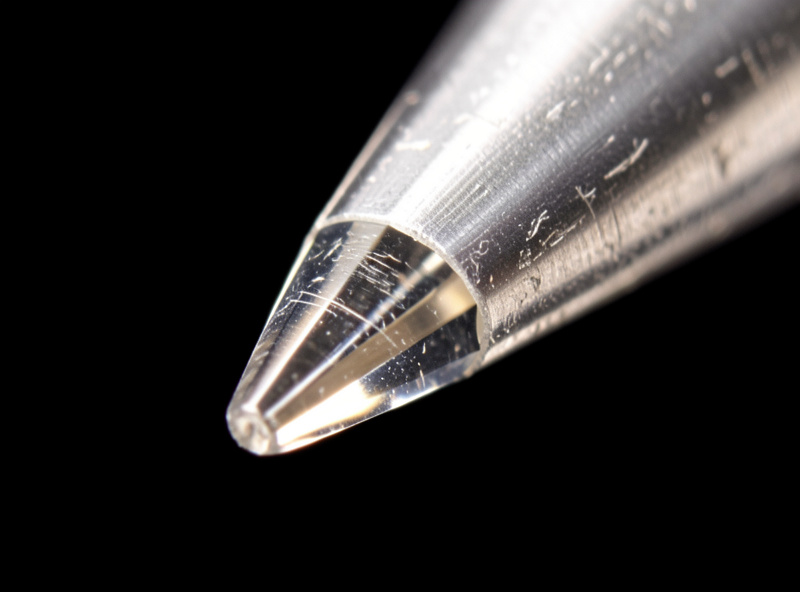
That is the gradual, chronic case. The sudden case is different and more urgent. If sibilance appears across every record more or less overnight, on a cartridge that used to track clean, the tip is almost certainly chipped or worn flat. A worn tip has effectively become a wider, rougher stylus, and it will sibilate and distort exactly like a conical that is past its hours. That is a replace-the-stylus situation, not an alignment one — the timeline for when wear is actually the cause is laid out in when to replace your turntable stylus. The full profile tradeoffs are in the stylus types comparison.
Tracking Force and Anti-Skate Have a Say
A sharp stylus still sibilates if it cannot hold the groove. Run the tracking force too light and the stylus momentarily loses contact with the groove wall on the sharp sibilant transient, then re-lands — and every micro-hop is a burst of distortion exactly on the consonant. Every cartridge has a specified range, and for sibilance the right setting is almost always in the upper third of that range, not the bottom, because the extra force holds the tip in the groove through the acceleration. I set it with a digital gauge to 0.01 g and never trust the calibration dial alone; the full method is in the tracking force adjustment guide.
Anti-skate matters here too, because a sibilant cut hard on one channel will distort on that channel first if the bias force is pushing the stylus off-center. The classic symptom is the right-channel sibilant spitting before the left, which is the tell that anti-skate is set too high relative to the tracking force. The interaction between anti-skate and end-of-side distortion is worked through separately in anti-skate and inner-groove distortion, but the short version is that the two settings have to move together.
Alignment and Why Sibilance Gets Worse at the End of a Side
Tracking error from a pivoting arm is not constant across the record — it is highest at the outer edge and the inner groove, and lowest at the two null points the alignment geometry places on the disc. So a vocal sibilant that sounds clean at the start of a side and spitty at the end is almost certainly hitting the high-tracking-error inner region. Re-checking the overhang and null-point alignment is one of the most effective sibilance fixes, because it moves the worst error off the part of the record where sibilants land.
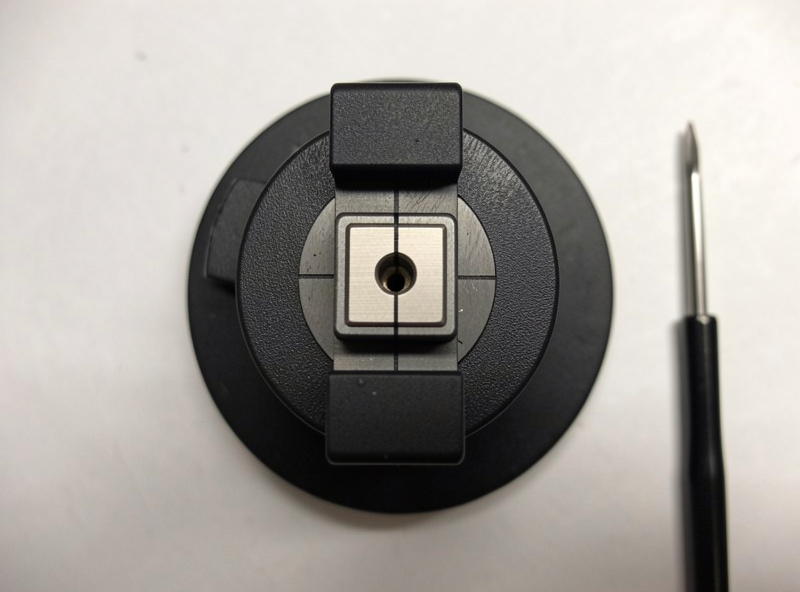
I use a two-point protractor — Baerwald null points — and confirm both nulls with the cartridge squared in the headshell. The full protractor walkthrough is in the cartridge alignment guide. The single most common alignment mistake I see is a cartridge that is straight in the headshell slots but not actually on the correct overhang, so the null points fall in the wrong place and the inner-groove error never gets cleaned up.
How I Isolate the Cause on the Bench
When a sibilance complaint comes in I work it in a fixed order, because the fixes range from free to expensive and the cheap ones get checked first.
1. Find the pattern. Is it one record, every record, or only the end of sides? One record at one spot points at the pressing or groove damage; every record points at the table; only the inner groove points at alignment.
2. Re-check tracking force. Gauge it, set it to the upper third of the cartridge range. Free, and clears a surprising fraction of cases.
3. Re-check alignment. Two-point protractor, confirm overhang and both nulls, re-square the cartridge. Free.
4. Consider the stylus. If the alignment and force are right and it still spits, the profile — or wear — is the ceiling. This is the step that costs money, which is why it comes last.
When It Is Actually the Record
Some sibilance is pressed in and no setup will remove it. A hot cut at the plant, or a master that already had pushed sibilants, will spit on a perfectly aligned deck with a Shibata because the energy is there on the groove wall and a faithful stylus reproduces it faithfully. The tell is consistency: if the same sibilant spits on a second cartridge, or on a different pressing of the same album, your table is not the variable. If a known-clean pressing plays silent, your table is. Surface noise and pressing faults live in the same diagnostic space, and the surface noise diagnosis guide covers separating the two by ear.
Frequently Asked Questions
Why do vocals sibilate on vinyl?
Sibilants are short bursts of high-frequency energy cut as tight undulations in the groove wall. A stylus tip that is too wide, worn, or running too light cannot accelerate fast enough to trace them, so it rounds them off and the error becomes the hard, spitty distortion you hear on the consonant.
Is sudden sibilance a sign of a worn stylus?
Usually yes. If sibilance appears across every record on a cartridge that used to track clean, the tip is likely chipped or worn flat, which effectively widens it. That is a replace-the-stylus problem, not an alignment one.
Does tracking force affect sibilance?
Yes. Run too light and the stylus briefly loses the groove wall on the sharp sibilant transient, then re-lands, producing a burst of distortion. Setting force to the upper third of the cartridge range holds the tip in the groove and clears much of it.
Will an elliptical stylus fix sibilance?
Often it is the biggest single fix after alignment. An elliptical, and better a nude elliptical or Shibata, has a smaller contact radius that resolves the tight sibilant wavelengths a conical tip rounds off. On a misaligned arm it can still distort, so geometry comes first.
Why is sibilance worse at the end of a vinyl side?
Tracking error from a pivoting arm is highest at the inner groove, and the groove there is moving more slowly so the sibilant wavelengths are tighter. Both effects stack at the end of the side, so a vocal that tracks clean at the start can spit at the finish until alignment is corrected.
Related Guides
- Inner-Groove Distortion Fix: The Complete Setup Guide
- Last Song on the Side Sounds Distorted: The Inner-Groove Problem
- Stylus Types Compared: Conical vs Elliptical and Beyond
- When to Replace Your Turntable Stylus
- How to Align a Turntable Cartridge: Protractor and Null Points