Speaker sensitivity tells you how loud a speaker plays per watt, measured in decibels at 1 watt and 1 meter, and it is the single most important spec for matching a speaker to your amplifier. Every 3 dB of sensitivity halves the power you need, so an 87 dB speaker needs twice the watts of a 90 dB one to play equally loud, and a low-sensitivity speaker can starve a modest amp.
This is the spec that trips up more buyers than any other, and getting it right is the difference between an effortless system and one that strains and clips. I match speakers to amps the way I match a cartridge to a phono stage — by the numbers first, then by ear. Here is how sensitivity and impedance actually work, how to read a manufacturer’s claim honestly, and how to pair watts to your speakers and your room.
What Sensitivity Actually Measures
Sensitivity is the sound level a speaker produces from 1 watt of input, measured 1 meter away, quoted in dB. A figure of 88 dB/W/m means one watt gets you 88 dB at a meter; higher numbers mean the speaker converts power into volume more efficiently, so it goes louder on the same amp.
The reason this matters is that amplifier power is expensive and decibels add up slowly. The human ear needs roughly ten times the power to perceive a sound as “twice as loud,” and a real listening session has peaks far above the average level. A sensitive speaker — say 90 dB and up — reaches satisfying volume on a handful of watts, which is exactly why high-efficiency designs pair so well with low-power tube amps. An insensitive speaker — low-to-mid 80s dB — demands real wattage to get the same result, and if the amp runs out, you hear strain and distortion instead of more volume. Sensitivity sits at the heart of the whole speaker-for-vinyl decision.
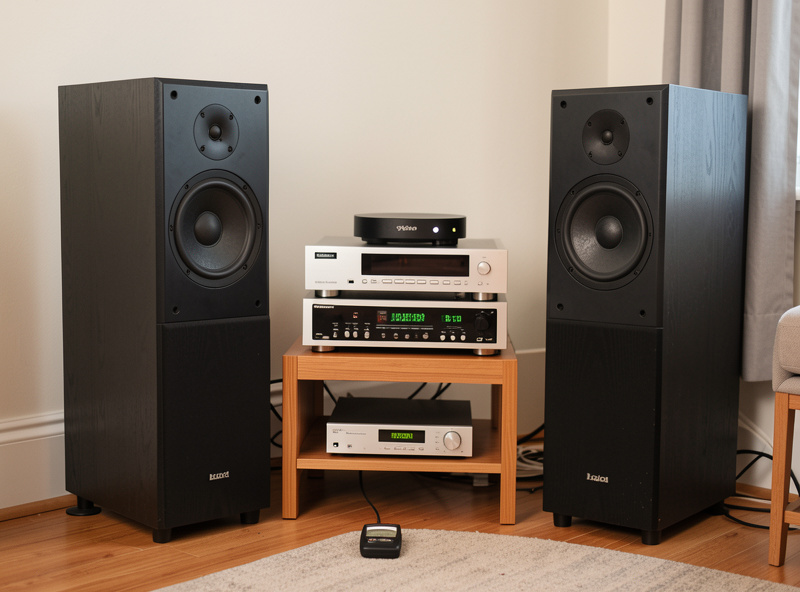
The 3 dB Rule and Why Watts Run Out Fast
Every 3 dB increase in level requires double the amplifier power, a direct consequence of how the decibel scales with power. Going from 1 watt to 2 watts adds 3 dB; reaching 10 dB louder — which sounds roughly twice as loud — takes ten times the power. This is why a speaker’s sensitivity matters far more than the amplifier’s headline wattage.
Run the math and the picture is stark. On an 87 dB speaker, 1 watt gives 87 dB at a meter, 10 watts gives 97 dB, and 100 watts gives 107 dB — and you lose level as you sit farther away. Music peaks can be 15 to 20 dB above the average level, so even moderate listening pulls surprising wattage on peaks. Drop the speaker’s sensitivity by 6 dB and you suddenly need four times the amplifier power for the same output. This is the trap: a buyer pairs a low-sensitivity speaker with a modest amp, turns it up, and the amp clips — and clipping, not lack of volume, is what actually destroys tweeters. Matching sensitivity to amp power keeps you out of that zone.
Impedance: The Second Half of the Match
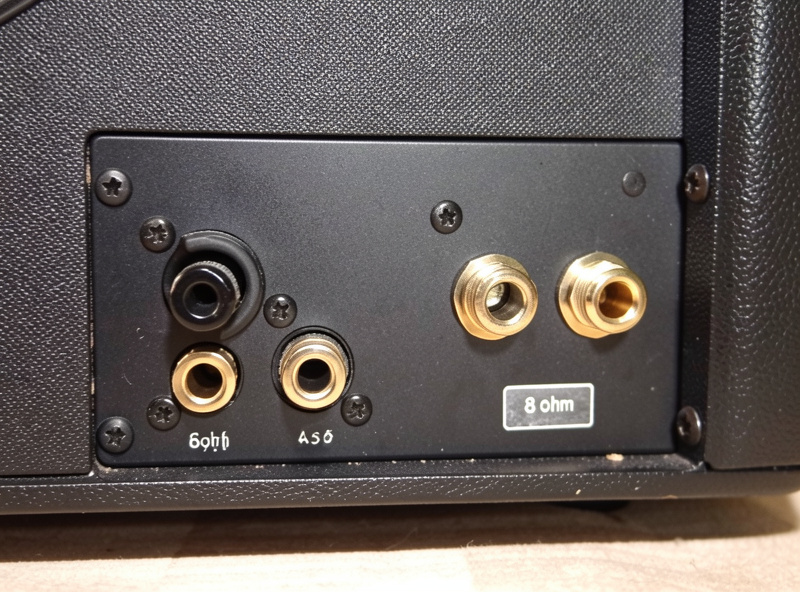
Impedance, measured in ohms, is how much the speaker resists the amplifier’s current — and a lower impedance demands more current from the amp. An 8-ohm speaker is the safe default that almost any amp drives happily; a 4-ohm speaker needs an amplifier rated to handle the lower load, or it will distort and overheat.
Sensitivity tells you how many watts you need; impedance tells you whether your amp can deliver them cleanly. Manufacturers quote a “nominal” impedance, but a speaker labeled 8 ohms can dip to 4 ohms or lower at certain frequencies, and that dip is the real load your amp must survive. A robust solid-state amp shrugs it off; a small tube amp or a budget receiver may not. For a vinyl rig built on a modest tube integrated or entry receiver, I stay with true 8-ohm speakers and a sensible sensitivity, leaving the demanding 4-ohm loads to powerful amps. Match both numbers, not just the watts.
How to Read a Sensitivity Spec Honestly
Treat a published sensitivity figure as optimistic by a decibel or two, because some makers quote a 2.83-volt measurement that flatters low-impedance speakers rather than the true 1-watt figure. A 2.83V rating on a 4-ohm speaker actually represents 2 watts, inflating the number by 3 dB.
The honest reading takes two steps. First, check whether the number is quoted at 1 watt or 2.83 volts — on a 4-ohm speaker those differ by 3 dB, and the volt figure is the flattering one. Second, assume real-world in-room sensitivity is a touch below the anechoic lab figure. None of this requires a meter; it requires knowing that the spec is marketing as much as data. When I compare two speakers, I weight a genuine 1-watt rating over a volt rating and give the benefit of the doubt to the more conservative maker. The same skepticism applies to frequency-response claims, which are covered in the main speakers guide.
Matching Power to Your Speakers and Room
For a small room and a sensitive speaker (88 dB and up), 15 to 30 watts is plenty; for a medium room or a lower-sensitivity speaker (mid-80s dB), aim for 50 watts or more of clean power. More clean headroom is always safer than a marginal match, because amps clip when they run out, and clipping kills tweeters.
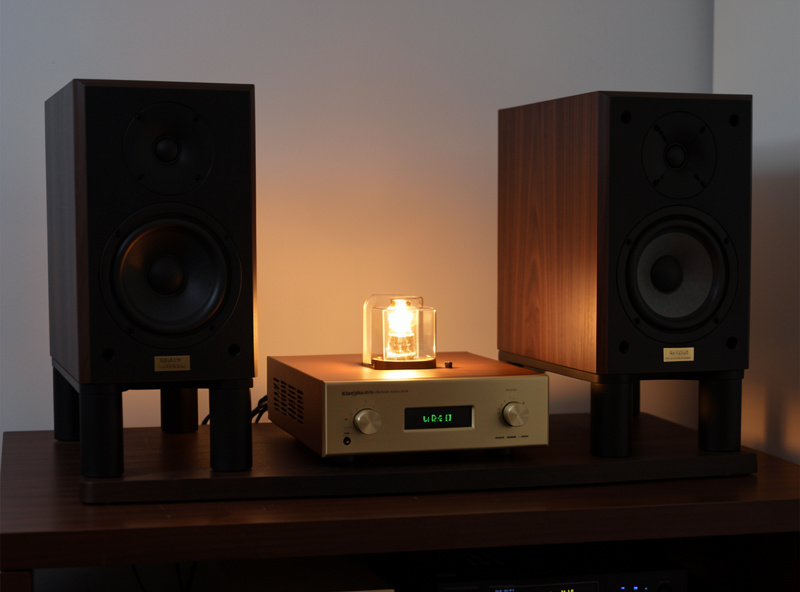
Room size multiplies the demand: a bigger room and a farther listening seat both cost you level, so they want either more sensitivity or more watts. My rule of thumb for a vinyl room is to over-provide clean power rather than under-provide — an amp loafing at a quarter of its rating sounds relaxed and dynamic, while one pushed to its limit sounds hard and risks the speakers. If your speaker is sensitive, a low-power tube amp can be glorious; if it is not, do not starve it. As an Amazon Associate I earn from qualifying purchases. When the amp is the weak link, a search for a integrated amplifier with a phono stage is a sensible starting point.
Sensitivity vs Amplifier Power Needed
| Speaker sensitivity | Relative power for same volume | Suits | Room fit |
|---|---|---|---|
| 92 dB and up | Lowest (baseline) | Low-power tube, single-ended amps | Any room on few watts |
| 89–91 dB | About 1.5–2× baseline | Tube or modest solid-state | Small to medium |
| 86–88 dB | About 2–4× baseline | 40W+ integrated | Small to medium with watts |
| 83–85 dB | About 4–8× baseline | Powerful solid-state (50W+) | Needs real power, any room |
Frequently Asked Questions
What is a good speaker sensitivity for vinyl?
For a typical vinyl rig, 86 dB or higher keeps things easy on most amplifiers, and 88 dB and up pairs comfortably with low-power tube amps. Below about 84 dB you need a powerful amp with real headroom to avoid strain and clipping.
Does higher sensitivity mean better sound?
No. Sensitivity measures efficiency, not quality. A high-sensitivity speaker is easier to drive and pairs well with low-power amps, but it is not inherently better sounding. Choose for tonal balance and room fit, then match the amp to the sensitivity.
How many watts do I need for my speakers?
It depends on sensitivity and room size. A sensitive 88 dB-plus speaker in a small room is happy on 15 to 30 watts, while a mid-80s dB speaker or a larger room wants 50 watts or more of clean power. More clean headroom is always safer than a marginal match.
Can a low-power amp damage my speakers?
Yes, indirectly. When a small amp is pushed past its limit it clips, sending a distorted signal that overheats and destroys tweeters. A clean, more powerful amp loafing well below its rating is actually safer for speakers than an underpowered one driven hard.
What does 8 ohms versus 4 ohms mean for matching?
Impedance is how hard the speaker is to drive. An 8-ohm speaker is the safe default that almost any amp handles, while a 4-ohm speaker demands an amp rated for the lower load and more current. Pair 4-ohm speakers only with amps comfortable driving them.