For most vinyl rooms, a bookshelf speaker on stands is the better choice — it images more precisely, costs less for the same driver quality, and is easier to place and to isolate from the turntable. Floorstanders win when the room is large, you listen loud, or you want deep bass below 40 Hz without adding a subwoofer.
This is one of the most over-fought arguments in the hobby, and it does not have a single answer. I run both kinds in different rooms, and the choice comes down to your space, your volume, and how the speaker interacts with the deck. Below I break the decision into the factors that actually change the result for a record player, rather than the spec-sheet bragging that usually drives the debate.
The Core Difference
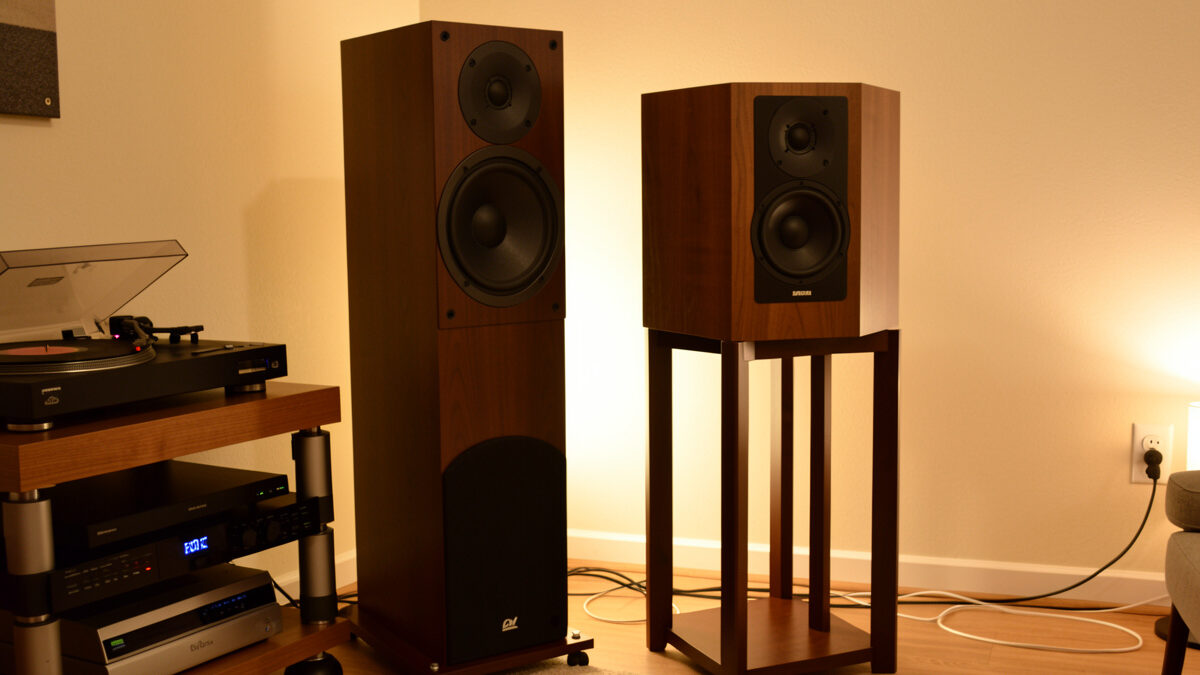
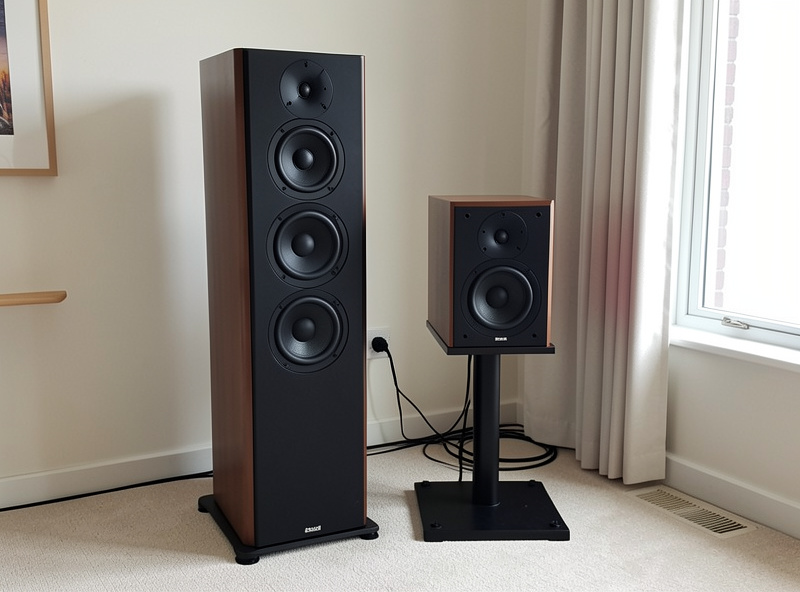
A bookshelf is a compact cabinet that needs a stand and reaches down to roughly 45 to 50 Hz; a floorstander is a taller cabinet with more drivers and internal volume that extends into the 30s of Hz. The floorstander trades placement ease and imaging precision for bass extension and the ability to pressurize a big room.
Everything else follows from cabinet size. The floorstander’s extra internal volume and larger or multiple bass drivers let it move more air, so it plays deeper and louder without strain. The bookshelf’s small front baffle and single mid-bass driver produce a tighter, more focused stereo image and a smaller, less excitable footprint. Neither is “better” — they are tuned for different rooms. The full menu of speaker types sits in the speakers for vinyl listening guide, and if you have already settled on the smaller box, the best bookshelf speakers for vinyl shortlist is the next step.
Room Size Decides More Than Anything
Room size is the deciding factor: under about 20 square meters, a floorstander often overloads the space with bass that the room cannot control, while a bookshelf images cleanly. Above that, the bookshelf can sound thin and a floorstander fills the room properly.
I have heard expensive floorstanders sound worse than modest bookshelves simply because they were jammed into a small room. Big speakers excite room modes — standing waves that boom and cancel at specific frequencies — and a small room has fewer ways to tame them. In a small or near-field setup, the bookshelf’s gentler bass output actually sounds more even because it stops exciting the worst modes. In a large, open-plan room, the bookshelf runs out of energy and the floorstander comes into its own. Measure your room before you shop; the speaker has to match the cubic volume it plays into.
Imaging and the Listening Seat
Bookshelf speakers generally image more precisely because their small baffle and single point of high-frequency origin create a tighter, more focused stereo picture. Floorstanders with multiple drivers spread the sound’s origin vertically, which can soften pinpoint imaging unless you sit at the right distance.
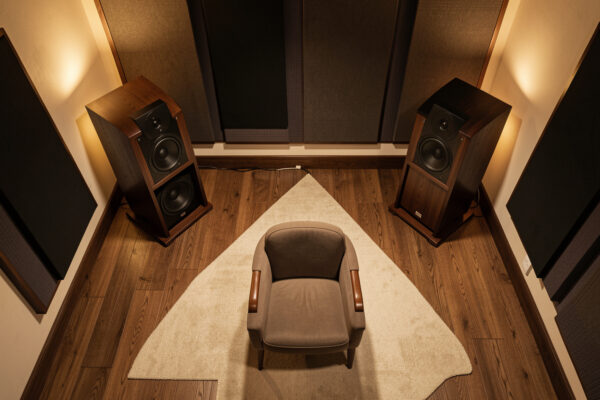
For a seated, attentive vinyl listener — the person who drops the needle and stays in the chair — imaging matters. A bookshelf on stands puts the tweeter at ear height and the drivers close together, so instruments occupy clear, stable positions across the soundstage. A tall floorstander has its drivers spread over a meter of height, and unless you sit far enough back for them to integrate, the image can smear vertically. This is part of why I lean bookshelf for a dedicated listening room: records reward the focus. If you stand and move around while listening, the difference matters less.
Feedback: Floorstanders and the Turntable
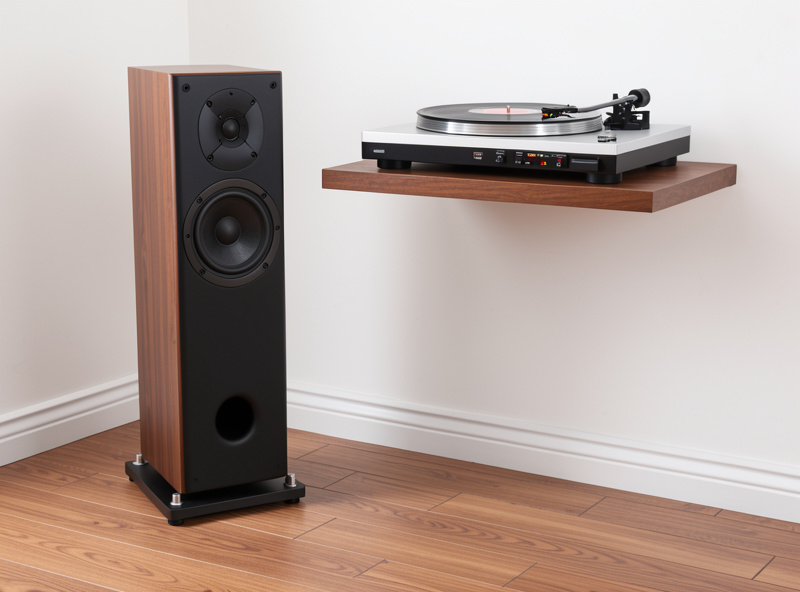
Floorstanders couple more energy into the floor, and on a suspended or wooden floor that energy can travel back into the turntable as acoustic feedback — a rising rumble that worsens with volume. Bookshelves on stands are easier to isolate from the deck, which is a real advantage in a vinyl room.
This is the factor the generic speaker comparisons ignore, because they are not thinking about a stylus tracking a groove. A floorstander sits directly on the floor and pumps bass energy into the structure; if the turntable shares that floor, the deck can pick it up and feed it back through the cartridge into a worsening loop. Bookshelves on isolated stands break that path more easily. Either way, the turntable itself should sit on a properly isolated platform, and a wall-mounted shelf is the strongest defense — the footfall versus airborne vibration breakdown explains which path is biting you.
Cost: Where the Money Goes
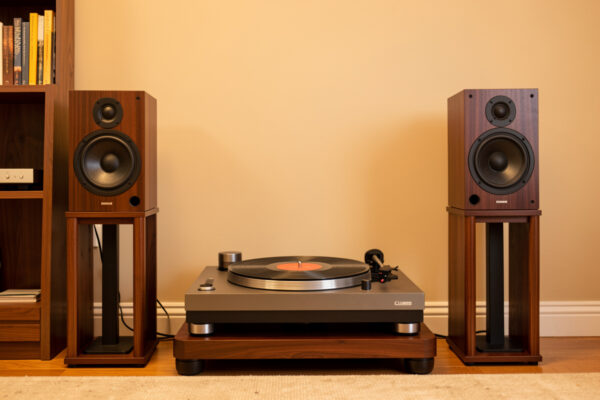
At any given price, a bookshelf puts more of your money into driver and crossover quality, because it has a smaller cabinet and fewer parts — but you must add stands. A floorstander includes its own support but spends budget on the larger cabinet and extra drivers. Factor the stands into the bookshelf’s true price.
The honest accounting: a bookshelf at a given price plus a decent pair of stands often lands near the price of a floorstander, but the bookshelf side usually buys better fundamental driver quality because the cabinet is cheaper to build. The floorstander gives you bass extension and no stand to buy. For a vinyl buyer working up from the source, I would rather put the money into a better bookshelf and good stands and keep budget for the phono stage, since a clean signal is what either speaker has to reveal. As an Amazon Associate I earn from qualifying purchases. Compare a bookshelf-and-stand package against a floorstanding tower at your budget before deciding.
The Middle Path: Bookshelf Plus Subwoofer
If you want bookshelf imaging but miss the bottom octave, a bookshelf pair plus one well-placed subwoofer often beats a floorstander in a small room — you keep the tight stereo image and add only the bass the room can handle. The catch for vinyl is that the subwoofer’s low-frequency output is exactly what can excite turntable feedback.
This is how I would build a small but serious vinyl room: a quality bookshelf on stands for imaging, and a single subwoofer crossed over low — around 60 to 80 Hz — to fill in what the room genuinely supports. It gives you most of a floorstander’s reach with the bookshelf’s focus and placement ease. Keep the subwoofer away from the turntable and the deck on a solid isolated platform, or the same feedback loop that bites floorstanders will find the sub instead. For many rooms this is the most flexible answer of the three.
Bookshelf vs Floorstander for Vinyl
| Factor | Bookshelf (on stands) | Floorstander |
|---|---|---|
| Best room size | Small to medium (under ~20 m²) | Medium to large |
| Bass extension | ~45–50 Hz (sub optional) | Into the 30s of Hz |
| Imaging | Tighter, more focused | Good, needs more distance |
| Turntable feedback risk | Lower, easier to isolate | Higher on suspended floors |
| Stands needed | Yes (budget for them) | No |
| Money into drivers | More per dollar | Split with bigger cabinet |
Frequently Asked Questions
Are bookshelf or floorstanding speakers better for vinyl?
For most vinyl rooms, bookshelves on stands are better: they image more precisely, cost less for the same driver quality, and isolate more easily from the turntable. Floorstanders are better in large rooms, at high volume, or when you want deep bass without a subwoofer.
Do floorstanding speakers cause turntable feedback?
They can. Floorstanders couple bass energy directly into the floor, and on a suspended or wooden floor that energy can return to the stylus as a rising rumble. Isolating the turntable on a platform or wall shelf, and separating it from the speakers, prevents the loop.
Do bookshelf speakers have enough bass for vinyl?
Usually yes. A good bookshelf reaches into the high 40s of Hz, which covers most of the bass on records, since very deep bass is sparse on vinyl. Add a subwoofer only for large rooms or if you specifically want sub-bass extension.
Will floorstanders overpower a small room?
Often, yes. In rooms under about 20 square meters, a floorstander tends to excite room modes and produce boomy, uneven bass that the space cannot control. A bookshelf’s gentler output usually sounds more even in a small room.
Is a bookshelf plus stands cheaper than a floorstander?
Not necessarily. A bookshelf at a given price plus quality stands often costs about the same as a comparable floorstander, but the bookshelf usually puts more money into driver quality. Always include the stands when comparing the true price.