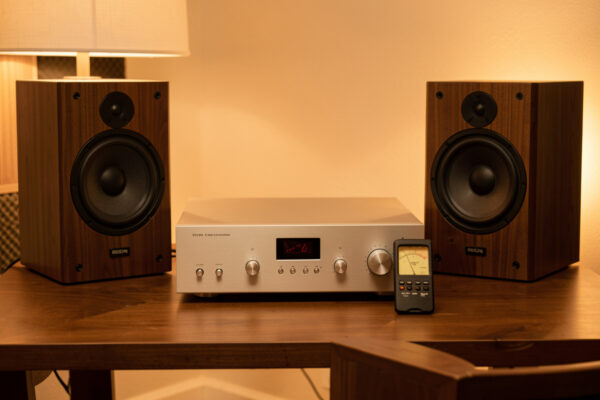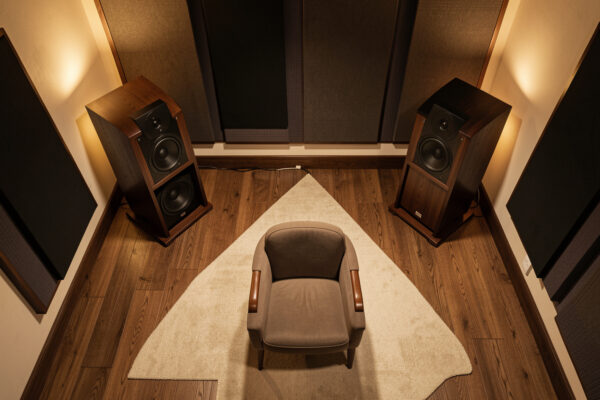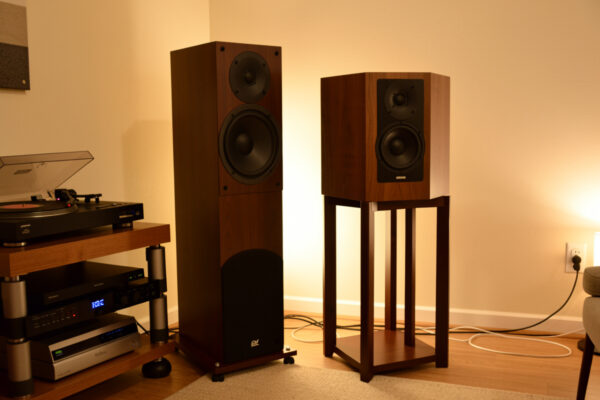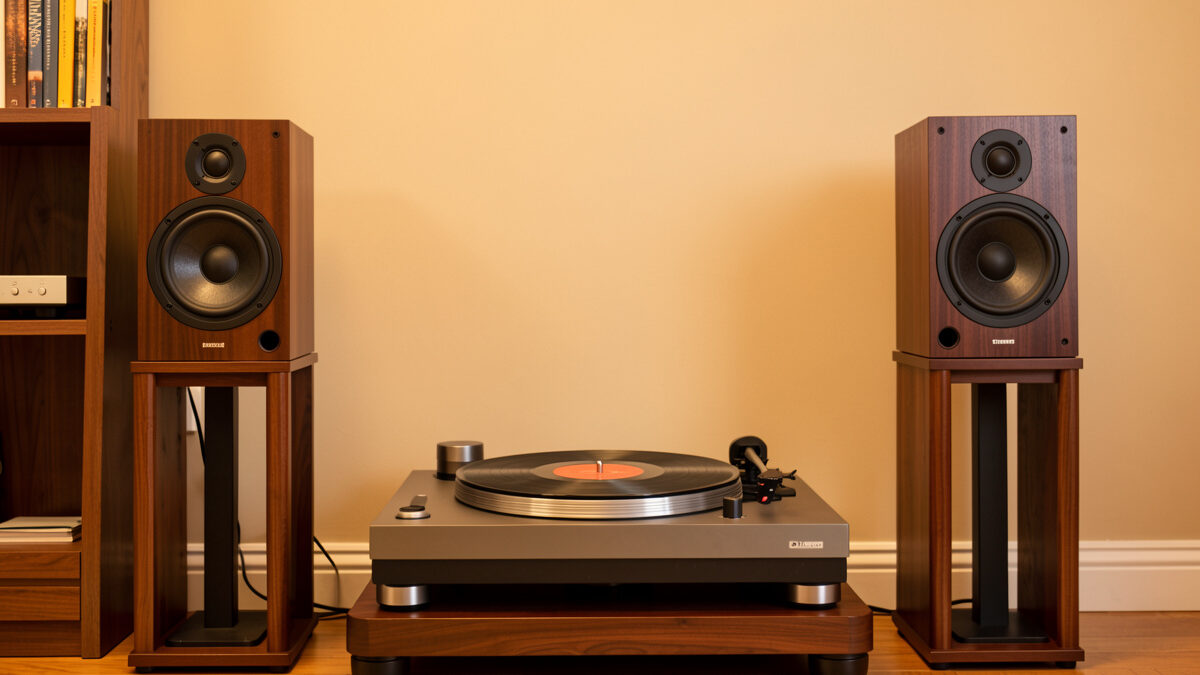
The best bookshelf speaker for vinyl is the one whose sensitivity matches your amplifier and whose size suits your room — not the one with the highest price. For most turntable setups I steer people toward an efficient, well-imaging two-way (86 dB and up) in the mid-budget range, on real stands, because that combination flatters records and leaves money for the phono stage.
I have fed bookshelf speakers from across the price ladder with the same Rega and Technics front ends, and the pattern is consistent: the speaker’s sensitivity and how you place it decide more than the badge. Below are the categories I actually recommend for a vinyl room, the kind of amp each one wants, and the tradeoffs a setup tech notices. This is a buying framework with real examples, not a bench-test ranking — your room and your amp change the answer.
What Makes a Bookshelf Speaker Good for Vinyl
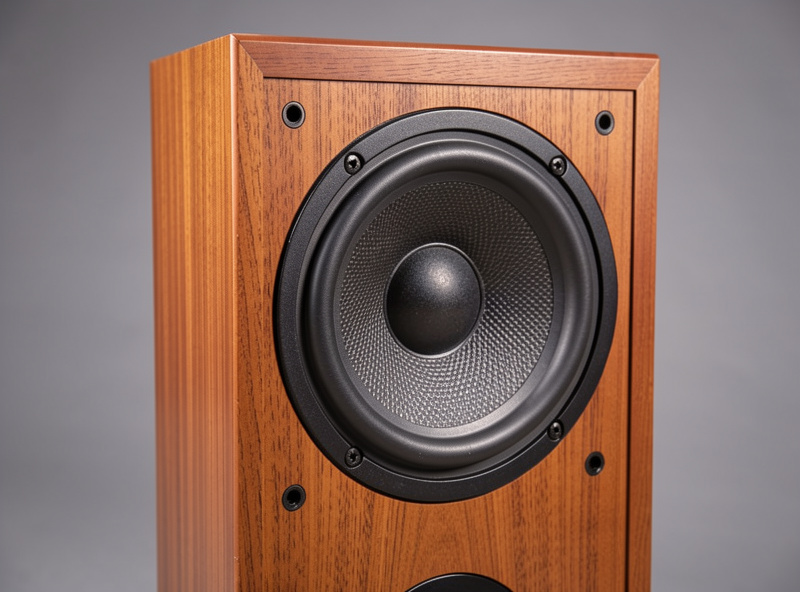
For vinyl, prioritize sensitivity (how loud per watt), a forgiving top end, and a cabinet sized to your room over raw specs. Records already carry surface noise and inner-groove distortion, so a slightly warm, non-fatiguing speaker suits the source better than a clinical one that spotlights every tick.
Three things separate a good vinyl bookshelf from a generic one. First, sensitivity: 86 dB and up keeps a modest integrated or tube amp comfortable, and that matters because many vinyl rigs run lower-power amps. Second, tonal balance — a speaker that is even through the midrange and gently rolled at the very top forgives a worn pressing without sounding dull. Third, imaging: a small two-way with a single tweeter and mid-bass driver throws a tight, focused stereo picture when placed well, which is the bookshelf’s home-field advantage over a bigger box. None of this requires spending big; it requires choosing for the room and the amp you actually own. The broader bookshelf-versus-floorstander question is covered in the floorstanding vs bookshelf guide.
High-Sensitivity Picks for Low-Power and Tube Amps
If you run a tube amp or a low-power integrated, a high-sensitivity bookshelf like the horn-loaded Klipsch RP-600M (around 96 dB) plays loud and effortless on just a few watts. Horn tweeters are lively and detailed, which suits jazz and acoustic records, though they reward careful toe-in to avoid sounding forward.
The horn-loaded designs are the natural match for the tube-amp approach, because their high efficiency means a 10- to 20-watt tube integrated drives them to satisfying levels with headroom to spare. The tradeoff is character: horns are detailed and dynamic but can sound bright if aimed straight at your ears, so I set toe-in by ear until the treble relaxes. These suit a listener who wants energy and slam from records and is willing to dial in placement. If your amp is a small tube unit, start your search here — a search for a horn-loaded bookshelf speaker is where I would begin.
Balanced All-Rounders for a Typical Integrated Amp
For a standard solid-state integrated with 40 watts or more, a refined two-way like the Q Acoustics 3030i or a KEF Q-series coaxial gives you accurate imaging and a smooth top end. These sit around 86 to 88 dB sensitivity, so they want real watts, but on a healthy integrated they image like a much pricier speaker.
This is the sweet spot for most vinyl rooms. The KEF Uni-Q coaxial puts the tweeter in the center of the mid driver, which produces a remarkably stable, point-source image that makes a record’s soundstage snap into place — it is the imaging champion of the category. The Q Acoustics 3030i is the value-balanced choice: slightly larger, fuller in the lower midrange, and very even. Both want a competent amp behind them; pair them with a thin amp and they sound polite. If your integrated has the watts, this class is where a vinyl setup matures. Compare options with a coaxial bookshelf speaker search.
Value Picks That Punch Above Their Price
On a tight budget, the ELAC Debut/DBR62 and Wharfedale Diamond 12.x deliver more bass and body than their price suggests, trading a little ultimate refinement for a warm, easy sound that suits records. They sit near 86 dB and prefer an amp with a bit of grunt, but they are forgiving of a modest source.
The Andrew Jones-designed ELAC Debut line is the classic value recommendation — a fuller low end than most small boxes, tuned to sound generous rather than analytical. The Wharfedale Diamond series leans warm and unfussy, which makes thin or older pressings listenable. Neither is the last word in transparency, but for a first real pair of vinyl speakers they punch well above their cost, and they leave budget for stands and the phono stage — which is exactly the right priority. For a deeper run at the lowest price tier, see the best budget speakers for a turntable.
The Stands Are Part of the Speaker
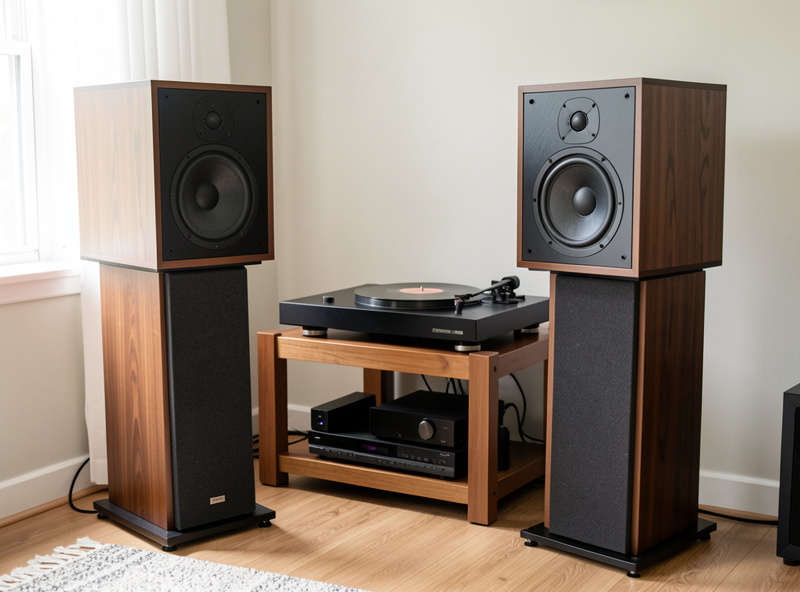
A bookshelf speaker placed on a desk, sideboard, or actual bookshelf gives up most of its imaging — the cabinet needs to be on a rigid, mass-loaded stand with the tweeter at ear height. Skipping stands to save money is the most common bookshelf mistake, and it undoes the speaker you paid for.
The name is a trap. “Bookshelf” describes the size, not the intended home. On a shelf, the speaker’s rear port loads against the wall and bloats the bass, and the tweeter sits below ear level so the treble dulls. On a solid stand, pulled out from the wall, the same speaker images cleanly and the bass tightens. I fill hollow stands with sand or shot to kill resonance and use isolation pads under the speaker. Budget for stands as a non-negotiable line item, not an afterthought — pair them with the right furniture for the turntable so the whole front end is solid. The placement method that finishes the job is in speaker placement for vinyl listening.
Check Impedance, Not Just Sensitivity
Sensitivity tells you how loud a speaker plays per watt, but impedance tells you how hard it is to drive — and a speaker can be sensitive yet still punish a weak amp if its impedance dips low. A nominal 8-ohm bookshelf is the safe default for almost any integrated; a 4-ohm design needs an amp that is comfortable with the load.
I have watched people pair a budget receiver with a 4-ohm bookshelf and wonder why it sounds thin and shuts down at volume — the amp simply cannot deliver current into that load. Manufacturers quote a “nominal” impedance that hides the minimum, so an 8-ohm-labeled speaker may dip to 4 ohms at certain frequencies. For a vinyl rig built around a modest integrated or a tube amp, I stay with speakers rated a true 8 ohms and a sensible sensitivity, and I leave the demanding 4-ohm designs to people running powerful solid-state amplifiers. The full matching exercise — reading these specs honestly and pairing watts to the room — is in speaker sensitivity and amplifier matching.
Bookshelf Speaker Picks Compared
| Speaker class | Typical sensitivity | Amp it wants | Character | Best for |
|---|---|---|---|---|
| Horn-loaded (e.g. Klipsch RP-600M) | ~96 dB | Low-power / tube | Lively, dynamic, detailed | Tube amps, jazz and acoustic |
| Coaxial (e.g. KEF Q150) | ~86–88 dB | 40W+ integrated | Precise, stable imaging | Imaging, mixed genres |
| Refined two-way (e.g. Q Acoustics 3030i) | ~88 dB | 40W+ integrated | Smooth, even, full | All-round vinyl listening |
| Value two-way (e.g. ELAC DBR62) | ~86 dB | Mid-power integrated | Warm, generous bass | First real pair, tight budget |
As an Amazon Associate I earn from qualifying purchases.
Frequently Asked Questions
Are bookshelf speakers good enough for vinyl?
Yes. In rooms up to about 20 square meters, a quality bookshelf speaker on solid stands images better than many floorstanders and costs less. Add a subwoofer only if you genuinely miss the deepest bass, which most records do not contain anyway.
What size bookshelf speaker do I need for vinyl?
Match the cabinet to the room. A 4 to 5 inch mid-bass driver suits small rooms and near-field listening, while a 6.5 inch driver fills a medium room with more bass. Bigger is not better if the speaker overloads a small space.
Do bookshelf speakers need a subwoofer for vinyl?
Usually not. Most records carry little usable bass below 40 Hz, and a good bookshelf reaches low enough for them. Add a subwoofer for large rooms or bass-light speakers, crossed over around 60 to 80 Hz and placed away from the turntable.
How much should I spend on bookshelf speakers for a turntable?
Spend enough to clear the budget tier but keep money for stands and the phono stage. A solid mid-budget pair on proper stands outperforms a pricier speaker placed on a shelf, because the stand and placement realize the speaker you bought.
Do I need powered or passive bookshelf speakers for vinyl?
Either works. Passive speakers need a separate amplifier and a phono stage; powered speakers build the amp in and often a phono stage too, so a turntable connects almost directly. Choose powered for simplicity, passive for upgrade flexibility.