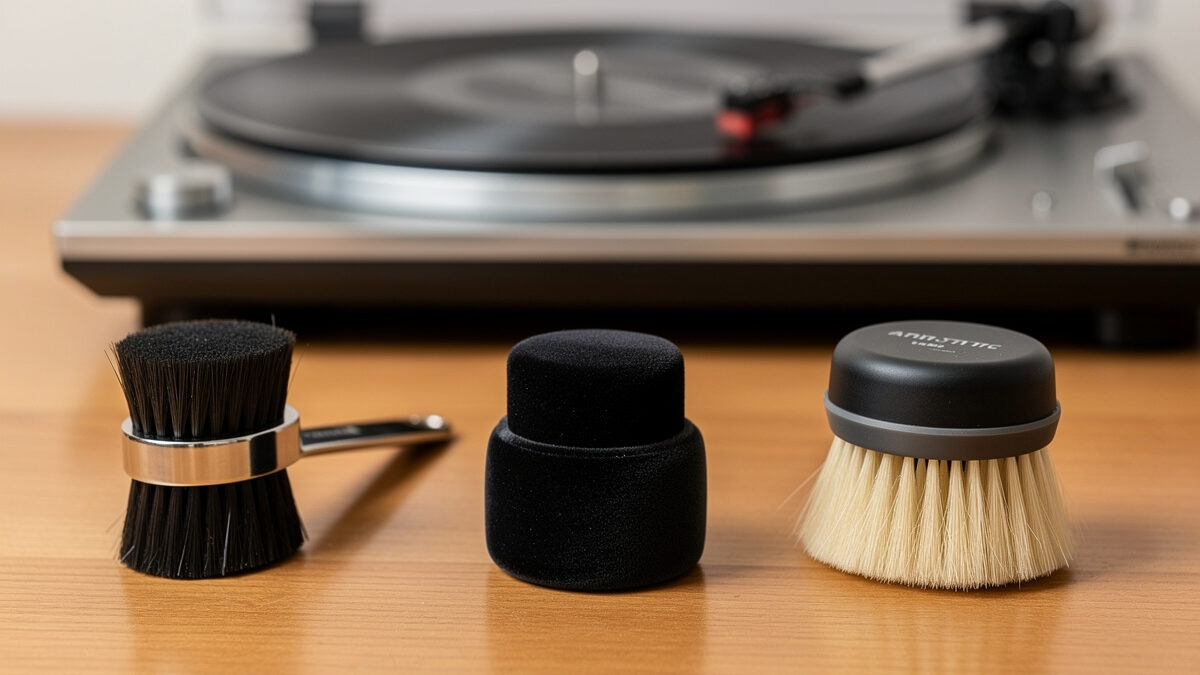
The brush is the most-used cleaning tool in vinyl and the one most people use wrong. A carbon-fiber brush before every side is the single habit that keeps a clean record clean, bleeding off static and lifting loose dust in ten seconds. But not all record brushes do the same job: carbon-fiber, velvet pad, and dedicated anti-static brushes each have a role, and confusing them is how people either skip the step or do it badly. Here is what each type is for and how to use them so they help rather than harm.
I keep a carbon-fiber brush on the plinth of every deck I run, because the only good brush is the one that is within reach when the record is spinning. The technique is as important as the tool. A brush dragged carelessly across a dusty record can scratch it; held correctly, it is the gentlest and most effective maintenance there is. This guide covers both the gear and the technique.
Why a Brush Matters Before Every Play
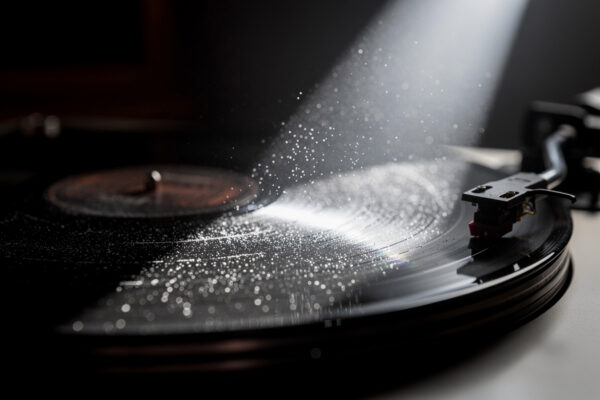
Every time you slide a record from its sleeve and set it spinning, it builds a static charge that pulls dust from the air onto the surface, right into the path of the stylus. A quick brush before the needle drops removes that loose dust and bleeds off some of the charge, so the stylus reads the groove instead of plowing through grit. It is maintenance, not deep cleaning, but it is the maintenance that protects every deeper clean you have done. This is the first line of defense in my complete record cleaning guide.
Skipping the brush means the stylus carries dust down into the groove and grinds it in, adding noise and wearing both the record and the diamond. Ten seconds of brushing prevents that. It is the cheapest, fastest, most repeatable habit in the hobby, and it pays back every single play.
Carbon-Fiber Brushes
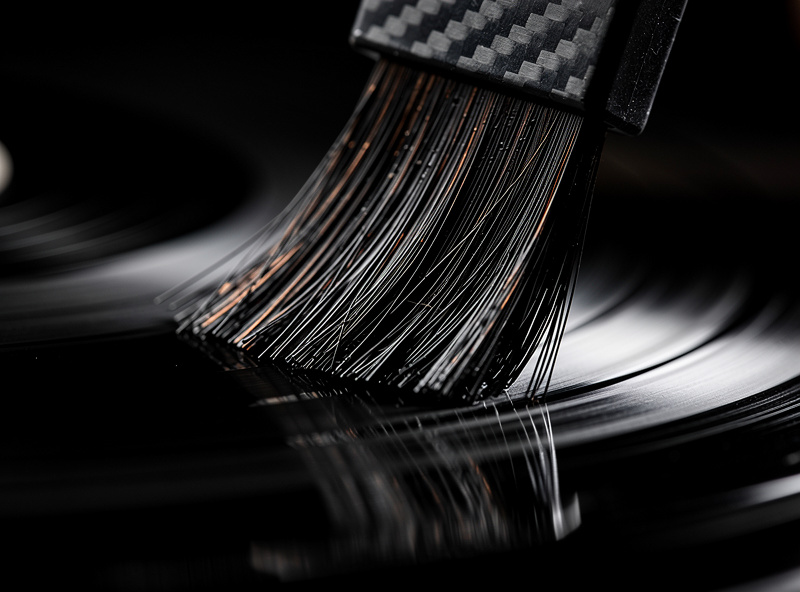
The carbon-fiber brush is the workhorse and the one I reach for before every side. Thousands of fine conductive bristles reach into the groove to lift loose dust, and because carbon fiber is conductive it also bleeds static charge to your hand and the brush body. That dual action, dust and static at once, is why it is the standard maintenance tool. A good carbon fiber record brush is the first cleaning purchase I recommend to anyone.
Technique is everything with carbon fiber. Hold the bristles lightly against the record as it spins, let them rest in the groove for a couple of rotations to lift the dust, then gently angle the brush to sweep the gathered dust off the edge. Do not press hard and do not drag it across the spinning surface, because that just redistributes dust. Light contact, let it do the work, lift the dust away.
Velvet Pad Brushes
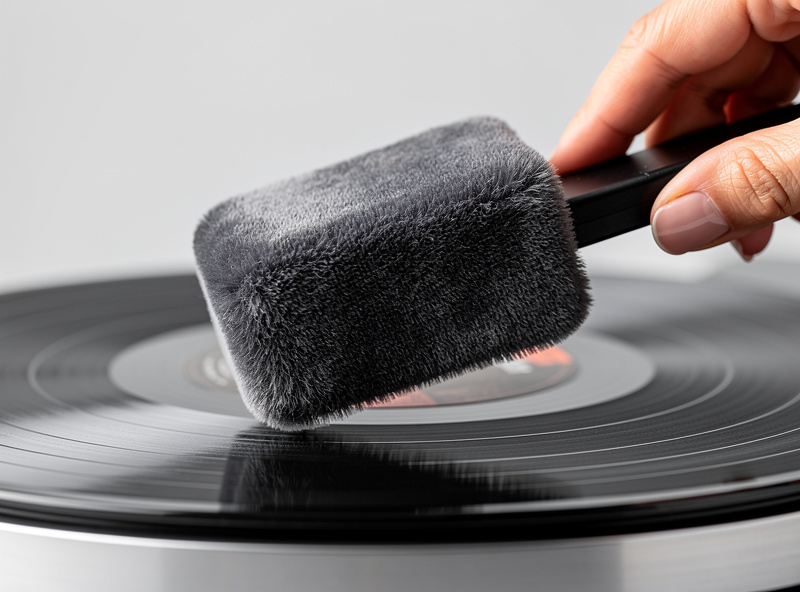
Velvet or plush-pad brushes use a soft nap to wipe the surface, and they are most useful as wet-cleaning applicators rather than dry-dust tools. A velvet pad dampened with cleaning fluid is a fine way to work fluid into the groove during a manual wet clean. Used dry on a dusty record, though, velvet can smear dust around rather than lift it, and it does little for static. A velvet record brush earns its place at the wet-cleaning bench, not as your every-play tool.
The key with velvet is to keep it clean. A pad that has absorbed grime just reapplies it, so rinse and dry velvet applicators and replace them when they stop coming clean. For the full wet-cleaning method these pads support, see my wet cleaning guide.
Anti-Static Brushes
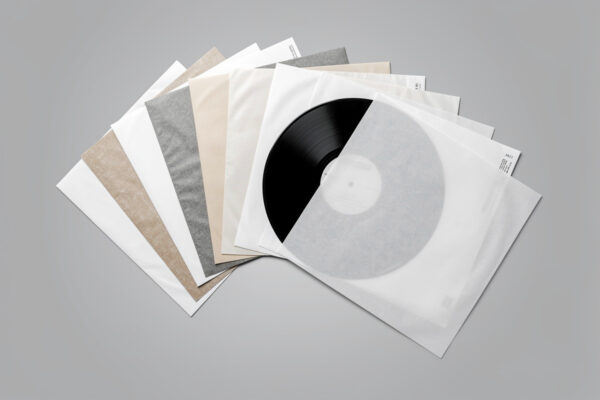
Dedicated anti-static brushes focus on the charge rather than the dust. Carbon-fiber brushes already do a lot of this, but in very dry air a record can hold enough static that more help is welcome. Anti-static brushes and tools target that charge directly, and they pair well with anti-static inner sleeves to keep dust from being pulled back the moment you clean. An anti-static record brush is most useful in winter heating season when static is at its worst.
As an Amazon Associate I earn from qualifying purchases. The brushes linked here are the types I keep at my own cleaning station.
Static is genuinely the other half of the dust problem, because no amount of brushing helps if the record immediately re-attracts dust. Humidity control and good sleeves do most of the work, with anti-static tools filling the gap in dry conditions. That whole topic is worth its own deep-dive alongside this one.
Brush Types Compared
Here is how the three brush types line up by what they actually do. The short version: a carbon-fiber brush for every-play maintenance, velvet as a wet-cleaning applicator, and anti-static tools for dry-air static. Most people only truly need the first one.
| Brush Type | Primary Job | Removes Static? | Best Used |
|---|---|---|---|
| Carbon fiber | Lift loose dust | Yes (conductive) | Dry, before every play |
| Velvet pad | Apply/spread fluid | Minimal | Wet cleaning applicator |
| Anti-static brush | Bleed off charge | Yes (primary) | Dry air, heavy static |

Brushing Technique That Protects the Record
A brush used wrong scratches; used right it is the safest tool in vinyl. The rules are simple. Use light pressure and let the bristles rest in the groove rather than pressing them in. Let the record spin a couple of rotations so the bristles gather dust before you lift it off. Sweep the collected dust off the edge of the record in a single controlled motion rather than scrubbing back and forth. And keep the brush itself clean, wiping or tapping out the dust it collects so you are not reapplying it next time.
Treat the brush as the first step in a routine, not the whole routine. It handles loose dust; embedded grime still needs a wet clean, and seriously dirty records may need ultrasonic cleaning. A brush keeps a clean record clean; it does not rescue a dirty one. For the broader care picture, including handling and storage, see my record care guide.
Frequently Asked Questions
Which record brush should I buy first?
A carbon-fiber brush. It lifts loose dust and bleeds off static at the same time, making it the ideal every-play maintenance tool. It is the first cleaning purchase to make before any fluid or machine.
How do I use a carbon-fiber record brush correctly?
Hold the bristles lightly against the record as it spins, let them rest in the groove for a couple of rotations to gather dust, then gently angle the brush to sweep the dust off the edge. Use light pressure and never drag it.
Are velvet record brushes any good?
Velvet brushes work best as wet-cleaning applicators, used damp with fluid to work it into the groove. Used dry on a dusty record they can smear dust around rather than lift it, so they are not ideal for every-play maintenance.
Do I need a separate anti-static brush?
Usually not. A conductive carbon-fiber brush already bleeds off static. A dedicated anti-static brush helps mainly in very dry air, such as winter heating season, when static is at its worst.
Can a brush scratch my records?
Only if used wrong. Pressing hard or dragging a brush across a dusty record can scratch it. Used with light pressure, letting the bristles rest in the groove and sweeping dust off the edge, a brush is the safest cleaning tool there is.
How often should I brush my records?
Before every side. A quick brush each time you play removes the dust the record attracts from the air and bleeds off static, keeping the stylus reading the groove cleanly and protecting both record and stylus from wear.