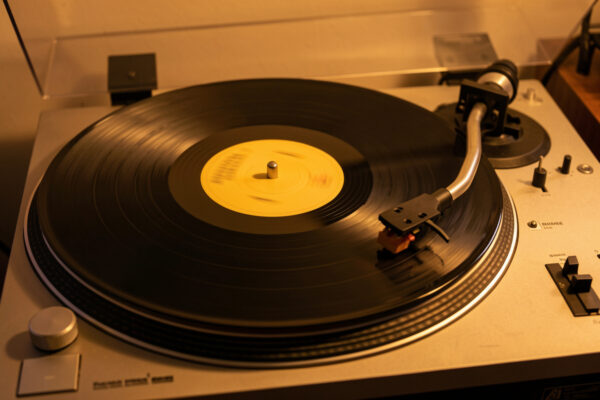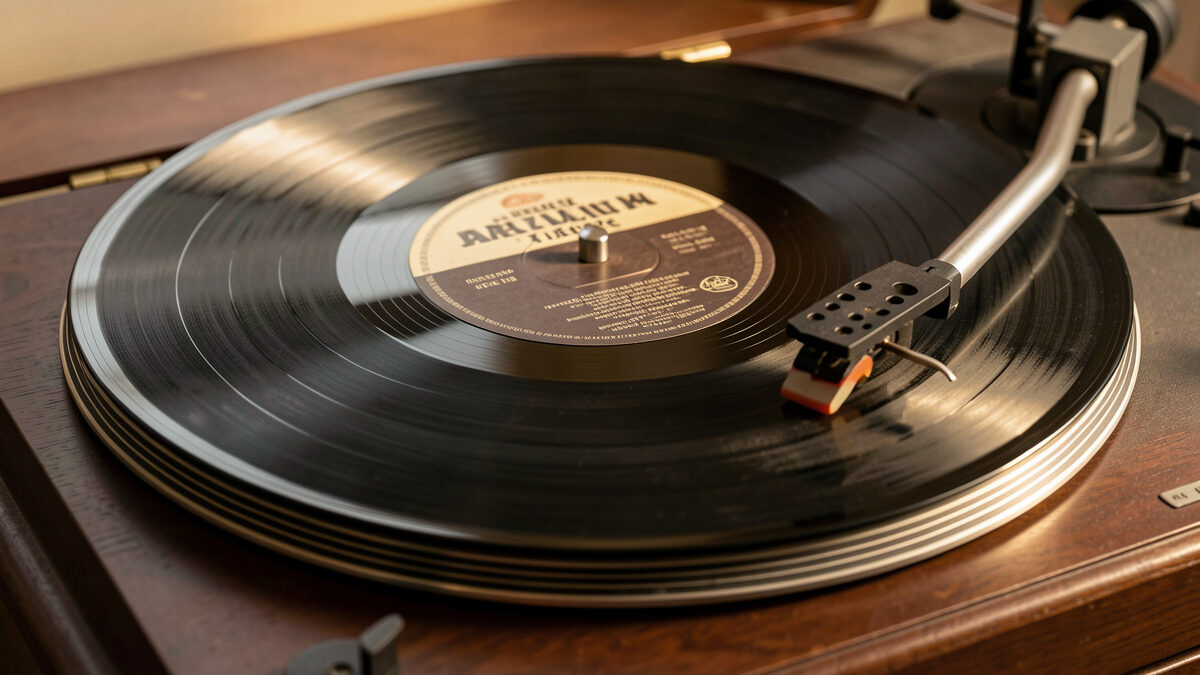
Mono records played back in stereo carry a layer of noise and distortion that no amount of alignment will remove, because the stereo cartridge is reading a vertical signal the mono record never intended to carry. A mono switch — or a mono cartridge — sums the two channels and cancels that vertical component, and the result is a cleaner, quieter, more solid playback from the same pressing. For original mono pressings it is one of the biggest free upgrades in vinyl playback, and it directly reduces the kind of surface grit people mistake for distortion.
This is the conceptual spoke of the inner-groove distortion and channel balance cluster. The other spokes chase setup faults that cause distortion; this one explains why the playback mode itself — stereo versus mono summing — changes how much noise and distortion you hear from a mono record, even on a perfectly aligned table.
How a Mono Record Is Cut Versus a Stereo One
The difference is in the groove geometry, and it is worth understanding because it explains everything that follows. A mono recording is cut with purely lateral modulation: the cutter moves side to side only, encoding the single audio signal as horizontal motion of the groove wall. There is no vertical information at all — the depth of the groove is constant.
Stereo, by contrast, uses the 45/45 system: the two channels are cut at ninety degrees to each other, each channel on a wall angled 45 degrees from vertical. The clever part of the maths is that adding the two walls gives the lateral (mono-sum) signal, while subtracting them gives the vertical (stereo-difference) signal. So on a stereo record, horizontal motion carries the mono content and vertical motion carries the stereo-only content — the left-minus-right difference that makes a recording sit wide across the soundstage. A stereo cartridge reads both axes simultaneously.
Why Playing Mono in Stereo Leaves Noise In
Here is where the trouble starts. A true mono record has no intended vertical modulation, but the real world is not clean. Dust in the groove, small pressing irregularities, warps, and the stylus’s own mistracking all produce vertical motion as the record plays. On a stereo cartridge, that vertical motion is faithfully read as the stereo-difference channel — and because there is no real stereo content to mask it, every tick, every warp thump, and every micro-mistracking event shows up directly in the output as noise and distortion.
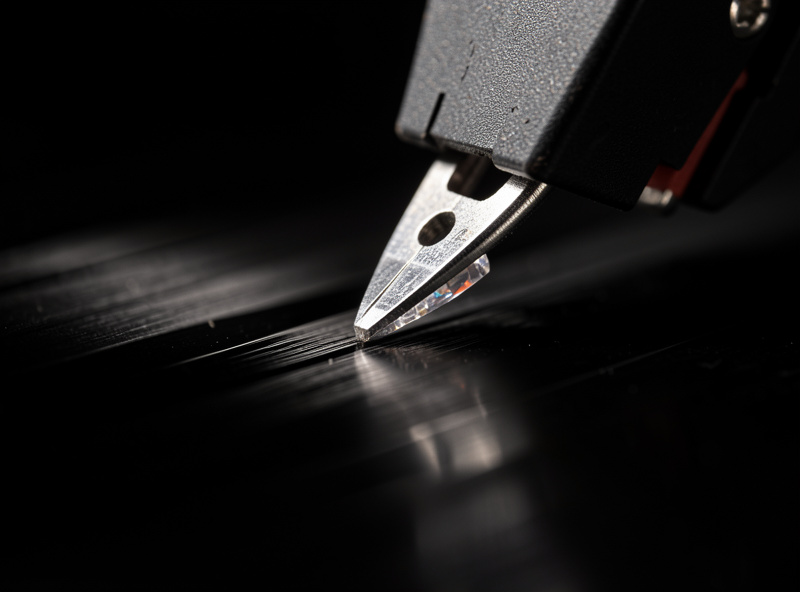
Put plainly: when you play a mono record in stereo, your cartridge is spending half its sensitivity listening to vertical motion that carries nothing but noise. That is why a beat-up vintage mono pressing can sound gritty, splashy, and distorted in stereo yet clean up dramatically the moment you sum to mono. The groove damage and the dust have not changed; you have simply stopped amplifying the axis they live on.
What a Mono Switch Actually Does
A mono switch sums the left and right channels electrically — it adds them together into a single mono signal before the output stage. Remember the 45/45 maths: adding the two channels reinforces the lateral, mono-sum content and cancels the vertical, stereo-difference content. So when you flip to mono, the intended music (which is purely lateral on a mono record) is preserved and reinforced, while the vertical noise — the ticks, the warp thumps, the mistracking artifacts — cancels itself out because it is anti-phase between the two channels.
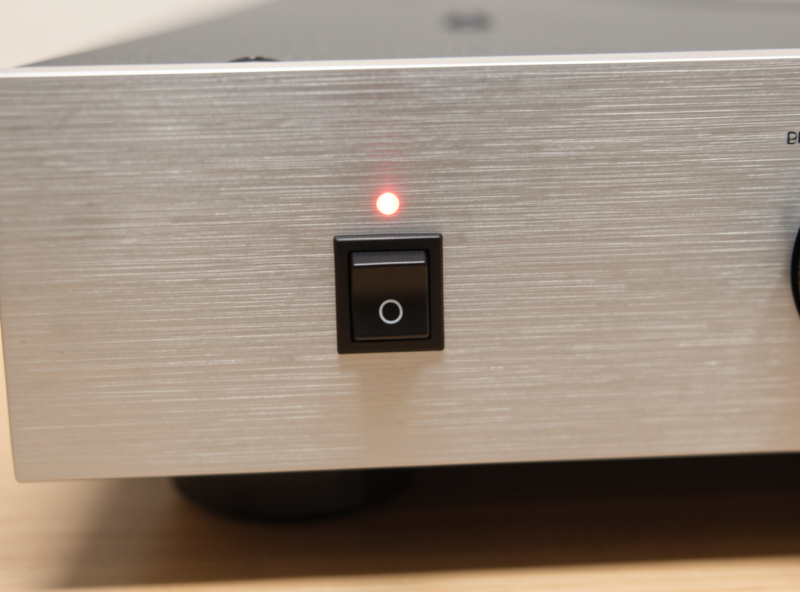
The practical effect is striking on the right record. A noisy mono pressing that sounded gritty and splashy in stereo suddenly sits solidly in the centre with a much lower perceived noise floor, because the vertical-axis garbage that was doubling your surface noise has been subtracted away. The first time I flipped the mono switch on my phono stage during a battered fifties jazz pressing, the grit I’d been blaming on a tired stylus simply dropped out and the horns snapped into a solid centre — that was the afternoon the 45/45 maths stopped being theory on my bench. It does not repair groove damage — a physical tick is still a tick — but it removes the stereo-cart amplification of vertical noise that mono records are full of. The related skill of diagnosing what is dust versus damage versus setup is in the surface noise diagnosis guide; mono summing is the one lever that reduces a whole category of that noise at once.
The Audible Result on Real Records
On original mono pressings — and there are millions of them, since stereo did not become universal until the late 1960s — the difference is the kind of thing that makes you re-evaluate records you had written off as noisy. Jazz and classical pressings from the fifties and sixties are the classic beneficiaries, because so many were cut mono first and the mono pressings are often the better-sounding master. A mono pressing that seemed distorted and worn in stereo can reveal itself as clean and dynamic in mono summing, because what you thought was distortion was largely vertical-axis noise the format never asked for.
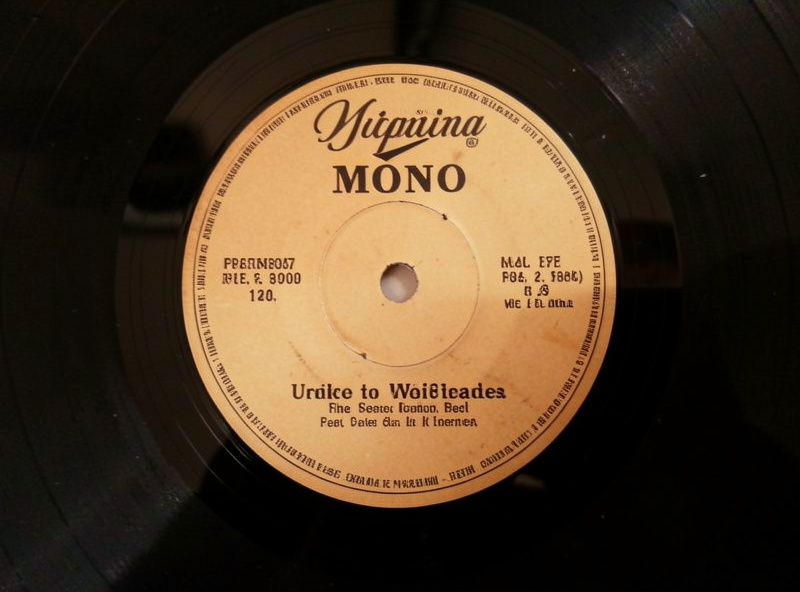
It is especially kind to well-loved, well-played copies. Records that have lived through decades of handling accumulate exactly the kind of low-level vertical-axis damage — fine scratches, groove-wall scuffing — that mono summing suppresses. You are not hiding damage; you are ignoring the axis the damage lives on, which the original mono playback did by definition.
Mono Switch Versus a Mono Cartridge
A mono switch is the cheap, eighty-percent solution, and it is the one I would take before spending money. But the deeper solution is a dedicated mono cartridge. A true mono cartridge is wound so that it has very low sensitivity to vertical motion — some designs bobbin the coils to actively reject the vertical signal — which means the vertical noise and mistracking never get generated in the first place, rather than being cancelled electrically after the fact. The result is marginally cleaner again than a stereo cartridge with the mono switch on, because electrical summing only cancels noise that is perfectly anti-phase, while a mono cartridge simply does not respond to vertical motion at all.
For most listeners the mono switch captures the great majority of the benefit for free, and a mono cartridge is a later refinement for someone who plays mono pressings often enough to justify a second cartridge on a removable headshell. I keep one on a spare headshell myself and only swap it in for a dedicated mono session; for everyday listening the switch on my phono stage does the job. The channel-balance angle — that summing also cures any azimuth-related imbalance on a mono record, since the two channels are forced equal — is why this sits alongside the channel imbalance spoke; on a mono pressing, a mono switch makes a tilted azimuth irrelevant.
If your phono stage or preamp has no mono switch, you can still sum electrically with a pair of RCA Y-adapters that combine the left and right outputs into a mono feed before the amplifier. It is a crude but effective workaround — the same maths applies, the vertical noise cancels, and a noisy mono pressing cleans up in exactly the same way as it would with a proper switch. The caveat is to use resistors in the summing path rather than hard-wiring the two outputs together, because tying outputs directly can load the output stage unevenly on some equipment. A ready-made RCA summing adapter handles this correctly for a few pounds, and it is the cheapest way to hear what mono summing does if your gear lacks the button.
Does a Mono Switch Hurt Stereo Records?
A common and reasonable worry, and the answer is no — with one caveat. A mono switch only sums; it does not damage anything. On a stereo record, flipping to mono simply collapses the stereo image to a centred mono signal, which sounds wrong for stereo material because you lose the width and the placement. So you would not listen to a stereo record in mono on purpose. But it is entirely harmless to try it — you are just mixing the two channels — and flipping it back restores full stereo. The rule is simple: mono switch for mono pressings, stereo for stereo pressings, and switch by ear if you are unsure which a record is.
Which Records Actually Benefit
The benefit is specific to true mono pressings — records cut with a mono cutter, where the groove carries lateral modulation only. Original mono pressings from before stereo took over are the obvious candidates, and many were cut from dedicated mono masters that sound different from (and often better than) their stereo counterparts. Fake stereo and electronically rechannelled records do not benefit in the same way, because they have had artificial stereo content added that the mono switch will collapse. And genuine stereo records gain nothing from mono summing except a centred image. The tell is the label and the era: a record marked mono, or a pressing from the mono era, is the candidate. If mono summing suddenly makes a noisy record sound clean, you have confirmed it was a true mono pressing all along.
None of this replaces good setup — a misaligned table will still mistrack a mono record, and the tracing limits of the format still apply. But for the large category of distortion and grit on mono pressings that survives a perfect alignment, mono summing is the lever that actually moves it, which is why it earns its place in this cluster alongside the geometry and balance fixes.
Further Reading
- Inner-Groove Distortion Fix: The Complete Setup Guide
- Right Channel Quieter Than Left on Vinyl: Azimuth and Wiring
- One Channel Sounds Noisier Than the Other on Vinyl
- Last Song on the Side Sounds Distorted: The Inner-Groove Problem
- Vinyl Surface Noise: Causes and How to Diagnose It by Ear