A record weight or clamp helps most on a slightly warped or dished pressing, where coupling the record to the platter flattens it and tightens tracking for $20–40. On a dead-flat record the change is subtle, and on a suspended subchassis deck too much mass can upset the suspension. The right answer is the lightest weight that solves your actual problem — not the heaviest billet on the shelf.
I keep a weight and a screw-down clamp on the bench and reach for them on specific records, not every record. Across my Technics, Rega and Pro-Ject decks I’ve tested what they do and don’t do, and the marketing oversells it: a clamp is a coupling and damping tool, not a sonic transformation. This guide separates the real benefit from the romance, and it slots into the wider turntable upgrades and mods spending order, where a clamp sits well below setup and the phono stage.
Weight vs Clamp vs Screw-Down: What’s the Difference?
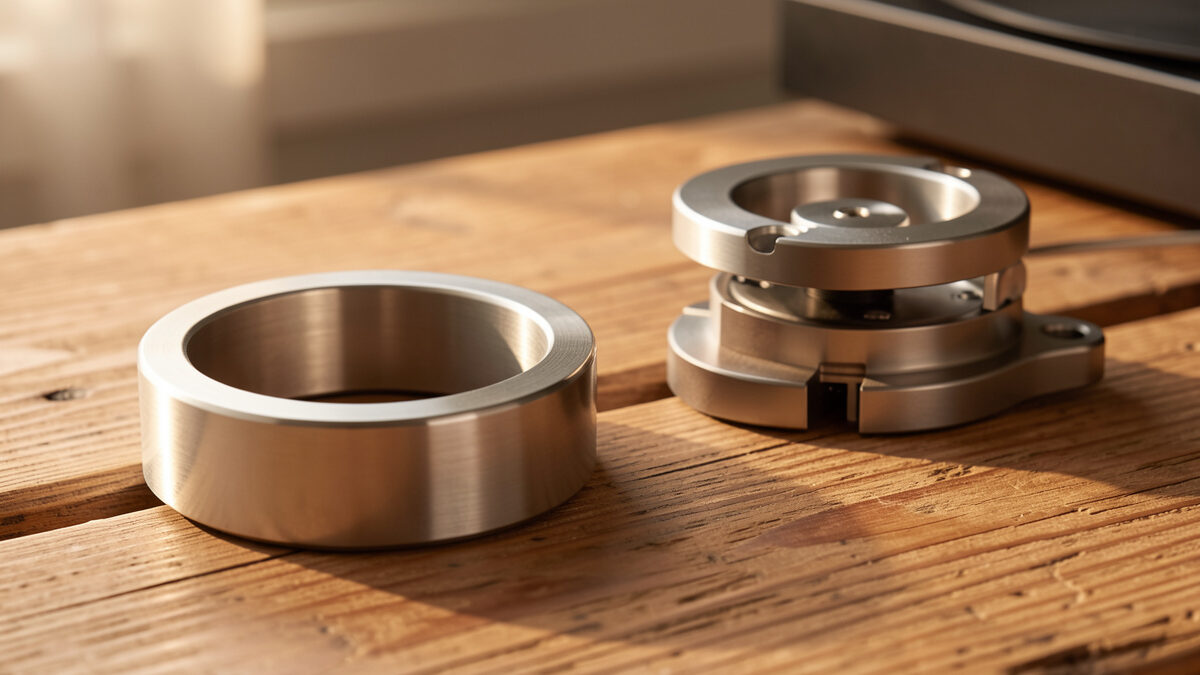
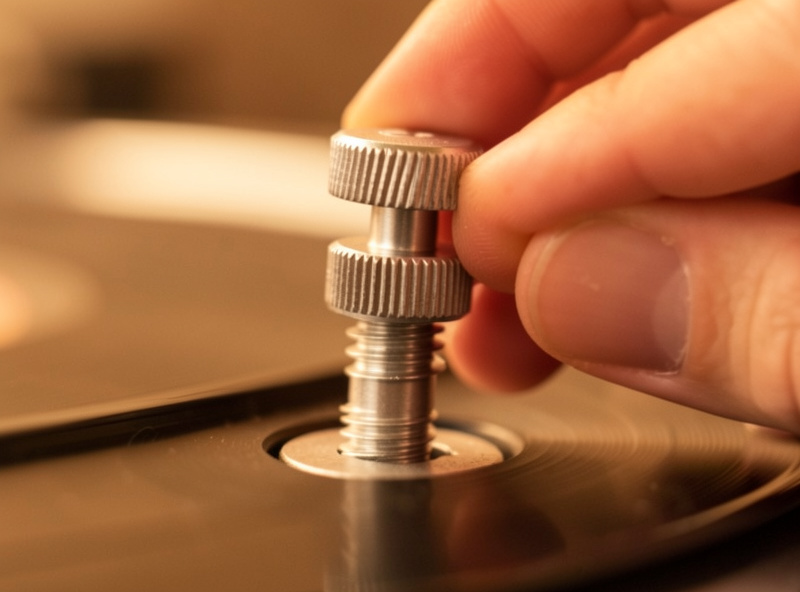
The three approaches all couple the record to the platter but do it differently. A record weight is a heavy puck that drops over the spindle and presses the label area down by mass alone. A clamp grips or levers the record down with mechanical force. A threaded screw-down spindle uses a collar that screws onto a threaded spindle to pull the record flat. Each one trades simplicity for clamping force and each suits a different deck.
The weight is the simplest and most universal — it works on any deck with a standard spindle and you just set it on. A clamp applies more force for a flatter result but needs a compatible spindle or collet. A screw-down gives the most even, controlled pressure but only exists on decks built with a threaded spindle. For most people a weight is the place to start because it’s universal and reversible, and a record weight or stabilizer is cheap to try.

What a Weight Actually Does to the Sound
A weight does two measurable things: it flattens mild warps so the stylus tracks a flatter surface, and it damps the record so it stores and re-radiates less energy. On a dished or warped pressing, flattening the surface genuinely improves tracking and lowers the wow that warp causes — a real, audible win. The damping effect is subtler: a coupled record rings less, which can tighten bass slightly and lower a hair of surface haze.
What a weight does not do is add bass or “weight” to the sound in the tonal sense — that’s the name fooling people. On a perfectly flat, well-pressed record, a weight changes very little, and you should be honest with yourself about whether you’re hearing a difference or expecting one. The biggest gains live with warped records, which is why preventing warps in the first place, per the warp prevention guide, matters more than any clamp.
The Mass Trap: When Heavier Is Worse
More mass is not automatically better, and this is where buyers go wrong. On a suspended subchassis deck — a Linn-style or many vintage belt decks — the platter sits on a sprung suspension tuned to a specific mass. Drop a heavy weight on top and you push the suspension out of its designed range, changing its bounce frequency and potentially making the deck more sensitive to footfalls, not less. The cure becomes the disease.
Even on a rigid deck, excessive mass loads the main bearing, and a bearing not rated for it will wear faster or add rumble. So the rule I follow is to use the lightest weight that flattens the record in front of me. If a 250-gram weight flattens the warp, a 600-gram one buys nothing but bearing load. Check your bearing’s health and rating first, per the bearing maintenance guide, and if you have a suspended deck, be very conservative with added mass.
Clamp Plus Mat: They Work Together
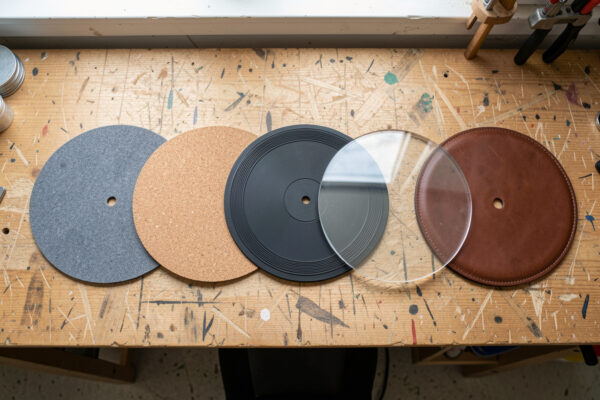
A weight or clamp and your platter mat are part of the same coupling system, and they interact. A grippy mat like cork plus a weight gives the most even contact between record and platter; a slick mat plus a weight can let the record’s center pull down while the edge stays proud, which is the opposite of what you want on a dished record. If you’re optimizing coupling, think of the mat and weight together, not separately.
On my acrylic-platter deck I rarely use a weight at all, because acrylic already couples the record evenly. On the steel-platter Technics with a cork mat, a modest weight on a warped record is a useful tool. Pairing decisions like this are exactly why I cover mats in the platter mat comparison — the mat sets the baseline, the weight fine-tunes the worst pressings.
Weight and Clamp Types Compared
| Type | How it couples | Force | Deck compatibility | Best for |
|---|---|---|---|---|
| Record weight (puck) | Mass over spindle | Low–moderate | Any standard spindle | Mild warps, easy start |
| Clamp (lever/collet) | Mechanical grip | Moderate–high | Compatible spindle | Flatter result, firmer hold |
| Threaded screw-down | Collar pulls flat | High, even | Threaded spindle only | Most even pressure |
| Peripheral ring | Weights the edge | Edge-focused | Precise fit required | Edge warps (advanced) |
For most people the puck-style weight is the right first buy: universal, reversible, and enough to flatten the mild warps that make up most of the problem.
Do You Actually Need One?
If your records are mostly flat and well-pressed, you can skip a weight entirely and lose nothing. If you buy used records or live with a humid storage environment that warps discs, a weight becomes a genuinely useful tool for $20–40. My honest take is that a weight is a fix for a specific problem — warps and dishing — rather than a universal upgrade, and it ranks well below a clean record, a proper alignment, and a real phono stage in the spending order.
Buy one if you have warped records; don’t buy one expecting it to “improve everything.” And if you do buy one, weigh it against your deck type — light for suspended decks, modest for rigid ones — and pair it with the right mat. The full spending logic, and where a clamp sits relative to everything else, is in the upgrades and mods guide.
Frequently Asked Questions
Do record weights and clamps actually improve sound?
On warped or dished records, yes. Coupling the record to the platter flattens it and tightens tracking, lowering the wow a warp causes. On dead-flat records the change is subtle. A weight damps the record slightly but does not add bass or transform the sound the way marketing implies.
Is a heavier record weight always better?
No. On suspended subchassis decks, too much mass pushes the suspension out of its tuned range and can worsen footfall sensitivity. Excess mass also loads the main bearing. Use the lightest weight that flattens the record in front of you, not the heaviest one available.
What is the difference between a record weight and a clamp?
A weight is a heavy puck that presses the record down by mass and fits any standard spindle. A clamp grips or levers the record down with more mechanical force but needs a compatible spindle. A threaded screw-down gives the most even pressure but requires a threaded spindle.
Can a record weight damage my turntable?
It can if you overdo the mass. On suspended decks a heavy weight upsets the sprung suspension, and on any deck excessive mass increases main-bearing wear. Check that your bearing is rated for added load and stay conservative, especially on vintage belt-drive decks.
Do I need a record clamp if my records are flat?
Not really. If your records are mostly flat and well pressed, a clamp adds little. A weight is most useful for used or warped records. It ranks well below a clean record, correct cartridge alignment, and a good phono stage in the order of worthwhile upgrades.
As an Amazon Associate I earn from qualifying purchases.