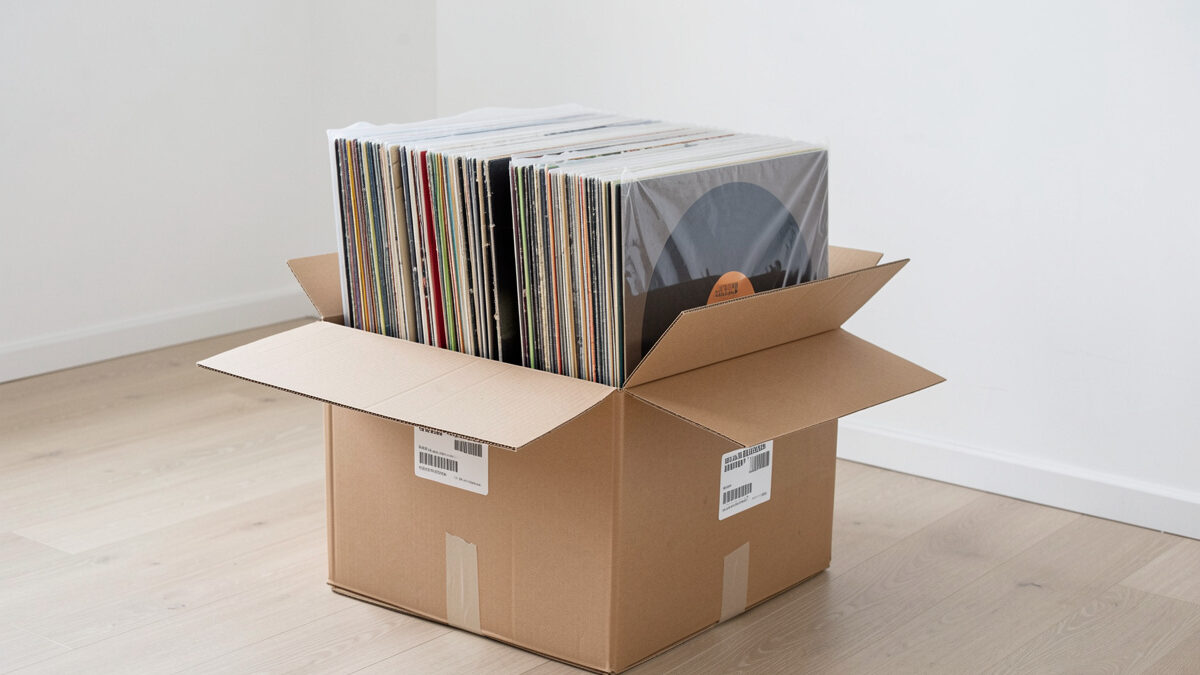
A move is the single most dangerous day in a record collection’s life. Years of careful upright storage, climate control, and sleeving can be undone in one afternoon of careless boxing and a hot truck. I have moved my own collection across town and helped move a friend’s much larger one, and the lessons were the same both times: the forces in transit are different from the ones on a shelf, and the mistakes are different too. This is how to move a vinyl record collection safely, from boxing to the truck to unpacking on the other side.
The throughline from my storage guide still holds, records travel best upright, but moving adds three new enemies the shelf never had: shock, vibration, and the temptation to overpack. Get those right and your records arrive exactly as they left.
The Box Is Everything
The most important moving decision is the box, and the most common mistake is using one that is too big. Records are dense; a large box full of them becomes impossibly heavy, and a box too heavy to lift safely is a box that gets dropped, dragged, or has its bottom give out. The sweet spot is a small, strong box, ideally one sized close to record dimensions so the records fill it without much empty space to shift in.
Purpose-made record boxes exist and are worth it for a serious move; they are sized right and built strong. Sturdy small moving boxes work too, reinforced with extra tape on the bottom seam, which is the failure point under record weight. A stack of proper vinyl record storage boxes is what I use, because they double as archive storage after the move and they are built for the load. Whatever you choose, tape the bottom seam thoroughly with strong heavy-duty packing tape before you load a single record.
Packing: Upright and Snug
Records go into the box the same way they live on the shelf: standing upright, spines up, never stacked flat. Flat stacking in a box during a bumpy drive is how you get dished and cracked records, because every bump drives the cumulative weight down through the stack. Upright, each record bears the shock through its strong edge, just as it does standing on a shelf.
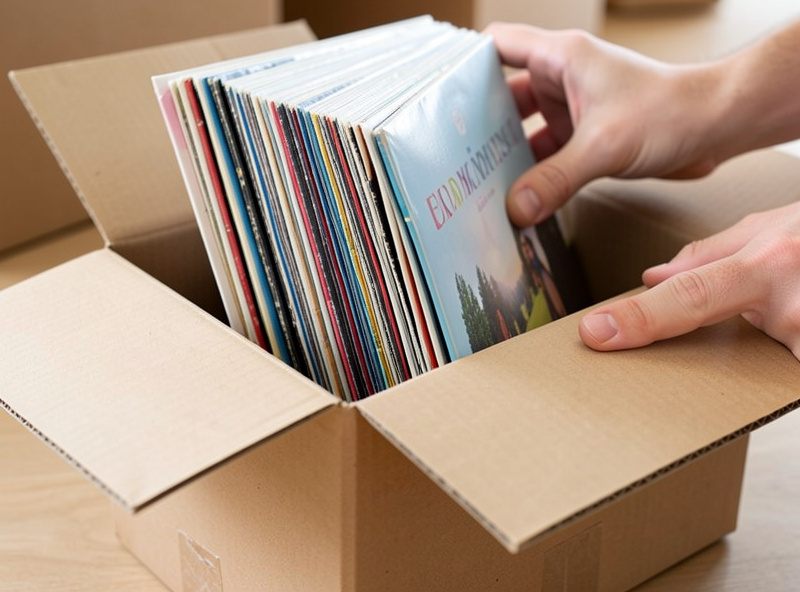
Pack snugly enough that records cannot shift and topple, but never so tight that you have to force them, because forcing them stresses jackets and seams. The goal is records that stand together as a solid block with no room to slide. If a box is not quite full, fill the gap with crumpled paper or a piece of foam so the records stay vertical and braced rather than falling into a lean that bends them over a long drive.
Protecting Against Shock and Vibration
A shelf never gets dropped or driven over potholes; a moving box does both. Cushion the bottom of each box with a layer of bubble wrap or crumpled paper so records are not resting directly on a hard surface that transmits every impact. For valuable records, wrapping the most precious individually adds a layer of insurance. A roll of bubble wrap is cheap insurance for the records you would be sick to lose.
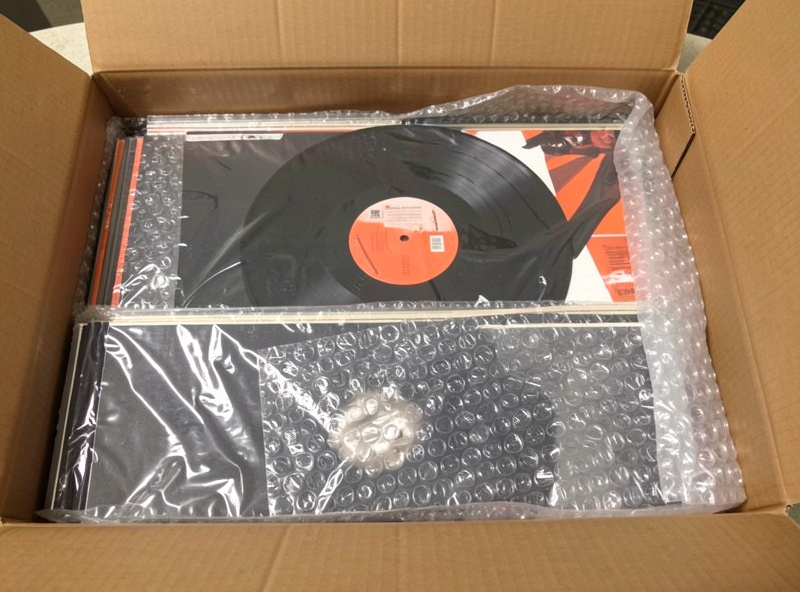
There is a long-running debate about whether to pull valuable discs out of their jackets for a move, sliding the disc separately alongside the jacket so the disc’s weight cannot press a seam split during a jolt. For genuinely valuable or heavy pressings I do this; for the everyday collection it is overkill. Either way, keep the inner sleeve on the disc, which is the groove protection covered in the record care guide.
The Heat Problem in Transit
This is the move-specific danger people most underestimate. A moving truck, a car trunk, or a storage unit can reach temperatures far above what warps PVC, and records left in any of them for hours can come out curved. The climate rule from normal storage becomes acute in transit, because you have lost the stable room that normally protects the records.
The discipline is simple: records are the last thing loaded into the vehicle and the first thing carried into a stable indoor space at the destination. Never leave boxed records sitting in a hot vehicle or a sun-baked storage unit. If a move involves storage, prioritize a climate-controlled unit for the records even if everything else goes in a standard one. A few hours of heat is all it takes, and unlike most moving mishaps, a heat warp does not undo, as I cover in the guide on avoiding warping.
Unpacking and Recovery
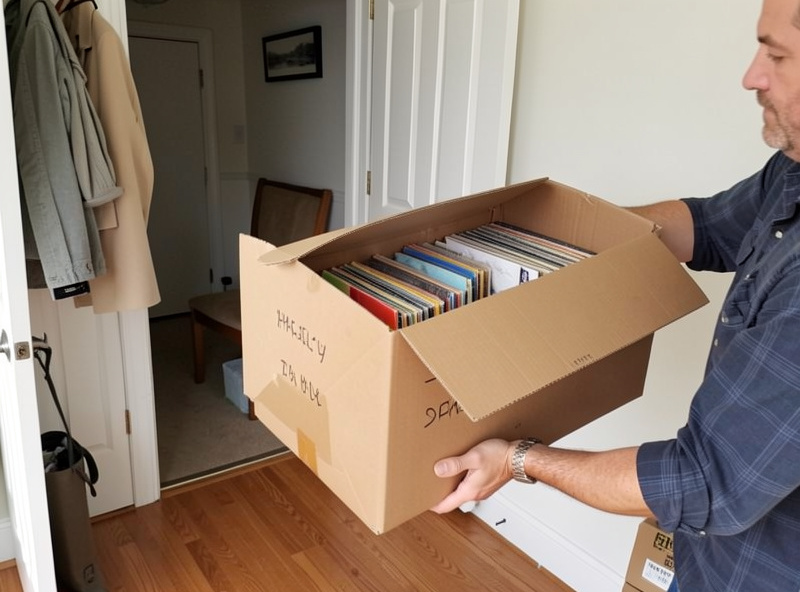
On arrival, get the record boxes into a stable indoor space before anything else and let them acclimate to room temperature before you start shelving, especially if they saw any temperature swing in transit. Then reshelve upright, packed firm with dividers, restoring the storage discipline the move temporarily suspended. Resist the urge to leave records boxed for weeks while you settle in, because a box on a floor is vulnerable to damp, crushing, and being stepped on in a way a proper shelf is not.
Treat the move as a chance to reorganize if you like, but get the collection back to upright, climate-stable storage quickly. The whole point of doing a move carefully is that the records arrive in the same condition they left, ready to go straight back into the system that protects them the rest of the time.
One last habit that has saved me grief: label the record boxes clearly and keep them together rather than scattering them through the load. On moving day everything is chaos, and an unlabeled box of records looks identical to a box of books until someone stacks three heavy cartons on top of it. A bright label and a rule that record boxes never go on the bottom of a stack costs nothing and prevents the crushing that flat-stacked weight causes. If you are moving a large collection, it is also worth counting the boxes and noting the total somewhere, so nothing quietly gets left behind in the rush of the last load.
Frequently Asked Questions
How do you pack vinyl records for moving?
Pack them upright, spines up, never stacked flat, in small strong boxes with a taped-reinforced bottom seam. Cushion the box bottom with bubble wrap or crumpled paper, pack snugly so records cannot shift, and fill any gap so nothing leans. Keep boxes small enough to lift safely.
Should records be stored flat or upright when moving?
Upright, the same as on a shelf. Flat stacking in a box during a bumpy drive drives cumulative weight through the stack and dishes or cracks records with every bump. Standing upright, each record absorbs shock through its strong edge instead of its fragile face.
What kind of box is best for moving records?
A small, strong box sized close to record dimensions so they fill it without shifting. Purpose-made record boxes are ideal and double as archive storage afterward. Avoid large boxes, which become too heavy to lift safely and get dropped. Always reinforce the bottom seam with strong tape.
Can records warp during a move?
Yes, this is the most underestimated moving danger. A hot truck, car trunk, or storage unit can far exceed the temperature that warps PVC, and a few hours is enough. Load records last, carry them into a stable indoor space first, and never leave them in a hot vehicle.
Should I take records out of their sleeves to move them?
For genuinely valuable or heavy pressings, sliding the disc separately alongside the jacket prevents the disc’s weight from splitting a seam during a jolt. For the everyday collection it is overkill. Either way, keep the inner sleeve on the disc to protect the groove.
Disclosure: This article contains affiliate links. If you buy through them I may earn a small commission at no extra cost to you. I only point to supplies I would use to move my own collection.