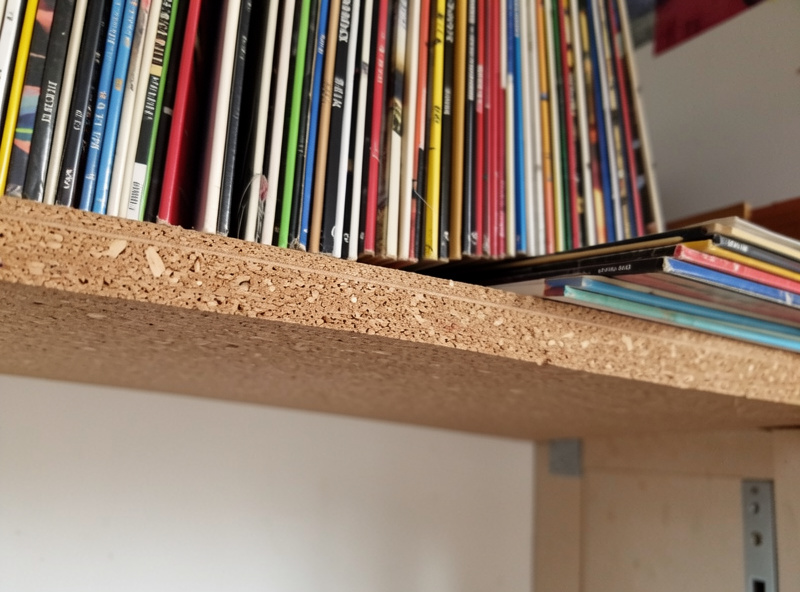
The first real shelf I bought for records was a long, handsome open bookcase, and within a year it had a visible smile bowed into the middle shelf where two hundred LPs sat. That sag taught me more about choosing the best vinyl record shelf than any product roundup ever did: with records, the shelf is a structural problem first and a furniture problem second. Get the structure right and almost anything looks fine; get it wrong and the prettiest unit in the room slowly fails.
I have since loaded, braced, and in a couple of cases reinforced most of the popular options, because a record collection is one of the heaviest things people casually put on consumer furniture. This is what actually matters when you choose a shelf, the formats worth your money, and the cheap modifications that turn a budget unit into something that will hold a serious collection for decades.
Start With the Weight, Not the Looks
Here is the number that reframes the whole decision: a 12-inch LP in its jacket weighs roughly 200 to 250 grams, and they pack about 65 to 70 per running cube. That means a single full cube is pushing 15 to 18 kilograms, and a modest 200-record collection is over 40 kilograms concentrated in a small footprint. People shop for record shelves the way they shop for a bookcase, and books are far lighter per centimeter of shelf than vinyl is.
So the first filter is load rating and span, not finish or color. The enemy is the unsupported horizontal span. A shelf board sags in proportion to how far it reaches between supports, and once it takes a set, it never fully recovers. This single fact eliminates most long open bookcases from serious consideration unless you add center support, and it explains why the humble cube unit has quietly become the standard for vinyl.
Why the Cube Format Won
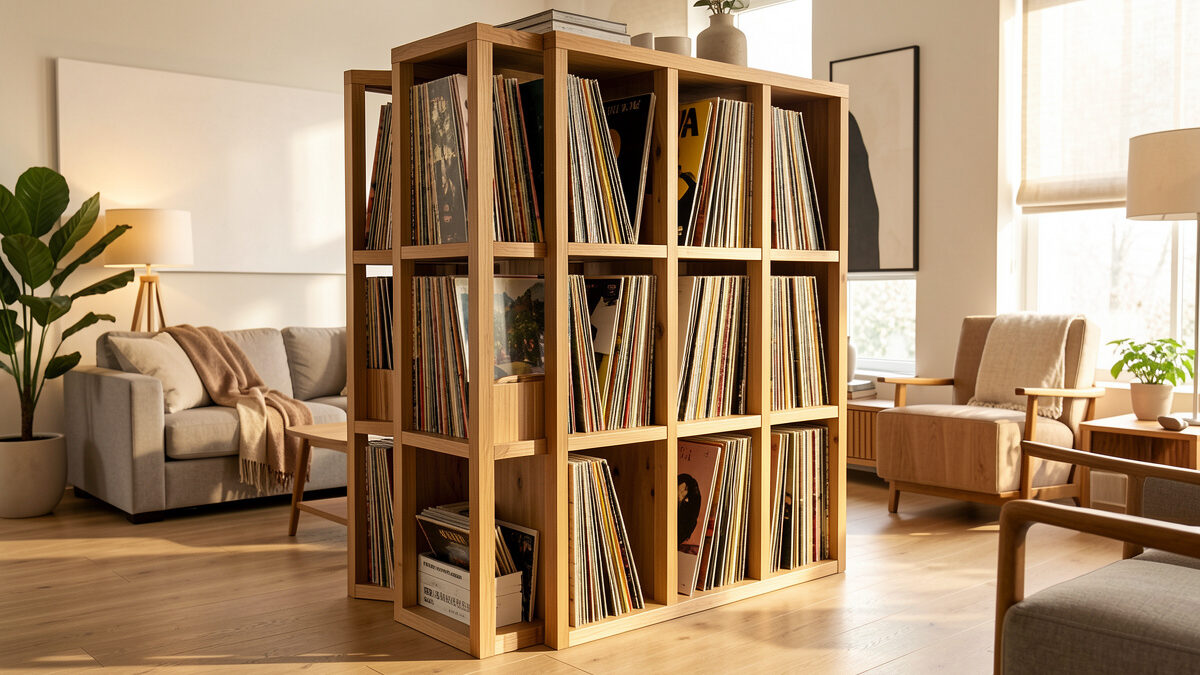
The square-cube shelving unit, the kind sold as a 2×2, 4×4, or larger grid, dominates record storage for one structural reason: every cube is short enough to span that nothing sags. A typical cube opening is around 33 to 36 cm wide, which is right at the limit where a particleboard shelf stays flat under a full load of records. The vertical dividers brace the whole structure, so the load path is short and clean.
It is also a near-perfect dimensional match. A 12-inch jacket is about 31.5 cm square, so it slips into a 33 to 36 cm cube with just enough room to pull records in and out without binding. Each cube holds roughly 65 to 70 records, which makes capacity easy to plan: a 4×4 grid holds around a thousand at the top end, more than most collections will ever reach.
I run cube units for the bulk of my own collection, and the one upgrade I always recommend over the cheapest tier is to look for a unit with a real back panel and thicker shelves. A cube storage shelf sized for vinyl is the safe default purchase, and the marginal cost of a sturdier one is trivial next to the records it holds.
Purpose-Built Record Cabinets
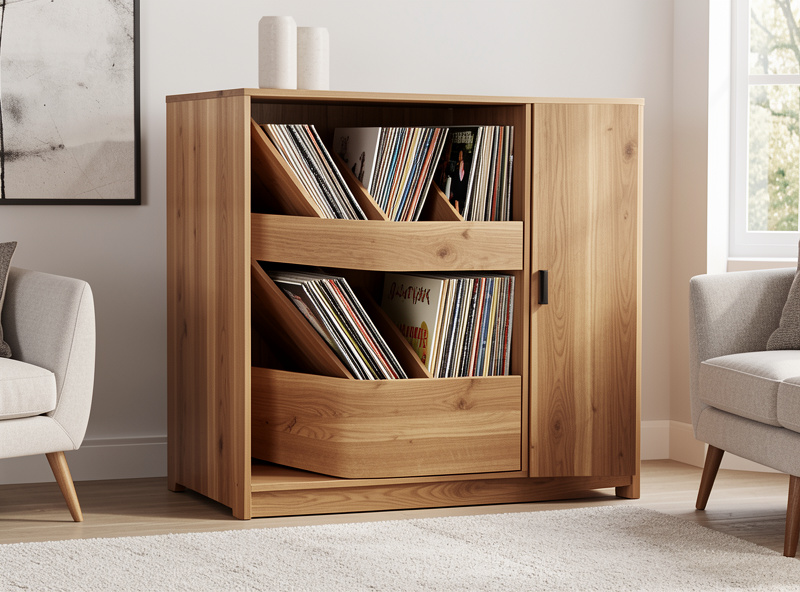
A step up from the generic cube is the purpose-built record cabinet, designed from the start around the weight and dimensions of LPs. These typically use thicker panels, deeper construction, and dividers spaced specifically for vinyl, sometimes with pull-out sections or angled browsing bins. If a record shelf is going to be a centerpiece in a living room rather than tucked into a corner, this is where the money goes.
The tradeoff is cost and, sometimes, capacity flexibility. A dedicated vinyl record storage cabinet usually costs more per record stored than a plain cube, and you are committing to its fixed layout. But the build quality difference is real: I have never seen a properly made record cabinet sag, and the browsing experience of a well-designed one beats reaching into a cube.
Shelf Types Compared
| Type | Sag Risk | Cost per LP Stored | Capacity | Best For |
|---|---|---|---|---|
| Square cube unit | Very low | Low | ~65-70 per cube | The default for most collections |
| Purpose-built cabinet | Very low | High | 150-700+ | Centerpiece, browsing, looks |
| Open bookcase | High on long spans | Low | Varies | Only with center supports added |
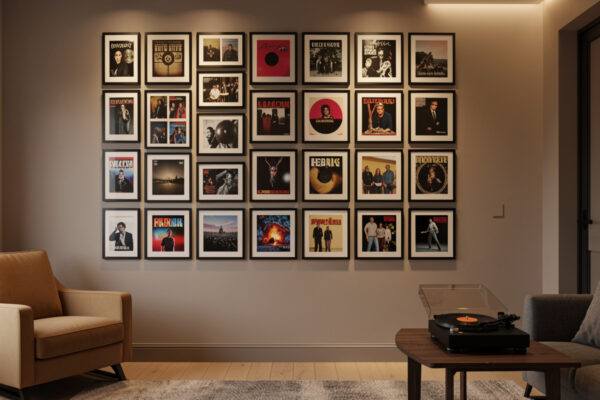
| Floating wall shelf | High under load | Medium | 12-20 sleeves | A display row, never bulk |
| Storage crates / boxes | Low if not deep-stacked | Very low | 40-60 per box | Overflow, archive, moving |
Crates and Boxes for Overflow
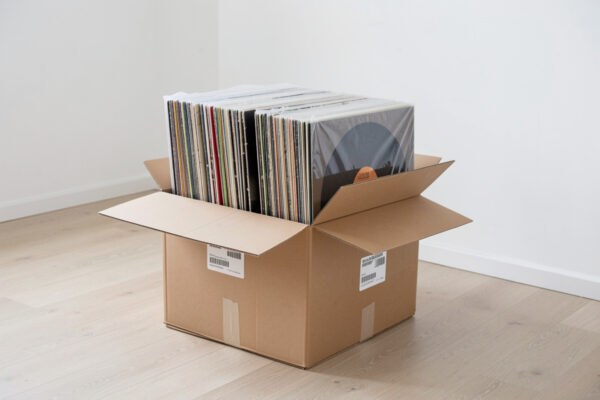
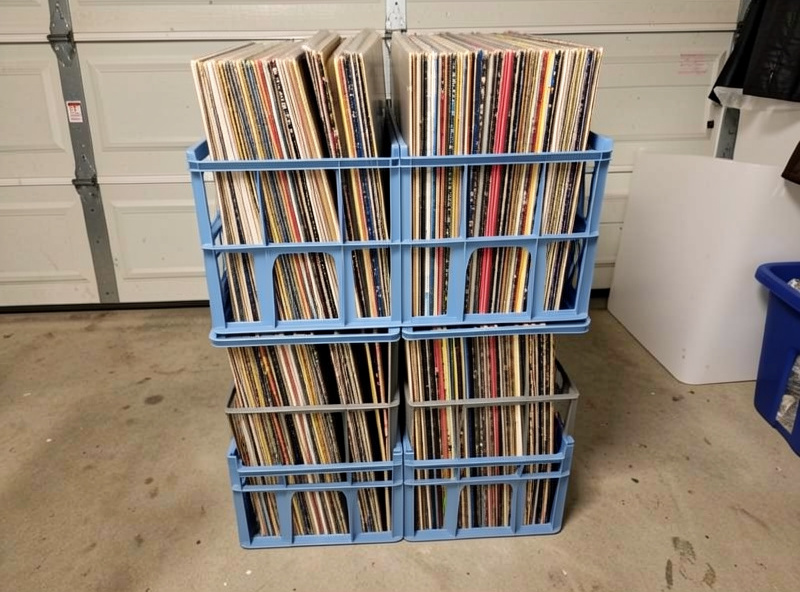
Not every record needs to live on display, and for overflow, archive, or a collection that is still growing fast, sturdy storage crates are the most cost-effective option going. The classic milk-crate look exists for a reason: it holds records upright, it stacks, and it costs almost nothing per record. The modern equivalents are purpose-made and stronger.
The rules for crates are the same as for any storage: records go in upright, never flat, and you never stack crates so deep that the bottom one bears a crushing load. Two or three high is sensible; a tower of eight is asking for a collapsed bottom crate and dished records. A set of stackable LP storage crates is also what I keep on hand for moving and for sorting through new acquisitions before they earn a permanent shelf spot.
Cheap Modifications That Matter
The single best upgrade to a budget cube unit costs a few krona: a strip of wood or an L-bracket center support if you ever use a wider opening, and felt or cork pads under the unit to stop it walking on hard floors. If a cube has a flimsy back, adding a proper hardboard back panel screwed in at the corners transforms its rigidity, because the back panel is what stops the whole frame from racking into a parallelogram under uneven load.
One thing I always do: get the unit up off a cold floor, especially in a Swedish home where a concrete basement or garage floor stays cold and can sweat. A couple of centimeters of clearance and airflow behind the unit does more for long-term preservation than any amount of cabinet quality. The shelf protects against sag; the placement protects against the climate problems I cover in the complete record storage guide.
What to Avoid
Avoid floating shelves for anything but a small display row. They look fantastic in photos and they bow within a year under real record weight, and a floating shelf that fails takes its whole load to the floor at once. Avoid deep, soft particleboard shelves with long spans. And avoid the temptation to overfill: a shelf rated for a load is rated for that load standing upright with breathing room, not crammed edge to edge.
The cheapest mistake to avoid is buying twice. A unit that sags or racks gets replaced, and then you have moved your entire collection twice and paid for two shelves. Buy the structurally sound option the first time and the cost-per-record over twenty years is negligible.
Frequently Asked Questions
What is the best type of shelf for vinyl records?
A square-cube shelving unit is the best default for most collections because each cube is short enough that the shelf cannot sag, and the dividers brace the whole structure. Purpose-built record cabinets are better for a centerpiece collection but cost more per record stored.
How much weight can a record shelf hold?
It depends entirely on span and construction, but plan for real weight: a full cube of records runs 15 to 18 kilograms, and a 200-record collection exceeds 40 kilograms. Always check load rating and avoid long unsupported spans, which sag and take a permanent set.
Is IKEA Kallax good for records?
Cube units in that style are popular for vinyl for a structural reason: the cube openings are short enough that the shelves do not sag, and they roughly match LP dimensions at about 33 to 36 cm. Adding a proper back panel and keeping each cube from being overstuffed makes them excellent.
How many records fit in one cube?
A standard storage cube holds roughly 65 to 70 LPs in their jackets when filled to a sensible density with breathing room. Cramming more in causes binding and jacket wear, so plan capacity at around 65 per cube rather than the absolute maximum.
Should I use floating shelves for records?
Only for a small display row of a dozen or so sleeves. Floating shelves bow under the heavy weight of a full record load within a year and can fail entirely, dropping the whole load. Use self-braced cube units or cabinets for bulk storage instead.
Disclosure: This article contains affiliate links. If you buy through them I may earn a small commission at no extra cost to you. I only point to gear I would actually use to store my own collection.