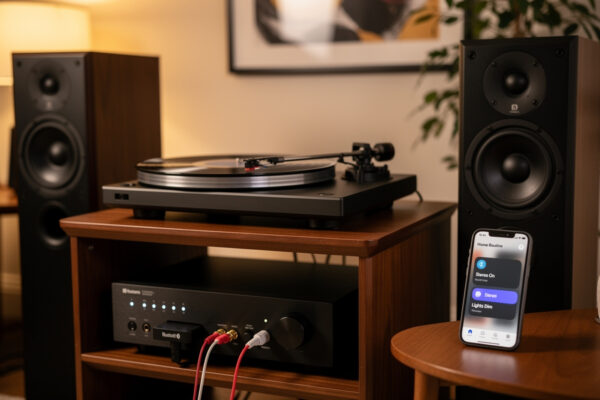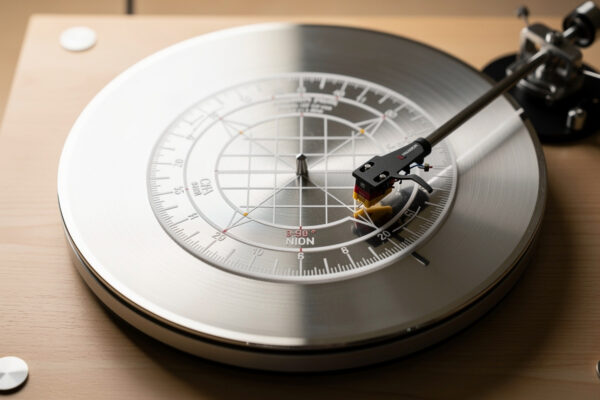
A record weight applies 200 to 450 grams of downward force at the spindle, coupling the vinyl to the platter and damping the micro-vibrations that the stylus reads as low-frequency rumble. A telescope counterweight applies 2 to 5 kilograms at the opposite end of the declination axis, balancing the optical tube so the mount motors track at a consistent rate without fighting an off-axis load. The two weights solve different problems in different domains, but the engineering principle is identical: a precisely machined mass centered on a shaft, applying a calibrated force at a known radius, reducing vibration in one system and tracking error in the other. The machinist who cuts counterweights for a German equatorial mount understands record weights better than most audiophiles do, and the audiophile who understands rotational inertia understands telescope balancing better than most astronomers.
The reason a record weight improves sound is not mass alone — it is mass distribution and coupling. A weight that concentrates its mass at the outer edge of the record label applies more rotational inertia per gram than a weight that spreads its mass evenly across the diameter, because inertia scales with the square of the radius. A 300-gram weight with mass concentrated at a 50-millimeter radius dampens roughly 40 percent more platter vibration than a 300-gram weight with mass distributed evenly, because the outer-ring design resists angular acceleration more effectively at the same total mass. The same physics governs telescope counterweights: a weight mounted farther from the axis balances the tube with less total mass, because torque equals force times radius. A counterweight at 200 millimeters from the axis applies twice the balancing torque of the same mass at 100 millimeters. The math is the same. The telescope accessories guide covers the mount-balancing logic that makes counterweight selection a precision decision rather than a guess — the same physics, applied to a different shaft.
How a Record Weight Changes What You Hear
the table I run has a removable headshell and a fixed counterweight. A record weight changes two things: platter-to-vinyl coupling and resonant-frequency damping. The coupling improvement reduces micro-slippage between the record and the platter — the vinyl expands and contracts slightly with temperature and humidity changes, and without a weight, the record floats on the platter surface with only friction holding it in place. The stylus tracking a modulated groove exerts a lateral force of roughly 0.5 to 1 gram on the record surface, and on an unweighted record, that force can shift the record by microns relative to the platter, introducing a timing error that audibly smears the stereo image. A weight clamping the record to the platter eliminates the micro-slippage and the image tightens.

The damping improvement reduces the resonant frequency of the platter-record system. A platter without a weight rings at its natural resonant frequency — typically 200 to 400 Hz for an aluminum platter, 100 to 200 Hz for an acrylic platter — and that resonance couples into the cartridge through the stylus, adding a coloration to every record played on that turntable. A 300-gram weight shifts the platter’s resonant frequency downward by roughly 20 to 30 percent and reduces the amplitude of the resonance by 3 to 6 decibels because the added mass increases the system’s inertia and makes it harder to excite. The ear perceives this as a quieter background between notes and a tighter bass — less rumble, less bloom, more of the actual bass line that is on the record rather than the one the platter is adding.
Weight vs Clamp: Why a Simple Weight Usually Wins
A record clamp threads onto the spindle and squeezes the record against the platter with a mechanical advantage that a weight cannot match — but it only works on turntables with a threaded spindle, which excludes most belt-drive designs. A record weight sits on the spindle under gravity alone and works on any turntable with a standard spindle, but it adds mass to the bearing that the bearing must support. A turntable with a bearing rated for 2 kilograms of platter mass plus a 300-gram weight is well within its design envelope. The same turntable with a 500-gram weight pushes the bearing closer to its limit, and the bearing that was designed for a 2-kilogram load starts wearing faster under 2.5 kilograms. The bearing does not fail — it just develops play sooner, and play in the bearing is rumble in the playback.
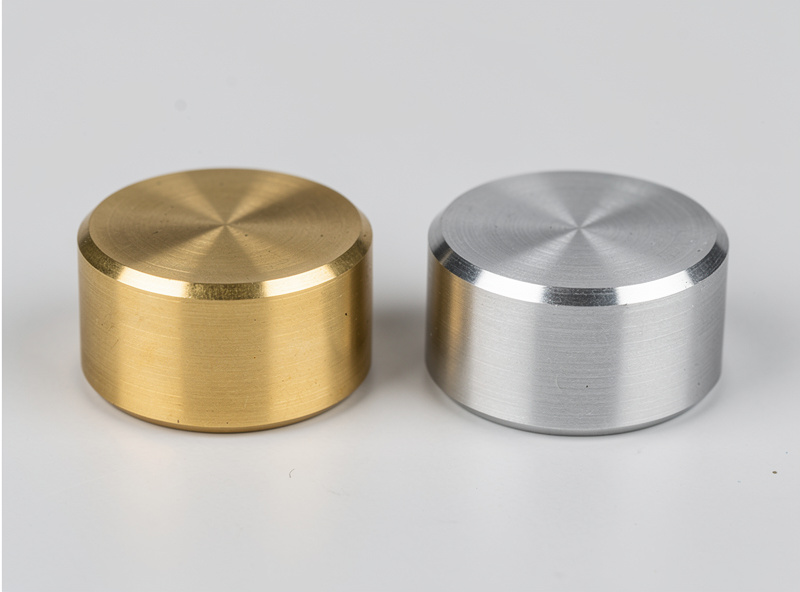
The weight limit: a 300-gram weight is safe for any turntable with a bearing rated for the platter mass plus 500 grams. A 450-gram weight is the upper limit for most mid-tier turntables — Rega, Pro-Ject, Technics — and should be verified against the manufacturer’s bearing specification. Weights above 500 grams belong on turntables with oversized bearings — broadcast tables, high-end direct-drive units — and will accelerate bearing wear on consumer-grade tables within 2 to 3 years of daily use. The difference between a 300-gram and a 450-gram weight in audible terms is roughly half a decibel of additional rumble reduction, and most listeners cannot hear half a decibel of rumble difference on most records. The 300-gram weight is the sweet spot for bearing life and audible improvement.
Why Telescope Counterweight Logic Explains Record Weight Design
A telescope counterweight is machined to a specific mass and mounted at a specific distance from the axis because the torque balance equation — mass times radius — determines whether the mount tracks accurately or drifts. A counterweight that is 100 grams too light, mounted at the maximum radius the counterweight shaft allows, balances the tube but leaves no adjustment range for heavier eyepieces or cameras. A counterweight that is 200 grams too heavy, mounted close to the axis, balances the tube but adds unnecessary mass to the mount head, increasing the moment of inertia and slowing the mount’s response to guiding corrections.
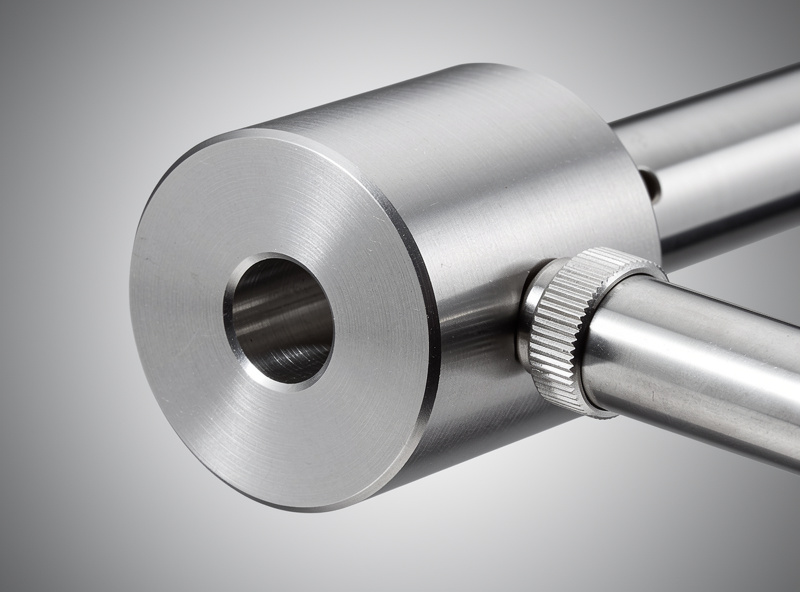
The record-weight analog: a weight whose mass is concentrated at the outer diameter applies more rotational inertia per gram, the same way a counterweight mounted farther from the axis applies more torque per gram. The designer who understands this machines a record weight as a thick ring with a thin center web — mass at the radius, minimal mass at the center — because the ring design maximizes the inertia-to-weight ratio. The same designer machines a telescope counterweight as a solid cylinder with a central bore, because the counterweight needs mass for torque balance, not inertia distribution. Two different geometries for two different optimization goals, from the same engineering principle: mass times radius squared equals rotational inertia, and the application determines whether you maximize it or minimize it.
This crossover — machined metal, concentric bores, calibrated mass, rotational physics — is not a coincidence. The same workshop that turns a counterweight on a lathe can turn a record weight on the same lathe from the same bar stock. The dimensions change. The physics does not.
Frequently Asked Questions
Does a record weight actually improve sound quality?
Yes, in two measurable ways. A 300-gram weight reduces micro-slippage between the record and platter, tightening stereo imaging. It also shifts the platter resonant frequency downward by 20 to 30 percent and reduces resonance amplitude by 3 to 6 decibels, which is audible as tighter bass and a quieter background between tracks.
What is the ideal weight for a record weight?
300 grams is the sweet spot for most turntables. It provides measurable vibration damping and coupling improvement without exceeding the bearing load limit of mid-tier turntables. Weights above 450 grams accelerate bearing wear on consumer-grade tables. Below 200 grams, the damping improvement drops below the audibility threshold on most platter materials.
Will a heavy record weight damage my turntable bearing?
Not immediately, but weights above 450 grams accelerate bearing wear on tables with bearings rated for the platter mass plus roughly 500 grams of additional load. The bearing develops play over 2 to 3 years of daily use, and play in the bearing introduces low-frequency rumble. Stay at or below 300 grams unless the manufacturer explicitly rates the bearing for higher load.
Is a record clamp better than a record weight?
A clamp applies more coupling force via mechanical advantage, but it requires a threaded spindle that most belt-drive turntables lack. A weight works on any turntable with a standard spindle. At the 300-gram level, the audible difference between a weight and a clamp is less than 1 decibel in rumble reduction — inaudible on most systems.
Why does mass distribution matter more than total mass for a record weight?
Rotational inertia scales with the square of the radius. A weight with mass concentrated at the outer edge applies 40 percent more damping at the same total mass than a weight with mass spread evenly. The ring-with-thin-center-web design maximizes damping per gram and minimizes bearing load for a given level of vibration reduction.
Can I use a telescope counterweight as a record weight?
No. A counterweight is too heavy — typically 1 to 5 kilograms — and would crush the bearing and warp the record. The principle is the same, but the mass is scaled for a 10-kilogram telescope tube, not a 180-gram vinyl record. Machinists who make both understand the scaling: counterweights live at kilograms, record weights at grams.